

Philips Unveils Next-Gen AI-Powered Imaging Platform IntelliSpace Portal V12 to Redefine Clinical Diagnostics

Philips Healthcare
Integrated service provider in healthcare, quality living, and lighting fields
In recent years, China has continuously and vigorously advanced healthcare informatization. At the national level, numerous policies have been successively issued, including the Action Plan for Promoting High-Quality Development of Public Hospitals (2021–2025), to support the development of smart hospitals and the standardization of hospital information systems. As a result, China’s healthcare informatization systems have entered a new 2.0 stage.
However, the early stages of development generally lacked top-level design support, leading to widespread “patchwork” practices in many hospitals’ information systems. This has resulted in inconsistent system interfaces, disorganized data, and “information silos,” which have become significant bottlenecks to further development. To advance into Healthcare Informatics 2.0, hospitals must prioritize interoperability, unlock the value of data, and build clinical decision support systems that are highly aligned with actual needs.
To support the digital transformation of hospitals, Philips has leveraged its extensive industry ecosystem advantages, drawing on years of deep expertise in healthcare informatics, to build an innovation-driven “flagship” platform for healthcare IT and advance the development of healthcare informatization in China. As part of this year’s global business architecture restructuring, Philips also established a new Enterprise Informatics business group, dedicated to integrating its internal healthcare informatics resources and further strengthening its leading position as a global health technology leader in medical IT.
Furthermore, the Clinical Informatics business line, which is patient-centric and focused on clinical services, plays a synergistic role in this transformation. By leveraging deep clinical insights, enhancing capabilities with innovative technologies, and integrating with the local ecosystem, it has become another strong pillar for intelligent imaging, positioning itself at the forefront as it sets sail. The strategy involves enriching the product portfolio, launching hospital-level imaging solutions, and collaborating with third parties to build an ecosystem that achieves scale, ultimately forming an enterprise-level closed-loop clinical informatics system tailored to the overall Chinese healthcare market.
During the China International Import Expo (CIIE), which also coincided with Philips’ 100th anniversary, its Clinical Informatics team unveiled the next-generation Nebula Advanced Visualization Imaging Platform, IntelliSpace Portal (hereinafter referred to as “Nebula ISP V12”), comprehensively showcasing the latest achievements of “Intelligent Innovation in China” and aiming to achieve intelligent diagnostics, streamlined workflows, and interconnected data in the new era.
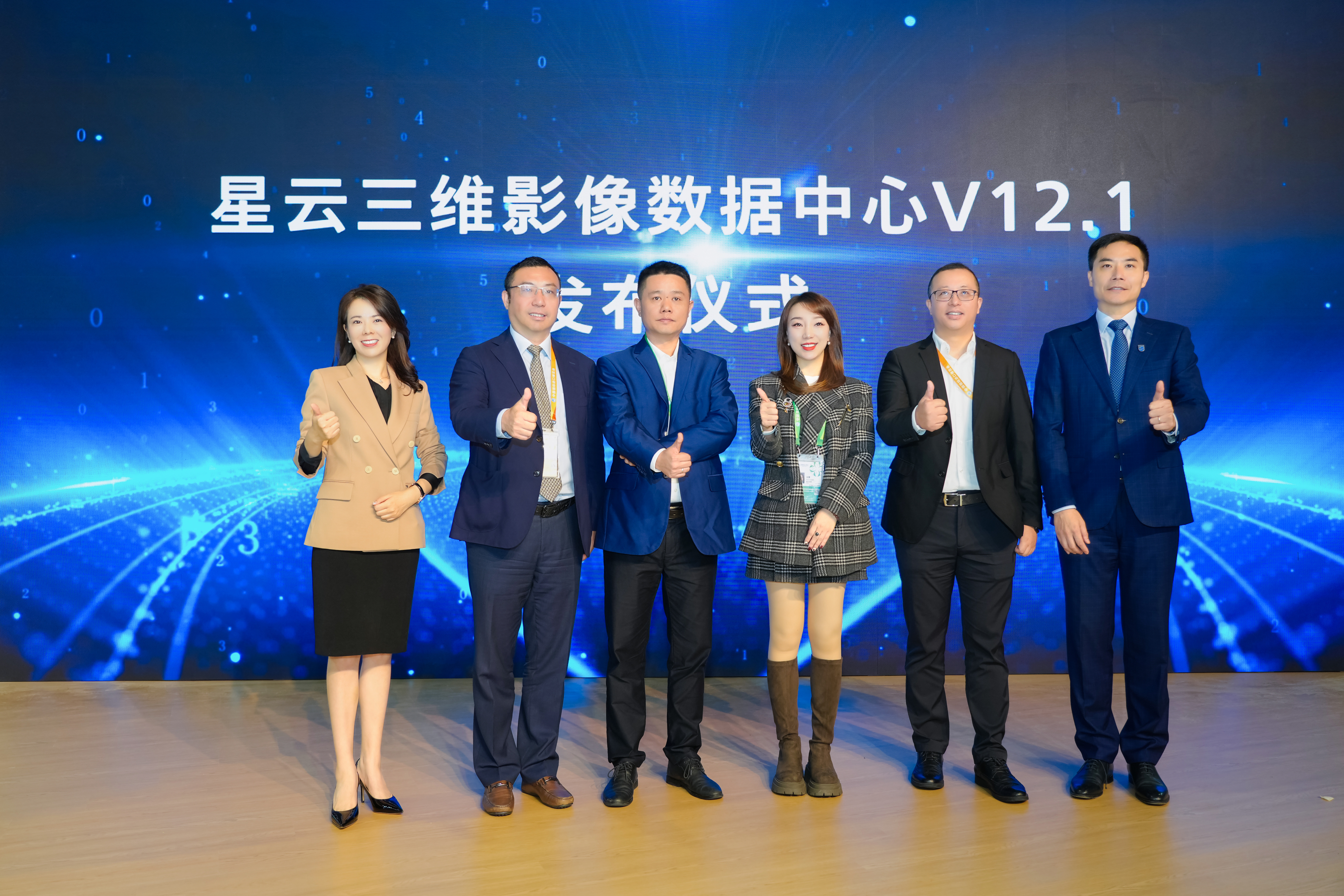
Since the widespread adoption of deep learning in computer vision, medical imaging AI has experienced unprecedented rapid development. In just a few years, a continuous stream of intelligent applications has been integrated into clinical workflows, subtly transforming the diagnostic and treatment practices of contemporary physicians. However, the influx of numerous AI applications has also introduced new challenges to clinical use. On one hand, AI solutions tailored for different diseases operate independently and exist as external plugins on workstations, forcing physicians to engage in cumbersome switching between various systems. On the other hand, these fragmented AI applications lack unified management and regulation, making it difficult for AI-processed imaging data to meet interoperability requirements.
In this context, Nebula ISP was developed to address these needs. Centered on the unification and standardization of medical imaging data, it inherits a long-established architecture characterized by high compatibility and scalability. It supports cross-vendor, multi-modal imaging data for integrated viewing, streamlines imaging workflows, and fundamentally resolves interoperability challenges among disparate systems.
To support the development of regional medical networks, Philips has launched the Nebula ISP enterprise-grade solution, designed to handle massive concurrent user access. Currently, Nebula ISP V12 supports up to 200 simultaneous online users, empowering hospital groups and medical consortia to establish multi-campus intelligent imaging centers as an informational bridge. This facilitates standardization of imaging examinations and enhances accessibility to high-quality medical teaching resources.
In the realm of scientific research, Nebula ISP also shines with its unique brilliance. The platform provides access to the most comprehensive data resources, truly integrating the complete workflow of image processing, analysis, and scientific research. According to Philips statistics, Nebula ISP helps thousands of researchers worldwide publish hundreds of SCI papers annually, with many outstanding achievements featured in authoritative journals such as Nature, Cell, and Radiology.
With its numerous advantages, the Nebula ISP has achieved over 10,000 installations worldwide, with more than 4,000 units deployed in the Chinese market. Wuhan Asia Heart Hospital installed the Nebula ISP in 2019 and has continuously upgraded it in the following years. The built-in cardiac quantitative analysis and ADA (Automated Data Analysis) features of the Nebula ISP have effectively addressed research needs such as cardiac T1 and T2 mapping, enabling the hospital to explore further research possibilities in bi-exponential diffusion analysis and Diffusion Kurtosis Imaging (DKI).
Nowadays, Nebula ISP has become an essential tool in the daily workflows of many physicians at Wuhan Hanyang Hospital. These doctors demonstrate a high level of understanding and proficiency in intelligent imaging. According to the physicians, Philips offers stable system performance, excellent clinical diagnostic capabilities, and continuous technical support in the field of 3D post-processing of medical images, thereby helping our doctors improve work efficiency and enhance diagnostic accuracy.
Viewed through the lens of traditional Informatics 1.0, Nebula ISP—with its efficient workflows and seamless interoperability—can already be regarded as a comprehensive radiology system. However, in the era of digital intelligence, AI algorithms, reshaped by intelligent application technologies, are breaking through the efficiency bottlenecks of traditional workflows and driving transformative improvements in performance.
A prime example is the newly added CAAS MRI module in StarrySky V12. This module comprises three applications: 4D Artery workflow, 4D Heart workflow, and Strain workflow, which are used for quantitative and visual assessment of blood flow throughout the cardiac cycle in patients with vascular, valvular, or ventricular diseases. Compared with traditional two-dimensional blood flow analysis, CAAS incorporates the time dimension to enable comprehensive, dynamic hemodynamic quantitative analysis as well as visualization of blood flow velocity and direction, thereby fully supporting intelligent diagnosis of heart diseases.
Powered by AI algorithms, the Nebula ISP V12 also stands out for its highly efficient automated workflow. By leveraging AI to enhance the underlying algorithms of numerous application modules, the intelligent preprocessing capability of the Nebula ISP V12 achieves a “ready-to-use after initial processing” experience. According to Philips, AI-based 3D reconstruction of the heart, liver, and lung tissues improves the identification of diseased tissues or organs with subtle structures, simplifies operational procedures, and reduces the rate of missed lesion diagnoses. The longitudinal brain assessment application highlights temporal changes in subtle brain structures through color coding, thereby improving diagnostic accuracy for patients with multiple sclerosis and reducing image interpretation time to 44% of that required by conventional methods.
To date, Nebula ISP V12 supports multi-vendor, multi-modality imaging—including CT, MRI, PET, and ultrasound—optimizing workflows across diverse clinical scenarios such as health screening, preoperative planning, and postoperative follow-up. It offers over 100 application functions tailored to various clinical subspecialties, including cardiology, neurology, and oncology, thereby enhancing clinicians’ diagnostic confidence and enabling precise diagnosis at its core.
In China’s medical IT market, traditional health informatics companies tend to focus on optimizing clinical workflows and enabling interoperability of imaging data, whereas the vast majority of emerging AI-in-imaging startups prioritize the development of intelligent applications. By contrast, Nebula ISP V12 has successfully integrated the strengths of both approaches, merging “data” and “intelligence” into a unified solution.
Nebula ISP V12 is a win-win solution tailored to local needs. For physicians, the comprehensive Nebula ISP platform empowers them with the flexibility to select and switch among intelligent application modules. When existing workstations fail to meet evolving clinical demands and there is an urgent need to integrate AI technologies, Nebula ISP, as an intelligent imaging platform embedded with AI algorithms, can better satisfy the multidisciplinary clinical requirements for advanced visualized imaging. For hospitals, Nebula ISP offers new possibilities for keeping pace with evolving clinical needs and the rapidly changing landscape of multi-site imaging centers, provides fresh perspectives for hospital information technology construction, and promotes the development of the entire digital healthcare industry.
However, Nebula ISP V12 is not the final destination for the imaging data center. To achieve Philips’ goals of “reducing care costs” and “improving healthcare professional satisfaction,” the ISP will continue to evolve toward greater intelligence, automation, and openness.
This year marks the 100th anniversary of Philips’ entry into China. With extensive local resources in R&D, manufacturing, and production, bolstered by its three innovation centers, Philips has established a systematic presence in the Chinese market. By transitioning from basic to advanced localization, Philips China is truly achieving “local for local” while expanding its “local for global” footprint, leveraging Chinese innovation and manufacturing to serve the world.
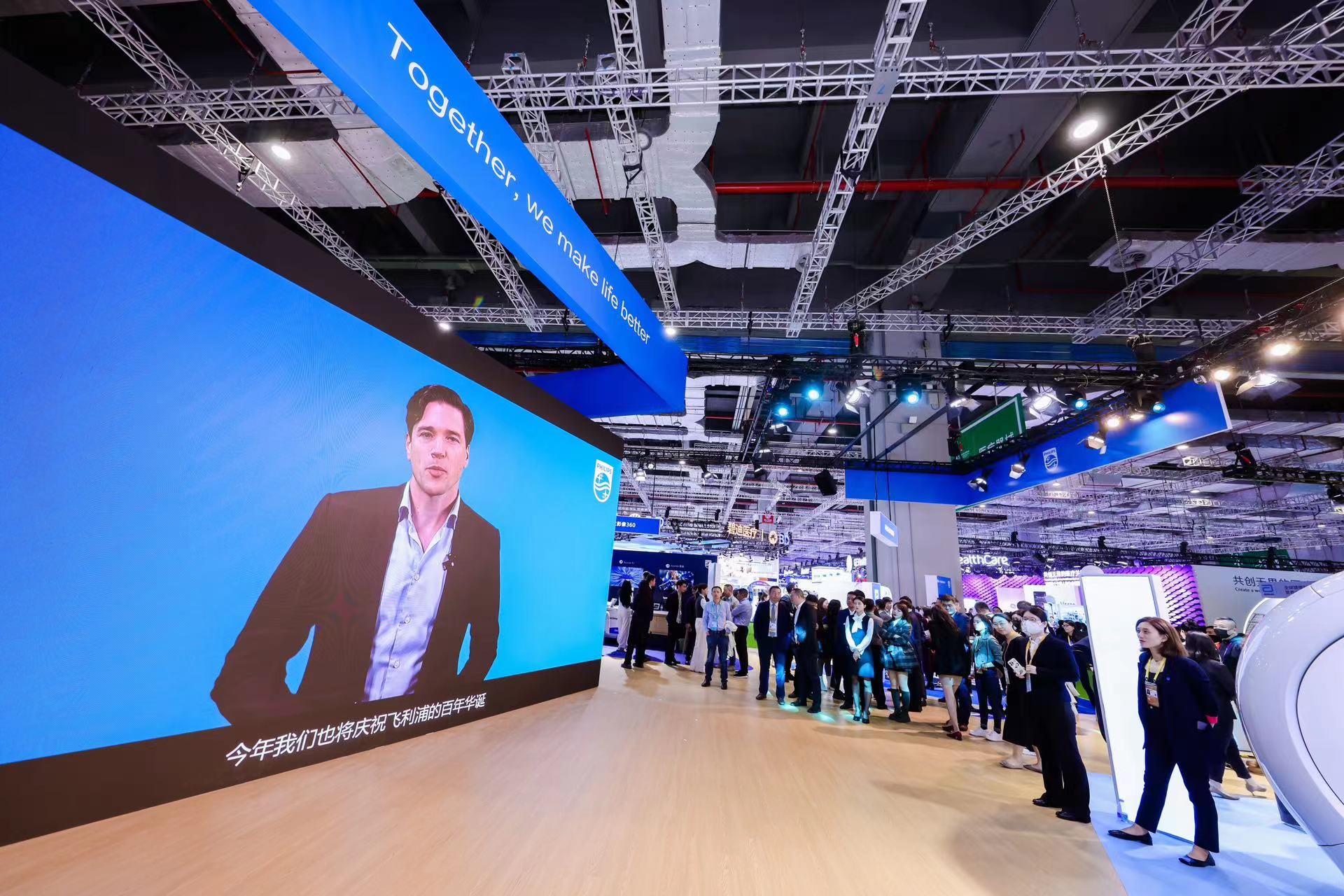
Returning to the clinical setting, Martijn Hartjes, Global Head of Philips Clinical Informatics, shared his outlook during the China International Import Expo. He stated, “Philips Clinical Informatics will continue to innovate, further advancing the development of innovative technologies for imaging visualization in China. At the same time, we are committed to continuously exploring collaborations with industry partners to expand a robust ecosystem of intelligent applications, promoting the in-depth application of AI technologies in areas such as imaging diagnosis, thereby empowering clinical practice.”
“Looking ahead, we will join hands with our Chinese partners to deliver high-quality clinical information solutions and services, leveraging intelligence to advance the ‘Healthy China 2030’ initiative and improve lives through meaningful innovation.”