

Rilabnacept: A Novel IL-1 Inhibitor Inspired by Rare Disease Mechanism Targets Autoinflammatory Disorders
Yaya (a pseudonym) is an 11-year-old child who suffers fromAutoinflammatory Diseases, enduring recurrent joint swelling and pain throughout the day. She suffers from a novel autoinflammatory disease, a rare condition mediated by the innate immune system, characterized clinically by abnormally elevated inflammatory responses and recurrent systemic inflammation.
Yaya and her parents spent years shuttling between hospitals of all sizes, yet a definitive diagnosis remained elusive. Over the years, sitting in consultation rooms at various locations, they had long grown accustomed to the doctors’ helplessness. It was not until 2020, when Yaya came toDepartment of Pediatric Rheumatology, The Second Affiliated Hospital and Yuying Children's Hospital of Wenzhou Medical University, was finally diagnosed and received precise treatment.
Yaya is a microcosm of patients with rare diseases: Due to low incidence rates and a small total patient population, individuals with rare diseases face multiple challenges, including high rates of misdiagnosis and missed diagnosis; limited therapeutic options, or even a complete lack of available medications; and prohibitive costs for new therapies, which deter many patients and their families despite the market availability of novel drugs.
As a scientific researcher, identifying disease-causing genes for genetic disorders and elucidating their pathogenic mechanisms to provide more effective treatments for patients isYu Xiaomin, Researcher at Liangzhu Laboratory, Zhejiang UniversityThe Goal We Always Adhere To.
In Yu Xiaomin’s view, research on immune system disorders can bridge the gap between diagnosis and treatment: forming a closed loop from the clinic to the laboratory and back to the clinic. This trajectory closely mirrors Yu Xiaomin’s own life path. After leaving the research institute to embark on an entrepreneurial venture, he returned to Zhejiang University’s Liangzhu Laboratory to focus on cutting-edge exploration, leveraging appropriate opportunities to effectively translate scientific achievements into practical applications.
In 2022, inspired by the pathogenesis of autoinflammatory diseases in Yaya, Professor Yu Xiaomin’s research team introduced the K131E mutation into the IL-1R1 domain of rilonacept to enhance its efficacy in suppressing inflammation mediated by IL-1α and IL-1β. The innovatively designed drug was namedRilabnacept。
However, the translation of scientific achievements into practical applications has not been as smooth as expected. Yu Xiaomin clearly felt that,He and his team struggled with market valuation, resource constraints, and team dynamics.“We have indeed encountered difficulties.”
Two Arrivals
Boarding the flight to the United States, Yu Xiaomin prepared to embrace some changes.
It was a day in 2010. For the previous five years, Yu Xiaomin had been dedicated to genetic research at the Beijing Institute of Genomics, Chinese Academy of Sciences, tackling academic challenges. “At that time, my work had little relevance to clinical practice.”
And at this moment, he will arrive in a new country.
The plane landed. Yu Xiaomin entered the U.S. National Institutes of Health and began engaging in research on the correlation between genomic variations and the onset and progression of human diseases. After encountering numerous unusual disease cases, Yu Xiaomin increasingly felt thatResearch on immune system diseases offers the most straightforward path to integrating diagnosis and treatment.。
“First, sample collection is relatively convenient; we can obtain clinical samples through a one-time peripheral blood draw and genetic diagnosis. Second, immunological diseases are easier to intervene in and treat compared to other genetic disorders characterized by functional abnormalities. Therapeutic effects can be achieved by direct drug administration or by correcting the behavior of immune cells, and in vitro studies are also relatively straightforward,” said Yu Xiaomin.
Although Yu Xiaomin still believes that identifying disease-causing genes and elucidating pathogenic mechanisms through human genomics research is of great significance, when viewed from the perspectives of rapid technological application and market capacity, “The U.S. research institute model is unlikely to be widely adopted and applied on a large scale.”
Meanwhile,China’s Entire Gene Sequencing Industry Enters a Golden Age. From 2010 to the present, China's market size has been in a stage of rapid development, with a median year-on-year growth rate exceeding 40% (data sourced from CCID Consulting). Between 2014 and 2015, second-generation gene sequencing diagnostic NIPT products from BGI Genomics, Berry Genomics, and Zhongda An Gene were successively approved for market launch.
Yu Xiaomin sought to seize this historic opportunity. In 2016, he gave up his comfortable life in the United States and boarded a flight back to China.
This kind of “impulse” is rare among scientific researchers. You could call it a “desire to realize the application value of technology.” After returning to China, Yu XiaominFounded/joined Hangzhou Zhenyuan Health Technology Co., Ltd., Hangzhou Zhenyuan Medical Laboratory Co., Ltd., and Zhejiang Bosheng Biotechnology Co., Ltd. in succession, specializing in genetic diagnosis using genome sequencing and typing technologies.
This time, Yu Xiaomin arrives at the field of genomics applications.
Rilabnacept New Drug Development
In 2020, Yu Xiaomin joined the Liangzhu Laboratory of Zhejiang University.
Prior to this year, Yu Xiaomin served as Chairman, General Manager, and R&D Director. In the year that followed, she donned a lab coat once again, becoming the first Principal Investigator (PI) at Zhejiang University’s Liangzhu Laboratory. Reflecting on her transition from industry back to academia, Yu told Chengguo Ju, “This process has been quite intriguing.” Basic medical research originates from clinical practice; researchers elucidate molecular mechanisms and then apply these insights back in clinical settings for therapeutic purposes.
It was also in this year that Yu Xiaomin came into contact with Yaya.
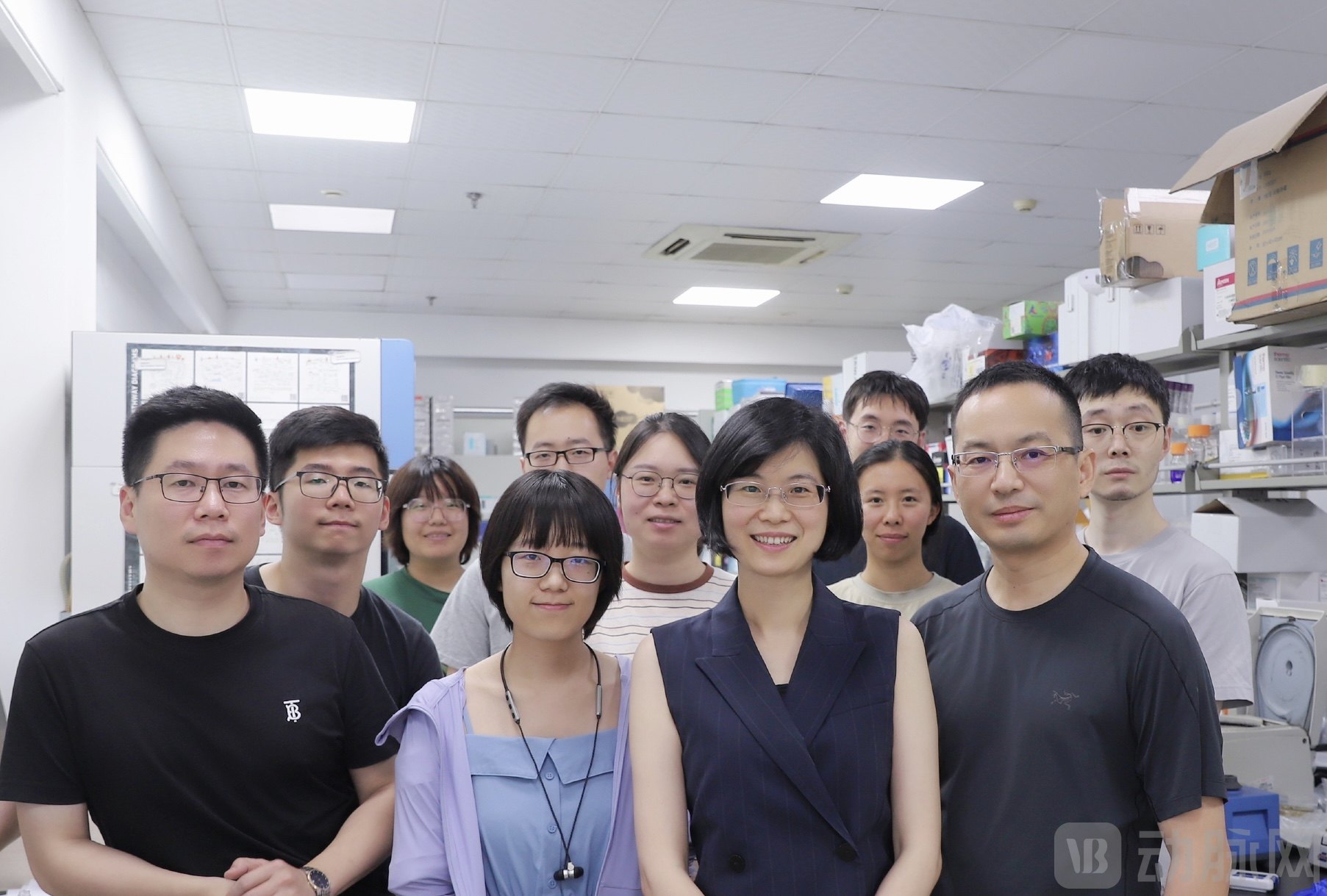
Group photo of Yu Xiaomin’s research team (Image provided by the interviewee)
Based on the results of Yaya’s whole-exome sequencing analysis, a definitive diagnosis could not be established by cross-referencing with existing pathogenic gene databases. However, Yu Xiaomin’s team discovered Yaya’sThe IL-1R1 gene harbors a de novo mutation, p.Lys131Glu (K131E).。
Through protein structure simulation, molecular dynamics analysis, and a series of in vitro cellular experiments, the team demonstrated that the K131E mutation inhibits the interaction between IL-1R1 and its antagonist protein IL-1Ra, without affecting its binding to IL-1α/β. Given that the auto-transcriptional regulation of IL-1α/β is also subject to activation by the IL-1 pathway, the K131E mutation leads to uninhibited, persistent activation of the IL-1 signaling pathway, which is the fundamental cause of Yaya’s recurrent multifocal osteomyelitis over the years.
“Interleukin-1 (IL-1) signaling pathway is one of the most critical pathways regulating inflammation and immune responses in the body, and its aberrant activation leads to the development of a series of inflammatory diseases. Type I IL-1 receptor (IL-1R1) is the central membrane receptor for transducing IL-1 signals; upon recognizing and binding to the pro-inflammatory cytokines IL-1α or IL-1β via its extracellular domain, it transmits signals into the cell, driving the activation of downstream NF-κB and MAPK pathways. As an antagonist within the IL-1 cytokine family, IL-1Ra competitively binds to IL-1R1 with IL-1α or IL-1β, thereby blocking downstream signal transduction, inhibiting sustained activation of the IL-1 pathway, and serving as a ‘brake’ to control inflammation. In other words,”Which partner IL-1R1 binds to determines whether this critical inflammatory signaling pathway is activated or suppressed..” explained Yu Xiaomin.
After confirming the pathogenicity of the IL-1R1 mutation, and following multiple rounds of expert deliberation, approval by the hospital’s ethics committee, and informed consent from Yaya’s parents, Dr. Yu Xiaomin’s team administered canakinumab, an anti–IL-1β monoclonal antibody, to Yaya. Shortly thereafter, Yaya recovered.
This isThe First Case Worldwide of Definitive Diagnosis and Precision Treatment for This Rare Disease. The research team led by Yu Xiaomin named this disease LIRSA (Loss of IL-1R1 Sensitivity to IL-1Ra).
However, Yu Xiaomin’s work is not yet complete. He aims to develop a more universally applicable and highly efficient IL-1 inhibitor, based on the mechanism underlying Yaya’s condition, for the treatment of both rare and common diseases characterized by excessive activation of the IL-1 signaling pathway.
Currently, there are three classes of therapeutic agents on the market targeting the overactivation of the IL-1 signaling pathway: Anakinra, Canakinumab, and Rilonacept. Among these, Rilonacept targets both IL-1α and IL-1β. This drug links the extracellular domains of IL-1R1 and IL-1RAcP with a fragment of human IgG1 to form a dimeric fusion protein. This dimer acts as a “trap,” binding to IL-1α and IL-1β in patients’ bodies, thereby limiting the overactivation of the IL-1 pathway; however,Rilonacept also binds indiscriminately to IL-1Ra, which significantly reduces the drug’s efficacy.。
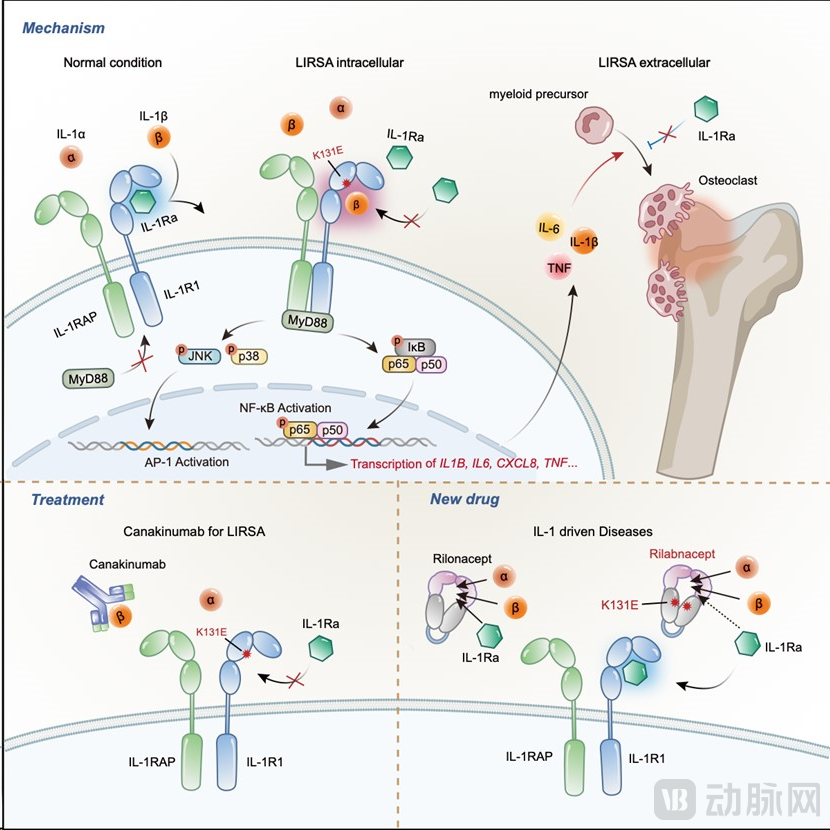
Demonstration of New Drug Efficacy
To enhance the molecular-level efficacy of anti-inflammatory agents and improve their capacity to suppress inflammation induced by IL-1α and IL-1β, Yu Xiaomin’s team furtherIntroduce the K131E mutation on IL-1R1 into Rilonacept, blocking the “trap” from capturing the “brake.” “Like a funnel, it filters out IL-1α/IL-1β.” Yu Xiaomin’s team named this new drug Rilabnacept.
Next, Yu Xiaomin aims to bring this new drug to market as soon as possible.
Seeking Industry Partners
The Development of Drugs for Rare Diseases Is Destined to Be a Tapestry of “Love and Hate.”
As of now,Rare diseases lack a precise definition and have not yet formed a substantial market size, let alone achieved precision diagnosis and treatment.. Due to insufficient returns, companies are constrained by limited R&D capabilities and funding support, thus falling back into the vicious cycle of homogeneous competition. According to industry statistics, among the first batch of 121 rare diseases, there are currently 180 drug molecules under development in China. Of these, 170 target indications for which treatments are already available domestically, eight target rare diseases with a global focus, and only two target indications for which treatments are available abroad but not yet in China.
Many times,The “market failure” of orphan drugs and the cognitive gaps surrounding them have deterred many companies and investors.。
Accordingly, Yu Xiaomin faces a very practical question: how to commercialize the innovative drug Rilabnacept?
“Without the support of a pharmaceutical company with a sense of social responsibility, it would be difficult for us to independently advance the drug into clinical trials. In fact, Rilabnacept is not only indicated for rare diseases but can also be used for more common conditions such as rheumatoid arthritis and gout.” Yu Xiaomin believed that the best approach to translation wasSeeking Collaboration with Pharmaceutical Companies. Currently, Rilabnacept has identified a preclinical candidate compound (PCC) and is in the process of transferring related intellectual property rights.
“Once the intellectual property transfer is complete, we will approach pharmaceutical companies to discuss collaborations.” Fearing that patent issues might cause them to miss opportunities, Yu Xiaomin has placed increasing emphasis on the transfer of intellectual property. As the team’s frontline leader, he actively communicates with colleagues at the university’s Technology Transfer Office, aiming to expedite the IP transfer and achieve industrial commercialization.
“Sometimes, Yu Xiaomin simply cannot spare the time.”We urgently need partners to help the team oversee various risks.“He told VCBeat that a postdoctoral fellow in his team was one of the co-founders. ‘Postdoctoral researchers are only suited to promoting your academic concepts and technologies; they are not fit for running a company or handling specific technology transfer tasks.’ Having only technical co-founders is far from sufficient.”
He is currently seeking industry partners for his team. Yu Xiaomin noted that one of his colleagues achieved remarkable success in translating research outcomes into commercial applications, and later revealed that his partner was a friend from the pharmaceutical industry. “Such partners and teams have already passed the initial adjustment phase; with an established foundation of trust, the entire process proceeds more smoothly.”
At this point, Yu Xiaomin stated,The most crucial element in building trust is shared values, with the team and partners aligned toward a common goal: ensuring the successful execution of the endeavor.