

BMF Precision Tech: Pioneering Disruptive Innovation in Medical Technology through Microscale 3D Printing

BMF Precision Tech
3D Printing Service Provider for Single-Use Medical Application Devices
As one of the important downstream applications of precision manufacturing, the medical field has a long history of applying 3D printing. In 1996, Therics, the world’s first company dedicated to 3D-printed pharmaceuticals, was established. In 2012, 3D printing began to be applied in the field of medical devices, with the first successful printing of artificial liver tissue. In 2015, the 3D-printed drug Spritam received FDA approval for market launch.
Currently, 3D printing in the medical device sector is primarily applied to human implants and bioprinting. Taking vascular stents as an example, patients were previously limited to selecting from existing off-the-shelf sizes; today, they can opt for stents that are custom-designed and 3D-printed based on individual patient characteristics. Customized, personalized precision medicine represents a major direction for 3D precision manufacturing.
In another direction, technological innovation is empowering the healthcare industry through collaborative research and development of incremental and disruptive innovative products.Chongqing BMF Precision Tech Inc. (hereinafter referred to as "BMF Precision") isThe world’s only company capable of achieving 3D printing precision at the 2μm level, featuring ultra-high tolerance control, and enabling industrial-scale applications.
As a global leader in micro-nano 3D precision printing, is BMF Precision Tech set to enter the medical industry? To find out, VCBeat conducted an exclusive interview with Xing Yuxiang, Marketing Director at BMF Precision Tech.
“Since its establishment in 2016, BMF Precision Tech has consistently pursued a highly challenging yet compelling path—transitioning from an equipment manufacturer to a product-oriented company, thereby empowering industry development through technology,” mentioned Xing Yuxiang. “Our first step was to solidify our technological innovation and foundational R&D capabilities.”
Xing Yuxiang introduced, “Specifically, BMF Precision Tech focuses on the field of micro-nano 3D printing within 3D printing technology, primarily addressing the processing and manufacturing of precision small-scale products and complex devices that are difficult to achieve with traditional techniques. This aligns with the global trend in industrial manufacturing toward increasing precision, accuracy, and miniaturization.”
“Projection Micro Stereolithography” (PμSL) is a globally unique technology pioneered by BMF Precision Tech, offering the world’s only high printing precision with a resolution of up to 2 μm, while maintaining industrial-grade tolerance control. In terms of industrialization, BMF Precision Tech holds a dominant global position in the printing precision range of 1–20 μm. By integrating various functional materials and related post-processing techniques, the company has achieved a tripartite technological synergy encompassing equipment, materials, and processes, thereby providing a novel solution for precision manufacturing.
The breakthrough innovations in PμSL have also amplified BMF Precision Tech’s global presence. The company was selected for the MIT STEX25 list in 2018 and 2019; in 2021, its ultra-high-precision 3D printing system, the microArch S240, won the “Prism Award,” the highest annual honor in the global optoelectronic technology sector; and in 2022, it received the Manufacturing Award from the Japan Society for Precision Engineering, becoming only the third non-Japanese enterprise ever to receive this accolade.
Behind its numerous awards, BMF Precision Tech’s ultra-high-precision 3D printing systems have undergone continuous iteration, fully meeting manufacturers’ demands for the mass production of precision and complex components such as connectors, and propelling Chinese manufacturing onto the global market.As of November 2023, BMF Precision Tech has established collaborations with nearly 2,000 research institutions and industrial enterprises across 35 countries worldwide. These partners include top-10 global medical device companies such as Johnson & Johnson and GE Healthcare, as well as top-10 global precision connector manufacturers.
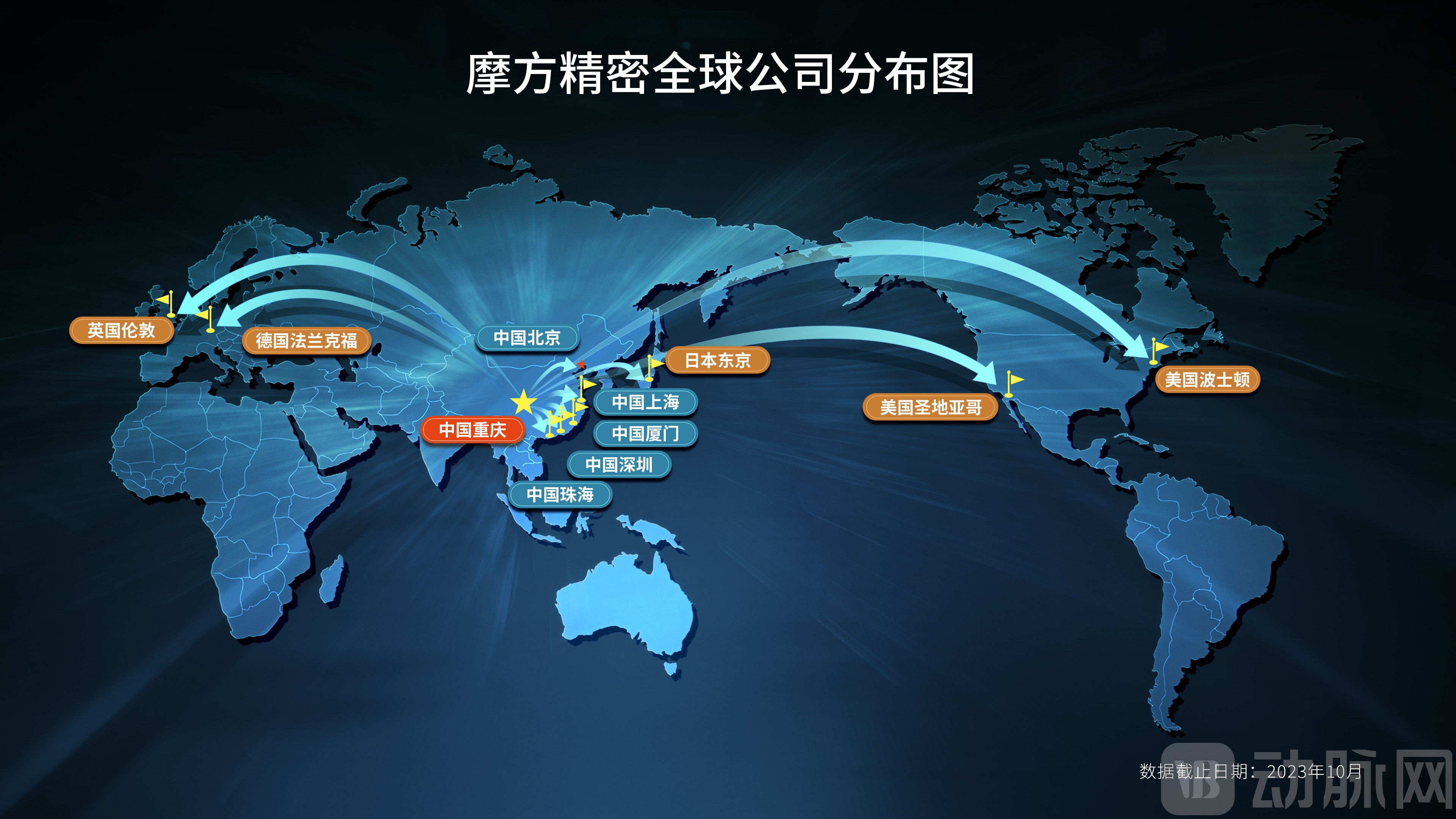
Global Presence of BMF Precision Tech
Currently, BMF Precision Tech is headquartered in Chongqing with a global footprint, having established offices in multiple cities including Shenzhen, Beijing, Shanghai, Xiamen, and Zhuhai, as well as overseas subsidiaries in Japan and the United States. The company has grown into a global team of 200 employees, among whom 10% hold doctoral degrees and 15% hold master’s degrees. Xing Yuxiang stated, “"Entering its seventh year, BMF Precision Tech is advancing simultaneously across four fronts—equipment, services, technological innovation, and end-use applications—committed to empowering technology through high-precision manufacturing and driving the development of the advanced medical manufacturing sector."
“For a long time, the machining of precision and complex components has been a major challenge for both traditional manufacturing and 3D printing, contributing to their time-consuming and costly nature. Conventional 3D printing technologies with standard precision cannot meet the tolerance requirements of prototype designs, making it difficult to reproduce features smaller than 200 μm,” emphasized Xing Yuxiang. “This is precisely our area of expertise.”In the medical field, trends such as the refinement and complexity of high-end devices, along with the demand for intricate channel designs, are gaining momentum. BMF Precision Tech’s PμSL technology is precisely aligned with this ultra-high-precision 3D printing sector.
On July 30, BMF Precision Tech partnered with Peking University School of Stomatology to invest RMB 12 million in establishing a Joint Laboratory for Ultra-High-Precision Tooth Surface Reinforcement Technology in Chongqing. This laboratory is built upon the joint development by BMF Precision Tech and Peking University School of Stomatology of the end-product “Ultra-Thin, High-Strength Zirconia Dental Veneers.” Dental veneers are ceramic restorative materials bonded to the tooth surface to restore tooth morphology and improve aesthetics. Notably, the material thickness determines whether grinding of the original enamel is required.
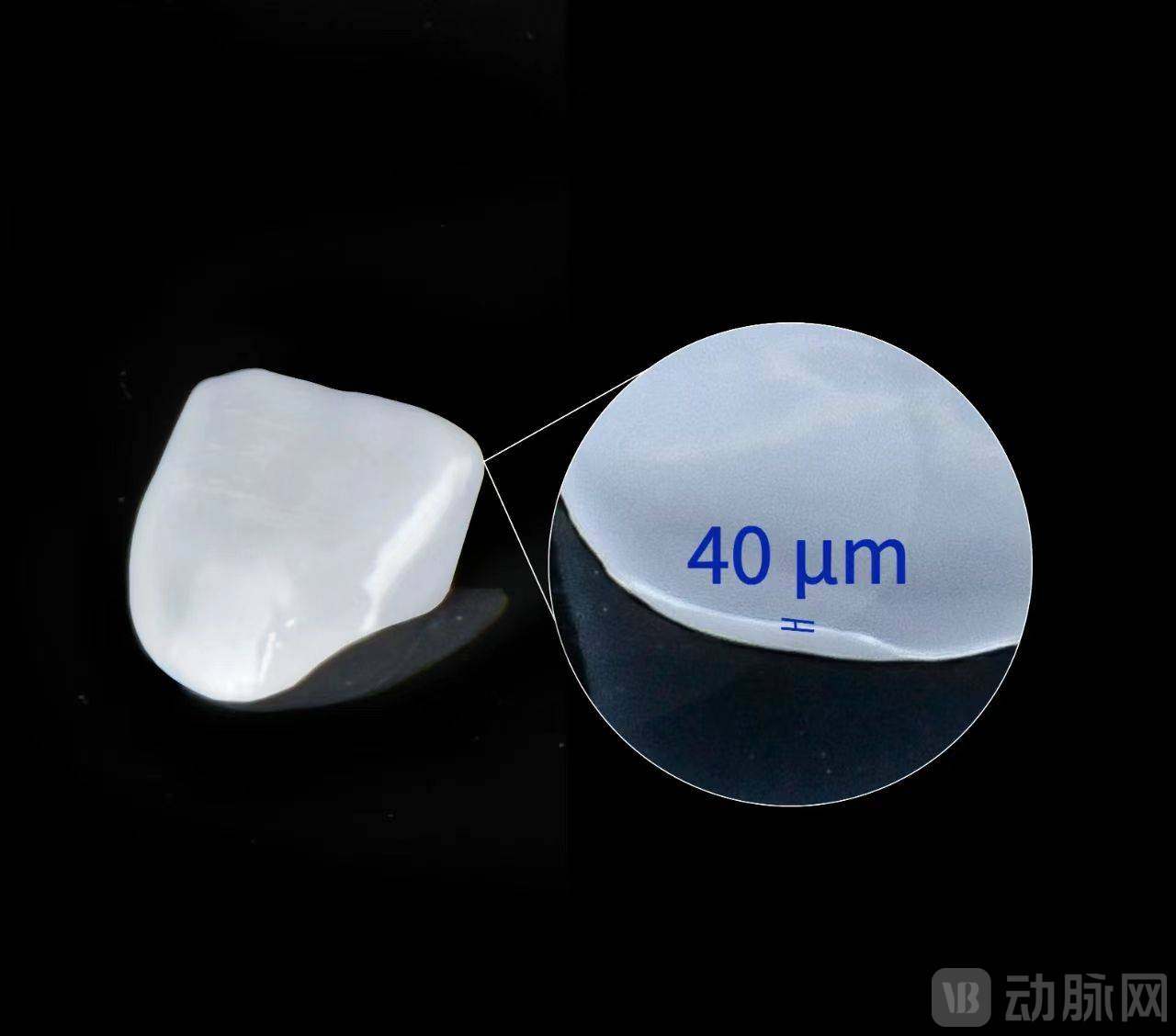
Sample of the Jointly Developed “Ultra-Thin, High-Strength Zirconia Dental Veneer”
“Leveraging ultra-high-precision 3D printing technology, the R&D team hasThe thickness of zirconia dental veneers has decreased from the global machining standard of 300 μm to approximately 40 μm,“Minimize or eliminate tooth grinding to achieve minimally invasive, or even non-invasive, aesthetic reconstruction and rapid reinforcement of the tooth surface,” said Xing Yuxiang.
On September 12, BMF Precision Tech announcedFirst Self-Developed In Vitro Medical Device Terminal Application: “Capillary Organ-on-a-Chip”. This is an in vitro 3D culture chip that can be used directly for external applications, enabling higher cell culture densities and long-term continuous cultivation over several weeks. It is suitable for analytical applications such as disease model analysis, new drug development research, and cosmetics testing.
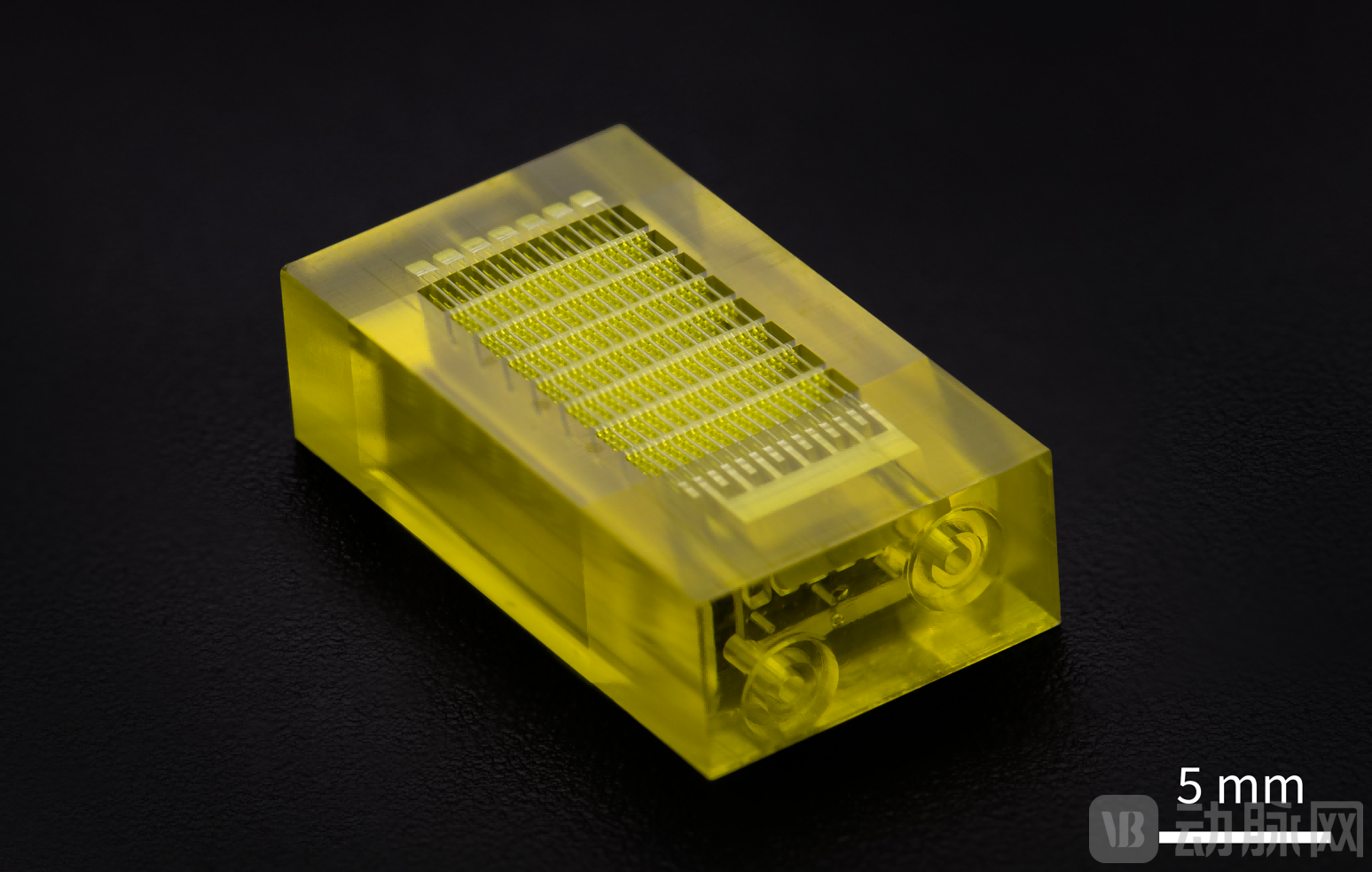
Proprietary “Capillary Organ-on-a-Chip” Sample
“In the biomedical sectors of endoscopes, microneedle patches, hybrid microneedles, glaucoma drainage devices, nebulizers, and mass spectrometers,”“We have all established extensive R&D collaborations and innovation enablement,” Xing Yuxiang mentioned. BMF Precision Tech primarily empowers product innovation and industry development through three technological approaches:
Establish Strategic Partnerships with Industry-Leading Enterprises
“By establishing strategic partnerships with industry-leading enterprises, BMF Precision Tech addresses real-world downstream demands, builds joint R&D platforms through collaborative laboratories, and fosters market-oriented cooperation to accelerate the practical application of ultra-high-precision 3D printing technology.” For instance, the company has signed strategic cooperation agreements with enterprises in sectors such as mass spectrometry and dental veneers, jointly establishing collaborative laboratory platforms to expedite product commercialization and market adoption.
Backed by Government Support, Integrating Industry-Academia-Research Collaboration
“By promoting technology implementation in collaboration with governments, universities, and research institutions, we are also exploring more diverse forms of cooperation, such as establishing a ‘Shared Service Platform.’” In terms of university partnerships, we have established a Joint Laboratory for Precision Additive Manufacturing Technology with Peking University’s Nanchang Institute to expand micro-nano energy applications; additionally, we jointly secured approval for the National Key R&D Program’s “Technology Innovation Application Demonstration Project for Science and Technology-Based SMEs” in partnership with the Chongqing Innovation Center of Beijing Institute of Technology.
The concept of the “Shared Service Platform” has been widely applied by BMF Precision Tech in collaborative initiatives among industry, academia, and research institutions. Previously, BMF Precision Tech partnered with Chongqing Liangjiang New Area to establish the “Mingyue Lake Ultra-High Precision Additive Manufacturing Research Institute,” an innovative public service platform that openly provides high-precision 3D printing technologies and other advanced precision technologies to enterprises and academic institutions both in China and globally, significantly lowering the barrier to adopting new technologies. Meanwhile, this technology-sharing model also benefits BMF Precision Tech, enabling joint R&D efforts with multiple research institutes to tackle next-generation precision printing materials, processes, and related applications.
Private Label Seminar
“Within the year, BMF Precision Tech held a series of seminars, advanced manufacturing workshops, and other exchange activities worldwide, establishing its brand as a platform for technical cooperation, consensus building, and synergy within the industry.”
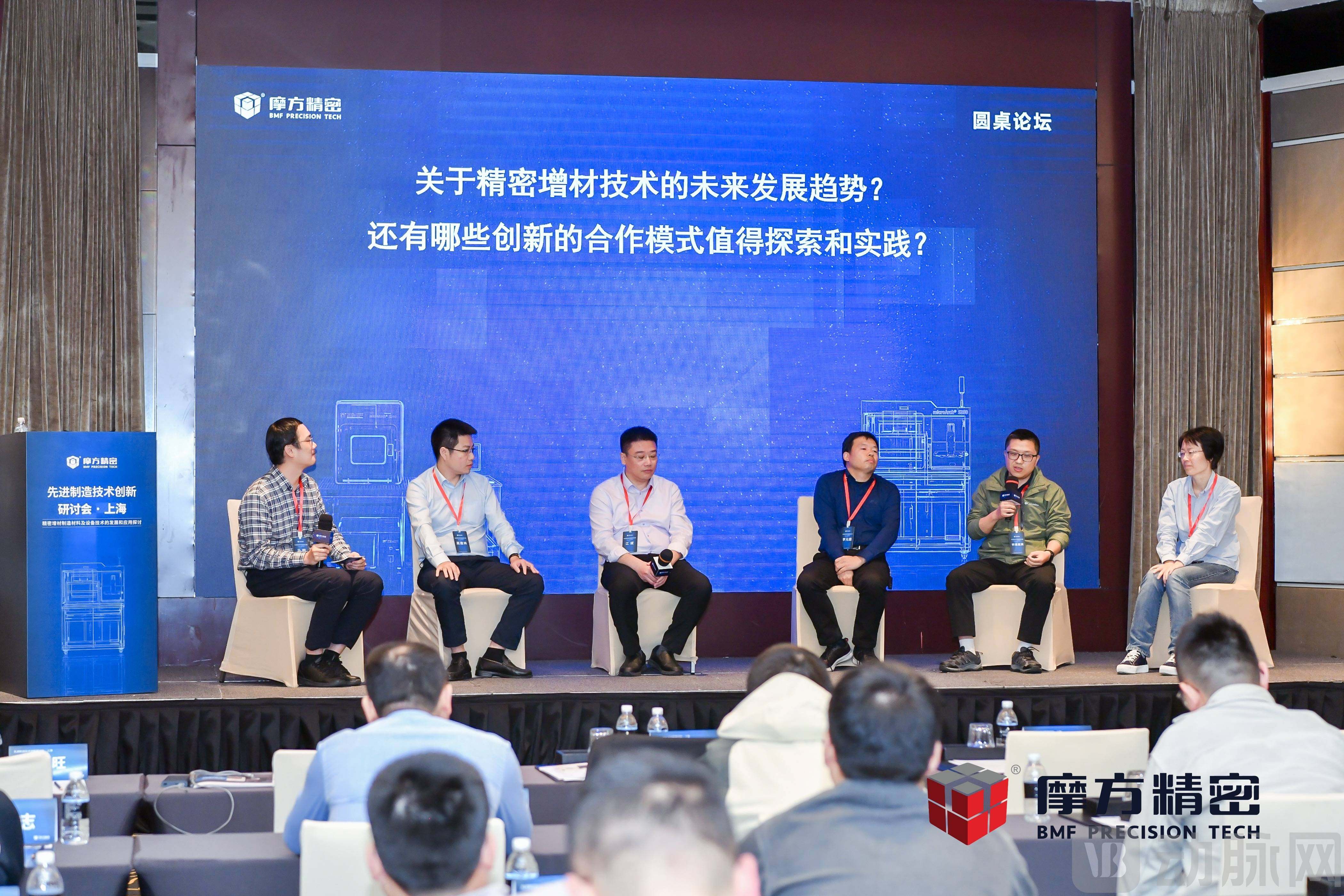
BMF Precision Tech Brand Seminar Roundtable Forum
In his analysis of BMF Precision Tech’s brand building and strategic empowerment, Xing Yuxiang repeatedly emphasized the word “platform.”
Cheng Hua, Executive Director of the Digital Economy Research Center at Renmin University of China, once mentioned in an article analyzing “the integration of the real economy and the digital economy,”“Empowerment is the mode of survival and intrinsic drive for platform-based enterprises.”This logic does not apply to BMF Precision Tech in its early stages—a frontier manufacturing enterprise driven by technological R&D, and a real-economy entity characterized by high technical barriers. However, our analysis reveals that BMF Precision Tech is organically building itself into a platform-based enterprise that empowers industries through technology.
Where does its driving force lie?
Perhaps it is BMF Precision Tech’s vision, as stated on its official website, of “upholding the transformation of 3D printing into true precision rapid prototyping and direct manufacturing.” Xing Yuxiang’s answer is“BMF Precision Tech aims to ultimately transition into a technology-enabling platform company.”。
More likely, as a globally leading cutting-edge technology, the high-precision 3D printing sector where BMF Precision Tech operates remains largely untapped. While the potential market space is vast, there is an urgent need for “pioneers” to cultivate and develop the market.
Be a “pioneer” and also a “cultivator,” ultimately growing into an industry leader—a path that has been validated across countless sectors. Ultimately, the size of the market space depends on how “cultivators” expand the boundaries of their sectors and build an ecosystem where innovation and intense competition coexist.