

WanYingMei (Tianjin) Health Technology Submits IPO Prospectus Following Class II Medical Device Certification for Exhaled Breath Analyzer
WanyingmeiWanyingmei (Tianjin) Health Technology Co., Ltd.'s "Exhaled Breath Analyzer" product was approved in October 2023National Class II Medical Device Registration Certificate(Tianjin Medical Device Registration No. 20232070288), this device is the second domestically developed direct-injection mass spectrometry medical device for exhaled breath analysis, and it will effectively promote the clinical adoption and industrialization of exhaled breath-based auxiliary diagnostic technologies in China.
Human exhaled breath contains hundreds of volatile organic compounds (VOCs). These VOCs originate from human metabolism and can serve as biomarkers for distinguishing between healthy and diseased states. As research on exhaled breath VOCs deepens, the relationship between these compounds and various diseases is becoming increasingly clear and well-defined. Currently, human breath metabolomics databases have identified correlations between exhaled breath VOCs and nearly 60 diseases, including lung cancer, Alzheimer’s disease, and breast cancer. In 2021, Nature magazine listed “exhaled breath diagnostic technology” as one of the “seven technologies that will have a major impact.” In April 2022, the U.S. Food and Drug Administration (FDA) issued an Emergency Use Authorization (EUA) for a diagnostic test for COVID-19 based on exhaled breath analysis. This marks the world’s first officially approved exhaled breath diagnostic technology based on the principles of breath metabolomics, signaling that exhaled breath diagnostics are beginning to mature and enter the commercialization phase.
In December 2021, the Institute of Biomedical Engineering, Chinese Academy of Medical Sciences & Peking Union Medical College,Professor Li Yingxin, Researcher Sun Meixiu, and senior investorMr. Ma WanliCo-founded Wanyingmei (Tianjin) Health Technology Co., Ltd. (hereinafter referred to as “Wanyingmei”).
Wanyingmei has been deeply engaged in the field of exhaled breath analysis and diagnosis, achieving continuous breakthroughs in diagnostic mechanism research, detection technology development, diagnostic equipment R&D, and diagnostic algorithm construction since its establishment. Wanyingmei’s scientific research team originates from the Exhaled Breath Analysis Laboratory of the Institute of Biomedical Engineering at the Chinese Academy of Medical Sciences & Peking Union Medical College. Dr. Sun Meixiu, a researcher who leads the team and serves as Wanyingmei’s CTO, has been tracking and studying internationally leading exhaled breath analysis technologies since 2012. She has accumulated extensive research expertise in mass spectrometry detection of exhaled volatile organic compounds (VOCs) and the development of auxiliary diagnostic models. She innovatively proposed an exhaled breath-based lung cancer screening/diagnostic method utilizing “direct injection mass spectrometry combined with machine learning classification models” and secured multiple key intellectual property rights. In 2023, this exhaled breath lung cancer screening technology was selected for the “High-Value Biomedical Patent Project Database” by the Chinese Society of Biotechnology.
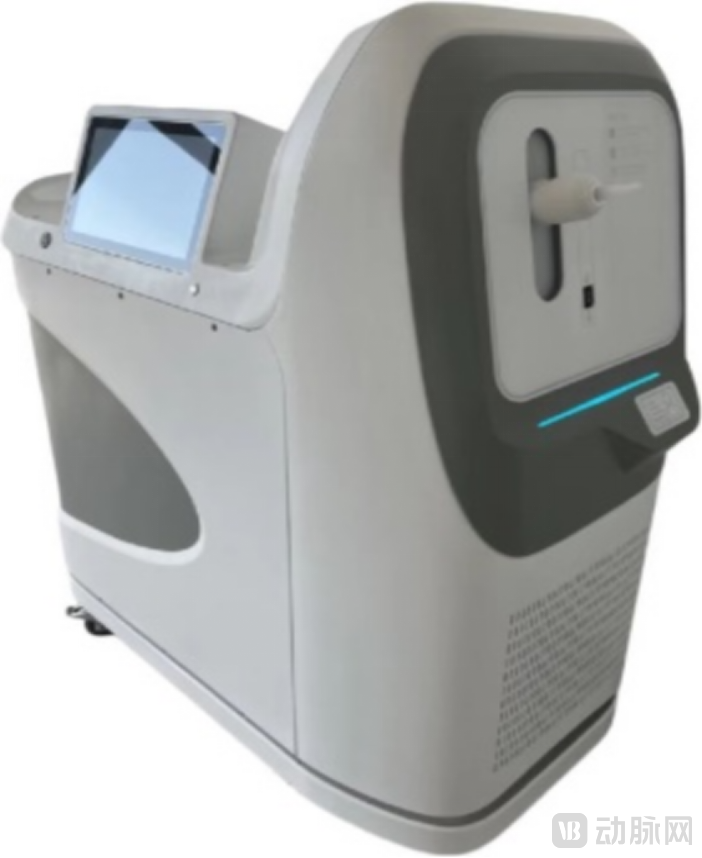
Exhaled Breath Analyzer
Wanyingmei, through independent research and development, developed a competitive exhaled breath analysis device within less than a year of its establishment—Exhaled Breath Analyzer. The device utilizes internationally leading Proton Transfer Reaction Time-of-Flight Mass Spectrometry (PTR-TOFMS) technology, representing a global state-of-the-art level, and obtained the National Class II Medical Device Registration Certificate in 2023. Furthermore, Wanyingmei integrates breath metabolomics data with classification algorithms and computational power to establish auxiliary diagnostic models, which have undergone methodological validation by internationally authoritative institutions. Related auxiliary diagnostic model products have evolved from single-modal machine learning models based solely on breath metabolomics data to dual-modal machine learning models that fuse breath metabolomics data with imaging and textual data, and are currently advancing toward multi-omics, multi-dimensional, multi-modal machine learning models. This progression effectively promotes the clinical adoption and industrialization of Wanyingmei’s exhaled breath detection and auxiliary diagnostic technologies.
Wanyingmei has engaged in scientific research collaborations with numerous universities, research institutions, and Grade A tertiary hospitals in the field of exhaled breath analysis and diagnosis. The research team leverages technologies derived from"Peking Union Medical College Affiliated"Leveraging its advantages, the company has continuously expanded its clinical trials in exhaled breath diagnostics and has jointly conducted multiple clinical studies with Tianjin Medical University Cancer Institute and Hospital, Tianjin Chest Hospital, and General Hospital of Tianjin Medical University on disease screening and diagnosis based on exhaled breath analysis technology. In particular, the “Research Project on VOCs Profiles of Respiratory Gases in Pulmonary Diseases,” carried out in collaboration with Tianjin Chest Hospital, focuses on various pulmonary conditions including lung cancer, chronic obstructive pulmonary disease (COPD), pneumonia, and asthma. The project aims to collect and analyze no fewer than 10,000 exhaled breath samples to establish the world’s largest VOCs profile database for pulmonary diseases, thereby effectively advancing the commercialization of related diagnostic technologies.
In the future, Wanyingmei will continue to strengthen technological innovation and R&D, enhance its technical competitiveness and increase the number of core patents; intensify marketing efforts, and collaborate with national-level authoritative institutions to carry out“Internet + Exhaled Breath Health Assessment Service””, continuously expanding the company’s brand awareness in the field of exhaled breath analysis and assisted diagnosis.
In summary, exhaled breath detection and diagnostic technologies hold broad clinical prospects in the medical field, with the potential to evolve into routine clinical testing and diagnostic methods. These technologies will support future personalized precision medicine, effectively enabling earlier, more accessible, and widespread disease diagnosis, thereby improving the quality of diagnosis and treatment and enhancing patient prognosis.