

Suzhou Zhongke Yiwei Completes Tens of Millions RMB Angel Financing Led by CAS Venture Capital to Advance Exosome-Based Precision Diagnostics
VCBeat (WeChat ID: vcbeat) has learned that Suzhou Zhongke Yiwei Technology Development Co., Ltd. (“Zhongke Yiwei”), a provider of exosome-based precision diagnostic products and services, recently completed an angel financing round worth tens of millions of yuan. This round was exclusively invested by CAS VENTURE CAPITAL, and the funds raised will be primarily used for the research and development and industrialization of precision diagnostic products for diseases such as glioma and Alzheimer’s disease.
Zhongke Yiwei was established in December 2022. The company focuses on precision medicine for cancer and neurodegenerative diseases, having built a domestically leading general-purpose technology platform for the efficient capture and precise detection of exosomes. It is committed to providing systematic products and services for the early and precise diagnosis of major diseases. The company’s core technologies are backed by the National Center for Nanoscience and Technology of the Chinese Academy of Sciences. The founder, Dr. Yang Yanlian, and her team have cultivated extensive expertise in the nanotechnology field of liquid biopsy and its industrialization for many years, with profound research accumulation particularly in the characterization, detection, and clinical diagnostic applications of exosomes.
Early diagnosis and treatment of diseases are crucial to the life and health of the public, carrying immense social value. They not only significantly improve survival rates but also substantially reduce full-cycle treatment costs and alleviate the burden of medical expenditures, making them a key development direction strongly supported by national policies. As an emerging technology for disease detection and diagnosis, liquid biopsy offers advantages such as convenience, non-invasiveness, high patient compliance, and the ability to detect early-stage lesions. It is widely applied in early cancer screening, auxiliary diagnosis, and prognosis monitoring. According to BCC Research data, the global liquid biopsy market reached approximately $24 billion in 2023. Given China’s large population base and aging demographics, industry experts generally believe that the domestic liquid biopsy market size could reach tens of billions of yuan in the future. In 2020, *Nature* magazine selected liquid biopsy technology as one of the major research topics for the next two decades, recognizing it as an innovation in cancer diagnosis and treatment. There are three common types of analytes in liquid biopsy: circulating tumor DNA (ctDNA), circulating tumor cells (CTCs), and extracellular vesicles (EVs). Among these, exosomes possess various unique advantages and have become a new research hotspot in the field of liquid biopsy in recent years, boasting broad prospects for future development.
Disease-Associated Exosomes Are Important Liquid Biopsy Biomarkers
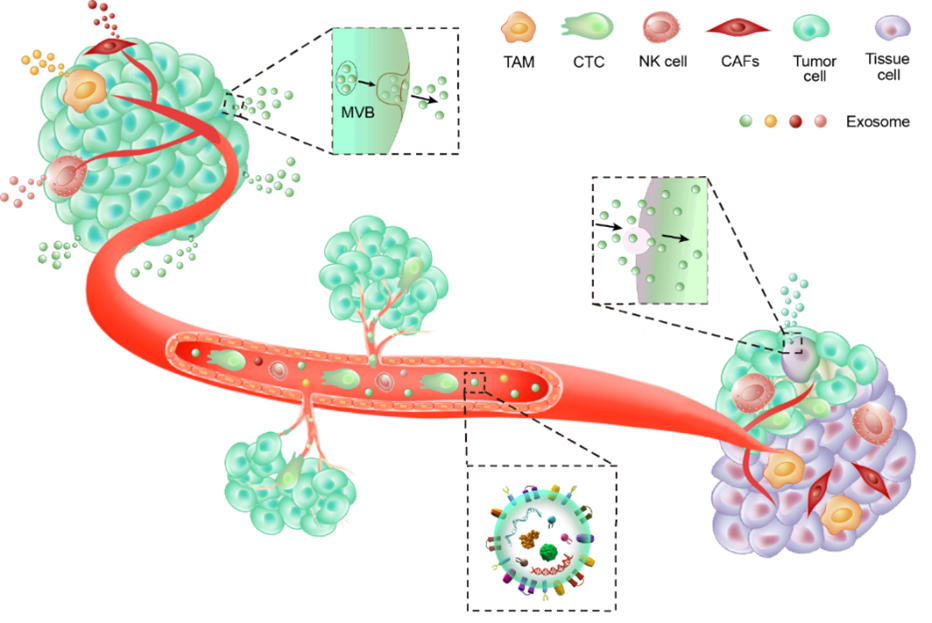
Source: Li WZ et al. Adv. Mater. 2018, 1805344
According to a study on dementia prevalence published by Xuanwu Hospital in *The Lancet Public Health* in 2020, which represents one of the largest such studies worldwide to date, China currently has over 15.07 million dementia patients, including 9.83 million with Alzheimer’s disease (AD). Additionally, 38.77 million people in China suffer from mild cognitive impairment. As the country with the largest AD patient population and the fastest growth rate globally, China faces a substantial burden on families and society. AD is considered a major challenging disease that humanity must overcome in the next 10 to 20 years. However, public awareness and attention toward AD remain low in China, and there is a lack of objective, effective, and convenient diagnostic methods in clinical practice, resulting in generally low diagnosis rates (particularly for early-stage diagnosis) and low treatment rates. According to a report by LeadLeo Research Institute, the market size for AD diagnostics in China is projected to reach RMB 26 billion by 2025.
Number of Patients with Various Types of Dementia Aged 60 and Above in China (Unit: Million Cases)
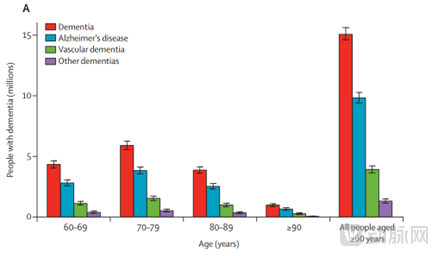
Source: Jia LF et al., Lancet Public Health 2020, 5, e661-671
Due to the presence of the blood-brain barrier, blood-based testing for brain tumors and Alzheimer’s disease (AD) poses significant challenges. Exosomes, however, can cross the blood-brain barrier, offering unique advantages in the precise diagnosis of brain tumors and AD. Against the backdrop of a massive market demand valued at tens of billions, exosome-based diagnostic technologies hold great promise and are poised to address substantial unmet clinical needs.
Dr. Yang Yanlian, CEO of Zhongke Yiwei, stated, “Zhongke Yiwei is an innovative enterprise integrating the research and development, production, sales, and service of exosome diagnostic products. The company has assembled a team of professionals with expertise in interdisciplinary fields such as nanoscience, chemistry, biology, and medicine, as well as extensive experience in the in vitro diagnostics (IVD) industry. The team has mastered proprietary technologies and processes, including peptide probe design and microsphere surface functionalization, enabling efficient capture, isolation, and detection of exosomes from various sample sources. This has facilitated the establishment of an exosome diagnostic technology platform characterized by high efficiency, high throughput, high sensitivity, and high specificity. Following the angel financing round, the company will intensify its R&D and translation efforts in the precise diagnosis of brain tumors and Alzheimer’s disease (AD), striving to become a leading enterprise in the exosome diagnostics industry, a frontrunner in liquid biopsy, and a guardian of life and health.”
The Life Sciences Investment Team at CAS VENTURE CAPITAL stated, “There is a significant unmet clinical need in the early diagnosis and prognostic monitoring of tumors and neurodegenerative diseases, indicating substantial market potential. Exosomes represent an emerging liquid biopsy technology characterized by high abundance in blood, stable cargo, rich detectable information, and the ability to cross the blood-brain barrier. Leveraging functionalized microbead technology, Suzhou Zhongke Yiwei Technology Development Co., Ltd. has achieved efficient exosome isolation and detection, addressing common challenges in the exosome diagnostics industry. Its platform is compatible with various mature detection systems, including flow cytometry, laying the foundation for the development of diagnostic products for various indications. The company’s product pipeline (e.g., for glioma and Alzheimer’s disease) holds high clinical value. Following the completion of its angel financing round, the company will further accelerate product R&D and clinical translation. We are optimistic about the development prospects of exosome-based liquid biopsy technology.”