

China's First AI-Powered Hospital Unveiled: A Paradigm Shift in Medical AI

JIANPEI
Medical Imaging Big Data Analysis Technology Developer
After a decade of intensive development, healthcare has become the largest application scenario for artificial intelligence. Whether in radiology, informatics, or life sciences, AI is being embedded across various use cases to reduce costs and improve efficiency in clinical practice, research, pharmaceuticals, and management, even enabling paradigm-shifting innovations that disrupt traditional workflows.
However, due to the absence of a sufficiently large AI vendor capable of orchestrating AI applications across the entire hospital, numerous AI implementations in real-world hospital settings tend to be fragmented and discontinuous. As a result, they cannot be “seamlessly” integrated into clinical workflows, nor can they fully maximize their “digital-intelligence value.”
On November 7, China’s first AI-powered hospital, “Wuzhen Smart Hospital,” was established at No. 1 Zhaoming Road, Wuzhen Town (the former site of the Wuzhen Town People’s Government), seemingly offering a solution to the aforementioned challenges. Reportedly, the Wuzhen Smart Hospital comprises a smart rehabilitation hospital and several intelligent consultation rooms, making it the first comprehensive healthcare service complex in China to fully adopt next-generation artificial intelligence technologies.
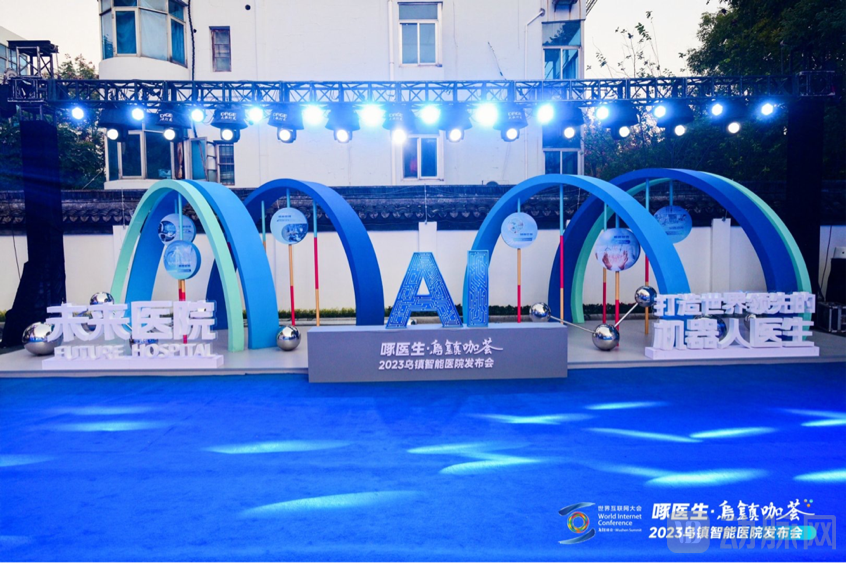
Merely introducing the concept of “intelligence” is clearly insufficient. What exactly is the positioning of Wuzhen Smart Hospital? Where does its “intelligence” lie, and what are its advantages? Centering on these questions, VCBeat conducted an in-depth interview with Cheng Guohua, Chairman of JIANPEI, the constructor of Wuzhen Smart Hospital, aiming to clarify the value that Wuzhen Smart Hospital brings to the entire healthcare system.
Before the first AI-powered hospital settled in Wuzhen, the town had already become home to China’s first internet hospital—the Wuzhen Internet Hospital—and China’s first online traditional Chinese medicine clinic—the Wuzhen Internet TCM Clinic. While the names of these two types of hospitals may appear similar, their functions are, in fact, entirely different.
“At its inception, the internet hospital emerged in an environment where channels for doctor-patient communication were scarce, aiming to address the difficulty of accessing medical care. Therefore, the primary function of internet hospitals is ‘connection,’ linking patients with hospitals to mitigate information asymmetry, while not directly providing medical services themselves,” stated Cheng Guohua.
“In contrast, AI hospitals are built upon internet hospitals, extending their functions into the treatment phase and integrating digital-intelligence technologies. They facilitate a transition from indirect to direct medical care.”
Currently, the diagnostic and therapeutic tools deployed at Wuzhen Smart Hospital comprise four major modules: “AI + Medical Imaging,” “AI + Disease Diagnosis and Prediction,” “AI + Chronic Disease Management,” and “AI + Personalized Rehabilitation.” These tools can effectively enhance the level of imaging diagnosis in primary care, improve the efficiency of diagnosis and treatment in primary healthcare settings, increase the convenience and target achievement rates of chronic disease management, and elevate the overall quality of medical services.
Hospital management and scientific research are the distinctive features of Wuzhen Smart Hospital. By deeply integrating artificial intelligence into the hospital management system, all clinical, administrative, and health-related data generated during operations are archived in standardized formats. This enables physicians within the hospital to conduct data mining more conveniently, thereby accelerating research output; meanwhile, hospital administrators can access real-time insights into operational status and make timely decisions.
Years of commercialization experience in medical AI have demonstrated that tertiary hospitals, which aggregate the highest-quality medical resources across China, are not the most optimal buyers of AI services. Therefore, Wuzhen AI Hospital has not focused its core business on the intra-consultation phase, but rather on the pre-consultation and post-consultation phases, which are the weakest links in non-first-tier cities.
Cheng Guohua told VCBeat, “China has a comprehensive ‘Hospital Classification Management Standard,’ and theoretically, there is no shortage of physicians providing diagnostic and treatment services. However, due to the lack of an effective guidance mechanism, many patients who should be managed at the primary care level have flocked to tertiary hospitals, leading to a misallocation of medical resources and creating the perception that hospital resources are perpetually insufficient. Therefore, the primary mission of Wuzhen Smart Hospital is to empower the pre-consultation phase and effectively implement patient triage within the tiered diagnosis and treatment system.”
Unlike conventional intelligent triage systems based on keyword association, JIANPEI has developed “Zhuo Yisheng,” a pre-consultation assistant powered by large language models. Accessible via multiple channels such as WeChat Mini Programs and offline terminals, this application provides triage services comparable to those of real physicians and offers personalized recommendations based on patients’ chief complaints, serving as a dedicated health companion for patients.
Revisiting the Post-Consultation Phase. The ancient adage “three parts treatment, seven parts recuperation” has long underscored the importance of post-consultation care. However, within China’s healthcare system, constrained by factors such as high workloads and payment policies, medical institutions predominantly prioritize diagnosis and treatment over rehabilitation and wellness, leading to a certain degree of deficiency in rehabilitative and wellness services.
This is precisely where the opportunity for Wuzhen Smart Hospital lies. Powered by large language models, Wuzhen Smart Hospital can create a unique “digital twin” for each patient to monitor and analyze physiological changes over time.
On one hand, this technology can intuitively display the morphology of patients' organs and changes in lesions, enabling patients to monitor their physical condition, understand their disease status, and even collaboratively plan subsequent treatment and rehabilitation strategies. On the other hand, large-model-based digital twins can predict future disease progression based on data collected over a specific period, thereby facilitating early intervention.
Currently, Wuzhen Smart Hospital has established collaborations with multiple medical institutions to assist in the post-consultation management of patients. Through this model, the hospital not only alleviates the burden of post-consultation management for its partner hospitals but also fulfills patients’ needs for rehabilitation services, thereby serving as an effective complement to public hospitals.
Supported by the Wuzhen AI Hospital model, JIANPEI is expanding the concept of AI hospitals outward, helping regions with needs strengthen their primary healthcare capabilities through self-built or co-built models.
At the press conference held on the afternoon of November 7, medical institutions or health commissions from Dezhou, Jining, Siyang, and Heze have already completed signing agreements, with more AI-powered hospitals expected to officially commence operations next year.
According to Cheng Guohua, AI hospitals in different regions formulate construction plans tailored to local conditions. In Shandong, where the township population is concentrated, hospital construction will appropriately expand in scale; in Gansu, which features a long and narrow terrain, adjustments will be made to functional layouts, with the focus placed on the synergy between telemedicine and artificial intelligence technologies.
Overall, the establishment of AI-powered hospitals offers a new paradigm for development in this field. As technology and clinical practice become more deeply integrated, we may witness the emergence of more intelligent clinical applications and see more patients benefit from the construction of a Smart China.