

Breakthrough in Natural Orifice Surgery Robotics: Shisu Medical's Flexible Dual-Arm Endoscopic Robot Successfully Completes First Live Animal Trial

Visual Tentacle Medtech
Surgical Robot R&D Manufacturer
Recently, Suzhou Shitong Medical Technology Co., Ltd. (hereinafter referred to as“Shitong Medical”) Gastroenterology Expert at a Well-Known Grade-A Tertiary Hospital in ShanghaiofUnder the guidance, successfully completed endoscopic submucosal dissection (ESD)Animal experiments on Endoscopic Submucosal Dissection (ESD). VariousTesting of IndicatorsThe results all met the expected targets, fully validating ShitongMedicalPrecision, Safety, and Efficacy of Flexible Digestive Surgical Robotic Systems.
Natural Orifice Flexible Digestive Surgical Robot, an advanced technology leading the future trend of surgicalization in gastroenterology. Shitong Medical’s successful completion of animal experiments demonstrates a major breakthrough in the field of natural orifice flexible digestive surgical robots.
Shitong Medical has accumulated profound technical expertise in the field of natural orifice surgical robots. Following significant breakthroughs in flexible gynecological surgical robots for natural orifices, the company continues to focus intensively on this domain and has recently launched a flexible dual-arm digestive surgical robot, fully demonstrating Shitong Medical’s strength and determination in the natural orifice surgical robotics sector.
Endoscopic Submucosal Dissection (ESD) is an innovative therapeutic approach for early-stage gastrointestinal tumors, renowned for its high en bloc resection rate and excellent safety profile. Compared with traditional open surgery or extensive resection, this minimally invasive procedure facilitates faster patient recovery and reduces postoperative scarring. Consequently, ESD has become the preferred treatment modality for early gastric cancer, esophageal cancer, colonic polyps, and other submucosal lesions.
However, traditional endoscopic submucosal dissection (ESD) still faces several challenges. Due to the high technical difficulty of the procedure, physicians must undergo a prolonged learning curve. Structural limitations of digestive endoscopes and available instruments prevent effective tissue traction during resection, which not only reduces cutting efficiency but also increases procedural complexity. Furthermore, ESD heavily relies on the operator’s individual skills, thereby hindering its widespread adoption and dissemination. In particular, less experienced physicians need to devote considerable time and effort to maintaining a clear visual field of the mucosal layer during ESD. This not only compromises procedural efficiency and prolongs operative time but may also elevate the risk of postoperative complications such as perforation and bleeding.
With the growing demand for minimally invasive surgery, the research, development, and application of digestive robots have garnered significant attention. Numerous overseas companies, such as Medrobotics with its Flex™ Robotic System, EndoQuest Robotics with its ELS system, and Endomaster with its Ease System, are actively developing and promoting the application of robotic technology in gastroenterology, injecting new vitality into the advancement of surgical practices in this field. Through independent research and development, Vitong Medical has successfully launched a flexible digestive surgical robot. Its innovative design increases the degrees of freedom for instrument movement, empowers physicians with bimanual control capabilities, and successfully achieves the transformation of endoscopic procedures into surgical-grade interventions. This advancement enhances the precision of digestive surgeries, shortens the learning curve for physicians, and reduces the barriers to the widespread adoption and popularization of robotic surgical techniques.
The Shitong Digestive Robot consists of two parts: a physician platform and a patient platform, enabling master-slave control. This product features independently developedMulti-lumen Device ChannelAs the platform, it allows independent operation of imaging and robotic arms during surgery while providing an additional working channel. Due to its ingenious design and compact size, the Shitong surgical robot is not constrained by operating room space and offers high mobility.
The patient platform features360° rotation, telescopic extension/retraction, and pitch controlsuch functions, thereby reducing the difficulty for physicians in navigating instruments through the digestive tract into the human body. The system is equipped with a variety of end-effector surgical tools, including wristed electrocautery knives, duck-bill forceps, and needle holders. The robotic arms combine the advantages of flexible navigability and rigid suturing capability, meeting the demands of current digestive surgeries. Furthermore, these instruments can switch between monopolar and bipolar modes, reducing the frequency of intraoperative instrument exchanges.
Physicians can access the physician control platform.Independent ControlImaging system, robotic arm, and water-air channel enable comprehensive and precise operations. The main control arm adopts a seven-degree-of-freedom redundant structure, with a reachable workspace of approximately 400mm*300mm*300mm, and features force feedback functionality, providing physicians with a more flexible, wider-range, and finer manipulation experience. The system’s operational interface is intelligent, with intuitive operational feedback, allowing physicians to easily perform tasks that are difficult to achieve in traditional endoscopic surgery, such as lifting, traction, elevation, incision closure, andFull-thickness suturingetc.
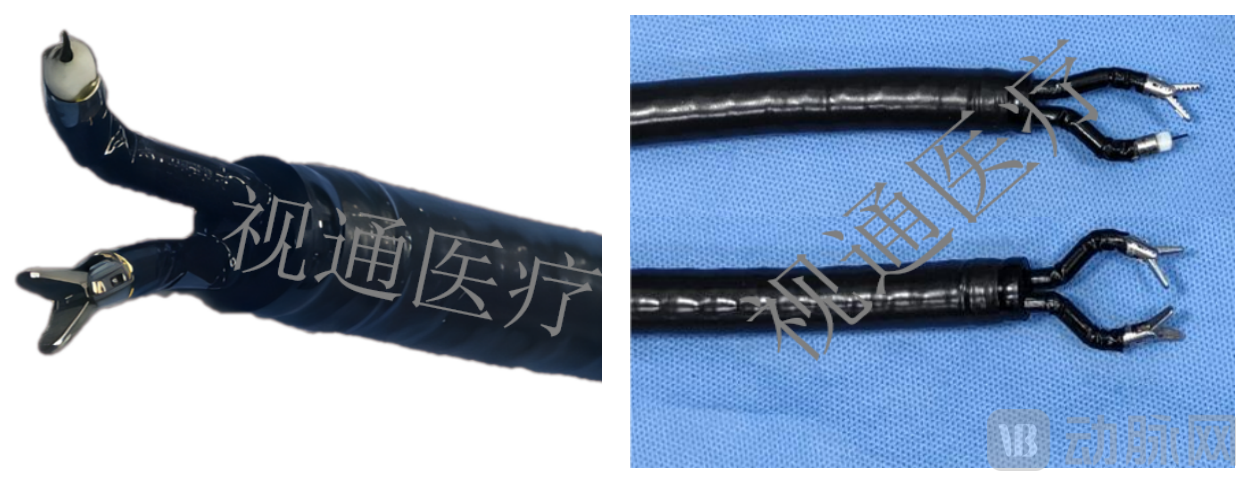 Seven-Degree-of-Freedom Flexible Robotic Arm: Enabling Endoscopic Visualization in Endoscopic Surgery
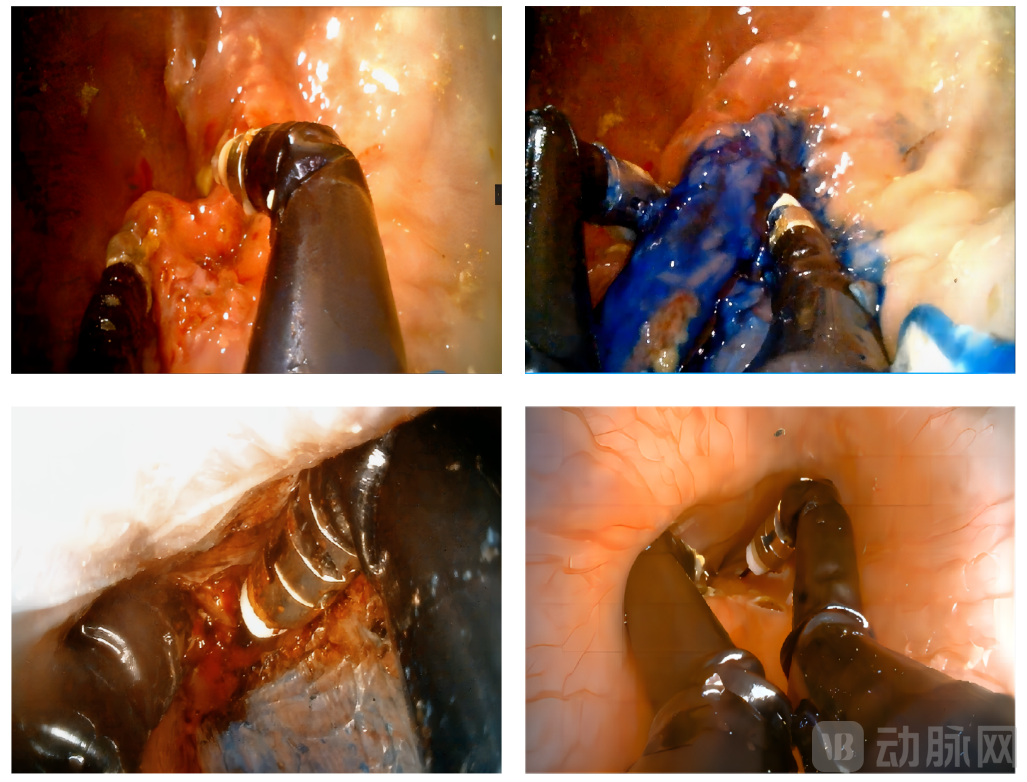
This animal study selected adult live white pigs as the research subjects and successfully performed multiple robot-assisted endoscopic submucosal dissections (ESD) of the stomach and esophagus.During the process of locating the lesionShitong Medical’s multi-lumen instrument channel features a unique design with excellent flexibility and extensibility, allowing physicians to advance the instrument channel to the lesion site with endoscope-like maneuverability. This multi-lumen channel comprises two robotic arm channels, one imaging channel, and one instrument working channel, all of which can be independently controlled via the physician’s control console. This innovative design makes surgical operations more akin to traditional laparoscopic procedures, while the intelligent access approach provides surgeons with a broader range of tools and resources. Once the instrument channel reaches the lesion site, it is rapidly connected to the patient platform, enabling intracorporeal manipulation through the physician’s control console, thereby providing a stable surgical view that simulates the visual experience of laparoscopic surgery.
Upon reaching the lesion site,The patient platform is equipped with a seven-degree-of-freedom wristed electrosurgical knife and atraumatic duck-bill tissue forceps, supplemented by an independently controlled imaging system. By simply manipulating the master control arms with both hands for lifting and electrosurgical positioning, physicians can easily and stably mark multiple lesion areas ranging from 2x2 cm² to 4x4 cm² on the stomach and esophagus. This significantly addresses the issue of frequent field-of-view shifts in traditional endoscopic procedures, ensuring surgical precision. The wristed electrosurgical knife, featuring an injection function, can expand the mucosal space by injecting methylene blue dye, thereby providing greater operational room. Physicians coordinate the electrosurgical knife and tissue forceps for mucosal incision and tissue retraction. By applying traction tension, the muscularis mucosae and submucosal space can be separated, clearly revealing the course of submucosal blood vessels. This facilitates vessel coagulation and transection, enabling more efficient resection of lesions. This precise simulation of the surgeon’s bimanual operation reduces the risk of postoperative bleeding, achieves atraumatic dissection of the submucosal muscular layer, and effectively lowers the probability of perforation. Physicians can use the flexible robotic arms to hold and rotate needles with ease.Complete full-thickness suturing, thereby achieving optimal closure. This suturing technique not only serves as a remedial measure for intraoperative perforation complications but also eliminates the need for surgeons to switch to hemostatic clips during the procedure, thus facilitating smoother surgical execution. Compared with other ESD procedures, it provides better therapeutic outcomes for patients and increases the success rate of the surgery. Such high-precision, robot-assisted surgery further promotes the adoption and application of ESD.
About Shitong Medical
Suzhou Shitong Medical Technology Co., Ltd., established in August 2022, subsequently secured tens of millions of RMB in angel financing led by Proxima Ventures. As an enterprise integrating the research and development, production, and sales of natural-orifice flexible robots and high-value consumables, it has filled the gap in China’s high-end flexible robot technology.
Shitong Medical leverages platform-based technologies to develop flexible, miniaturized, and cost-effective surgical robots. The company is committed to becoming a technological pioneer and market leader in the field of natural orifice flexible surgical robots globally. In addition to its gynecological and gastrointestinal surgical robot systems, Shitong Medical will also initiate animal studies for its neurosurgical robotic system.
Shitong Medical’s Neurosurgical Robotic System features high-precision flexible instrument arms with a theoretical manipulation accuracy of 0.05 mm, enabling the treatment of deep-seated brain tumors and hematomas. Characterized by a 10 mm single-port approach via either the transnasal or transcranial route, the system completely replaces conventional craniotomy, minimizing head trauma, alleviating postoperative pain, and accelerating recovery. Furthermore, the system offers preoperative planning compatibility with CT and MRI imaging systems, allowing physicians to formulate surgical plans based on these imaging data. During surgery, binocular sensor registration enables automated platform operation, significantly enhancing surgical precision and facilitating accurate lesion resection. Postoperatively, patients are spared from additional CT/MRI scans, providing more convenient and safer medical care. The system’s applications can be subsequently expanded to other specialties, such as thoracic and spinal surgery, as well as to additional scenarios like biopsies.
Currently, Shitong Medical has established collaborations with multiple top-tier hospitals both domestically and internationally. Its products are widely applied in clinical departments such as gynecology, gastroenterology, neurosurgery, and general surgery, and are gradually expanding to other specialties including urology, otolaryngology, pulmonology, and thoracic surgery, thereby achieving comprehensive coverage across clinical departments. The Shitong Medical team comprises approximately forty members, with core personnel hailing from renowned medical device and diagnostic equipment companies. They possess extensive industrialization experience in the design, research and development, manufacturing, and commercialization of surgical robots. Leveraging its strong technical problem-solving capabilities and sustained innovation, the company has achieved significant advancements in the field of natural orifice flexible surgical robots.
Wang Zhen, the company’s founder, stated that Shitong Medical’s major breakthroughs in multiple products within approximately one year of its establishment were made possible by the team’s technological innovations as well as the trust and support from market-oriented investment institutions such as Proxima Ventures. The company will continue to be guided by clinical needs, drive product research and development, provide more solutions for surgical departments, and promote the industrialization of natural orifice surgical robots in China.
Shitong Medical is on the verge of closing its Pre-A financing round and is preparing for clinical trials following the finalization of its surgical robot system design, as well as subsequent commercial promotion. We believe that more patients will benefit from Shitong Medical’s intelligent and precise surgical robotic treatment solutions in the future.