

NitiNotes Submits IPO Prospectus Following $10.1M Series B Funding for Its 30-Minute Robotic Obesity Solution

NitiNotes
Gastrointestinal Suturing Instrument Developer
Due to changes in dietary patterns, lifestyle habits, and psychological factors, obesity is becoming a major challenge affecting billions of people worldwide.
In March 2023, the World Obesity Federation released the 2023 World Obesity Atlas, projecting that by 2035, more than 4 billion people worldwide will be living with obesity or overweight, accounting for 51% of the global population.
Compared to appearance and body shape, the health issues caused by obesity are more worthy of attention. Obesity significantly increases patients' risk of developing various diseases, including cardiovascular disease, diabetes, and cancer.
In the realm of weight-loss therapies, minimally invasive surgical approaches are gradually emerging as a promising new option, alongside pharmacological treatment, dietary control, lifestyle modifications, and traditional invasive surgeries. NitiNotes is a key player entering this field.
NitiNotes is an innovative Israeli medical device company founded in 2016. Its core product, EndoZip, is a novel robotic endoscopic suturing system. NitiNotes is committed to providing a widely accessible, minimally invasive, and effective treatment option for the more than 700 million patients worldwide with Class I and Class II obesity.
Treatment options for severe obesity include lifestyle interventions, pharmacotherapy, and bariatric surgery. In their article “Robotic endoscopic sleeve gastroplasty,” Vincenzo Bove and colleagues note that non-surgical weight-loss therapies, such as dietary modifications, physical exercise, and medications, often fail to achieve substantial and sustained weight loss. Bariatric surgery is currently the most effective treatment for severe obesity. However, in practice, only about 1% of eligible patients undergo bariatric surgery.
This is closely related to the risks associated with bariatric surgery. Over its more than 70-year history, bariatric surgical procedures have become increasingly diverse, yet a balance between “safety” and “efficacy” appears to remain elusive.
Traditional surgical procedures carry significant risks, are costly, and are irreversible. For instance, gastric bypass surgery alters the intestinal structure and disables most of the stomach’s function. Although such procedures reduce nutrient absorption and achieve substantial weight loss, they are characterized by prolonged operative times, high technical difficulty, significant invasiveness, severe postoperative pain, and extended recovery periods.
Although some transoral procedures are minimally invasive and offer faster recovery times, they require regular follow-up visits and adjustments, and their efficacy is compromised compared to traditional surgical interventions. These procedures can only temporarily alter gastric capacity or function, failing to address the root cause of obesity; consequently, multiple sessions or combination with other therapies may be necessary to achieve optimal outcomes.
To bridge the therapeutic gap between medical and surgical approaches, endoscopic bariatric therapies have been developed to provide minimally invasive, more feasible, and more attractive treatment options for obese patients who have failed non-interventional treatments.
Among these, Endoscopic Sleeve Gastroplasty (ESG), as an emerging minimally invasive weight-loss procedure, has demonstrated significant potential. This bariatric intervention reduces gastric volume by placing sutures within the stomach via an endoscope, reshaping it into a tubular configuration to restrict food intake and facilitate weight loss. However, this procedure demands exceptionally high technical proficiency from physicians; endoscopists must possess advanced operational skills and extensive experience to perform precise intragastric suturing, thereby avoiding complications such as air leakage, hemorrhage, and perforation.
NitiNotes is the game-changer for this dilemma. Its flagship product, EndoZip, simplifies and accelerates the process of endoscopic sleeve gastroplasty (ESG), providing a new solution for patients with Class 1 and Class 2 obesity who are not candidates for traditional bariatric surgery.
Existing surgical solutions for reducing gastric capacity and suppressing obesity mainly include gastric bypass surgery and sleeve gastrectomy (removal of most of the stomach), which are suitable for patients with a body mass index (BMI) of 40 and above, or 35 with other comorbidities. However, for patients with Class I obesity (BMI between 30-35) or Class II obesity (BMI between 35-40), this method is often not recommended or not covered by insurance. Additionally, such surgeries carry higher risks and are irreversible, often resulting in only temporary weight improvement.
In a telephone interview with The Times of Israel, NitiNotes CEO Raz Bar-On stated that the company is providing a minimally invasive, fully automated gastrointestinal suturing system solution for these two patient groups.
NitiNotes' EndoZip is a minimally invasive endoscopic surgical system. It enables gastric suturing via the oral route without open surgery, thereby reducing patient trauma, infection risk, and complications, while shortening recovery time.
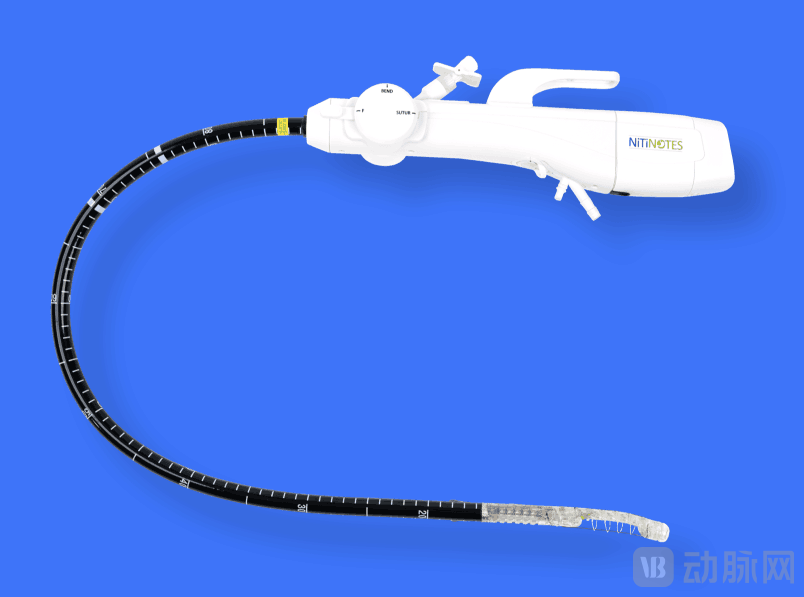
EndoZip System. Image source: NitiNotes official website
EndoZip works by delivering a small suturing device into the stomach via the mouth and esophagus, then employing robotic technology to create multiple longitudinal suture lines along the gastric wall, thereby dividing the stomach into 4 to 8 smaller compartments. This reduces gastric capacity and enhances satiety, leading to weight loss in patients.
The Endozip suturing device features eight built-in suture needles. When not in use, the needle tips are retracted and enclosed within the device to prevent accidental injury to the patient. Additionally, it is equipped with a 5-mm endoscope, allowing physicians to clearly visualize the surgical site.
First, under endoscopic guidance, the physician advances the EndoZip suturing device through the patient’s mouth and esophagus into the stomach. The physician selects an appropriate suturing site on the gastric wall, aligns the device’s needle with the anterior and posterior layers of the stomach wall, and then presses the button to drive the needle through the gastric tissue, forming a looped stitch. The device is then moved a specified distance along the gastric wall, and the button is pressed again to create a second looped stitch, which is linked to the first to form a suture line. This process is repeated sequentially along the gastric wall until a complete longitudinal suture line is established.
Next, the stapler is moved to another position to begin creating the second longitudinal suture line. After sequentially completing 4 to 8 longitudinal suture lines, the stomach is divided into multiple small segments. The stapler is then removed from the stomach, concluding the procedure. The surgery lasts approximately 30 minutes, and patients can be discharged after a brief period of postoperative observation.
Understanding the workflow of Endozip makes it easy to identify its core advantage: “automation.”
EndoZip is an operator-independent, automated minimally invasive robotic suturing system. Compared with other endoscopic sleeve gastroplasty (ESG) systems, its greatest advantage lies in not relying on physician experience, making it easier to learn and operate. “EndoZip has a short learning curve; physicians can master the technique after performing just three procedures, whereas other systems require 20 cases to achieve the same level of proficiency,” said Dr. Steven Shamah.
EndoZip is simple to operate, requiring only a single operator without the need for additional assistants or equipment. Empowered by robotics, physicians of any skill level can master its use in a short period. Furthermore, its procedural workflow and outcomes are reproducible.
As the EndoZip suturing system is fully automated, the operator only needs to select the suture locations and quantity to complete the procedure. Furthermore, EndoZip offers superior control over operational precision, ensuring consistent suture size and depth with each stitch, thereby eliminating human error and inconsistency. This reduces the skill requirements for surgeons while enhancing the reproducibility and standardization of the surgical procedure. Moreover, each suture can be completed in just a few seconds, significantly reducing both operative time and patient anesthesia duration.
Notably, EndoZip is highly reversible. It requires no abdominal incisions, nor does it involve the resection or implantation of any materials; instead, it simply places several sutures on the gastric wall. These sutures can be removed if necessary to restore the stomach’s original anatomy or to convert to other types of bariatric surgery.
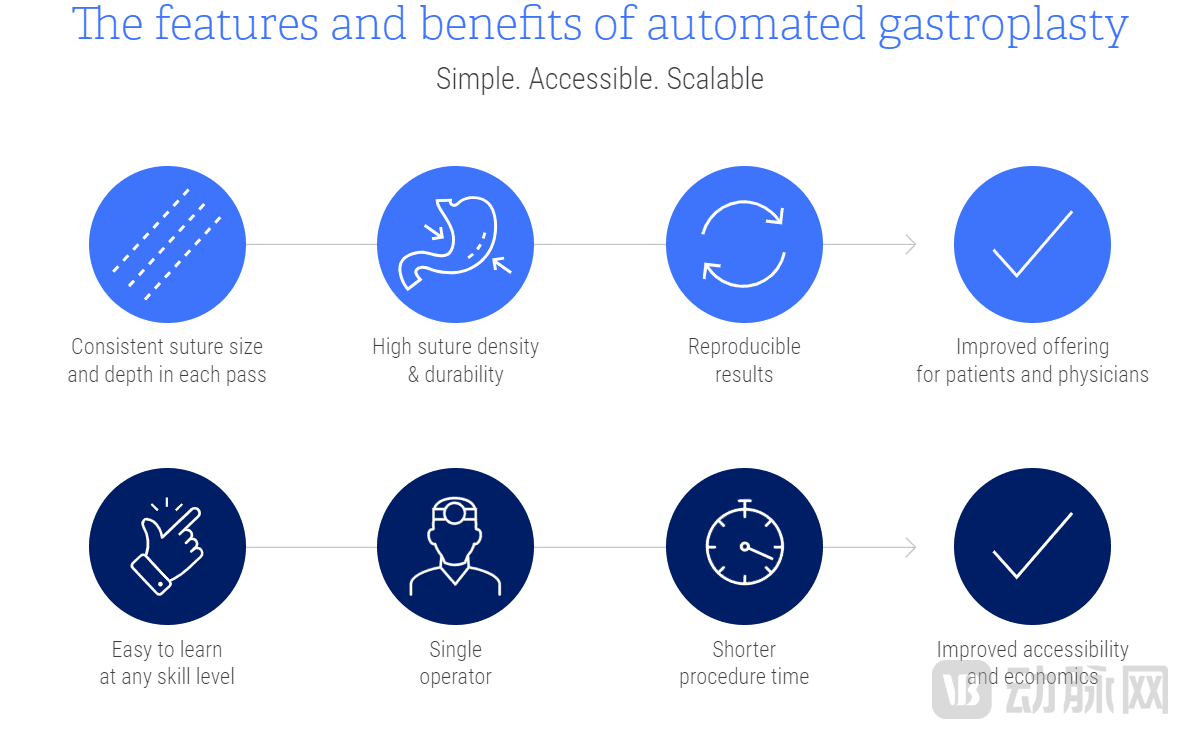
Features and Advantages of the EndoZip System Image Source: NitiNotes Official Website
NitiNotes’ fully automated minimally invasive endoscopic gastric suturing system is backed by outstanding key opinion leaders (KOLs). Its Scientific Advisory Board comprises nine MDs, including Gontrand López-Nava, Director of Bariatric Endoscopy at University Hospital Sanchinarro in Madrid, and Christine Stier, a member of the German Working Group on Metabolic Endoscopy and Chair of the Bariatric Endoscopy Committee of the International Federation for the Surgery of Obesity and Metabolic Disorders (IFSO). These world-renowned endoscopy experts provide professional advice and guidance to the company on the R&D, clinical trials, and market promotion of EndoZip, facilitating the optimization of product design and performance to meet diverse clinical needs.
The first-in-human study of Endozip was conducted to evaluate the safety and feasibility of the system in treating obesity. This single-center pilot feasibility study enrolled 11 patients with a body mass index (BMI) between 30 and 40 kg/m², with or without obesity-related comorbidities. The results demonstrated that surgical procedures were technically successful in all patients (100%). The first-in-human study indicated that the Endozip device is safe for the treatment of obesity, with promising early weight loss outcomes. Currently, the company is planning a feasibility study with a larger sample size.
In July 2021, NitiNotes initiated a multicenter pilot study (Madrid, Rome, and Israel) involving 45 patients. After a 12-month follow-up period, the results demonstrated that the EndoZip suturing system offers high safety, a short learning curve, and excellent usability, with patients achieving an average total body weight loss (TBWL) of up to 13.5%.
In February 2023, NitiNotes launched a new multicenter study (Prague, Rome). The primary objective of this study is to evaluate the weight-loss efficacy of EndoZip in obese patients with type 2 diabetes (T2D) and/or hypertension, monitoring their weight loss outcomes and potential improvements in obesity-related health metrics following the EndoZip procedure and lifestyle modifications. To date, 23 patients have successfully undergone the EndoZip procedure.
On September 28, 2023, NitiNotes announced the completion of an $10.1 million Series B financing round. The newly secured funds will be used to complete EU clinical studies in order to obtain CE marking certification, preparing for entry into the European Union market. In addition, this funding will accelerate the development of the next-generation Endozip product, enhancing the speed and precision of endoscopic suturing and thereby improving its technical performance and market competitiveness.
References:
1. DXY “Surgical Treatment of Adult Obesity (Review)”
2. Bove V, Matteo M V, Pontecorvi V, et al. Robotic endoscopic sleeve gastroplasty[J]. Gut, 2023, 72(1): 27-29.