

Cornell Spinout Lexeo Therapeutics Files for $100M IPO to Advance Gene Therapies for Rare Diseases

LEXEO Therapeutics
Clinical-Stage Gene Therapy Developer
Recently, Lexeo Therapeutics (“LEXEO”), a biotechnology company focused on gene therapy research, filed a registration statement with the U.S. Securities and Exchange Commission (SEC) to apply for an initial public offering (IPO) on the Nasdaq Stock Market. Upon listing, its stock ticker symbol will be LXEO. LEXEO plans to raise $100 million through this Nasdaq IPO to support the company’s future development and research programs.
Previously, on August 28, 2023 (New York time), LEXEO announced the completion of a strategic investment from Sarepta Therapeutics to support LEXEO’s adeno-associated virus (AAV) gene therapy programs. This strategic collaboration aims to jointly advance LEXEO’s AAV gene therapy programs and explore the development of novel gene therapy candidates for the treatment of a range of cardiovascular diseases.
In recent years, the global trend of population aging has become increasingly pronounced, sparking a surge in research on age-related diseases worldwide. Alzheimer’s disease (AD) is one such age-related condition, predominantly affecting the elderly. According to data from the Chinese Center for Disease Control and Prevention, the incidence rate among individuals aged 65 and older in European and American countries is 5%, while it exceeds 30% in those aged 85 and above. Currently, there are approximately 50 million AD patients globally, with an estimated 10 million in China. The number of AD patients worldwide is projected to reach 130 million by 2050. Due to the vast number of affected individuals, AD has become a focal point of global public health and social concern.
Cardiovascular diseases are characterized by high mortality and disability rates, predominantly affecting individuals aged 50 and older, thereby posing a severe threat to human health. According to the American Heart Association (AHA), more than 850,000 people die from cardiovascular diseases each year, making it one of the leading causes of death and disability worldwide. Therefore, the development of novel therapeutic approaches for cardiovascular diseases is of paramount importance.
In addition to traditional pharmacotherapy, surgical intervention, and cognitive training, LEXEO’s gene therapy, as an emerging therapeutic approach, has demonstrated significant application potential in the treatment of Alzheimer’s disease and cardiovascular diseases. Notably, adeno-associated virus (AAV) has become the preferred delivery vector for gene therapy over the past two decades.
LEXEO Therapeutics, founded in 2018 and headquartered in New York State, USA, is a gene therapy company focused on cardiovascular diseases and Alzheimer’s disease. The company is dedicated to leveraging advanced gene editing and delivery technologies to improve patients’ quality of life and provide them with more effective treatment options.
LEXEO positions itself as one of the few gene therapy companies targeting non-rare diseases, with one of its ultimate goals being the development of a gene therapy for Alzheimer’s disease—LX1001.
LX1001 is a candidate gene therapy designed to deliver the APOE2 gene for the treatment of Alzheimer’s disease in patients homozygous for the APOE4 allele. Alzheimer’s disease is the leading cause of cognitive decline in adulthood and is characterized by complex underlying pathological changes in the central nervous system (CNS). LEXEO Therapeutics is committed to bringing hope and transformation to this field through innovative scientific approaches and therapeutic strategies.
APOE4 is an allele of the APOE gene. Monozygotic twins have approximately a 15-fold higher risk of developing Alzheimer’s disease compared to the general population. It is estimated that there are 900,000 individuals with Alzheimer’s disease who are monozygotic twins carrying APOE4 in the United States alone. In contrast, individuals with two copies of the APOE2 allele have a 40% lower risk of developing Alzheimer’s disease than the general population, which, together with other evidence, suggests that APOE2 may have neuroprotective effects.
LX1001 is designed to express the protective APOE2 gene in the central nervous system of APOE4 homozygous patients, with the aim of halting or slowing the progression of Alzheimer’s disease.
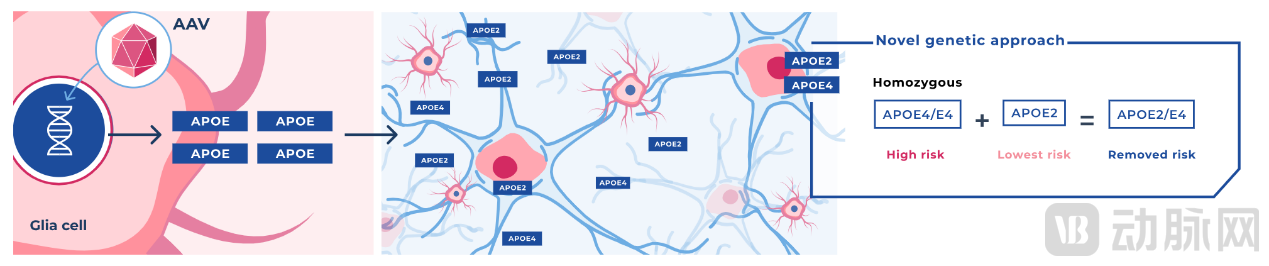
Mechanism of Action of LX1001 (Image source: LEXEO official website)
The project conducted a Phase 1/2 clinical trial, encompassing approximately 15 Alzheimer’s disease patients aged 50 years or older, all of whom carried two copies of the APOE4 allele. In Cohort 1, which consisted of patients (n=4) receiving low-dose LX1001 treatment:
APOE2 protein expression in cerebrospinal fluid was observed in all patients with a follow-up duration exceeding 3 months.
In the two patients with follow-up periods exceeding 12 months, cerebrospinal fluid levels of tau protein and phosphorylated tau protein decreased compared to baseline. The results indicate that LX1001 was generally well tolerated, with no serious adverse events reported to date.
Nolan Townsend, CEO of LEXEO Therapeutics, stated, “LX1001 is the lead program in our Alzheimer’s disease gene therapy portfolio and stands at the forefront of current Alzheimer’s research. These data support our unique approach of targeting the genetics of Alzheimer’s disease with multiple candidate gene therapies. We will continue to advance this clinical-stage program as well as other preclinical-stage programs.”
LEXEO’s second pipeline candidate is LX2006, an AAV-based gene therapy that received approval for clinical trials in February this year, becoming the first approved gene therapy for Friedreich’s ataxia (FA). This therapy aims to deliver a functional frataxin or FXN gene to promote the expression of the frataxin protein, thereby restoring normal mitochondrial function and energy production in cardiomyocytes, primarily for the treatment of FA-associated cardiomyopathy. In preclinical studies, LX2006 reversed cardiac abnormalities in FA disease models, demonstrated improvements in cardiac function and survival rates, and exhibited a favorable safety profile.
Nolan Townsend stated, “As there are currently no approved therapies for FA cardiomyopathy, the needs of these patients remain unmet. We will continue to advance this program and expect to announce data in the first half of 2024.”
Currently, the U.S. Food and Drug Administration has granted LX2006 the “Rare Pediatric Disease” designation and the “Orphan Drug” designation for the treatment of FA.
LEXEO’s third pipeline candidate is LX1004, an AAV-mediated gene therapy designed to deliver a fully functional CLN2 gene to the central nervous system via intrathecal injection, thereby restoring the deficient secreted protein TPP1 in patients with CLN2 Batten disease. On October 18, 2022, the European Commission granted LX1004 orphan drug designation for the treatment of CLN2 Batten disease.
CLN2 disease is an autosomal recessive lysosomal storage disorder with fewer than 1,000 cases worldwide, typically onset in children aged 2 to 4 years. Caused by mutations in the CLN2 gene, it leads to progressive cognitive impairment, visual decline, seizures, and deterioration of motor development.
In December 2020, clinical data published in Science Translational Medicine demonstrated that a single dose of the AAV-mediated CLN2 gene therapy (LX1004) could slow the progression of CLN2 disease in children. LX1004 was well tolerated, with very few serious adverse events reported during the acute/post-operative period (days 0–14) and throughout the 18-month study period (day 14 to 18 months). With the completion of this Phase 1/2 study, the program has now advanced into pivotal trials.
Founding Team from Weill Cornell Medicine
What sets LEXEO apart is not only its pioneering gene therapies but also its unique origins.
LEXEO originated from Weill Cornell Medicine in New York, spun out of the laboratory of Dr. Ronald Crystal, a pioneer in gene therapy. This laboratory represents the culmination of his nearly 25 years of academic work.
Prior to becoming the Founder and Chief Scientific Advisor of LEXEO Therapeutics, Dr. Ronald Crystal was Professor and Chair of the Department of Genetic Medicine at Weill Cornell Medicine, as well as Director of the Belfer Gene Therapy Core Facility, and previously led rare disease initiatives at Pfizer. With over 30 years of experience in gene therapy, ranging from basic vector design to clinical development, Dr. Crystal has amassed extensive expertise in adenovirus and adeno-associated virus (AAV) vectors. His research encompasses diseases affecting the central nervous system, heart, lungs, and liver. He has published more than 300 papers on gene therapy and has had 14 investigational new drug (IND) applications for gene therapies approved.
In addition to his outstanding contributions to academic research, Ronald Crystal has actively promoted the industrialization of gene therapy and serves as a scientific advisor at multiple companies, including Bridge Medicines and Sarepta Therapeutics.
LEXEO also appointed Dr. Jay Barth as Executive Vice President and Chief Medical Officer, overseeing medical affairs, regulatory affairs, and clinical development. Dr. Barth brings extensive experience in the pharmaceutical industry, having previously served as Chief Medical Officer at Amicus Therapeutics and Senior Vice President of Clinical Development at PTC Therapeutics. In these roles, he oversaw all clinical development programs at Amicus and secured approval for Galafold, a treatment for Fabry disease, as well as Translarna, PTC Therapeutics’ first-approved therapy for Duchenne muscular dystrophy.
Other members of the LEXEO board include Chief Executive Officer Nolan Townsend, Sandip Agarwala, Bernard Davitian, and Mette Kirstine Agger.
As LEXEO is a preclinical-stage biopharmaceutical company with no products currently approved for commercialization, it has never generated any revenue from product sales and has incurred substantial losses.
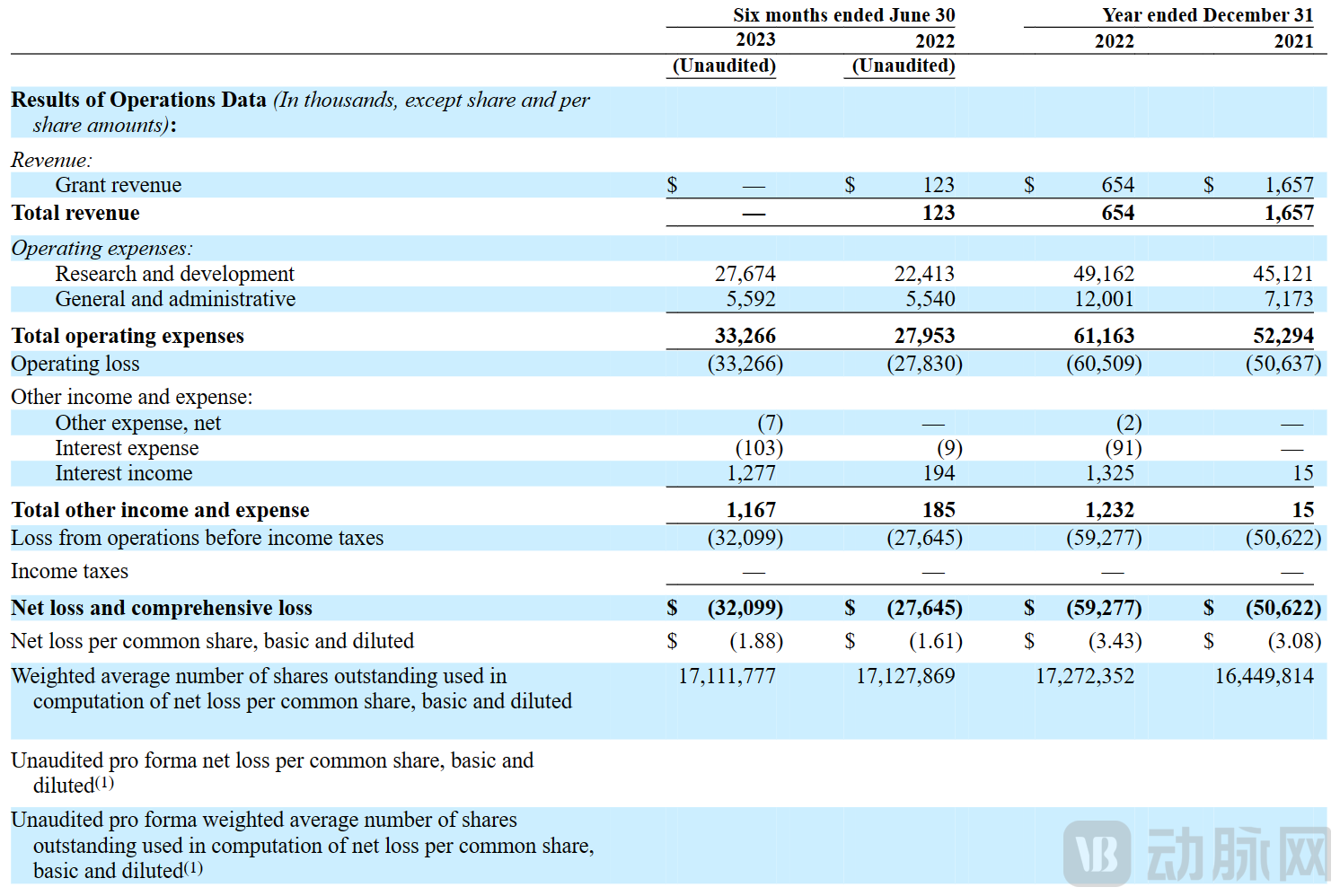
LEXEO Prospectus Screenshot: Revenue Performance Over the Past Three Years
LEXEO’s operating capital is primarily derived from the proceeds of its private placements of convertible preferred stock in 2020 and 2021, totaling approximately $183.7 million.
According to the prospectus, LEXEO reported net losses of $50.6 million, $59.3 million, and $32.1 million for the fiscal years ended December 31, 2021 and 2022, and for the six months ended June 30, 2023, respectively. As of June 30, 2023, the company had an accumulated deficit of $147.5 million and expects to continue incurring significant expenses and operating losses in the coming years.
LEXEO Therapeutics completed its $85 million Series A and $100 million Series B financing rounds in January and September 2021, respectively. Investors included prominent firms such as D1 Capital, Lundbeckfonden Ventures, and Omega Funds. The company was also named to BioSpace’s list of “30 Emerging Life Sciences Companies to Watch in 2022.”
Following the financing, LEXEO Therapeutics actively expanded its product pipeline by successfully acquiring Stelios Therapeutics and its three gene therapy programs for cardiomyopathy. Additionally, the company entered into a manufacturing collaboration with Fujifilm for gene therapies.
Following the successful acquisition, is LEXEO still pursuing other transactions? CEO Nolan Townsend stated: “We are indeed seeking additional opportunities, whether through acquisitions, academic collaborations, or licensing arrangements. We are interested in expanding our product portfolio in the field of genetic cardiovascular diseases and will pursue any opportunities that can help achieve this goal.”