

Mindray Launches Kunlun Resona A20 Premium Ultrasound System, Marking a New Milestone in Independent Innovation

Mindray
Medical Device R&D Manufacturer
11On June 10, at the “23rd National Ultrasound Medical Academic Conference of the Chinese Medical Association,” Mindray, a leading domestic medical device manufacturer, introduced the first domestically produced ultra-high-end solution for ultrasound departments—the Kunlun Resona A20 ultra-high-end ultrasound system (hereinafter referred to as “Ultra-High-End A20”), filling the gap in China’s ultra-high-end ultrasound sector.
It is reported that the development of the ultra-premium A20, from preliminary research to market launch, spanned eight years. This ultra-premium ultrasound system was introduced by Mindray’s R&D team, leveraging years of independent innovation and accumulated expertise while closely aligning with clinical needs. It has achieved “ultra-premium” breakthroughs across multiple core technological areas, ranging from system architecture and imaging algorithms to imaging technologies.
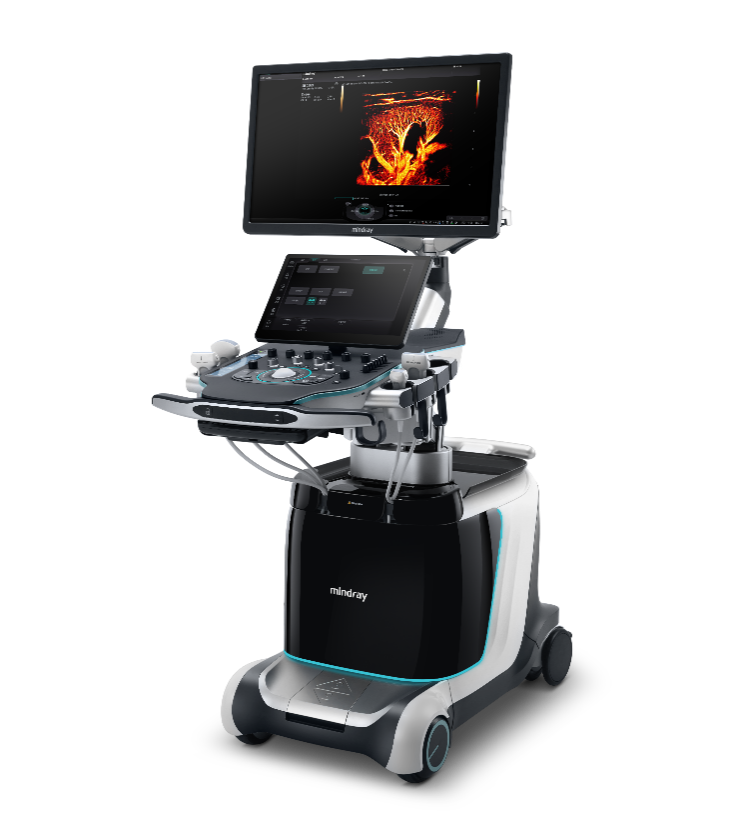
Ultra-Premium Ultrasound System Kunlun Resona A20
He Xujin, General Manager of Mindray’s Medical Imaging Division, stated that the “Wuji” Acoustic Intelligence Platform, meticulously developed by the team over many years, has achieved comprehensive breakthroughs across all key stages of ultrasound imaging. Leveraging this platform, Mindray has developed China’s first ultra-premium ultrasound system, the Resona A20, which delivers higher-clarity images for clinical diagnosis and treatment. This innovation facilitates advanced diagnosis of complex conditions, supports experts and scholars in exploring new directions in clinical research, and contributes to the high-quality development of public hospitals.
Ultrasound medicine is a vital branch of medical imaging. Since the first ultrasound imaging device was introduced into clinical practice in 1965, ultrasound systems have continuously improved in performance over the past half-century. Their integration with clinical departments has deepened, playing a significant role in disease diagnosis and treatment. In the context of multidisciplinary collaborative care, ultrasound imaging has become more closely aligned with clinical practice, seamlessly integrating with specialties such as surgery and internal medicine, and is hailed as the “visual stethoscope” for clinicians.
Therefore, for imaging equipment, image clarity is the most critical requirement, as it enables physicians to observe more authentic physiological and pathological conditions of the human body. Currently, the development of medical imaging has entered the era of digitalization and intelligence, where ultra-high-quality ultrasound imaging plays a vital role in helping clinicians capture subtle clues of disease.
According to the introduction, Mindray’s Kunlun Resona A20 is equipped with the industry’s first new ultrasound technology platform—the “Wuji” Acoustic Intelligence Technology (AIT) platform (hereinafter referred to as the “Wuji Platform”). It achieves innovative breakthroughs in the industry across three aspects: acoustic-electrical data, imaging algorithms, and system computing power. The system adopts the new “AFM Matrix Energy Probe,” groundbreaking “FreeBeam Adaptive Beamforming Technology,” and a significantly enhanced “Ultra-Parallel Computing Architecture.” These advancements enable multi-dimensional improvements in ultrasound imaging regarding tissue structure, blood perfusion, and biological characteristics, thereby facilitating precise diagnosis and boundless exploration in clinical academia.
As the powerful driving force behind the WUJI platform, data is of paramount importance. Unlike data in a broad sense, the data from medical imaging equipment consists of high-quality acoustoelectric signals. As the first link in the signal chain, the transducer serves as the cornerstone for acquiring acoustic data and determines the potential for image performance. Leveraging the WUJI platform, Mindray’s R&D team has developed a new matrix of transducer technologies—the AFM Matrix Energy Transducers—which incorporate three core technologies: Matrix Flying Edge, Acoustic Pressure Boosting, and Broadband Spread Spectrum. The AFM Matrix Energy Transducers enhance transmit and receive signal sensitivity through Acoustic Pressure Boosting technology, expand the transducer’s frequency bandwidth via Broadband Spread Spectrum technology, and optimize the acoustic thickness plane using Matrix Flying Edge technology. These advancements comprehensively improve the quality of acoustoelectric data signals, delivering superior image performance across various clinical applications.
In terms of algorithms for the WUJI platform, Mindray’s industry-first “FreeBeam Adaptive Beamforming Technology” has achieved the productization of adaptive beamforming in ultrasound imaging for the first time. This was accomplished by ingeniously reconstructing adaptive algorithms to ensure algorithmic performance, leveraging the ultra-parallel computing architecture of the WUJI platform. While enhancing the main lobe and improving spatial resolution, it simultaneously suppresses side lobes and enhances contrast resolution. In other words, adaptive beamforming technology overcomes the traditional limitation of being unable to optimize both the main lobe and side lobes simultaneously, thereby not only improving image resolution but also enhancing imaging across multiple modalities.
As the “engine” of the AI era, computing power serves as the hardware infrastructure for the Wuji platform. The computing power of the A20 Wuji platform supports complex algorithms and ensures ample bandwidth for massive data transmission, providing fundamental performance guarantees for ultra-high-end ultrasound systems with an ultra-wide data bandwidth of 256 Gbps.
Building on global precision imaging, the ultra-high-end A20 is also equipped with innovative RuiTong Imaging Technology to facilitate advanced clinical diagnosis. By employing transmit/receive channels independent of global imaging and adaptive beamforming algorithms, RuiTong Imaging Technology focuses on displaying minute details within target lesion areas, achieving dual real-time imaging that combines global precision with local refinement. Furthermore, it performs intelligent image optimization tailored to different clinical scenarios, thereby enhancing local image quality and differential diagnostic capabilities.
Industry insiders believe that, followingZST+Following the ZST+ platform, Mindray’s release of the WJ platform has once again elevated ultrasound imaging platform technology to a new height.
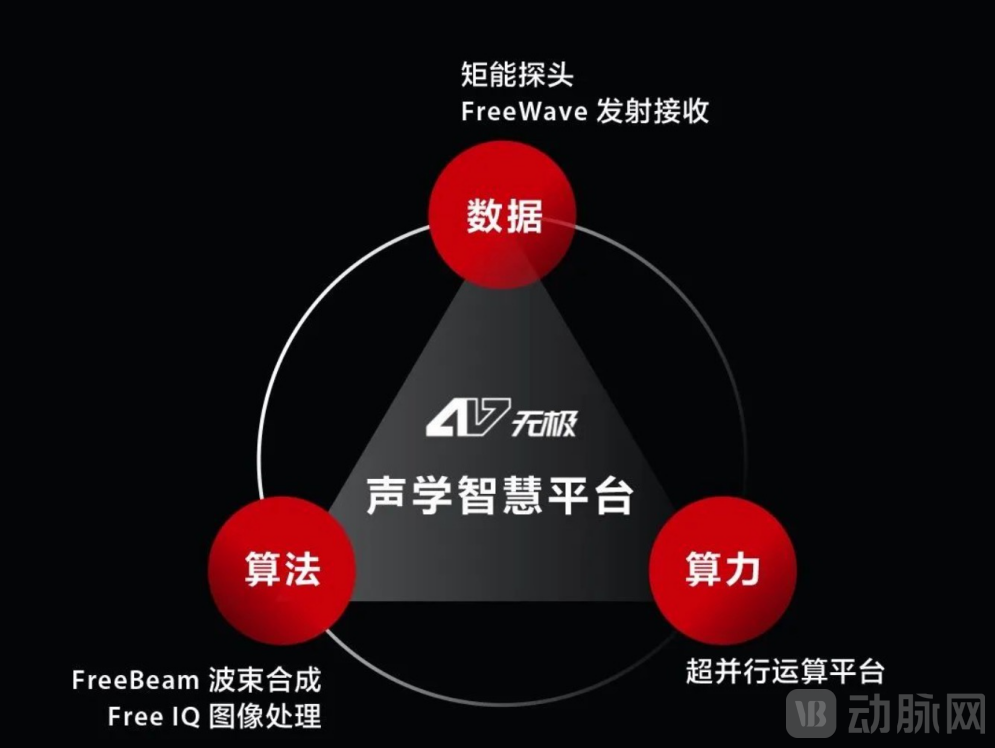
Resona A20 Achieves Comprehensive Breakthroughs in Acoustic-Electrical Data, Imaging Algorithms, and System Computing Power
Behind Mindray’s continuous leadership in driving technological upgrades across the industry lies its independent innovation capability, fueled by substantial R&D investment.
Mindray is a globally leading provider of medical devices and solutions, with its main products covering three major fields: Patient Monitoring & Life Support, In-Vitro Diagnostics, and Medical Imaging. The company has established ten R&D centers worldwide, located in Shenzhen, Wuhan, Nanjing, Beijing, Xi’an, Chengdu, Silicon Valley (USA), New Jersey (USA), Seattle (USA), and Europe, forming an extensive global network for R&D, marketing, and services.
For a long time, the company has maintained high-intensity investment in R&D resources, with R&D expenditure consistently accounting for approximately 10% of its revenue. Data shows that over the past five years, Mindray’s cumulative R&D investment has exceeded RMB 11 billion. In the first three quarters of 2023, R&D spending reached a new high of RMB 2.811 billion, representing 10.3% of operating revenue and marking a year-on-year increase of 23.3%. Driven by this substantial R&D investment, Mindray’s product portfolio continues to expand and innovate through iterative upgrades, achieving continuous breakthroughs particularly in the high-end segment.
The newly launched ultra-premium ultrasound system, Kunlun Resona A20, is not only a milestone product for Mindray but also holds significant importance for advancing the technical standards of ultrasound medicine in China’s public hospitals and supporting their high-quality development.
It is understood that medical imaging, as one of Mindray’s three core business segments, has seen an increasingly strong trend toward high-end breakthroughs in recent years. In the domestic market, by continuously advancing the high-end positioning and clinical application of its ultrasound technologies, the company has accelerated high-end penetration in both traditional hospital ultrasound departments and emerging clinical specialties. The proportion of revenue from tier-2 and tier-3 hospitals in Mindray’s domestic ultrasound business has risen year after year, with high-end ultrasound systems accounting for more than half of its domestic ultrasound revenue. In international markets, benefiting from the all-new mid-to-high-end cart-based ultrasound R series and I series (based on holographic data ZST+The Domain Light platform, equipped with an ultra-fast processing hardware architecture, along with the significant launch of several new blockbuster products such as various new POC ultrasound systems, has driven the proportion of mid-to-high-end ultrasound revenue in overseas ultrasound revenue to exceed half. It is believed that with the support of the upcoming ultra-high-end flagship product A20, the company’s ultrasound business will continue to advance into a new phase of comprehensive breakthroughs among high-end customers.
Notably, the ultra-premium A20, leveraging the robust performance of the Wujie platform, provides a wealth of innovative imaging tools for clinical academic research in ultrasound, thereby supporting the advancement of clinical disciplines and the high-quality development of public hospitals. Currently, modern medicine is evolving towards precision, intelligence, and minimally invasive approaches. The development of contemporary ultrasound medicine has long transcended conventional screening; ultrasound-guided interventions are playing an irreplaceable and critical role in clinical diagnosis and treatment. Therefore, the comprehensive and precise screening, diagnosis, and follow-up capabilities enabled by the ultra-premium A20 are particularly significant.
During the 23rd National Ultrasound Medicine Academic Conference of the Chinese Medical Association, the exchange meeting on “High-Quality Development of Ultrasound Medicine in Public Hospitals—Innovation-Driven: High-End Medical Equipment Leading New Trends in the Ultrasound Discipline,” hosted by People’s Daily Online · People’s Health, attracted extensive participation from industry experts and professionals.
Liang Ping, Chair of the Ultrasound Medicine Branch of the Chinese Medical Association and Director of the Department of Ultrasound Medicine at the Fifth Medical Center of the Chinese PLA General Hospital; Li Jianchu, Professor and Chief Physician in the Department of Ultrasound at Peking Union Medical College Hospital, Peking Union Medical CollegeZheng Yuanyi, Vice President of Shanghai Sixth People’s Hospital Affiliated to Shanghai Jiao Tong University School of Medicine; He Xujin, General Manager of the Medical Imaging Division at Mindray; and other representatives—comprising leading Chinese ultrasound medicine experts, executives from public hospitals at various levels, and collaborative R&D specialists from university research institutes—conducted a systematic discussion on the current status and future development trends of ultrasound medical technology in China.
In an interview at the conference, Professor Liang Ping stated that domestically produced ultrasound medical equipment in China has developed rapidly over the past decade. Chinese-made ultrasound devices, represented by Mindray, accounted for approximately 30% to 40% of the entire ultrasound market last year, marking a leapforward progress. Domestic ultrasound equipment has caught up with European and American brands, and its market distribution is showing a trend of rapid growth. In his sharing, Vice President Zheng Yuanyi mentioned that collaboration among industry, academia, research, and clinical practice has driven the rapid development of multimodal ultrasound imaging technology. He emphasized the need to consolidate multi-sectoral strengths from these areas to strengthen the research and development of medical engineering technologies and equipment.
Over the past decade, during which domestic medical device brands have comprehensively caught up with overseas giants, Mindray has continuously narrowed the gap between China’s medical device industry and that of developed countries, leading sector development by achieving excellence in both technology and manufacturing through relentless independent innovation. He Xujin, General Manager of Mindray’s Medical Imaging Division, stated that Mindray will continue to drive innovation in the future, enabling more patients to benefit from enhanced diagnostic and therapeutic capabilities and improved service quality brought by high-tech advancements, popularizing advanced technologies, and allowing more people to share in high-quality life care.