

Billion-Dollar Long-Term Care Market Poised for Takeoff as Providers Enter the 'Jiu Wan Li' Era
"The Roc Rises with the Wind in a Single Day, Soaring Straight Up Ninety Thousand Li."
As pilot cities for long-term care insurance (LTCI) continue to expand and the LTCI system is poised for nationwide implementation by 2025, long-term care service providers are entering a period of tremendous growth.
Clearly, the spotlight favors those who are prepared.
In an era when the long-term care insurance system is being rapidly implemented, what capabilities do long-term care service providers truly need to better expand their market? We interviewedXiao Cheng Group, which leads the long-term care service market in northern China and completed a nearly RMB 100 million Series A financing round this March, attempting to derive answers from it.
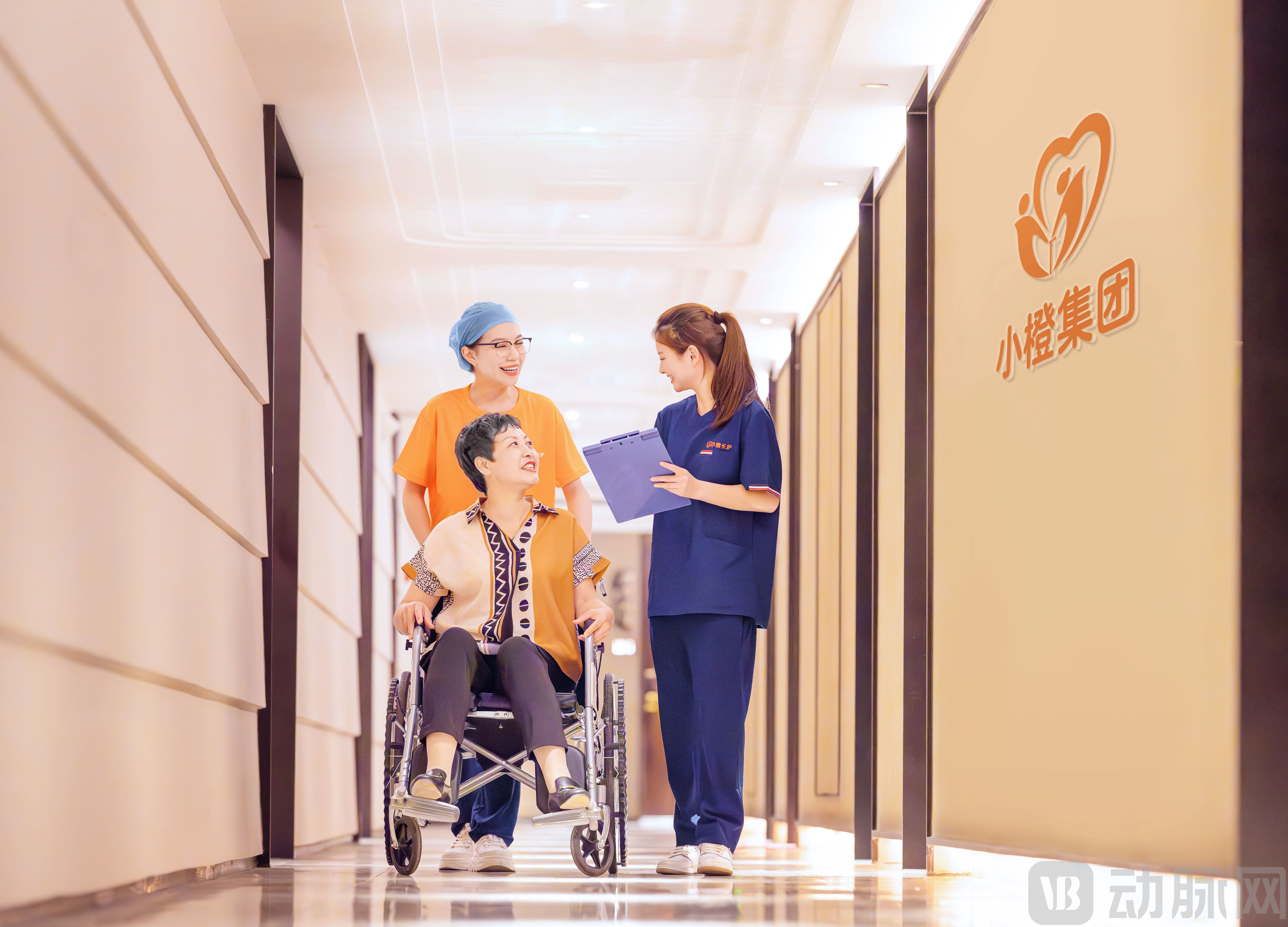
The challenges faced by disabled and semi-disabled elderly individuals in home-based care are undoubtedly severe.
On the one hand, the number of elderly individuals who have lost their ability to perform activities of daily living continues to rise rapidly.The “Report on the Development of China’s Elderly Care Industry (2021–2022),” released by the China Research Center on Aging, indicates that by the end of 2022, the number of people aged 60 and above in China reached 280 million, among whom approximately 44 million were disabled or semi-disabled. Furthermore, a demographic study conducted by Peking University previously projected that by 2030, the population of disabled elderly individuals in China will exceed 77 million, with an average disability duration of 7.44 years.
On the other hand, families with disabled or semi-disabled members face the challenge of long-term home-based care.Currently, China adheres to the “9073” elderly care model, with approximately 90% of seniors opting for home-based care. However, as China’s socio-economic development progresses and family structures become increasingly smaller, it has become less practical for children to bear the burden of home-based caregiving. Home-based care is facing numerous challenges, including excessive caregiver burden.
Reducing the burden of long-term care for families with disabled or semi-disabled members has been placed on the agenda.
In 2016, the Ministry of Human Resources and Social Security issued the “Guiding Opinions on Launching Pilot Programs for the Long-Term Care Insurance System,” initiating pilot programs in 15 cities, including Shanghai and Suzhou, to provide long-term care service guarantees for elderly individuals with disabilities or partial disabilities. Currently, the number of cities implementing long-term care insurance has exceeded 80. According to data released by the National Healthcare Security Administration this September, “As of the end of June 2023, the number of participants in the long-term care insurance system reached 170 million, with over 2 million cumulative beneficiaries receiving benefits, and cumulative fund expenditures amounting to approximately RMB 65 billion.” and “effectively alleviated the financial and caregiving burdens on families of disabled individuals, with an average annual reduction of approximately RMB 14,000 per person.”
Meanwhile, as the pilot cities for long-term care insurance continue to expand, the long-term care service market and its workforce are also growing stronger. The National Healthcare Security Administration pointed out that, on one hand,There are over 7,600 designated service providers for long-term care insurance in the pilot regions., which is five times that of the initial pilot phase (2017); on the other hand,The number of nursing staff at designated service institutions in pilot regions reached 330,000., nearly 10 times that of the initial pilot phase (2017).
In the face of an increasingly severe situation, the National Healthcare Security Administration’s “Guiding Opinions on Expanding the Pilot Program for the Long-Term Care Insurance System” (Draft for Comments) previously pointed out that efforts should be made to promote the establishment and improvement of a multi-tiered long-term care security system that meets the diverse needs of the public.Strive to basically establish a policy framework for the long-term care insurance system that adapts to the level of economic development and the trend of population aging during the "14th Five-Year Plan" period (i.e., 2021-2025).. This also means that the long-term care insurance system is expected to be fully implemented.
It is conceivable that this is a market with a service scale exceeding RMB 100 billion.
The long-term care service market, valued at hundreds of billions, presents opportunities; however, it also faces certain challenges.
The greatest challenge undoubtedly stems from the diversification of service needs among the elderly. Individuals with disabilities or partial disabilities have varying needs due to their physical limitations. Differences in physical condition, age, and cognitive function often lead to diverse requirements. Consequently, companies that solely provide care products and equipment, or those that only offer care services, struggle to meet the comprehensive needs of the elderly.
““The Product + Service” integrated model is the innovative approach to resolving this issue.“Tianjin Kanghu Pension Industry Development Co., Ltd. (Xiaocheng Group), which was founded in 2017 and has gradually evolved into a digital intelligent healthcare platform, pointed out in an interview. Guided by this philosophy, Xiaocheng Group has achieved rapid expansion by implementing the ‘product + service’ model: currently,”Xiaocheng Group has established a service network covering 12 provinces and 26 cities across China, serving nearly 40,000 households and becoming one of the largest domestic home-based elderly care and rehabilitation service providers in northern China.
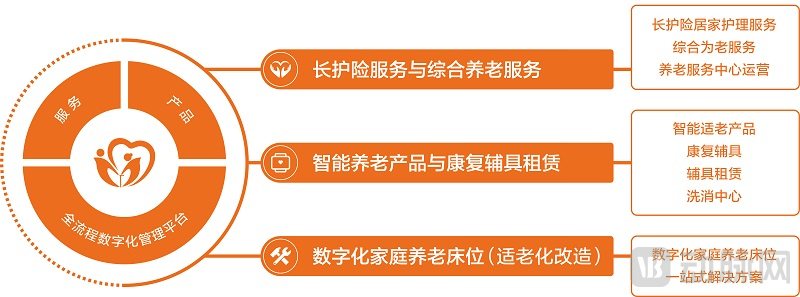
How does Xiaocheng Group meet the diverse needs for long-term care services and achieve the integration of “products + services”?
First, it provides full-scenario care products and equipment based on elderly care services, meeting the demand of long-term care families for upgraded “hardware” configurations, and establishing a connection on this basis to fulfill subsequent service needs for the elderly.
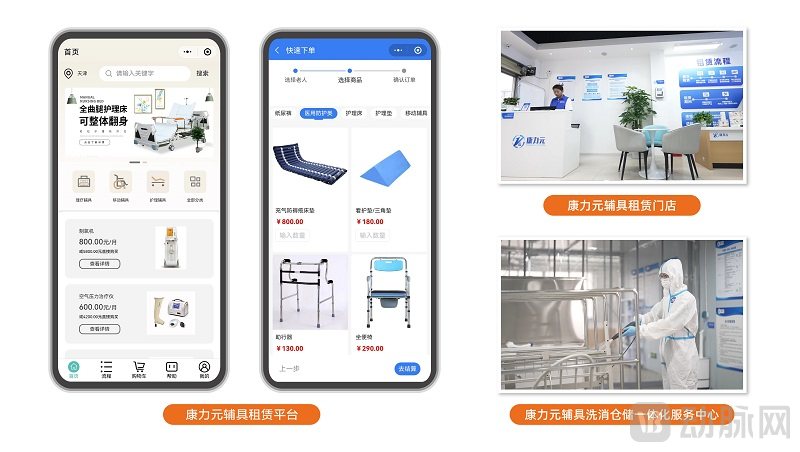
As long-term care insurance gradually implements the strategy of “raising reimbursement rates, expanding coverage, and enriching benefit packages,” the population eligible for benefits has expanded from urban employees with severe disability to include those with moderate disability, urban and rural residents, and individuals requiring assistive device rentals, among others. Tianjin Kanghu Pension Industry Development Co., Ltd. (Xiao Cheng Group) also takes into account the varying phased needs of users,Resolve the contradiction between high product unit prices and usage demands through assistive device rental.Currently, Xiaocheng Group has successively won bids for multiple assistive device rental projects in various regions, including Tianjin, Sichuan, and Jiangsu. To address practical challenges in the assistive device rental scenario, Xiaocheng Group has gradually established multiple disinfection and sterilization centers and 41 assistive device rental service outlets across several cities, providing services such as needs assessment, equipment configuration, and equipment recovery and sterilization.
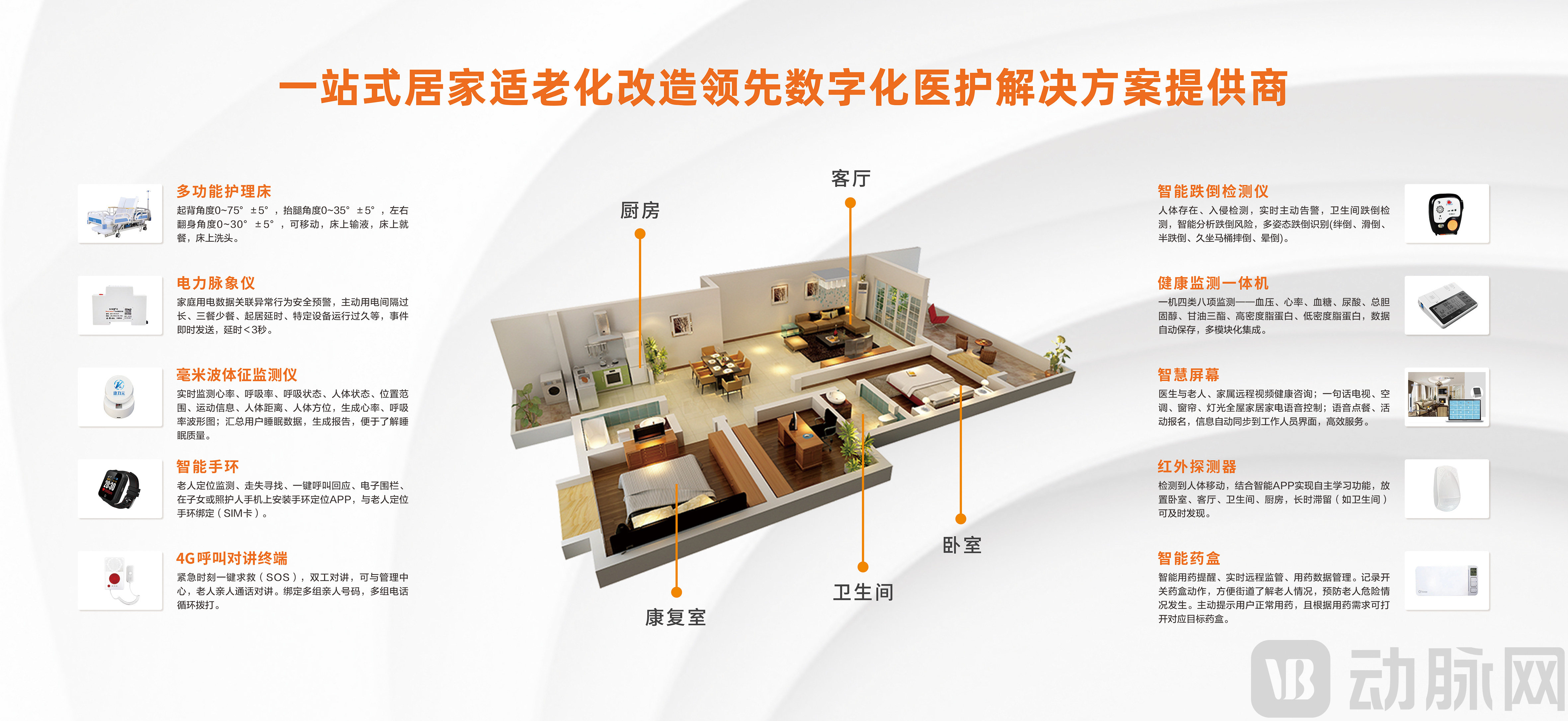
This capability is rooted in the corporate DNA of Tianjin Kanghu Pension Industry Development Co., Ltd. (Xiaocheng Group). Unlike most enterprises that have entered the long-term care sector, Xiaocheng Group penetrated the elderly care and rehabilitation services market from its inception by offering products such as nursing beds and rehabilitation assistive devices, leveraging strong capabilities in product R&D, manufacturing, and supply chain integration. Its age-friendly product portfolio comprehensively addresses the diverse needs of seniors, encompassing nursing robots, millimeter-wave vital sign monitors, rehabilitation assistive devices, nursing supplies, and foods for special medical purposes (FSMP). This enables the company to fully meet the “hardware” requirements across all scenarios of home-based care for the elderly.
Age-Friendly RenovationsIn home settings, numerous safety hazards often exist. Due to the impact of degenerative diseases, falls among older adults occur frequently, and the inability to receive timely medical attention can lead to severe consequences. Based on its own products, Tianjin Kanghu Pension Industry Development Co., Ltd. (Xiao Cheng Group) assesses the needs of older adults and their home environments to implement age-friendly environmental configurations and renovations. For instance, by deploying millimeter-wave health monitoring devices, the company enables real-time monitoring of vital signs such as respiratory rate, heart rate, and mobility status. This also provides an entry point for Xiao Cheng Group’s subsequent care services.
Secondly, by leveraging a professional team to promptly and effectively meet the care service needs of the elderly, this approach serves as an entry point to pave the way for the subsequent adoption of products and equipment.
Ranking among the top providers of long-term care services in northern China is a testament to the quality of Xiao Cheng Group’s long-term care offerings.This is also attributable to Xiaocheng Group’s possession of a professional care team comprising thousands of members.To ensure the quality of service delivery, Tianjin Kanghu Pension Industry Development Co., Ltd. (Xiao Cheng Group) collaborates with professional associations to lead and establish industry standards through the “Specifications for In-Home Elderly Care Services.” The company also cultivates personnel through standardized training and assessment systems, while implementing SOP-based process management to control service quality, among other measures.
Long-term care services have strengthened the relationship between supply and demand, enabling Tianjin Kanghu Pension Industry Development Co., Ltd. (Xiaocheng Group) to rapidly gain insights into the needs of seniors and their children regarding long-term care products. This has laid a solid foundation for the subsequent promotion of its offerings, facilitating the swift advancement of its age-friendly home modification and assistive device rental businesses.
The innovative model based on the integration of “products + services” has driven mutual reinforcement between products and services, as well as repeat purchases, for Xiaocheng Group.This innovative model has also driven rapid revenue growth for Xiaocheng Group. In 2022, the company’s revenue surpassed the RMB 200 million mark. According to Xiaocheng Group, its revenue is expected to reach a new high in 2023.
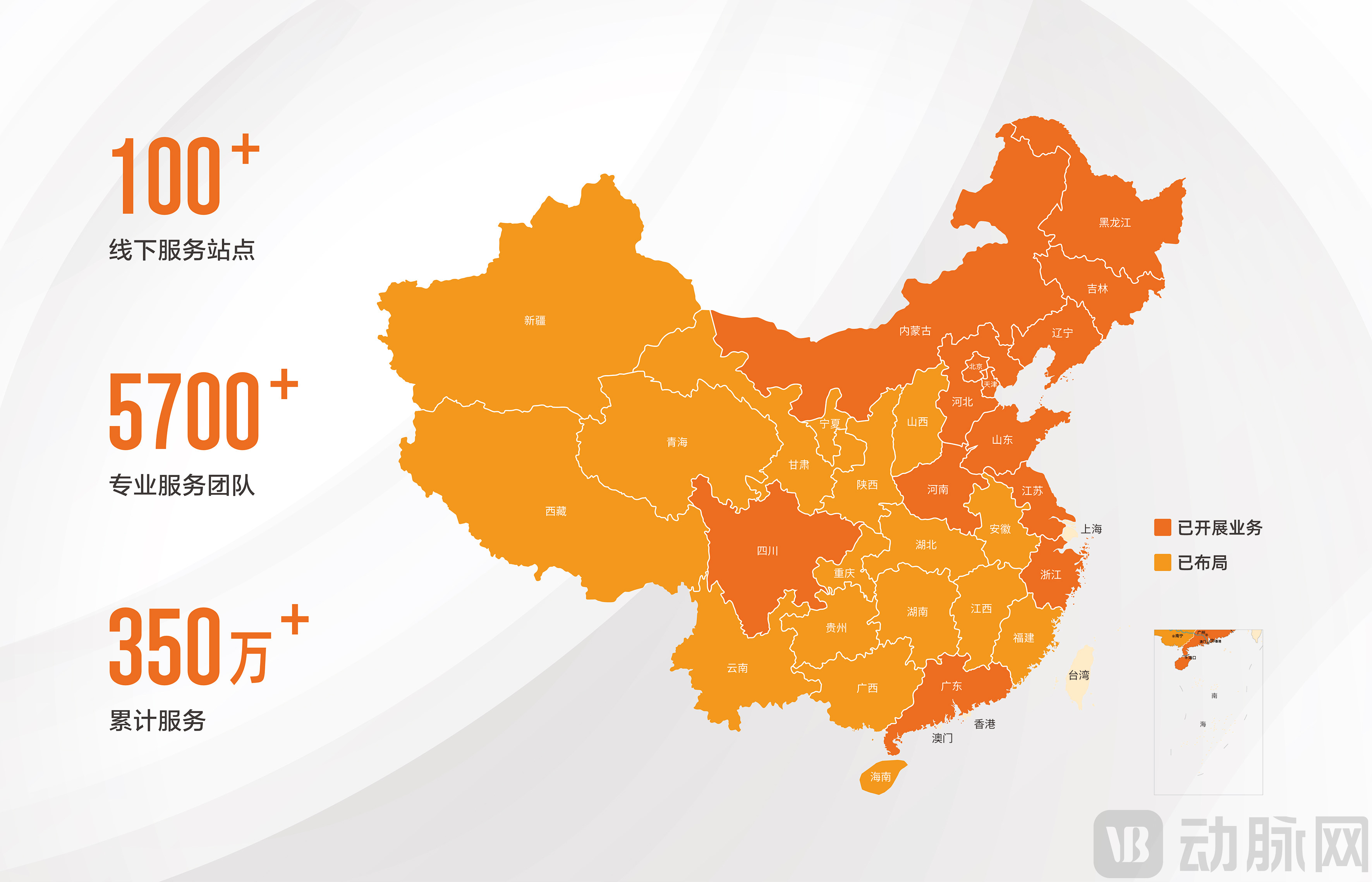
It is worth noting that the process of providing care services to elderly individuals with disabilities or partial disabilities has also enabled Xiaocheng Group to rapidly accumulate professional expertise, thereby allowing it to handle home-based elderly care for the general senior population with ease.Currently, Xiaocheng Group has established a comprehensive digital home-based elderly care solution encompassing in-home medical and nursing services, sales of smart elderly care products, assistive device rental, and age-friendly home modifications. This integrated approach enables the company to rapidly expand its market presence within the elderly care sector, including long-term care services.
In the long-term care service market, valued at hundreds of billions, providers must not only meet the diverse needs of individual clients but also possess the capacity to deliver services at scale.
This, in turn, hinges on the development of digital capabilities.
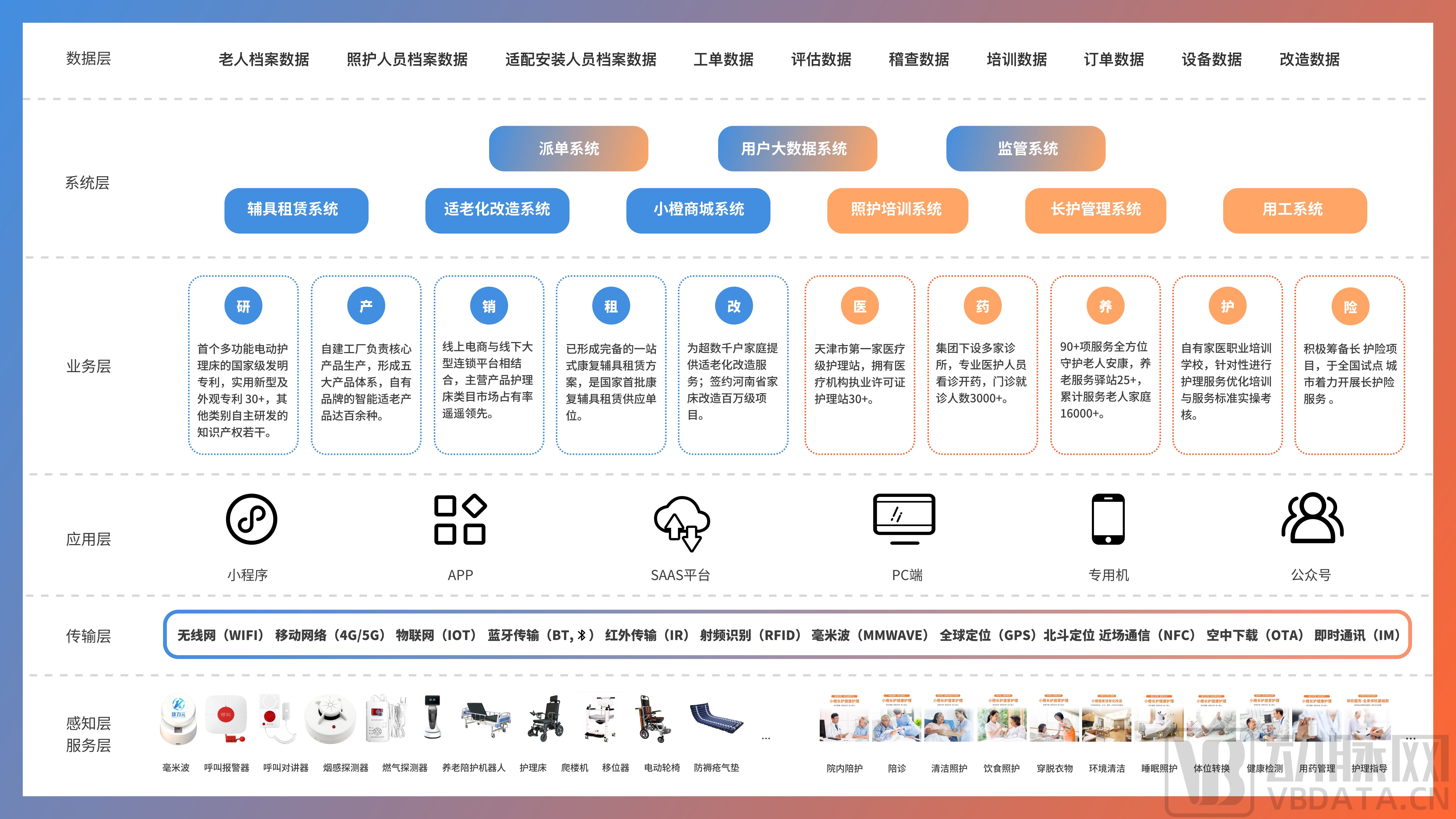
Xiao Cheng Group is also building digital capabilities to scale and replicate its service offerings.
First, digital empowerment internally enhances management capabilities and service response efficiency.The digital system currently adopted by Kanghu Group was built based on business development. Along with the sales of its home care products, provision of long-term care services, rental of assistive devices, age-friendly renovations, and customer management, Kanghu Group has successively developed nine subsystems to cover various business segments. Moreover, it continues to dynamically adjust in real time according to changing demands and add system functionalities. In addition, to better improve service response efficiency, Kanghu Group is also using specialized equipment to achieve dynamic real-time management. This has ensured its rapid expansion across 12 provinces and 26 cities, preparing it for swift preparation and large-scale expansion into other markets.
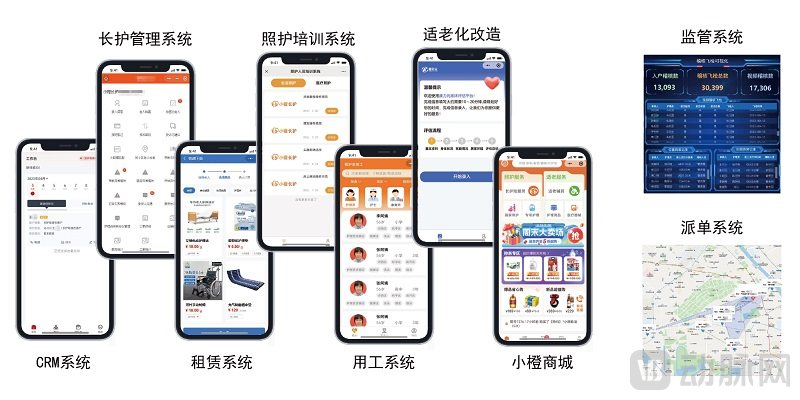
Second, digital empowerment externally expands the boundaries of service capabilities.The elderly care sector requires rapid technological refinement and product iteration within service scenarios. Leveraging its deep roots in the Northern China market, Tianjin Kanghu Pension Industry Development Co., Ltd. (Xiao Cheng Group) is actively enhancing its service capabilities through digitalization during implementation. Specifically, the company provides high-value, proactive user care management via its home-based elderly monitoring platform, initiating immediate inquiries in the event of accidents involving seniors. By developing its e-commerce platform, it leverages the advantages of online-offline integration to comprehensively meet seniors’ product needs. Furthermore, it utilizes a digital training platform to standardize and export its services. Through online work order confirmation and follow-up visits, the company further ensures consistent service quality and enhances attention to personalized needs. To better synchronize real-time status updates of long-term care services, Xiao Cheng Group is actively promoting data interoperability, facilitating the integration of information systems among medical insurance agencies, commercial insurers, and service providers through data convergence and exchange.
“The ability to provide high-quality services at scale is merely the beginning.” For Kanghu Group and enterprises aspiring to enter the elderly care sector,To achieve high-quality supply of long-term care and related elderly care services, it is also necessary to build a diversified elderly care ecosystem.For instance, for elderly individuals with chronic diseases, appropriate chronic disease monitoring and management as well as medical services are provided under the “Medical Care + Elderly Care” model; in terms of “Pharmaceuticals,” through deep collaboration between a large service team and ecosystem partners, medication records and home delivery services are realized; regarding “Insurance,” commercial long-term care insurance is utilized to better meet the personalized needs of seniors, among other measures.
Clearly, Tianjin Kanghu Pension Industry Development Co., Ltd. has established strong bonds of trust with the elderly and their families in the course of providing services to them.As providers of user outreach and services, various partners across the ecosystem chain, such as insurance companies, can also leverage Xiao Cheng Group’s digital ecosystem platform to achieve enhanced business empowerment and promote the healthy development of the entire ecosystem.
With the implementation of home-based elderly care bed projects, the establishment of digital community elderly care service centers, and the integration of hospital nursing services, Xiaocheng Group is also rapidly achieving its own development.
It is reported that,Xiaocheng Group is currently launching a new round of financing to accelerate the establishment of a nationwide service network, further cultivate its distinctive elderly care industry ecosystem, integrate resources, and better enable users to enjoy diversified services.
“We believe that, with the development of Xiaocheng Group, we are confident in delivering higher-quality products, services, and solutions to seniors, thereby better addressing the comprehensive home care needs arising in the current era of population aging,” said a representative of Xiaocheng Group.