

Spear Bio Inc. Files for IPO Following $Tens of Millions Seed Financing to Advance Next-Generation Proteomics and Immunoassay Technologies

Spear Bio
Developer of Ultra-Sensitive Protein Detection Technology

YONGHUA
Private Equity Investment Fund Management Company

HongShan
Business Consulting, Enterprise Management Consulting Investment Institutions

Maverick Ventures
Venture Capital Firm
Detecting disease signs at an earlier stage to enable early screening and treatment has long been a goal pursued by modern medicine. Companies that master high-sensitivity detection technologies are also highly anticipated by the market and capital.
On November 12, 2023 (Eastern Time), Spear Bio Inc., a Massachusetts-based biotechnology company focused on the research and development of next-generation proteomics and immuno-diagnostic technologies, announced that it had recently completed a seed funding round amounting to tens of millions of U.S. dollars. The round was co-led by HongShan Seed Fund and CDH VGC, with continued participation from existing investors including Maverick Ventures and YONGHUA.
Spear Bio was co-founded by Professor Peng Yin, a globally renowned scientist in the field of DNA nanotechnology from Harvard University’s Wyss Institute for Biologically Inspired Engineering, and Dr. Feng Xuan, a Technology Development Fellow at the Wyss Institute. Jerome Clavel, former Vice President at Abbott and Danaher, serves as CEO. The company’s core technical team hails from Harvard University, while its product development and commercialization teams consist of professionals from industry-leading companies such as Thermo Fisher Scientific and Abcam.
According to reports, Spear Bio’s core technology is derived from the SPEAR platform, a next-generation ultra-sensitive no-wash immunoassay technology developed in Professor Peng Yin’s laboratory. Through unique probe design, the platform achieves dual verification of “protein-protein interactions” and automatically converts protein information into nucleic acid sequences, thereby significantly enhancing the signal-to-noise ratio and specificity of protein detection. Moreover, compared with single-molecule techniques, the SPEAR technology platform is simpler and more user-friendly, substantially lowering the barrier to entry for ultra-sensitive protein detection.
Professor Yin Peng, co-founder of the company, stated that the SPEAR technology developed by Dr. Xuan Feng achieves high-sensitivity protein detection with low sample volumes by leveraging existing PCR nucleic acid testing platforms. “We hope to make this technology more widely accessible to the industry and patients through the establishment of Spear Bio.”
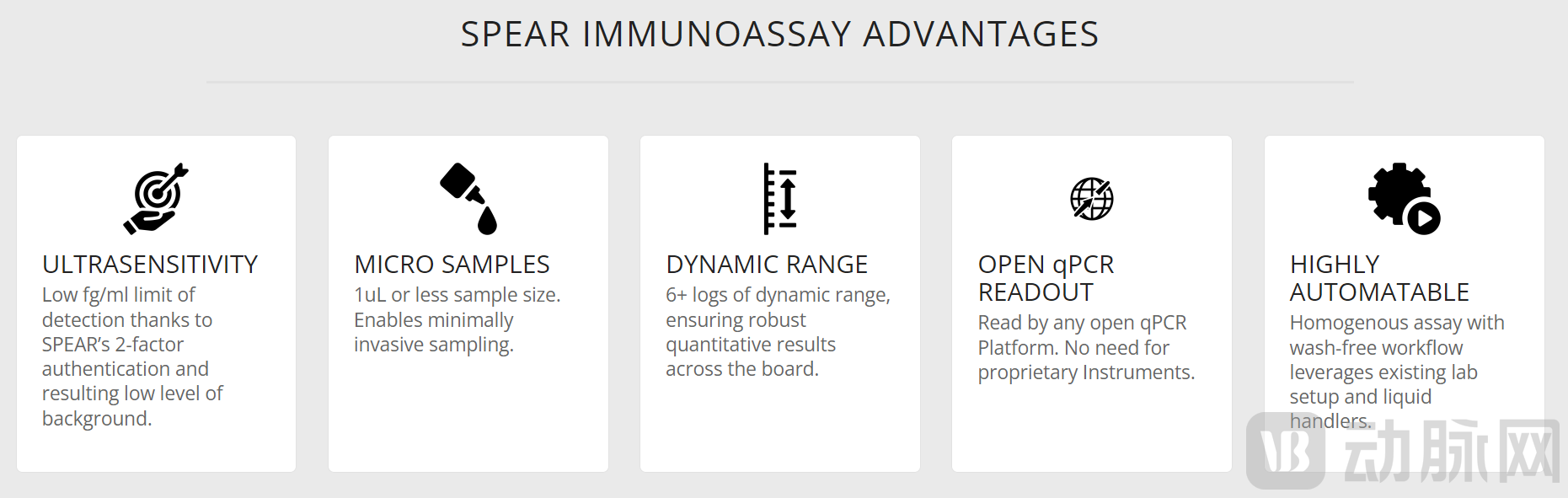
Specifically, on one hand, Spear Bio's protein detection technology possessesUltra-High Sensitivity, with a lower limit of detection capable of identifying single-digit quantities of protein biomarkers, representing a further 2- to 3-order-of-magnitude improvement over currently commercially available single-molecule immunoassay technologies; meanwhile, the SPEAR technologyExtremely Low Sample Size Requirements, requiring as little as 0.1 µL for reaction, making it highly suitable for trace and precious samples.
Furthermore, this technical systemCompatible with various standard laboratory PCR instruments, can be achievedHighWide dynamic range, multiplex target detection, and its wash-free simple workflow enable fully automated testing.Compared with commonly available high-sensitivity protein detection technology platforms, the SPEAR detection technology also offers significant cost advantages and is poised to become a breakthrough technology for next-generation proteomics and immunoassay diagnostics.
“Our goal is to bring ultra-sensitive protein detection technology to every laboratory, making it as ubiquitous as traditional ELISA and chemiluminescence assays. We aim to ensure that advancements in protein detection sensitivity genuinely facilitate the discovery of novel protein biomarkers, thereby realizing their true value in the early diagnosis of neurodegenerative diseases and cancer,” said Dr. Feng Xuan, CTO and Co-founder of Spear Bio.
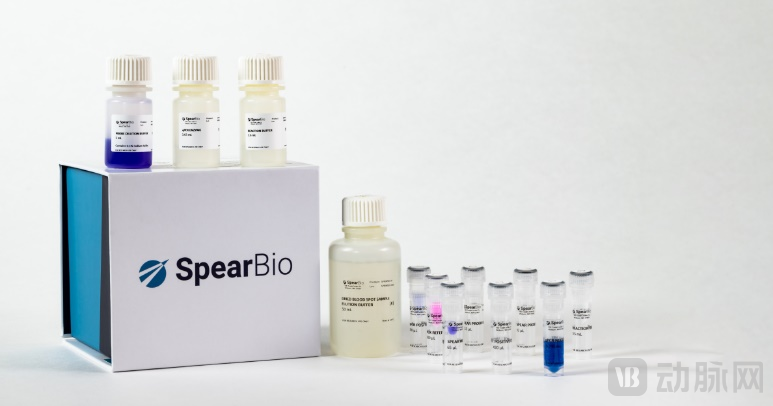
Currently, Spear Bio is dedicated to developingInfection, Immunity, and Neurology...and R&D and clinical diagnostic reagents in multiple fields. Within less than two years of independent operation, the company has achieved commercial sales of its first proof-of-concept product—the NAB-Sure™ SARS-CoV-2 Neutralizing Antibody Kit. This product delivers sensitivity comparable to the gold-standard cell-based assays from trace blood or dried blood spot samples, while significantly reducing the turnaround time from approximately three days to just a few hours. It has already been procured by leading customers such as the New York State Department of Health and LabCorp (the largest third-party laboratory in the United States).
It was also revealed that the company will soon roll out ultra-sensitive assay kits in fields such as immunology and neurology, offering both semi-automated and fully automated testing solutions. Clinical specialty IVD kits developed based on its platform technology are also in the R&D pipeline.
Dr. Liu Dan, Senior Partner at CDH Investments VGCstated: “We are optimistic about Spear Bio, a company leveraging technology transferred from Harvard University, to apply its globally leading and accessible proteomics technology for ultra-sensitive detection and applications in micro-samples. Following the pandemic, PCR systems have become more widely adopted globally. We believe that the integration of these technologies will drive significant advancements in diagnostic fields such as infectious diseases, immunology, and neurology. We are pleased to see initial recognition and commercialization progress from industry clients for this technology.”
Wang Chenyu, Vice President of HongShanstating, “With hundreds of Alzheimer’s disease-targeted drug pipelines advancing globally, there is a substantial demand for cost-effective and accurate detection of relevant biomarkers in peripheral blood. We are highly optimistic about Spear Bio’s leading technology and believe it is well-positioned to better meet market needs. Furthermore, we see significant potential for this technology in applications with stringent requirements for sensitivity and sample volume in protein biomarker detection, such as in immune diseases and infectious diseases.”