

Limei Medical Aims to Become the Da Vinci of Light Aesthetic Anti-Aging with Intelligent Robotics Platform
Whether it was the emperors of a millennium ago who were obsessed with alchemical elixirs, Countess Elizabeth Báthory in the 18th century who bathed in the blood of virgins, or today’s Silicon Valley billionaire Bryan Johnson, who spends tens of millions of yuan annually on plasma exchanges with his 17-year-old son, the fiery human desire for “anti-aging” has never been extinguished.
With advancements in technology, contemporary individuals now have access to more effective “powerful tools” for anti-aging. Minimally invasive aesthetic anti-aging treatments are increasingly sought after by beauty enthusiasts due to their “immediate results,” as well as advantages such as low risk, minimal trauma, and short recovery periods. Materials used in injectable procedures continue to diversify in response to user demand, with hyaluronic acid, botulinum toxin, and collagen products flourishing to restore volume loss associated with aging. Meanwhile, energy-based devices such as Thermage, Ultherapy (or similar ultrasound-based lifting devices), Fotona 4D, and picosecond lasers help smooth out life’s wrinkles and tighten sagging skin through mild heat or minimal discomfort, turning back the clock on aging.
However, the journey to aesthetic enhancement is fraught with hidden pitfalls. Whether undergoing injectable treatments or energy-based device procedures, in addition to the fundamental requirement of using compliant injectables or equipment approved by national regulatory authorities, the practitioner’s technique plays a decisive role in determining the final outcome.
Regarding injections, the vascular and neural networks of the human face are intricate and complex. If the practitioner lacks sufficient tactile sensitivity or skill, even a minor deviation or momentary lapse in concentration during needle insertion can puncture a blood vessel, allowing the injectable to enter the bloodstream. This may lead to vascular occlusion in the patient, resulting in extensive facial necrosis, and potentially severe complications such as blindness, cerebral infarction, or hemiplegia. As for energy-based device procedures, treatment outcomes can vary significantly depending on the operator using the same equipment. Improper operation may cause complications such as burns, hyperpigmentation, edema, and scarring.
The rapidly expanding medical aesthetics market is also fraught with challenges in treatment and management. For instance, the time-consuming nature of photoelectric anti-aging treatments limits the patient capacity of medical aesthetics institutions. Radiofrequency and photon therapies require customized parameters and filters tailored to individual patients, demanding substantial hands-on experience from physicians and therapists. Moreover, as high-frequency consumer services, these photoelectric treatments occupy a significant amount of clinicians’ time.
Some medical aesthetics practitioners told VCBeat that senior physicians with extensive expertise, such as those at Peking Union Medical College Hospital and the Plastic Surgery Hospital of the Chinese Academy of Medical Sciences (commonly known as “Ba Da Chu”), can treat only about three patients per morning when performing radiofrequency-based anti-aging procedures (e.g., Thermolift). The time-to-revenue ratio for these treatments is significantly less favorable than that of premium dermal filler injections. From the perspective of physicians and private hospitals, there is a stronger incentive to devote more time and effort to high-end injectable treatments; nevertheless, energy-based devices remain indispensable as patient-acquisition tools.
For another example, the quality of practitioners is uneven, and there is a lack of effective supply. In recent years, demand in China’s medical aesthetics market has seen “explosive” growth, yet the number of licensed medical aesthetics physicians remains far below that of mature markets. According to data from VCBeat Research Institute, compared with countries such as South Korea and the United States, which have established relatively comprehensive medical aesthetics industry systems, China lags significantly behind developed nations in terms of medical aesthetics procedures per 1,000 people—approximately 4% of South Korea’s level and less than 10% of those in Brazil, Japan, and the United States. Meanwhile, China has only 0.2 plastic surgeons per 100,000 population, indicating a substantial talent shortfall among professional medical practitioners and a significant imbalance between market supply and demand.
In recent years, despite substantial resource investments by the government and relevant authorities, the lengthy training cycle for qualified medical aesthetic physicians has made it difficult to rapidly fill the short-term physician shortage. This has resulted in tight market supply and demand, elevated salaries for physicians at leading institutions, and increased operational costs. Meanwhile, small and medium-sized institutions, often prioritizing customer acquisition, tend to increase their marketing expenditure ratios while reducing investment in physician resources, leading to issues such as substandard quality of medical aesthetic services.
While aesthetic enhancement is valuable, safety is paramount. These issues have not only inadvertently deterred countless cautious individuals seeking cosmetic improvements, thereby constraining the further expansion of the plastic surgery market, but have also led to persistent disputes within the existing market... The root cause lies inThere is a lack of intelligent, standardized solutions on the market that enable layered and quantified, precise, and efficient operational techniques for injection and energy-based device treatments.
Established in 2022,Beijing Limai Medical Technology Co., Ltd. (hereinafter referred to as “Limai Medical”)Precisely addressing this critical pain point, the platform integrates advanced technologies—including artificial intelligence, finite element mechanical analysis, haptic feedback, 3D printing materials, and AR smart hardware—to focus on intelligent anti-aging solutions in minimally invasive aesthetic medicine. It has pioneered the launch of an intelligent robotic platform for minimally invasive aesthetics, aspiring to become the "Da Vinci" of the anti-aging sector in this field.
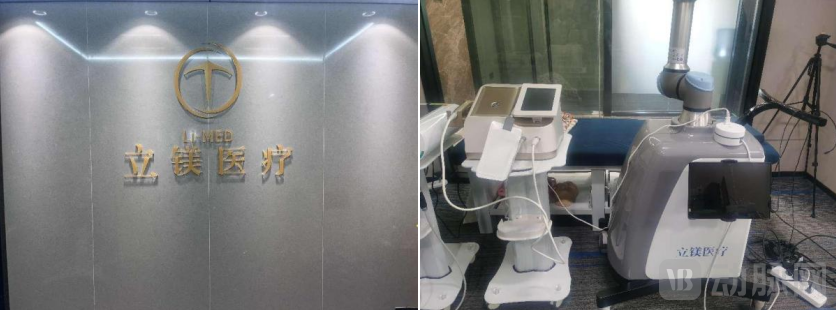
Limed Medical has independently developed and launched solutions centered on the concept of intelligent anti-aging in light medical aesthetics, specifically targeting photoelectric and injectable anti-aging treatments.Optoelectronic RobotandInjection Robot. On the basis of enhancing the precision and safety of treatment, it not only effectively alleviates the imbalance between the shortage of physicians and high patient demand, but also significantly lowers the learning curve and experience threshold for doctors and therapists, thereby improving therapeutic outcomes and efficiency. Furthermore, it reduces the time commitment required from physicians and therapists, enabling them to focus more on high-value procedures, such as injections of premium hyaluronic acid and regenerative materials.
Photoelectric robots primarily utilize intelligent automation algorithms to automatically adjust parameters and treatment trajectories based on assessments of skin condition and aging levels.It leverages robotic arm path-planning algorithms to precisely align with photoelectric treatment trajectories, as well as needle insertion points and angles, thereby “replicating” the skilled techniques of senior photoelectric therapy physicians. This raises the technical baseline for the entire photoelectric therapy industry, significantly enhancing treatment efficacy and safety while reducing the time physicians must devote to time-intensive photoelectric procedures.
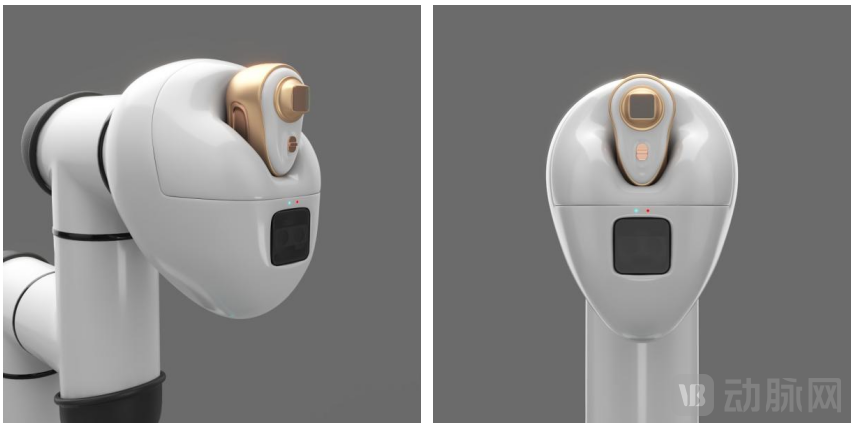
The core demand addressed by injection robots is to achieve precise injection through layer-specific and dose-controlled delivery, thereby avoiding embolism.Limei Medical leverages force-adaptive filtering combined with AI neural network filtering algorithms to precisely extract force feedback data from different tissue layers, thereby determining the location of each layer interface for accurate positioning. This helps prevent injectants from entering blood vessels, thus avoiding medical risks such as embolism.
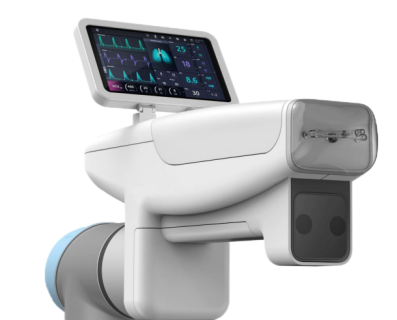
According to An Yicheng, founder of Limei Medical, the core technologies of injection/photoelectric robots mainly consist of three parts.First, intelligent skin diagnosis and classification, along with the output of corresponding solutions,It involves multi-dimensional assessments of dynamic wrinkles, static wrinkles, facial contours, and skin scarring. Its core technological barrier lies in using intelligent automated algorithms to automatically adjust parameters and treatment trajectories based on the assessment results of skin condition and aging severity.
Second, dynamic adjustment of robotic motion trajectory planning and treatment parameters.This technology imposes high demands on the robot’s path planning algorithms, force feedback sensing, and control algorithms for optoelectronic system hardware. Limed Medical employs adaptive filtering combined with AI neural network filtering algorithms to accurately extract force feedback data from different tissue layers, thereby determining the positions of these layers and identifying skin stratification.
Third is dynamic temperature control technology,Ensure that the energy-based aesthetic medical devices maintain an appropriate temperature during treatment to avoid burns or skin irritation. To overcome this technical challenge, Limei Medical has partnered with the Microwave Photonics Laboratory at Beijing Jiaotong University to conduct research on hardware setup and temperature control experiments.
It is reported that these two devices are expected to submit for Class III certification in early 2024, with the optoelectronic robot poised to achieve commercialization first.
Limei Medical’s ability to innovatively build an intelligent robotic platform for light medical aesthetics stems from the high-barrier technologies enabled by the technological integration of a multidisciplinary talent team, as well as the close collaboration between medicine and engineering deeply rooted in clinical practice.
An Yicheng, the company’s founder, holds a master’s degree from Stanford University and a bachelor’s degree in Robotics from Rensselaer Polytechnic Institute. He specializes in artificial intelligence algorithm design and medical image processing, and previously worked at Amazon’s Smart Retail Lab. Upon returning to China, he co-founded Beijing Changmu Medical Technology, a leading enterprise in intelligent orthopedic healthcare, and has steered the company toward steady growth.
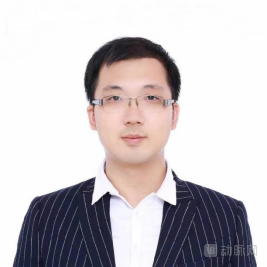
An Yicheng, Founder of Limed Medical
The rest of the company’s team hails from renowned domestic and international universities and institutions, including Stanford University, Shanghai Jiao Tong University, and Huawei HiSilicon AI Lab, possessing profound technical expertise in medical image algorithms, biomechanical simulation modeling, automation, and intelligent hardware.
Limai Medical, in terms of research and development and clinical application, withBeijing Badachu Plastic Surgery Hospital, Department of Plastic and Reconstructive Surgery at Peking Union Medical College Hospital, and Beijing Jiaotong University’s Microwave Photonics Laboratory Establish Collaboration. In terms of commercialization, it is withShanghai Mylike, Beijing MeimeiaoPartner with medical aesthetic institutions. Through deep integration of industry, academia, research, and clinical practice, Limedical integrates extensive valuable frontline clinical experience into its product systems via digitalization, forming standardized solutions that continuously facilitate in-depth iteration and refinement of the system.
In terms of financing, the company has previously obtainedOrigiMedExclusively InvestedAngel RoundFinancing. Currently, Limei Medical is launching a new round of financing, with Yuanyi Capital serving as the exclusive financial advisor.