

Zhiyun Health Launches Alzheimer's Disease Offensive with New Evidence of Ischelium®'s Cognitive Benefits
Recently, Dr. Liu Hongying, Chief Medical Officer of Zhiyun Health Technology Group, led her team in collaboration with key domestic research institutes to conduct studies on the Group’s proprietary innovative drug, Yishujialin® (Dihydroergotamine Mesylate Sustained-Release Tablets), for improving cognitive function. The latest research findings have been accepted by the internationally renowned academic journal *Biochemical and Biophysical Research Communications*.
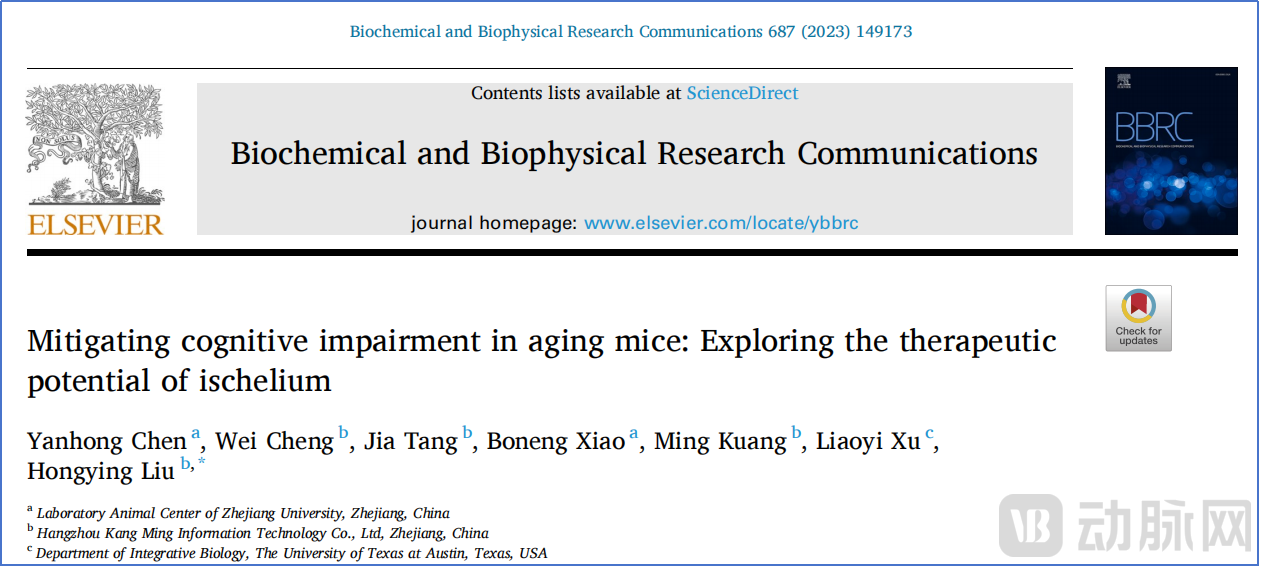
This foundational study provides an in-depth exploration of Yishujialin®Interventional Effects on Cognitive Decline and Potential Mechanisms. This study demonstrates that Yishujialin®It enhances the activity of antioxidant enzymes in the hippocampus of experimental animals, modulates the Nrf2/HO-1 signaling pathway, and reduces the production of pro-inflammatory cytokines IL-1β and TNF-α in hippocampal tissue. This leads to decreased expression of factors associated with cognitive function, thereby exerting neuroprotective effects. Meanwhile, studies have found that Yishujialin®By protecting neurons in the hippocampus, cognitive, learning, and memory functions in experimental animals can be significantly improved. These findings provide a basis for Yishujialin®It provides a scientific basis for the potential to delay aging, improve age-related diseases, and benefit the health of the elderly.
Zhiyun Group’s proprietary, self-developed drug: Yishujialin®Yishujialin: With years of market presence in China, a comprehensive mechanism of action, broad indications, and extensive clinical experience, it has been widely recognized by clinicians for the treatment of mild vascular dementia and cerebrovascular-related diseases.®It is an equimolar mixture of the four dihydro derivatives of natural ergot alkaloids. Studies have shown that it can increase cerebral blood flow and oxygen supply, improve cerebral microcirculation; inhibit erythrocyte aggregation, promote fibrinolysis, reduce adenosine diphosphate (ADP)-induced platelet aggregation, improve hemorheology, and thereby regulate coagulation function, exerting fibrinolytic and antiplatelet effects; it also modulates various neurotransmitters, antagonizes adrenergic hyperactivity, exhibits dopamine-like agonist and serotonin agonist activities, and increases the content of acetylcholine neurotransmitter in the brain; it inhibits the activity of postsynaptic neuronal Na+-K+-ATPase and adenylate cyclase, reduces ATP decomposition, thereby enhancing glucose utilization by ischemic neurons and improving energy balance in brain cells. Clinical studies have shown that Yishujialin®It significantly improves the symptom of sialorrhea in patients with Parkinson’s disease and is recommended by the 2022 “Chinese Expert Consensus on the Management of Gastrointestinal Symptoms in Parkinson’s Disease.” This further expands the applications of Yishujialin.®Applications in Age-Related Neurodegenerative Diseases.
Cognitive impairment is considered a transitional stage between normal aging and Alzheimer’s disease (AD). AD is an age-related, progressive neurodegenerative disorder characterized primarily by cognitive decline, which may result from the combined effects of genetic, environmental, and constitutional factors. The pathogenesis of AD remains unclear, making treatment challenging; patients often experience worsening symptoms, gradually losing their ability to perform activities of daily living until death. Therefore, early detection and timely intervention can improve prognosis and help patients regain basic physical functions. This study further confirms that Yishujialin®It can significantly improve cognitive, learning, and memory functions in aging animals, along with their underlying mechanisms of action, highlighting its potential application in age-related diseases.
China is home to over 10 million patients with Alzheimer’s disease (AD), the largest AD patient population globally, accounting for one-quarter of the world’s total. This figure continues to rise alongside population aging. As the pathogenesis of AD remains unclear, no effective cure has yet been identified, and clinical practice primarily relies on cholinesterase inhibitors. Current drug development efforts are mainly focused on mechanisms such as the amyloid-beta cascade hypothesis, tau protein hypothesis, cholinergic hypothesis, neuroinflammation hypothesis, and metal ion dyshomeostasis hypothesis. Drugs targeting different pathways and mechanisms are under continuous development, with clinical trials and regulatory submissions progressively underway, holding promise for expanding therapeutic options for AD patients. Zhiyun Health has also initiated research on AD prevention and treatment, looking forward to achieving significant breakthroughs in the future to benefit AD patients.
Zhiyun Health remains steadfastly patient-centric, focusing on the field of digital chronic disease management. Meanwhile, it continuously explores research frontiers and innovates service models in chronic disease management, making greater contributions to the health maintenance of patients with chronic conditions.