

Blasting Through Data Silos: Zhiye Software's ONE-LINK Smart Hospital Integrated Solution Powers High-Quality Healthcare Advancement
2023 was the year of the digital economy. Despite the overall sluggish macroeconomic environment, the digital economy sector in China’s A-share market continued to thrive, with revenues of digital-related enterprises steadily increasing. According to data released by the Ministry of Industry and Information Technology in July this year, China’s software business revenue exceeded RMB 4.3 trillion in 2023, with information technology service revenue reaching RMB 2.84 trillion. The digital economy has become a crucial support and a vital manifestation of vitality for technological innovation as well as economic and social development. Against this backdrop, the construction of smart hospitals has entered a peak period, and hospitals’ requirements for smart hospital development have reached a new level.
Over the past three decades, hospital informatization in China has evolved significantly, transitioning from a software- and hardware-driven era of informatization to a data-driven era of digitalization. While traditional management information systems have become widely adopted and leading hospitals have largely achieved digitalization, this does not necessarily mean that these hospitals have completed their digital transformation.
As early hospital information technology products were generally designed as monolithic systems based on business functions, they remained relatively independent in terms of underlying architecture, programming languages, and user interface interactions, resulting in multiple disparate systems for various business operations. With the continuous rise in clinical demands, healthcare IT systems are facing numerous challenges in practical applications.
The system is singular and isolated, making it difficult to achieve deep functional integration and resulting in a poor user experience.Due to the incomplete functionality of early Hospital Information Systems (HIS), physician workstations required the integration of third-party Electronic Medical Records (EMR), Clinical Data Repositories (CDR), 360-degree patient views, mobile nursing stations, and Clinical Decision Support Systems (CDSS). This transformed what should have been tightly coupled systems into loosely coupled or externally attached modules, limiting in-depth system development and compromising user experience. Furthermore, when legacy systems failed to meet practical operational needs, upgrades and maintenance were often limited to “patchwork” fixes, resulting in insurmountable data silos across departments and hindering internal data interoperability and sharing.
“Siloed systems” are prevalent, lacking open interfaces or standardized protocols, which leads to difficulties in data exchange, system integration, and business expansion.Since most systems are not designed as integrated solutions, they often operate in silos with their own independent database structures. During business interactions, the lack of unified collaboration protocols, coupled with absent or inconsistent interface standards, leads to information silos, data instability under frequent exchanges, and high data redundancy. Furthermore, constrained by architecture and system limitations, most existing solutions on the market focus solely on specific business functions and lack a compatible underlying operating system, making it difficult to support the transformative development needs of hospitals.
Intelligent features are immature, resulting in low system operation and maintenance efficiency.Although many current systems already offer functionalities such as electronic medical records (EMR) and clinical management systems, there is still significant room for improvement in their level of intelligence. At the operations and maintenance (O&M) level, driven by innovations in hospital services, hospital equipment and data are becoming increasingly diverse, with data volumes continuously growing. Consequently, O&M costs related to device interface development, data acquisition, and data processing have surged dramatically. When system issues arise, the response is often reactive and symptomatic—addressing immediate problems without tackling root causes. Hospitals and vendors can only resolve these O&M challenges through external measures, such as increasing manpower and hardware resources, resulting in high operational costs.
How to Ensure the Parallel Development of Smart Healthcare, Smart Services, and Smart ManagementZoe Soft Corp., Ltd. provides the answer with its next-generation smart hospital product, ONE-LINK.
ONE-LINK encompasses six product categories: Smart Healthcare, Smart Services, Smart Management, Smart Operations and Maintenance, Smart Specialties, and Group Hospitals, forming an integrated "six-in-one" smart hospital solution. It adheres to industry standards and national policy requirements related to Electronic Medical Record (EMR) grading, Interconnectivity grading, and Smart Service grading. Guided by the design philosophy of "One Design, One System" (ODOS), it builds a core smart healthcare business platform using a modern middle-platform mindset and a B/S/S three-tier architecture. By integrating technology, data, and business operations, ONE-LINK converges hospital business scenarios to provide a comprehensive IT solution that supports the long-term development of future hospitals.
Introduction to Zoe Soft ONE-LINK
In terms of technical architecture selection, ONE-LINK adoptedCloud-native development, microservices architecture,Characterized by high availability, elastic scalability, and agile deployment, it offers advantages in both horizontal scaling and vertical upgrading. It accommodates various cloud environments, including public and private clouds, helping hospitals rapidly break down service barriers between internal and external operations.
It has launched3165 Solution, i.e.Three Key Technical Features, unified backend (foundation of the technology middle platform), shared middle platform (empowered by the data middle platform), agile frontend (business middle platform building business);A Top-Level Design, unified architecture, unified language, unified standards, and unified operational experience; six smart applications: Smart Healthcare, Smart Services, Smart Management, Smart Specialties, Smart Operations and Maintenance, and Group Hospitals;Five Key Product Features,Integrated Unity, Smart Interaction, Intelligent Clinical Care, Efficient Operations, Open Interconnectivity.
ONE-LINK leverages the 3165 solution to comprehensively reconstruct a multi-dimensional, digital-intelligent operational model for patients, healthcare professionals, and hospitals.
Patient-Centered Care: Optimizing the Healthcare Journey to Deliver Convenient, Intelligent, and Multi-Hospital Shared Fully Digitalized Medical Services
During medical visits, many patients struggle with selecting the appropriate department, register for the wrong specialty, or need to consult triage nurses on-site before re-registering. This results in low efficiency, poor patient experience, and delays in treatment. Guided by the philosophy of “patient-centered informatization,” ONE-LINK systematically optimizes the pre-consultation, intra-consultation, and post-consultation phases to comprehensively streamline the healthcare journey.
First, achieve online-offline integration and facilitate convenient medical access across multiple hospital campuses.ONE-LINK’s end-to-end smart healthcare service covers the entire patient journey—pre-consultation, during consultation, and post-consultation. Patients can make online appointments, check in offline, receive clinical care, and undergo laboratory and imaging tests within the hospital. They receive real-time notifications of test results and critical values on their mobile phones. After discharge or leaving the hospital, they regularly receive rehabilitation recommendations and follow-up reminders via their mobile devices. With a single registration across the hospital group, patients can share their information among multiple hospitals, achieving a fully electronic medical experience. This truly enables data to do more of the running while reducing the need for patients to travel, thereby addressing bottlenecks and challenges in accessing medical care.
Next, it provides intelligent, end-to-end guidance for medical visits.By simply following the official WeChat account of their hospital on their mobile phones, patients can access intelligent, end-to-end healthcare navigation services. For instance, AI intelligently recommends the appropriate department for registration based on the patient’s self-reported symptoms. After registration, the system sends reminders, important notices, and appointment times via push notifications and SMS. Upon arrival at the hospital, patients can check real-time waiting queue status on their phones and complete pre-consultation questionnaires and epidemiological screenings while waiting, thereby enhancing the overall healthcare experience.
Finally, diverse payment methods.ONE-LINK integrates the electronic health code, medical insurance credential, and financial payment code into a single unified code, enabling card-free medical care throughout the entire process; patients need only present this integrated code. This three-code integration not only facilitates the sharing of patient master indices but also supports various online payment methods—including medical insurance, Alipay, WeChat Pay, UnionPay, Cloud QuickPass, and POS terminals—at multiple touchpoints such as billing counters, consultation rooms, and bedside stations, thereby eliminating the hassle of repeated queuing for patients.
Provide medical professionals with an integrated intelligent work platform that is smart, personalized, visualized, and user-friendly.
Traditional interactive system interfaces are monotonous and lack integration, failing to meet the personalized needs of different roles such as physicians, nurses, and medical technologists.
Zoe Soft Corp., Ltd. delves into the work scenarios of different user roles, leveraging its rich built-in portal components,Provide an integrated work desktop for doctors, nurses, medical technologists, and information maintenance personnel.Users can customize functional menus through simple drag-and-drop actions and build desktop layouts by selecting from a component library, enabling more flexible and efficient operations. This approach not only eliminates the cumbersome inefficiency of switching between different systems but also breaks down data silos across various business systems. Users can directly access various business interfaces via the Message Center, making work management more efficient.
Electronic medical records are the core component of hospital informatization construction, ONE-LINK'sIntelligent Entry for Medical Record DocumentationAssists physicians in rapidly, consistently, and standardizing the documentation of electronic medical records (EMRs). Built upon clinical practice guidelines, medical standards, and expert consensus, the system has accumulated over 1,480 specialized departmental disease templates covering more than 600 conditions. It features self-learning capabilities, precise recommendations, predictive analytics, automatic contextual semantic recognition, and quick entry support for common medical terminology including medical units. Additionally, its AI-driven self-learning functionality enables documentation to become “faster and more accurate with continued use.”
Moreover, the system also featuresIntelligent Patient Profiling and Clinical Diagnostic Decision Support.The former provides physicians with a comprehensive data profile of the patient’s entire care journey—from initial consultation through surgery to postoperative rehabilitation—enabling rapid and thorough assessment of the patient’s overall condition. The latter leverages AI algorithms to analyze patient medical history and clinical data, intelligently recommending appropriate treatment options for physician reference.
Empowering hospitals with refined management to achieve manageable, controllable, evaluable, and visualized operations.
As intra-hospital and inter-hospital business interactions continue to expand, hospital management has shifted from extensive to refined operational models. How to achieve "synchronized and homogeneous" development across multiple campuses under the "one hospital, multiple campuses" model—while addressing challenges such as fragmented systems, insufficient data consistency and integrity, complex and difficult-to-maintain interfaces, and lack of integration in business systems—has become a significant challenge facing both hospitals and healthcare IT vendors.
In response to these challenges, ONE-LINK stores core hospital operations within business domain models. By decoupling business functions and leveraging microservices and middle-platform technologies, it achieves modular encapsulation, allowing different business models to be flexibly assembled for various user scenarios, thereby meeting hospitals’ needs for personalized and refined operational management.
In terms of hospital quality management, ONE-LINK supports integration with medical quality and safety management systems and hospital decision support systems. It enables PDCA (Plan-Do-Check-Act) management of quality issues through a workflow that includes customizing quality standards, converting them into quality indicators, conducting indicator-based assessments, monitoring indicators, analyzing indicator data, facilitating managerial interventions, and analyzing post-intervention indicator performance.
In the informatization construction of "one hospital, multiple campuses," ONE-LINK has achieved the sharing of patients' basic information and medical cards across all campuses by establishing a Master Patient Index (MPI) and a group-level medical technology collaboration platform. This enables "order placement at the local campus, cross-campus examinations, and shared access to report information." Meanwhile, the system also builds a group hospital management platform based on the main and branch campuses, supporting single-platform, multi-campus deployment and group-scale expansion. It facilitates standardized construction across multiple campuses, implements two-tier management and control for both the group and individual campuses, and aids managerial decision-making and analysis.
Notably, ONE-LINK innovatively adopts deep intelligent O&M technology to ensure smooth system operation.Traditional platform system operations and maintenance (O&M) relied on professional project personnel for judgment, representing a reactive, "too-late" approach. In contrast, Zoe Soft Corp., Ltd. has innovatively adopted deep intelligent O&M technology, breaking away from the inefficiencies of traditional manual troubleshooting. This solution achieves a range of intelligent O&M objectives, including proactive automated early warnings, one-click inspections, rapid post-incident issue localization, centralized remote management, and assisted generation of data quality assessment documentation.
Through an innovative combination of features, ONE-LINK has dismantled the data silos inherent in traditional hospital information architectures, achieving seamless integration across the entire spectrum of medical operations. This approach not only maximizes data consolidation and utilization—thereby enhancing patient information leverage and the healthcare experience—but also empowers medical staff to perform their duties with greater efficiency and convenience, truly realizing a win-win outcome for patients, healthcare providers, and hospitals alike.
As the development of smart healthcare enters a critical phase, building a robust and forward-looking digital foundation has become the cornerstone for public hospitals to accelerate their advancement.Zoe Soft Corp., Ltd. leverages its proprietary products as the core foundation, achieving compatibility and interoperability with various Chinese software and database vendors., ensure compatibility with competitors through standardized interfaces, connect ecosystems, enable open interconnectivity, achieve ecosystem-based integration, break down information silos, facilitate multi-product collaboration to reduce costs and improve efficiency, and work with upstream and downstream partners to co-build a smart hospital ecosystem.
It is reported that Zoe Soft’s ONE-LINK comprehensive smart hospital solution has beenHuashan Hospital Affiliated to Fudan University (Fujian Branch), Mengchao Hepatobiliary Hospital of Fujian Medical University, The Affiliated Hospital of Inner Mongolia Medical University, Changde First People's Hospital, Shenyang Medical College Affiliated Central Hospital, Zhongshan Hospital Affiliated to Dalian University, The First Hospital of Hebei Medical University, Kunming Yan'an Hospital, Zhongshan Traditional Chinese Medicine Hospital, Liuzhou People's Hospital, Wuzhou People's Hospital, and more than 20 other hospitals across China have successfully launched and are operating stably.
upon reaching the average dailyOver 10 MillionAPI call volume, integrationNearly 100Third-Party Systems, Open ServicesOver 400 itemsunder such circumstances, it still maintains a near-perfect first-call success rate for data access. Furthermore, Zoe Soft Corp., Ltd. supports cloud desktop and cloud deployment architectures, capable of stably handling daily outpatient volumesOver 10,000 visits, Approved Bed CapacityOver 3,000 bedslarge Grade A tertiary hospitals.
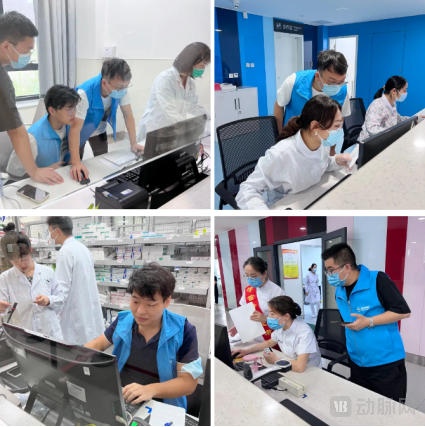
Zoe Soft Corp.,Ltd. Staff Debug ONEL-LINK for Hospital
Behind the impressive achievements lie repeated in-depth insights into hospital scenarios and meticulous refinement of every detail in user requirements. Behind this persistent dedication lies not only professional expertise demonstrated through committed action, but also a belief ingrained in the very core.
China’s healthcare informatization began in the early 1990s, when the Chinese government launched the “Golden Bridge,” “Golden Card,” and “Golden Customs” projects to develop the nation’s own “information superhighway.” In active response to this national call, Zoe Soft Corp., Ltd. has, since its establishment in 1997, remained steadfast in its original aspiration and mission of “promoting the modernization of the health industry through informatization.” Over the past 26 years, the company has stayed firmly committed to providing comprehensive solutions for medical informatization and intelligence, all-around supporting hospitals in achieving resource integration, enterprise-wide interconnectivity, and panoramic collaboration, thereby contributing to the steady and intelligent advancement of China’s healthcare informatization.
"Though the road is long, you will arrive if you keep walking; though the task is difficult, you will succeed if you keep working. Dawn will surely break on the long journey ahead. In a somewhat restless business environment, this perseverance is invaluable."