

Dallas Sleep Health Group Files Prospectus to Localize U.S. Sleep Medicine Expertise in China's Trillion-Yuan Sleep Health Market

DSG
Innovative Technology Solutions and Data Management Service Provider
In recent years, China’s sleep economy has truly taken off.
According to iiMedia Research, the market size of China's sleep economy grew from RMB 261.63 billion in 2016 to RMB 377.89 billion in 2020, and is expected to exceed RMB 1 trillion by 2030.
Over the past five years, awareness of the importance of sleep health has grown across all levels of society—from national policies and enterprises to medical institutions and the general public. Notably, the Healthy China Action (2019–2030), a guiding document for the development of China’s healthcare system, includes a dedicated section on sleep health. Meanwhile, the number of registered enterprises and medical institutions in this field has risen year by year, and getting a good night’s sleep has increasingly become a common aspiration among the Chinese population.
However, despite the high level of attention from all sectors of society, the healthy development of sleep medicine in China still faces numerous challenges. These include the lack of professional diagnostic criteria, textbooks, and clinical pathways; lagging treatment modalities; a disconnect between diagnosis and rehabilitation; and the need for improved patient compliance.
It is not difficult to observe that underlying these issues are the two key themes of “diagnosis and treatment” and “rehabilitation.” Admittedly, ventilators, sleep monitoring devices, and various sleep health and wellness products have experienced rapid growth in recent years. However, wearable bands with sleep monitoring functions exhibit stronger consumer-oriented attributes, while ventilators—recognized internationally as an effective treatment for obstructive sleep apnea syndrome—face challenges such as low patient adherence.
Therefore, in the development of China’s sleep health industry, the diagnostic stage has not made substantial progress, and the treatment and rehabilitation stage still faces many challenges. Consequently, given the current state of sleep health development in China, a professional diagnostic method, a comprehensive and cutting-edge treatment plan, and a full-process diagnosis, treatment, and rehabilitation system have become key to the industry.
In response, the renowned Dallas Sleep Health Group (hereinafter referred to as “Dallas DSG”) decided to enter the Chinese market in 2019, with plans to primarily drive the development of China’s sleep health industry through two key areas: screening/diagnosis and management/rehabilitation.
Originating from the world-renowned Texas Medical Center in the United States, Dallas Sleep Health Group primarily provides patients with cutting-edge services for sleep disorder assessment and treatment, as well as chronic disease management. The team is mainly composed of sleep medicine specialists, researchers, and sleep management experts. To date, DSG has established international sleep diagnosis and treatment centers in Dallas and Houston in the U.S., as well as in Shanghai, Haikou, and Changsha in China.
In 2019, Dr. Shaohui Wu, Executive President of the Dallas Sleep Health Group, returned to China. A medical doctor who graduated from Baylor College of Medicine, with over 20 years of clinical practice experience and 15 years of management experience in the global pharmaceutical and biopharmaceutical industries, he was determined to bring the successful U.S. models of sleep health diagnosis, treatment, and management to China, thereby promoting the healthy and comprehensive development of China’s sleep health industry.
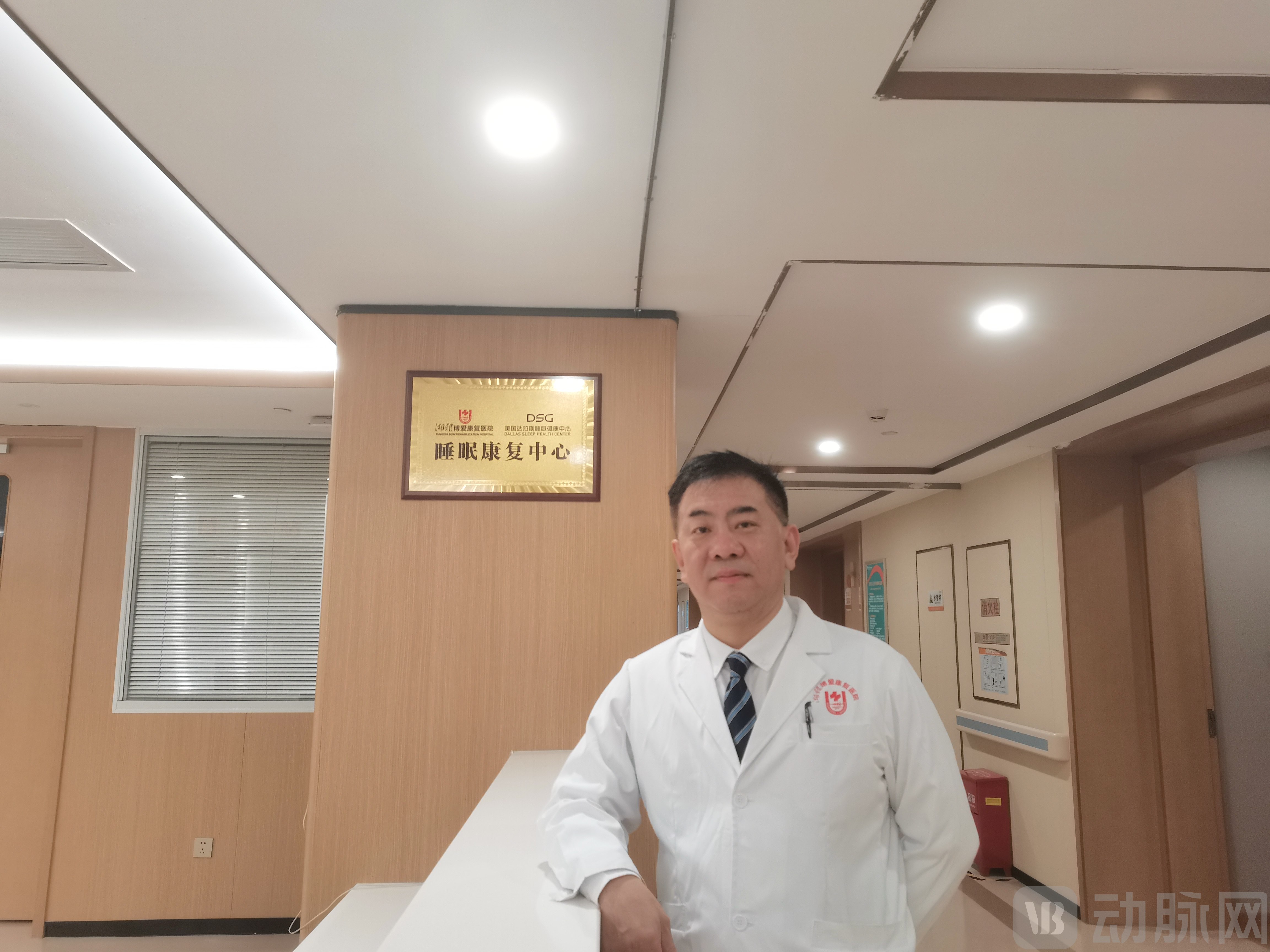
Dr. Shaohui Wu, Executive President of the Dallas Sleep Health Group
To support the initial development of China’s sleep health industry, Dallas Sleep Health Group has focused its efforts on preliminary diagnosis/screening and diagnostic procedures.
The reason is that Dr. Wu Shaohui believes that after years of development, certain niche segments within the domestic sleep health sector have achieved leapfrog progress, such as ventilators and sleep monitoring devices. However, most current domestic sleep monitoring devices are consumer-grade and fail to meet the requirements for professional clinical diagnosis. Furthermore, ventilators, which represent the most effective treatment and rehabilitation method for Obstructive Sleep Apnea Syndrome (OSAS), face challenges related to patient adherence and payment accessibility. This means that over 60 million OSAS patients in China are not receiving effective treatment. Given that OSAS can induce other chronic diseases and cardiovascular conditions, these more than 60 million untreated patients also face an elevated risk of developing additional serious illnesses.
Unfortunately, in the face of substantial market demand, China’s healthcare delivery capacity remains severely limited.
In terms of numbers, Dr. Wu Shaohui revealed that approximately 20% to 30% of adults in China suffer from sleep disorders of varying severity, with the prevalence among middle-aged and elderly populations reaching as high as 70%. However, there are only slightly over 200 hospital departments in China offering sleep diagnosis and treatment services. This stark disparity is astonishing.
Meanwhile, the level of diagnosis and treatment in sleep medicine in China urgently needs improvement. First, since sleep medicine is not an independent discipline in China but exists as a subspecialty attached to other specialties, there is currently no professional certification system for sleep medicine practitioners, nor are there comprehensive diagnostic and therapeutic guidelines or treatment standards.
Furthermore, the lack of independence as a distinct discipline in sleep medicine has resulted in an imperfect training system for sleep medicine professionals in China. In the United States, although sleep medicine is recognized as an independent specialty with its own certification framework, qualifications for sleep physicians and sleep technologists, examination systems, and clinical practice guidelines, it remains subspecialty under clinical sciences. Consequently, many Chinese students pursuing overseas education tend to focus on basic scientific research rather than clinical practice. As a result, whether trained domestically or returning from abroad, there is a severe shortage of physicians truly capable of providing specialized diagnosis and treatment for sleep disorders.
Finally, compared with European and American countries, China’s clinical diagnostic criteria for sleep disorders and the level of awareness thereof are relatively lagging.
Therefore, in the interview, Dr. Wu Shaohui remarked with emotion: “After more than two decades of exploration, although China has achieved phased results in sleep diagnosis and treatment technologies and standards, the overall development level of sleep medicine in China still lags far behind that of developed countries in Europe and America, due to national conditions and the healthcare system.”
It is precisely for this reason that the first step taken by Dallas Sleep Health Group in entering China’s sleep health industry has been to collaborate with public hospitals or private institutions to jointly establish regional, internationalized, and digital sleep medicine centers.
Specifically, for public hospitals, Dallas Sleep Health Group has launched turnkey solutions to support the development of sleep medicine centers in Chinese hospitals from the following aspects—
First, leveraging our accumulated experience in the U.S. sleep health market, we assist hospitals in establishing diagnostic and treatment protocols, diagnostic criteria, and management systems that align with international standards. Second, we help hospitals introduce and apply the most advanced international diagnostic and therapeutic equipment. Third, by tapping into resources from renowned U.S. specialists and cutting-edge clinical expertise, we train and support Chinese hospitals and physicians in enhancing their standards of sleep medicine care.
For private institutions, in addition to the aforementioned services, Dallas Sleep Health Group also provides professional talent training, sleep health management, and guidance on selecting sleep-aid products for private sleep medicine centers.
Taking the recent strategic partnership between Dallas Sleep Health Group and Wanda Information Group, a subsidiary of China Life, as an example, the collaboration encompasses not only the operational management of sleep medicine centers and the introduction of new digital technologies, but also chronic sleep disorder management and ecosystem products.
As for how to understand “regionalization” and “internationalization/digitalization,” Dr. Wu Shaohui also provided a detailed explanation in the interview. The so-called “regionalization” refers to the strategy whereby, when selecting partner hospitals or institutions, Dallas Sleep Health Group (DSG) first prioritizes one hospital or institution within a specific region for collaboration. The primary objective is to establish benchmark demonstration projects, thereby expanding regional influence while laying a solid foundation for penetrating lower-tier markets.
Meanwhile, “internationalization/digitalization” is more reflected in the internationalization of treatment standards and the digitalization of chronic disease management.
As most sleep health disorders are chronic conditions requiring long-term management, DSG, in addition to co-establishing sleep medicine centers with public hospitals and private medical institutions, has also targeted post-discharge management services for OSAS.
The reasons for selecting OSAS are not difficult to guess. First, China has a large population of OSA patients, approximately 176 million, among whom about 65 million suffer from moderate-to-severe OSAS. Second, as a chronic disease, OSAS treatment and rehabilitation require long-term follow-up management, and the use of ventilators needs guidance and necessary prompts to improve adherence.
To this end, Dallas Sleep Health Group, in partnership with ventilator manufacturers, monitoring device manufacturers, internet hospitals, and other online and offline platforms, has launched a professional post-discharge sleep management service for Obstructive Sleep Apnea Syndrome (OSAS). Through this service, patients not only have access to cutting-edge ventilator therapy and condition-monitoring devices but also receive personalized, professional lifestyle recommendations and expert answers to their questions from specialized physicians.
Moreover, Dallas Sleep Health Group has a health management team that regularly reminds patients to use their ventilators in accordance with medical advice, provides professional guidance on ventilator usage, establishes health records for patients, and promptly tracks ventilator usage to generate trend charts. This enables physicians to stay informed about patients’ treatment progress and facilitates timely adjustments to treatment plans.
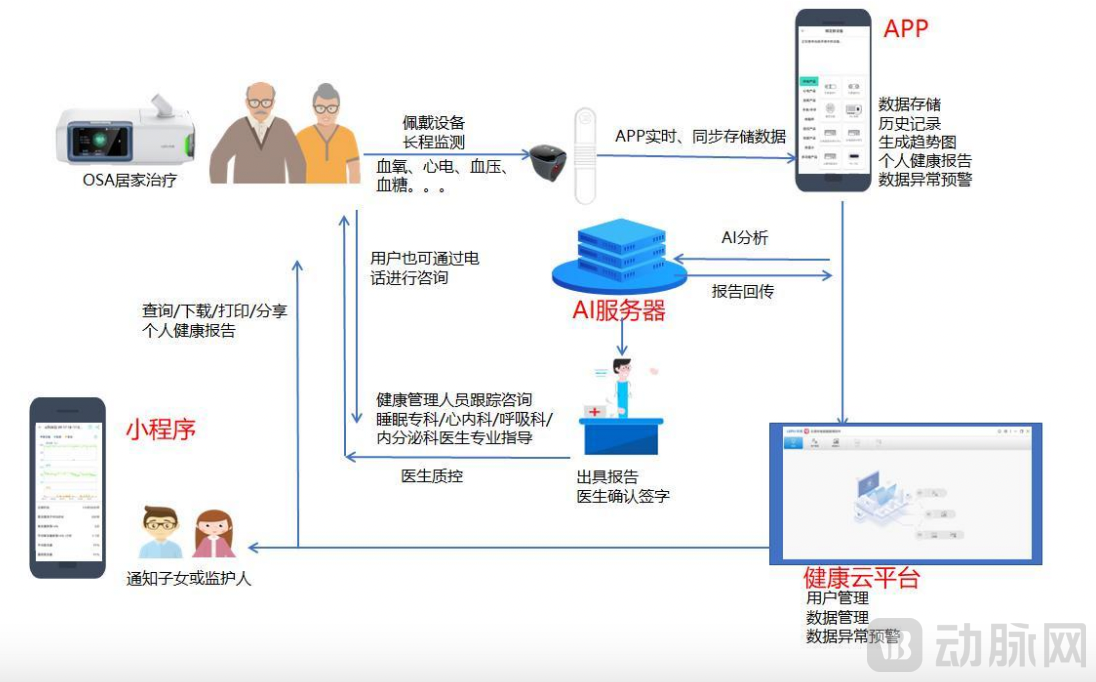
Schematic Diagram of the Post-Discharge Management Program for OSAS by Dallas Sleep Health Group
It is worth noting that the post-discharge management service for Obstructive Sleep Apnea Syndrome (OSAS) offered by Dallas Sleep Health Group has abandoned the traditional hardware-based revenue model in favor of a service-fee model. According to Wu Shaohui, as healthcare reform continues to advance, the prices of medical devices are bound to decrease, while services that provide tangible benefits to patients will inevitably become more valuable. Therefore, “high-quality services should constitute the most valuable component of chronic disease management programs.”
This is the philosophy that Dallas Sleep Health Group has always upheld and will continue to practice in the future. At the end of the interview, Dr. Wu Shaohui revealed to VCBeat DSG’s development plans for the Chinese sleep health market—
First, within the next two to three years, DSG will collaborate with dozens of domestic medical institutions, hospitals, and outpatient clinic chains to continuously advance the internationalization, standardization, and normalization of diagnosis and treatment for sleep-related disorders. Second, over an extended period in the future, DSG aims to partner with more stakeholders in the sleep health ecosystem to develop post-hospital management services for Obstructive Sleep Apnea Syndrome (OSAS) in China into a distinctive specialty service, ensuring effective treatment and professional management for the more than 60 million OSAS patients. This initiative seeks to improve the health status of the Chinese population, promote healthy sleep and well-being, and contribute to achieving the grand objectives of Healthy China 2030.