

Internet Giants Enter the Fray as Over 1,000 Institutions Fuel Offline Sleep Health Boom

Philips Healthcare
Integrated service provider in healthcare, quality living, and lighting fields

JD Health
Internet Medical and Health Service Platform Provider
The “Offline Battle” for Sleep Health Is Imminent.
In recent times,Offline sleep health institutions, including sleep medicine centers and sleep clinics, are rapidly emerging.: In November, the Psychological Sleep Center of Changgang Community Hospital in Haizhu District, Guangzhou was launched; in June, the TCM Insomnia Specialty Clinic at Shanghai Andrew Shengruici Outpatient Department was established; in April, the Xiaodou Health TCM Rehabilitation and Sleep Clinic Demonstration Base was unveiled; in March, Anxin Sleep (Guangzhou Outpatient Clinic) was completed and opened for business……
Data offers a glimpse into the growth rate of these institutions. According to data from Tianyancha, as of November 2023, there were 1,529 offline sleep health-related institutions in China (including enterprises tagged with “sleep center,” “sleep clinic,” etc.). Among them,In the sleep clinic category, institutions established within the past five years account for 75% of the total.
In addition, sleep health institutions represented by Shenzhen Sumian Doctor Group, Guangzhou Kangzheng Outpatient Department, Chengdu Yinlu Anesthesia and Sleep Center, Hangzhou Silipu Clinic, Shui’ermei, Yishi Sleep, Dallas Sleep Health Group, and Philips Sleep & Respiratory Care Experience Center are continuously emerging, with some enterprises rapidly expanding their market presence and establishing a certain brand effect.
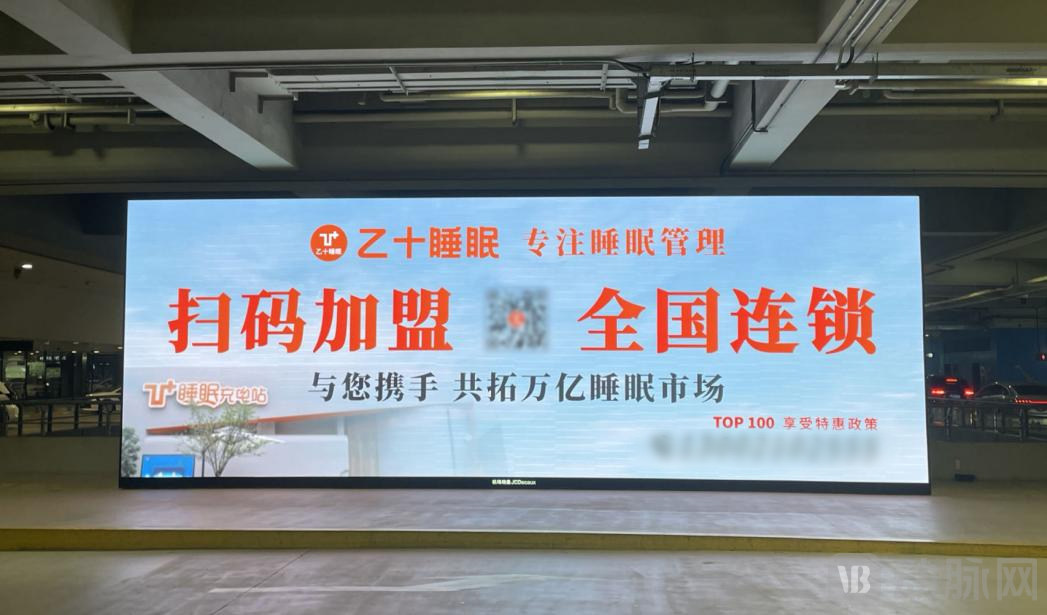 (Advertisement by a sleep health organization at Shanghai Hongqiao Airport in November. Photo by VCBeat)
It is worth noting that,Internet giants have also entered the fray personally.. Previously, JD Health and Sumian jointly established the JD Health Youmian Center and deployed Youmian outpatient clinics in offline settings.
It is evident that market entrants are flocking to offline service scenarios for sleep health. This trend is driven by the substantial demand for sleep health solutions: according to the "China Sleep Research Report 2023," the insomnia rate among adults is as high as 58%, and 16.2% of respondents reported not feeling fully rested after sleep. It is important to note thatChronic sleep deprivation can cause or increase the risk of cardiovascular and cerebrovascular diseases, depression, diabetes, and obesity, and impair cognitive, memory, metabolic, and immune functions.Therefore, helping people get a good night's sleep is an urgent priority.
As multiple players enter the sleep health services market, a new industry shift is brewing.
Sleep health is a hot sector, with related brands and institutions rapidly entering the fray in an effort to capture a significant share of the vast offline market.
Prior to this, market entrants were primarily sleep-focused home furnishing brands specializing in bedding products such as mattresses and pillows, as well as developers of medical devices for sleep monitoring and the treatment of sleep disorders. AndAs the offline service scenario with the closest user engagement, it has rarely been targeted by enterprises before, for two reasons.
· On the one hand, it isOn the demand side, there is insufficient attention paid to sleep health issues., few people consider sleep disorders to be a condition requiring treatment.
·On the other hand, it isOn the supply side, there is a lack of professional sleep health institutions.. For instance, the number of specialized sleep disorder clinics remains relatively low, with most concentrated in major cities such as Beijing, Shanghai, and Guangzhou. There is still room for improvement in terms of the number of professionals, training efforts, and the number of participating institutions.
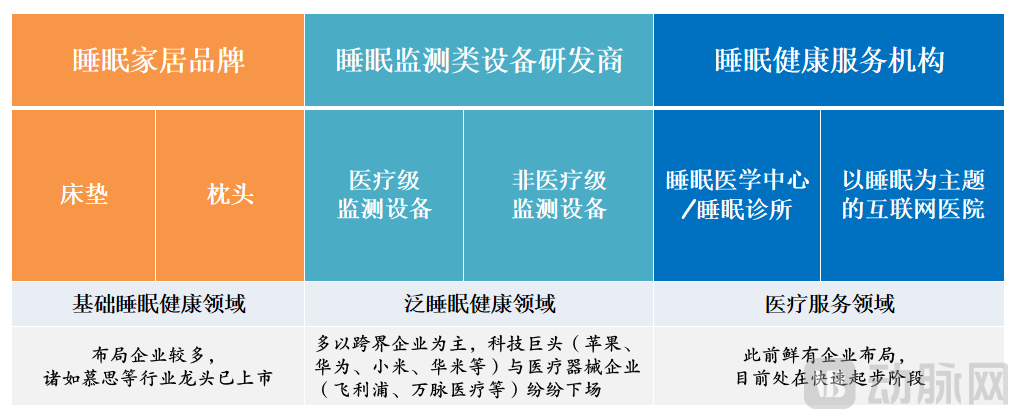
(Three Major Directions of the Sleep Health Industry; Graphic by VCBeat)
How Fragmented Is the Sleep Health Industry?According to statistics from "Zhen Suo Jie," among the more than 1,500 sleep-related outpatient clinics currently in China, approximately half are located in respiratory departments, one-quarter in otolaryngology departments, and the remainder are distributed across neurology, psychiatry, geriatrics, stomatology, traditional Chinese medicine, and other specialties. In contrast, sleep medicine is classified as a primary discipline in the United States, where even moderately sized hospitals typically have sleep clinics or sleep centers.
Treatment also faces barriers.This is because sleep disorders are a composite symptomatic manifestation of many conditions, including depression, anxiety disorders, phobias, schizophrenia, potential metabolic disturbances and immune suppression, as well as various somatic diseases and even unhealthy lifestyles. These conditions span different medical specialties and classifications, placing high demands on physicians’ professional expertise.
But change is quietly taking place.
“As health education efforts deepen, a growing number of people are paying attention to their sleep health. Public tertiary-A hospitals, including Peking Union Medical College Hospital, Beijing Chaoyang Hospital Affiliated to Capital Medical University, and West China Hospital of Sichuan University, have established sleep centers, but these facilities remain small in scale and serve a limited population,” said investor Cheng Hao. “This has provided market-oriented institutions with the opportunity to meet people’s growing and diverse needs for sleep health.”
It is precisely against this backdrop that relevant institutions, having sensed the opportunity, have been entering the market one after another.During this process, private institutions have become the primary driver of growth: they not only complement public hospitals and provide differentiated services, but also unlock greater market potential.
Specifically, in offline service scenarios, sleep health institutions can provide users with more precise medical services, such as treating various sleep disorders including insomnia, circadian rhythm disruptions, and nocturnal sleep behaviors.
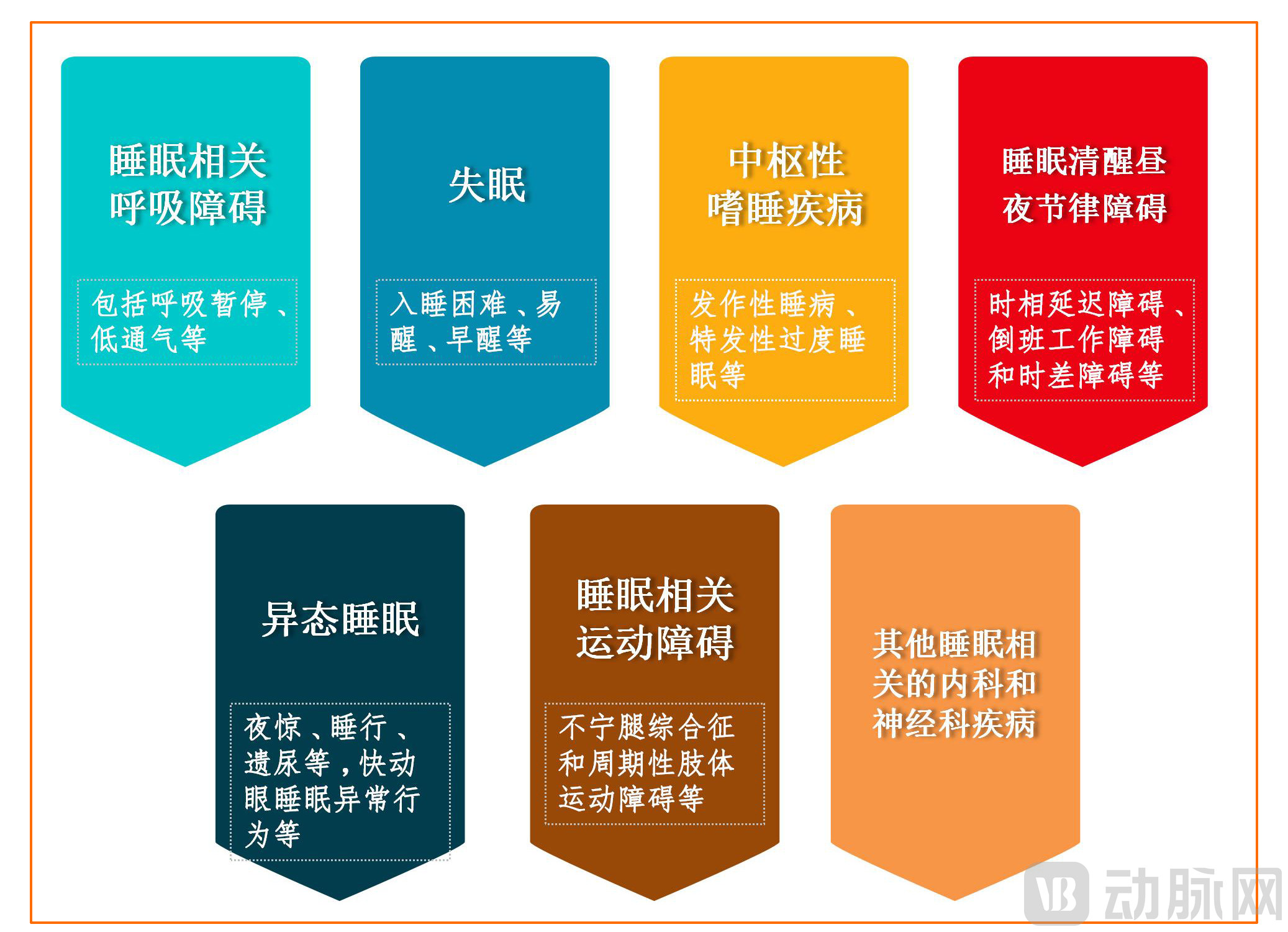 (Main Disease Needs Addressed by Sleep Health Service Providers; Graphic by VCBeat)
More importantly, the sleep health sector demonstrates significant scalability. For instance, since sleep quality often declines in women during pregnancy and the postpartum period, sleep health organizations can assist them with health management throughout their entire reproductive lifecycle. Similarly, as obstructive sleep apnea worsens in some patients with hypertension, the comorbidity of hypertension becomes more pronounced; therefore, sleep health organizations can also provide support in the intervention and management of chronic diseases.
From the perspective of progress, there are currently three types of enterprises deeply engaged in this field.One category consists of native institutions in the field of sleep health, primarily represented by Hangzhou Sleep Clinic and Kangzheng Medical; the second comprises cross-industry entrants, such as Philips, which has established a Sleep Respiratory Experience Center; the third involves collaborations between internet giants and sleep health enterprises, exemplified by JD Health.
It is not difficult to see that the sleep health services market has reached a critical turning point, driven by faster store expansion, greater market potential, and an increasingly diverse range of market entrants.
As people place increasing emphasis on sleep health,The sleep health sector is becoming increasingly hot, but it remains in its early stages, with no unified industry standards yet established.This also means that, unlike specialized fields such as ophthalmology and dentistry, which have established standardized diagnostic and treatment pathways, the sleep health sector features diverse service models.
Taking Kangzheng Medical as an example, it is a chain brand specializing in sleep disorders and mild-to-moderate psychological services. It adopts a systematic diagnosis, treatment, and prevention model that integrates “clinical psychology and sleep outpatient clinics + psychological counseling centers + psychological prevention centers,” thereby establishing an integrated, one-stop comprehensive mental health service system encompassing medical diagnosis, psychological assessment, psychological counseling, psychological rehabilitation, and psychological prevention. It is evident that it has leveraged psychological diagnosis and treatment as its breakthrough point,Deepening Offline Sleep Health Services。
As the offline sleep disorder diagnosis and treatment center for Good Sleep 365 (an application for insomnia diagnosis, treatment, and rehabilitation services), Hangzhou Slip Clinic provides sleep diagnosis and treatment services by combining physical medical care with remote consultations, including the use of FDA-cleared non-pharmacological therapies to treat various sleep disorders.Its model leans more toward a combination of “online + offline” approaches.。
Yishi Sleep also adopts a combined “online + offline” model. Its internet hospital is among the first in China to focus on sleep, offering end-to-end services and comprehensive solutions that include public education on sleep health, online consultations, appointment scheduling for testing, diagnosis and treatment, and follow-up care.
Offline, Yishi Sleep has avoided the capital-intensive sleep clinic model. Instead, it has launched a chain of "Sleep Charging Stations" in cities such as Shanghai. These Yishi Sleep Charging Stations come in three formats: flagship stores, standard stores, and community stores, enabling coverage of both urban communities and central business districts (CBDs). Each station is equipped with Yishi Sleep’s self-developed sleep ventilators, which incorporate digital-intelligent technologies such as dynamic sleep tracking, dynamic tidal volume tracking, cumulative volume technology, and adaptive sensing algorithms. These devices can monitor users’ respiratory characteristics in real time, match different breathing modes to diverse user profiles, and rapidly adapt to individual users, thereby facilitating improved sleep.
Beyond the distinction between online and offline services, institutions also exhibit significant differentiation in their treatment pathways: in addition to the aforementioned psychological diagnosis and treatment and non-pharmacological therapies, specialized services such as anesthesia-based interventions and Traditional Chinese Medicine (TCM) have successively emerged.
For example, the Yinlu Sleep Center in Chengdu is China’s first independent medical institution specializing in anesthesiology, and itsBuilding a Holistic Solution for Sleep Health Management Through Innovative Anesthesia-Based Diagnosis and TreatmentAccording to the institution's official website, Yinlu Sleep Center adopts a new chronic disease treatment logic of "appropriate dosage—dosage reduction—discontinuation" based on MDT (Multidisciplinary Team) evidence-based medicine. With innovative anesthetic diagnostic and therapeutic techniques as its core, it customizes multimodal treatment plans involving medication, physical therapy, and psychotherapy according to individual differences, specifically helping patients with refractory insomnia, treatment-resistant depression, and drug dependence.
Shanghai Andrew Shengruici Outpatient Department, established in June this yearTCM Specialty Clinic for InsomniaFeaturing multidisciplinary collaborative diagnosis and treatment to comprehensively address sleep disorders, it employs integrated Traditional Chinese Medicine (TCM) therapies tailored to the specific characteristics of different populations and constitutions. These therapies include internal administration of Chinese herbal medicines (decoctions and herbal teas) and external treatments using appropriate TCM techniques (acupuncture, cupping, sleep-aiding aromatic sachets, herbal foot baths, and medicated diets), with the aim of regulating zang-fu organ function and improving sleep quality.
Furthermore, with the emergence of new concepts in sleep health, institutions have diverged in their specific implementation pathways.“The first step in addressing sleep problems is to learn how to get a good night’s sleep. Lifestyle primarily revolves around diet, physical activity, and sleep. Improving these three aspects can help manage chronic diseases. By intervening in the dietary habits, exercise levels, and sleep rhythms of patients with chronic conditions, and providing them with scientific education and training, we can enable them to acquire knowledge, build confidence, and take action, gradually mastering the skills and methods for a healthy lifestyle, thereby restoring their health,” stated Han Zhenya, founder of Sumian Technology, in a public address.
Thus,Guided by the principles of lifestyle medicine, Sumian Technology, in collaboration with the Chinese Sleep Research Society and JD Health, has established the JD Health Youmian Center., the center promotes healthy sleep lifestyles to the general public and provides online free clinic services, enabling users to access sleep health solutions from home. Additionally, by leveraging JD Health’s Youmian Center online, tertiary hospital sleep centers offline, and the Youmian outpatient clinic network, Sumian has established bases for sleep medicine experts across China to promote tiered diagnosis and treatment of sleep disorders, thereby alleviating the supply-demand imbalance between patients and healthcare providers in sleep medicine.
In terms of business models, sleep health institutions are also making some attempts.For example, the Anxin Sleep Clinics established in Beijing and GuangzhouEstablished a commercial health insurance payment system, it has established direct billing arrangements with dozens of commercial health insurance companies worldwide, thereby providing customers with more convenient medical and insurance claims services, while also offering green referral channels to a multi-network hospital system.
Dallas Sleep Health Group, which entered China in 2019, chosePartnering with Public Hospitals or Private InstitutionsJointly Building a Regional, International, and Digital Sleep Medicine Center. Taking private institutions as an example, Dallas Sleep Health Group first leverages its experience accumulated in the U.S. sleep health market to help hospitals establish diagnostic and treatment protocols, diagnostic criteria, and management systems that meet international standards; second, it assists hospitals in introducing and applying the most advanced international diagnostic and therapeutic equipment; third, it relies on renowned U.S. specialist resources and cutting-edge clinical expertise to train and support Chinese hospitals and physicians in enhancing their sleep medicine care capabilities; and fourth, it provides private sleep medicine centers with services such as professional talent training, sleep health management, and guidance on selecting sleep-aid products.
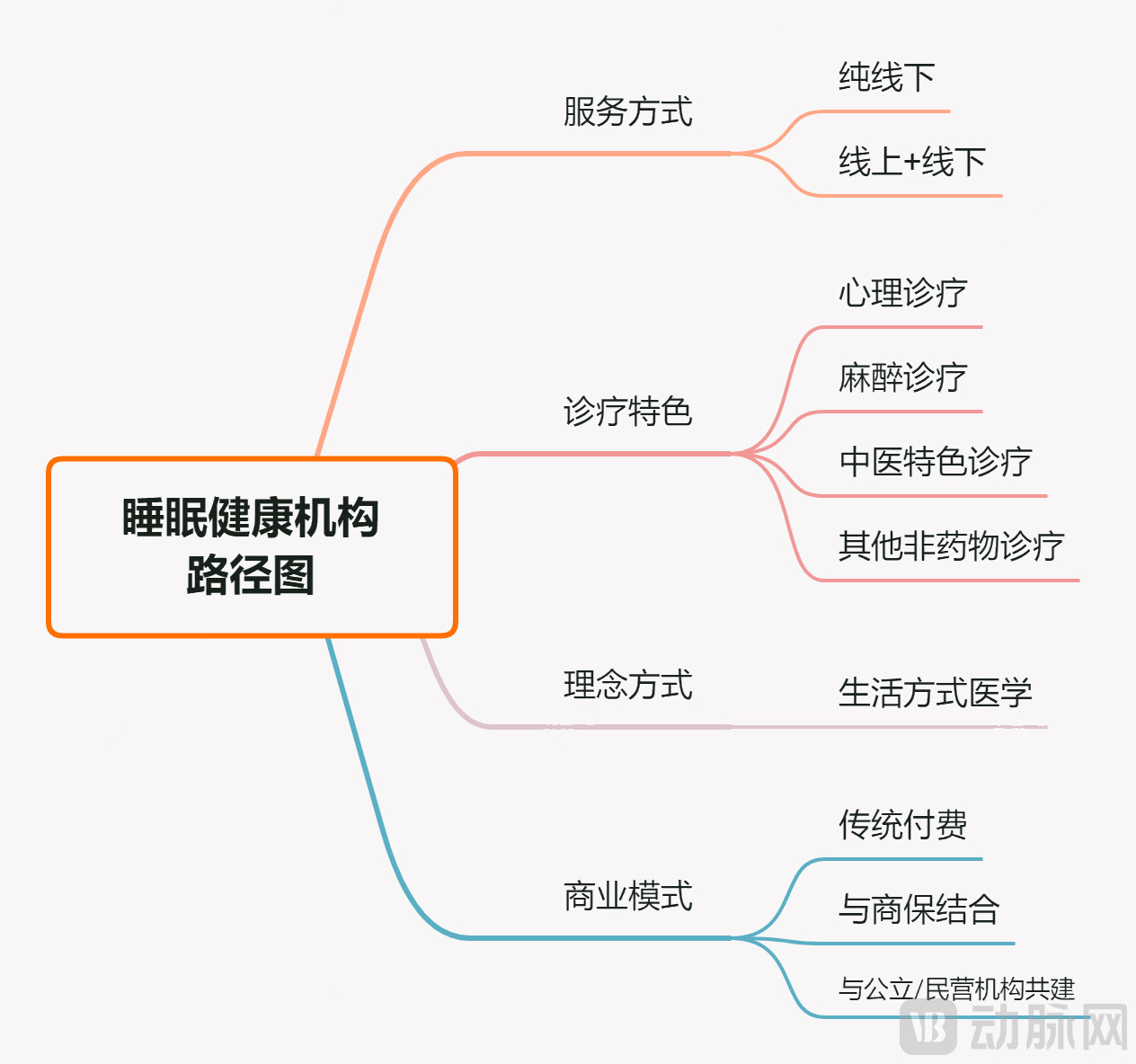 (Sleep Health Organization Roadmap, Chart by VCBeat)
In summary, China’s sleep health industry has explored diverse pathways and identified new possibilities, reshaping the market landscape. However, the industry remains in its early stages, with a long and arduous journey ahead, requiring sustained innovation and continuous accumulation of expertise from all stakeholders.
Like two sides of the same coin, as sleep health gains prominence, corporate strategic positioning and entrepreneurial ventures in this sector are not as straightforward as one might imagine, with numerous challenges still present at this stage.
For instance, China faces a shortage of specialized talent in sleep medicine. Taking internationally registered polysomnographic technologists as an example, there are currently only around 300 such professionals in China, which falls far short of the industry’s development needs. Furthermore, the sector lacks unified standards, and public awareness urgently needs to be improved.
In light of this, VCBeat offers three recommendations to sleep health organizations, based on interviews with industry experts.
First, prioritize the development of internet-based healthcare to advance the field of sleep medicine.Zhan Shuqin, Chief Physician and Director of the Sleep Disorders Specialty at Xuanwu Hospital, Capital Medical University, previously told VCBeat that internet healthcare platforms can conduct online condition assessments for patients with insomnia and other groups, allowing them to avoid in-person visits and saving time. Furthermore, the internet can, to a certain extent, help alleviate the imbalance in medical resource distribution.
Taking the Sleep Center at Xuanwu Hospital, Capital Medical University, where Director Zhan Shuqin practices, as an example, the center has opened its services to patients across China through an internet hospital platform, enabling patients from various regions to conveniently access Dr. Zhan’s team online and benefit from high-quality medical resources.
Second, focus on the application of digital therapeutics in sleep health scenarios.Currently, CBT-I (Cognitive Behavioral Therapy for Insomnia), a cognitive behavioral therapy targeting sleep disorders, is being widely accepted by the industry. This therapy primarily improves insomnia by modifying various factors, such as poor lifestyle behaviors and sleep habits. Companies including Zhilan Health, Sumian, Zheng’an Technology, and Wangli Technology are all actively deploying in this field.
Certainly, digital therapeutics need to continuously improve convenience, meaning the software should provide users with a positive experience and be easy for patients to use. After all, clinicians encounter a wide variety of patients, including those who are older and have lower levels of education; they are more likely to accept interfaces that are cleaner and operations that are simpler. Another key aspect is enhancing patient adherence, which is a challenge faced by the vast majority of behavioral digital therapeutics. This can be addressed, for example, by improving interactivity to engage patients and encourage long-term use.
Third, there is an urgent need for new innovative products beyond pharmacological and psychological interventions.This is because, although medications have a certain therapeutic effect on sleep disorders, they also produce significant side effects, including excessive daytime sleepiness, poor drug tolerance, cognitive impairment, dependence, and difficulty in withdrawal. Meanwhile, these drugs are often used for psychiatric disorders, leading to their rejection by the general population.
Therefore, there is an urgent market need for new assistive technologies, such as the system launched by Sumian that centers on magnetic field physical interference technology. This system provides non-pharmacological, non-invasive interventions with minimal side effects and high patient compliance, thereby serving as a complement to traditional solutions involving pharmacological and psychological interventions.
It is believed that as people place greater emphasis on sleep health, the sleep health industry will continue to be in a growth phase. However, it is important to note that the industry needs to develop in a more positive direction, constantly providing users with higher-quality sleep experiences.
After all, in an increasingly anxious era, a good night's sleep is becoming ever more scarce and precious.