

Jingqin Intelligent Medical Secures Tens of Millions RMB in Angel Funding to Advance Domestic Hand-Controlled Laparoscopic Robotic Arm with Proprietary Technology

Dalton Venture
Venture Capital Institutions in the Medical and Health Field
VCBeat learned at the earliest opportunity that,Jingqin Zhizao (Suzhou) Medical Technology Co., Ltd. (hereinafter referred to as “Jingqin Zhizao”) has completed a tens-of-millions-yuan angel round of financing. This round was led by Dalton Venture, with participation from the SND Science and Technology Investment Co., Ltd. The funds raised will be primarily used for the research and development, registration, and production of core products, as well as team expansion.
As a Gusu Leading Talent Enterprise in Suzhou, Jingqin Zhizao has long been committed to the research and development of innovative technologies in the field of medical engineering, with technical advantages spanning multiple areas including mechanical design, electronic engineering, and laser technology.Among them, the representative original research technology—““Universal Flexible Transmission Technology” and “Transmission Control Technology”, R&D has been completed and patents have been applied for both domestically and internationally, with plans to complete batch pilot production and type testing of the corresponding medical device products in the near term.
Compared with surgical robots, the niche segment of “hand-controlled robotic arms” in which Jingqin Zhizao operates is not particularly “crowded.” Globally, there are only a handful of competitors, yet this space includes several industry leaders such as Johnson & Johnson and B. Braun Melsungen. Among them, FlexDex Surgical, a U.S. company backed by Johnson & Johnson, secured $13 million in financing in 2021 and was one of the earliest players to engage in R&D in this field. Meanwhile, LivsMed, a South Korean company active during the same period, had its product approved for market launch by China’s National Medical Products Administration (NMPA) earlier this year and has entered into a domestic distribution partnership with GenSci Medical.
Why Are These Giants Betting on the Hand-Controlled Robotic Arm Sector? What Is the Market Value of This Sector?What differentiated advantages does Jingqin Zhizao’s novel, independently developed universal laparoscopic surgical instrument possess, enabling it to secure multi-million-yuan angel financing and make a strong market entry?
Jingqin Zhizao is committed to driving innovative advancements in minimally invasive surgery through the research and development of surgical instruments. It is one of the few companies in China that has independently developed flexible transmission technology and successfully translated it into the field of universal endoscopic surgical instruments.
From the perspective of the overall historical development of surgery, surgical procedures and instruments have undergone multiple stages: from open surgeries involving debridement and suturing with scalpels and needles, to later specially designed rigid laparoscopic instruments such as scissors, forceps, and graspers, and further to the invention of minimally invasive devices like staplers and harmonic clips.
Surgical instruments, continuously evolving through advanced engineering technologies such as mechanical design, electronic circuits, and materials science, have driven innovation and development in surgical procedures. Meanwhile, surgical robots, exemplified by the da Vinci system, have gradually emerged and evolved within this positive feedback loop between surgical techniques and instrumentation.
However, behind the disruptive success of the da Vinci Surgical System lies its massive equipment cost, often running into millions of dollars, along with the corresponding high surgical fees. As a result, its actual adoption rate remains low, accounting for only about 3% of laparoscopic procedures. In fact, the vast majority of surgeons still primarily use traditional rigid laparoscopic instruments without articulation capabilities. This not only places more stringent demands on surgeons’ technical skills but also hinders the further advancement of surgical techniques.
As the da Vinci surgical robot gains increasing recognition as a surgical modality, the industry has begun to explore whether it is possible to combine the strengths of both systems by transplanting the multi-degree-of-freedom robotic arm operation mode onto traditional laparoscopic surgical instruments.
To this end, innovative medical device companies such as FlexDex Surgical and LivsMed have begun developing manually controlled robotic arms compatible with conventional laparoscopy.Jingqin Zhizao’s team also began experimenting in 2016 with applying its self-developed flexible transmission technology to minimally invasive medical devices, and successfully prototyped an electromechanical control system compatible with the technology.
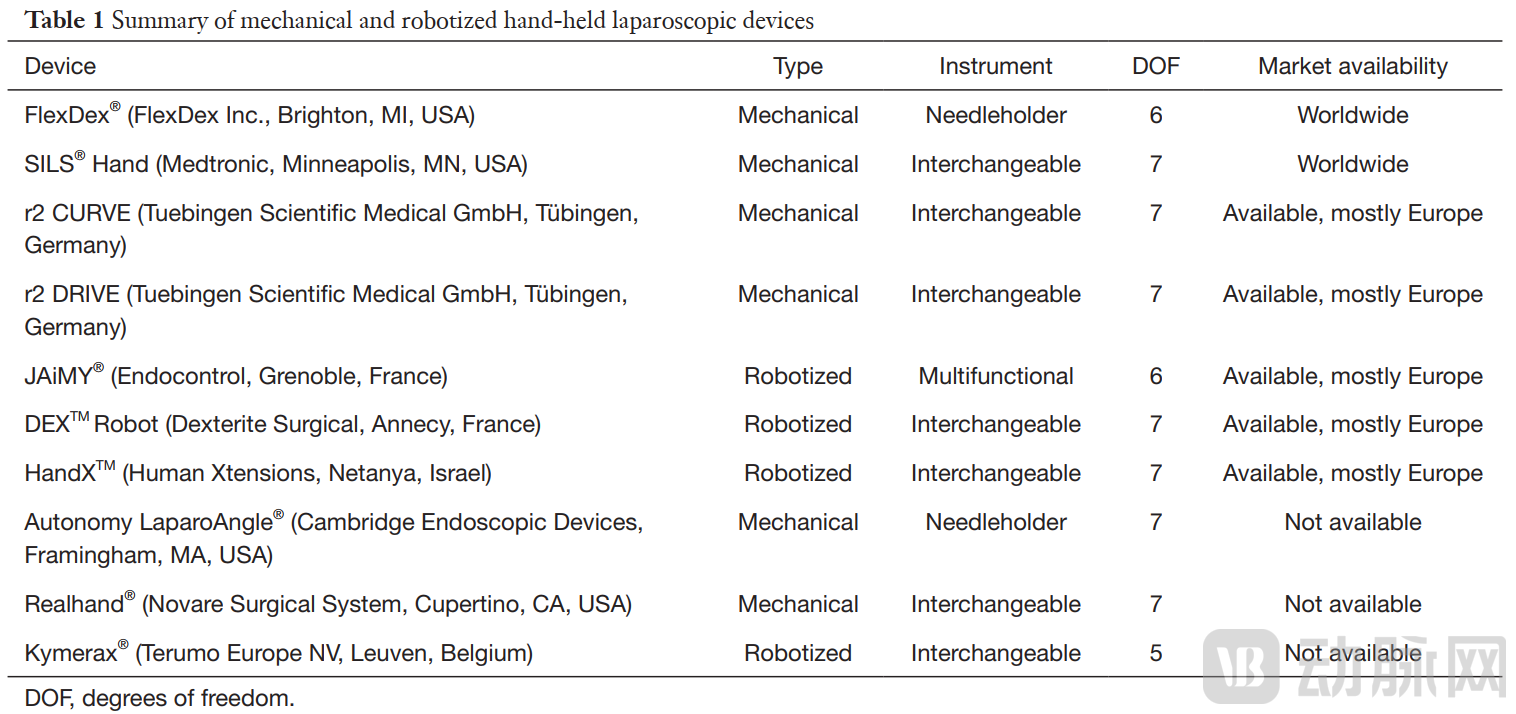
A Review of Research on Hand-Controlled Robotic Arms
Image source: Ann Laparosc Endosc Surg (ALES)
According to Wang Yichu, Co-founder of Jingqin Zhizao,The company has successfully commercialized its two core technologies—"Universal Joint Flexible Transmission Technology" and "Transmission Control Technology"—and integrated them into a modular platform technology. This has enabled the development of its latest generation of hand-controlled robotic arms with modular functionalities, offering surgeons the advantages of robotic surgery—such as enhanced precision, flexibility, intuitive control, and ergonomic benefits—at a lower cost.
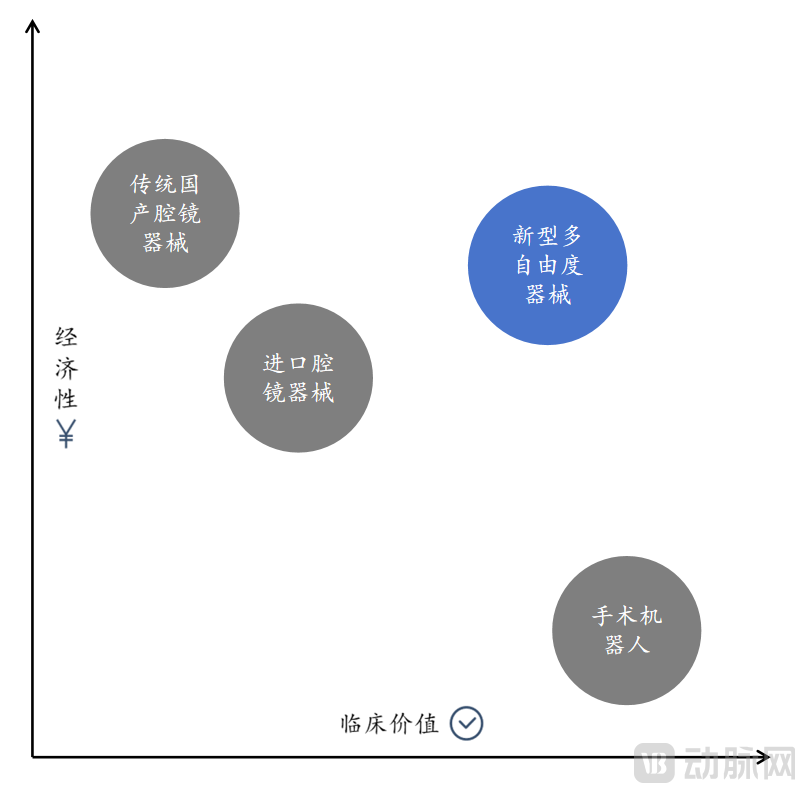
Economic and Clinical Value Coordinate System
Photo provided by the interviewee
Public data shows that the number of minimally invasive surgeries in China grew to approximately 22 million cases in 2022. With the rapid increase in surgical volume, the domestic market for minimally invasive surgical instruments and accessories (MISIA) has also experienced explosive growth, with the market size expected to exceed RMB 30 billion in 2023.
It is worth noting that in most typical Grade A tertiary hospitals in China, minimally invasive procedures account for only 40% of all surgical operations. Given the nearly 90% penetration rate of laparoscopic surgeries overseas during the same period, there is still significant room for growth. The MISIA market has already seen the emergence of star products with substantial market share, such as ultrasonic scalpels and staplers.The new multi-degree-of-freedom instrument developed by Jingqin Zhizao is positioned in this imaginative market and has the potential to become the next “blockbuster.”
The internal structure of the human body is highly complex, with limited operational space in many areas, making anatomical dissection and tissue mobilization particularly challenging. Some physicians have likened conventional laparoscopic surgery to “merely inserting the surgeon’s forearm into the patient’s body to perform the procedure.”
This lack of fine motor control at the metacarpophalangeal and wrist joints places a significant burden on the physician’s wrists, shoulders, and hips.Surgeons face significant challenges when performing particularly demanding minimally invasive procedures, such as transoral thyroidectomy, where the instrument entry angle is nearly parallel to the surgical field, and radical prostatectomy, which involves resection and suturing in close proximity to critical tissues.
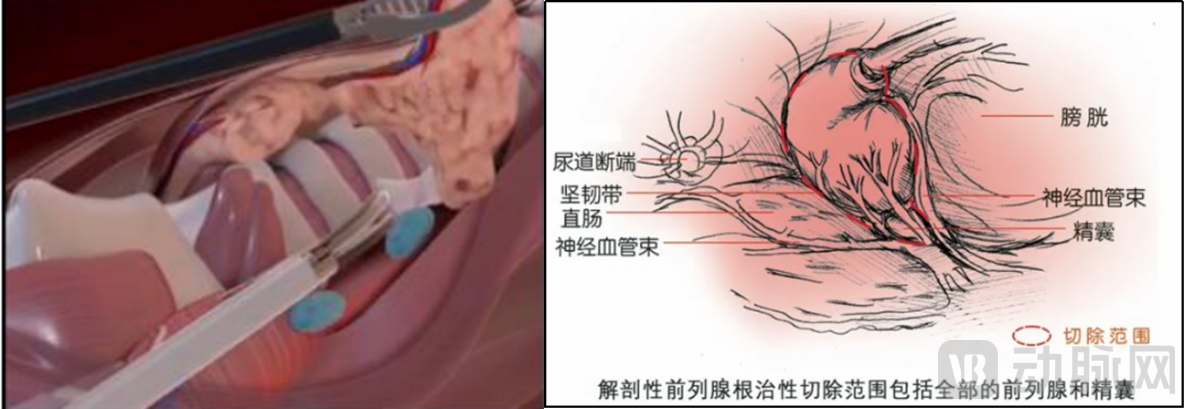
Schematic of transoral thyroidectomy (left) and prostatectomy (right)
Image source: Johns Hopkins Medicine (left), bapimi.com (right)
Jingqin Zhizao leverages its "Universal Flexible Transmission Technology" and ingenious design to precisely translate the movements of a surgeon’s hands, wrists, and arms outside the patient’s body into corresponding motions of the end-effector inside the patient. This simplifies procedures such as dissection and suturing in hard-to-reach surgical target areas, making it particularly suitable for surgeries involving narrow spaces and requiring fine manipulation.
Furthermore, unlike systems that rely solely on complex knobs or buttons for joint articulation control, the “transmission control technology” developed by Jingqin Zhizao employs a drive mechanism that enables synchronous and co-postural movement of the wrist and end-effector. This allows surgeons to largely maintain their existing operational patterns and usage habits during laparoscopic procedures.
Empowered by advanced technologies, the novel multi-directional laparoscopic surgical instruments independently developed by Jingqin Zhizao can mimic the functions of the human hand, serving as a direct extension of the surgeon’s hand. They enable nearly 360° free adjustment and intuitive, precise control, allowing access to the surgical site from multiple angles and making the interaction between surgeons and instruments more intuitive and natural. According to reports, compared with other similar products, Jingqin Zhizao’s new multi-directional laparoscopic surgical instruments offer advantages including higher strength, fewer motion dead points, and greater stability.
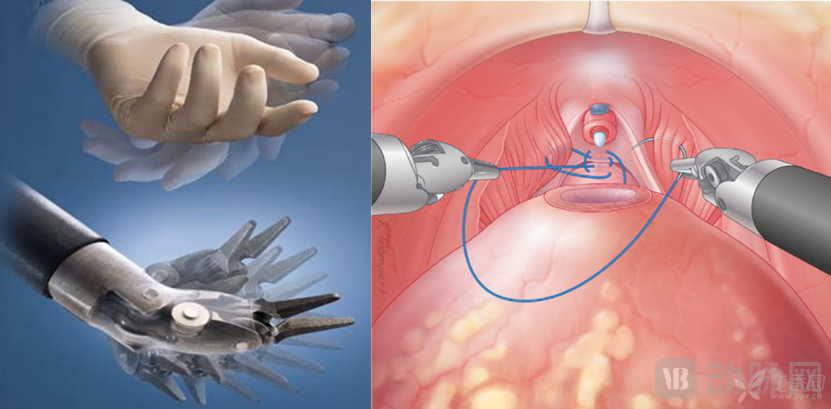
Biomimetic Design (Left), Suture Simulation (Right)
Image source: Urologic Robotic Surgery (left), Eur Urol (right)
In line with the complexity of surgical procedures, operating rooms are required to prepare dozens of laparoscopic instruments of varying models before each laparoscopic surgery, such as laparoscopic forceps, needle holders, and electrocautery devices. Jingqin Zhizao’s modular technology offers distinct advantages in this regard by enabling the low-cost provision of easily replaceable instrument tips—both passive and active—during surgery, thereby significantly enhancing the competitiveness of its single-use consumable products.
According to reports, the modular flexible transmission platform technology is an original and proprietary innovation of Jingqin Zhizao. It provides reliable, precise, and highly flexible steering and bending solutions for various types of medical device products, demonstrating excellent versatility.
Wang Yichu stated:“We have consistently focused on the prevalent, real-world concerns in clinical practice to guide discussions on the final product form, striving to avoid being distracted by various ‘definitions’ and ‘terminologies.’ In the future, the concept of ‘surgical robots’ may be deconstructed, no longer confined to a single, large, deterministic structure. Instead, their characteristic features and functions will be dispersed and targeted toward specific surgical application scenarios. Meanwhile, the barriers between internal medicine and surgery will gradually dissolve. The evolution of surgery from open procedures to minimally invasive techniques, and further to ‘non-invasive’ approaches, will deliver leapfrog benefits to patients.”
VCBeat learned during the interview that,Jingqin Zhizao’s independently developed novel universal needle holder, designed to simplify suturing in complex laparoscopic surgeries, along with passive instruments such as grasping forceps and dissecting forceps for precise dissection and anatomical manipulation, are expected to enter the registration testing process by the end of this year. Active devices and consumables, including new universal electrosurgical coagulation units, will follow closely behind and be launched sequentially.
Currently, Jingqin Zhizao’s technologies and product solutions have undergone multiple iterations, with its core products approaching the stage of submission for regulatory testing. To date, the company has filed more than 40 patent applications, including over 20 invention patents. Notably, all these achievements are the result of the team’s years of original, independent R&D, demonstrating clear leadership in both technological depth and product competitiveness.
Li Xiaozhen, Technical Director of Jingqin ZhizaoHolding a Ph.D. from Nanjing University of Aeronautics and Astronautics, he is an expert in mechanical design and automation and has long been engaged in postdoctoral research in the field of mechanical transmission. He has published more than ten relevant papers and has presided over or participated in various funded projects, including those supported by the National Natural Science Foundation of China.
Furthermore, VCBeat has learned thatJingqin Zhizao’s partners also include technical experts in fields such as automation control and intelligent algorithms, medical specialists from core target departments, and sales elites with experience at top global healthcare companies.
Jingqin Zhizao maintains long-term, close industry-academia-research collaboration with Soochow University and its affiliated hospitals, and serves as a co-organizing unit of the Soochow University Collaborative Innovation Center for Intelligent Healthcare and Algorithms. Furthermore, the company has collaborated with Air Force Medical University and its affiliated Xijing Hospital, as well as the Air Force Specialty Medical Center, on multiple R&D projects for medical devices.
“Jingqin Zhizao” is derived from Sun Simiao’s *Qianjin Fang* (Prescriptions Worth a Thousand Gold). Sun Simiao believed that physicians should “thoroughly explore the origins of medicine and practice with diligence and tireless effort,” a philosophy that resonates deeply with the team’s original entrepreneurial spirit. Wang Yichu stated, “We hope that our entire company team will strive for excellence and remain diligent throughout the entrepreneurial journey, continuously learning, progressing, and updating our technologies to provide doctors with products characterized by exquisite craftsmanship, clinical relevance, and significant clinical value.”
Dalton Venture stated:Driven by advantages such as minimal surgical trauma, favorable prognosis, and shorter hospital stays, the penetration rate of minimally invasive laparoscopic techniques in surgery is accelerating. Meanwhile, innovation in minimally invasive laparoscopic instruments has both propelled and witnessed the advancement of surgical science.
We believe that precision surgical instruments featuring omnidirectional steering, multi-degree-of-freedom manipulation, force feedback, and intuitive mapping will serve as powerful tools for surgeons, addressing the challenge of operating in complex, confined anatomical spaces. International industry leaders such as Johnson & Johnson and B. Braun have already begun to focus on and strategically position themselves in this innovative field. Jingqin Zhizao (Suzhou) Medical Technology Co., Ltd. has accumulated extensive technological expertise and experience through long-term exploration, with a well-integrated team possessing complementary capabilities. We look forward to collaborating with Jingqin Zhizao to accelerate the adoption of these innovative products across diverse surgical scenarios, ultimately benefiting both patients and healthcare providers.
SND Science and Technology Investment Co., Ltd. stated:We are honored to participate in the angel round investment of Jingqin Zhizao. Due to the limited operating space and restricted angles in minimally invasive laparoscopic surgery, the use of traditional straight-shaft instruments commonly presents pain points such as difficulty in suturing and knot-tying, challenges in precise anatomical dissection, and ergonomic inconveniences for surgeons.
The company’s core product, the “Novel Articulating Endoscopic Surgical Instrument,” effectively addresses this series of challenges and represents a current focal point in the development of endoscopic surgical instruments. The company’s proprietary flexible joint and transmission technologies, along with its modular design, are industry-leading. In this technology-driven sector, these advantages underpin our confidence in and decision to back the Jingqin Zhizao team.
Dalton Venture
Dalton Venture focuses on forward-looking medical innovation technologies and serves as the early-stage exclusive investor for multiple first-of-their-kind technology projects in China. Its investment portfolio encompasses VC funds as well as angel funds in the Yangtze River Delta and the Greater Bay Area. The core team members all hail from the healthcare industry, having successfully incubated early-stage startups and founded and managed public companies with market capitalizations exceeding RMB 10 billion. Adhering to the philosophy of being not only value discoverers but also value creators, Dalton Venture has received numerous accolades, including Top 100 VC Firms and Top 20 Medical Device Investors by China Venture. Selected portfolio companies include Landing Medical, Hannuo Medical, Triastek, and Heyuan Biopharma.
SND Sci-Tech Angel Fund
Suzhou New District Sci-Tech Innovation Angel Fund, a state-controlled entity directly under the Suzhou New District Administrative Committee, has a fund size exceeding RMB 2 billion. Since its establishment in early 2022, the fund has closely aligned with the district’s “2+5” modern industrial system, focusing on the integrated development of innovative clusters in photonics, high-end medical devices, and integrated circuits. It is committed to attracting and cultivating a portfolio of high-caliber, high-quality, and high-efficiency early-to-mid-stage sci-tech innovation projects, guiding and supporting technology-driven and innovative enterprises to achieve sustained growth, excellence, and competitiveness.