

The New Brain 30: 2023 Innovators in Brain Science and Brain-Inspired Intelligence Announced
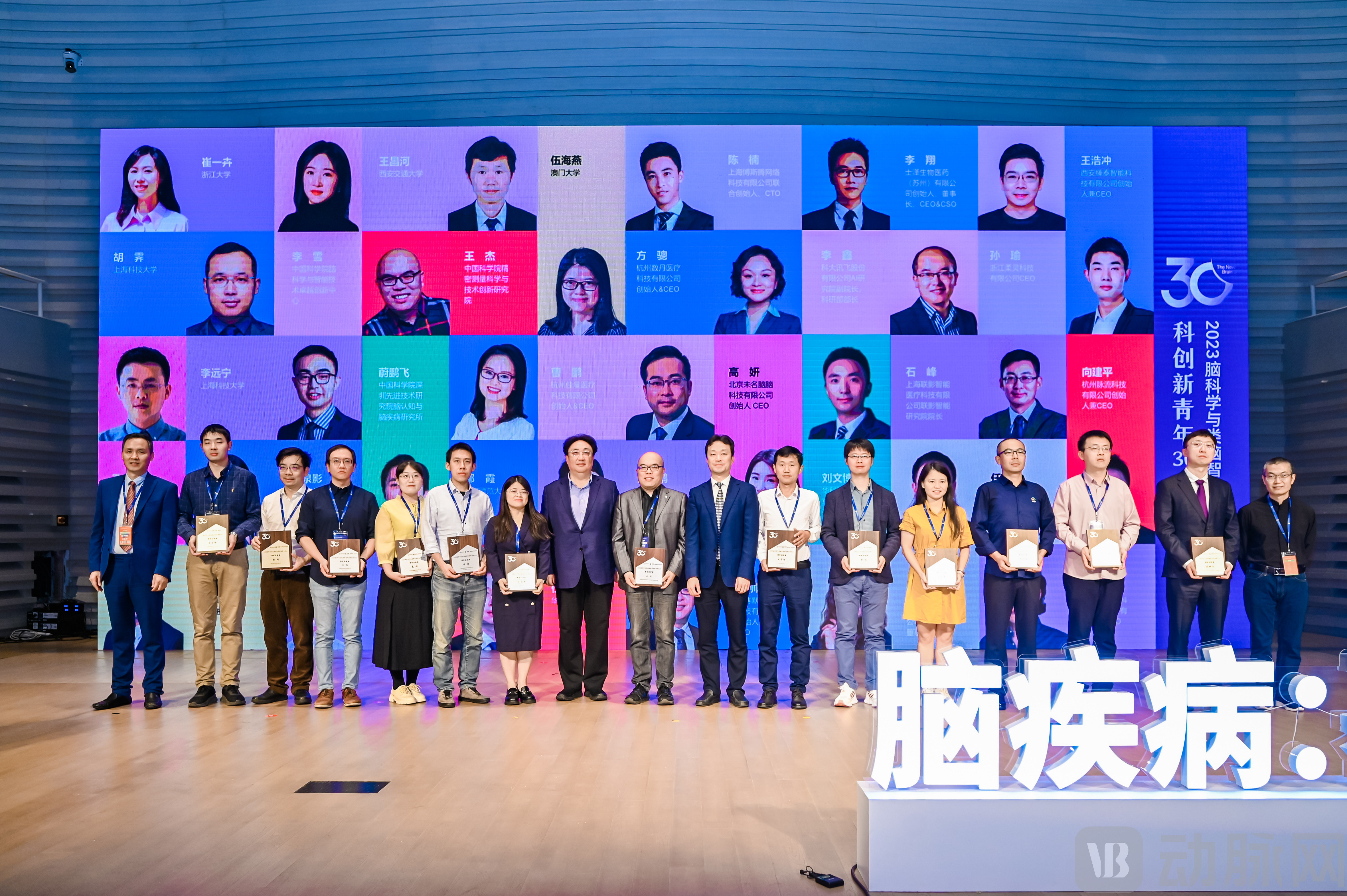
Following a rigorous one-month review,“2023 Top 30 Young Innovators in Brain Science and Brain-Inspired Intelligence”The selection event recently concluded successfully in Shenzhen, with the results officially announced at the “Bay Area Brain Science Industry Innovation and Cooperation Conference 2023, the Second Annual Meeting of the Shenzhen Society for Brain Science, and the Annual Meeting of the Neuroscience Research Technology Branch of the Chinese Society for Neuroscience.” This selection was organized byShenzhen Society for Brain Science, Shenzhen Brain Science and Brain-inspired Intelligence Industry Alliance, VCBeatVB100, VCBeatJointly initiated, ultimately selecting 15 individuals from the field of brain science and brain-inspired intelligence in China.Young Scientistand 15Young Entrepreneur。

Review Committee

For this edition of the “The New Brain 30” selection, the Organizing Committee specially invited a panel of experts from the conference’s “Frontiers in Brain Science and Industry Think Tank” to form the Review Committee. The committee comprises industry professionals with extensive research experience and unique insights in the fields of brain science and brain-inspired intelligence, including recipients of the National Science Fund for Distinguished Young Scholars, industry association experts, seasoned investors, industry researchers, and medical industry media practitioners. Based on an evaluation model, the Review Committee conducted cross-evaluations and scoring of the nominated scientists and entrepreneurs, ultimately selecting the “2023 Top 30 Innovative Young Talents in Brain Science and Brain-Inspired Intelligence.”
Academic Expert Panel
*Listed alphabetically by guest name; no ranking implied.
Naihong Chen | Researcher at the Institute of Materia Medica, Chinese Academy of Medical Sciences; Deputy Director of the Center for Neuroscience, Chinese Academy of Medical Sciences; Chairman of the Professional Committee on Pharmacology of Tonifying Drugs, Chinese Pharmacological Society
Chen Xiaochun | Professor at Fujian Medical University, Head of the Dementia and Cognitive Disorders Group under the Chinese Society of Neurology of the Chinese Medical Association, National Outstanding Scientific and Technological Worker
Dong Hailong | Deputy President of Xijing Hospital, Air Force Medical University; Distinguished Professor under the Ministry of Education’s Changjiang Scholars Reward Program
Wang Yanjiang | Director of the Department of Neurology, Daping Hospital of the Third Military Medical University; Chief Physician, Professor; Recipient of the National Science Fund for Distinguished Young Scholars; Chang Jiang Scholar Distinguished Professor; Leading Talent under the National "Ten Thousand Talents Program"
Wang Zheng | Researcher, School of Psychological and Cognitive Sciences, Peking University; McGovern Institute for Brain Research; PKU-Tsinghua Center for Life Sciences
Wu Haitao | Researcher at the Academy of Military Medical Sciences, Director of the Laboratory of Military Cognition and Stress Medicine. Recipient of the National Science Fund for Distinguished Young Scholars, the National Science Fund for Excellent Young Scholars, and the National Defense Science and Technology Excellence Youth Science Fund
Wu Shengxi | Director of the Department of Neurobiology, School of Basic Medical Sciences, Fourth Military Medical University; Chang Jiang Scholar of the Ministry of Education; National Leading Talent in Science and Technology under the “Ten Thousand Talents Program”
Xu Lin | Director of the Key Laboratory of Animal Models and Human Disease Mechanisms, Kunming Institute of Zoology, Chinese Academy of Sciences; “Expert with Outstanding Contributions” under the National Hundred, Thousand, and Ten Thousand Talents Project
Xu Tianle | Professor, School of Basic Medical Sciences, Shanghai Jiao Tong University; National Distinguished Young Scholar; Changjiang Scholar of the Ministry of Education
Xu Qi | Deputy Director of the Institute of Basic Medical Sciences, Chinese Academy of Medical Sciences; Executive Deputy Director of the Neuroscience Center, Chinese Academy of Medical Sciences. Recipient of the National Science Fund for Distinguished Young Scholars, the National Science Fund for Excellent Young Scholars, Chang Jiang Scholar Distinguished Professor (Ministry of Education), and Leading Talent of the “Ten Thousand Talents Program”
Zhang Chen | Dean of the School of Basic Medical Sciences, Capital Medical University; Executive Vice Dean of the Graduate School; Recipient of the National Science Fund for Distinguished Young Scholars and the National Science Fund for Excellent Young Scholars; Selected for the National “Hundred, Thousand, and Ten Thousand Talents Project” and Honored as “Young and Middle-Aged Expert with Outstanding Contributions”
Zhang Yunwu | Director of the Institute of Neuroscience at Xiamen University, Director of the Fujian Provincial Key Laboratory for Research on Neurodegenerative Diseases and Aging. National Distinguished Young Scholar
Zhen Xuechu|Distinguished Professor at Soochow University, Director of the Provincial Key Laboratory, Leader of the Provincial Innovation and Entrepreneurship Team, National Distinguished Young Scholar
Zhang Zhanjun | Director of the Center for Research on Aging and Brain Health at Beijing Normal University, National Distinguished Young Scholar
Industry Expert Panel
Li Datao | Founder of Danhuang Tech
Jiang Tianjiao | Dean of VCBeat Institute
Frees Fund
Gao Te Jia Investment
Sequoia China
China Renaissance
Legend Capital

This selection was jointly initiated by the Shenzhen Society for Brain Science and Danhuang Technology. Both parties stated that they would continue to deepen their strategic cooperation to promote the integrated development of industry, academia, research, and application in brain science.
Wang Liping, Researcher, Director of the Institute for Brain Cognition and Brain Disorders at Shenzhen Institutes of Advanced Technology, and Dean of the Shenzhen-Hong Kong Institute of Brain Science“It has been stated that ‘research in brain science and brain-inspired intelligence is currently the focal point of global technological competition and a strategic priority for development, as well as a key direction for breakthroughs in frontier and disruptive technologies worldwide.’ The coordinated advancement of ‘education, science and technology, and talent’ represents a significant initiative through which the Shenzhen Society for Brain Science strives to implement the national innovation strategy. Brain science is driving the rapid formation of a high-quality brain industry ecosystem. Outstanding young scientists and entrepreneurs are continually emerging, becoming the core force propelling the industry’s rapid future development.”
Who are these young people? Where are they? What new questions and hypotheses are they proposing? What innovations are they creating? Youth represent hope and the future. How to ensure that these individuals, who embody the promise and power of tomorrow, are seen and supported has been a central focus of my reflections. In discussions with our colleagues at VCBeat, we developed the idea of identifying 30 promising young innovators in the fields of brain science and brain-inspired intelligence through expert review. The “2023 Top 30 Innovative Young Talents in Brain Science and Brain-Inspired Intelligence” initiative, jointly launched by the Shenzhen Society for Neuroscience and Danhuang Technology, selected 15 young scientists and 15 young entrepreneurs. We hope this initiative will be more than just an awards selection; we aim to conduct a systematic overview and collectively serve as discerning talent scouts, identifying the standout talents (“Qianlima”) within the realms of brain science and the brain industry.
The Young Scientists award aims to recognize outstanding young researchers who have made innovative contributions to basic research in areas such as the principles of brain cognition, brain diseases, brain development and education, brain-inspired intelligence, and cutting-edge technologies. The Young Entrepreneurs award seeks to honor exceptional young entrepreneurs who have made significant contributions to translating basic brain science research achievements into industrial applications. This selection process is merely the beginning; I hope and believe that it will evolve into a self-sustaining initiative. Over the course of one year, two years, or even longer, the “Top 30 Young Innovators in Science and Technology” can grow into a community that gathers outstanding young talents in brain science research and translation from China and around the world. This platform will foster the collision and generation of ideas, enabling us to better understand ourselves and the world, promoting a more ecological industrial development, and propelling China’s brain science and brain-inspired intelligence industries to the forefront globally.
Mr. Li Datao, Founder of Danhuang Technologystated: “We are navigating a sea of rapidly evolving cognition, from which we are forging powerful new tools. No new product or process emerges abruptly, self-develops, or grows on its own; rather, they are all built upon new scientific principles and concepts. We believe that innovative practices born from these foundations will offer our solutions to global challenges in the foreseeable future.”
VCBeat aims to create a continuous, researchable textual record through long-term observation and documentation. The industry insights derived from close-up observations of innovation are gradually shaping industry consensus.
The selection of the 30 Young Innovators in Sci-Tech has enabled us to observe the field of brain science in greater detail and document its developments in real time, from both expert and industry perspectives. Through this rigorous and continuously updated ranking, we aim to contribute a written record to the advancement of brain science in China.
Currently, brain science has been elevated to a national strategic scientific and technological force, and China is striving to build a globally influential hub for brain science. As a national-level new area, Shenzhen is actively integrating into and leading the implementation of the national brain science strategy. This selection process highly integrates the two value orientations of talent cultivation and technology transfer, which will have a profound impact on stimulating the vitality of original research in brain science, enhancing technological innovation and industrialization capabilities in brain science, and further promoting the development of the brain science industry. This fully demonstrates Shenzhen’s strategic layout and proactive initiatives amidst the new round of scientific and technological revolution and industrial transformation.
Leveraging its unique advantages in neuroscience expertise and research resources, the Shenzhen Society for Neuroscience has launched an initiative to effectively identify and cultivate local young neuroscience researchers. This effort provides critical talent support for Shenzhen’s further aggregation of innovative elements in neuroscience and the establishment of a world-class hub for brain science. In the future, the Society will continue to fulfill its role as an academic organization by building a high-level innovation ecosystem for neuroscience and strengthening frontier talent development and technological leadership through international exchanges and cooperation.
As a highly renowned industry service provider, VCBeat has launched this selection initiative based on its precise assessment of the development trends in the brain science sector. By identifying entrepreneurial talents driving innovation in brain science, the initiative will effectively accelerate the industrial application of core brain science technologies and foster the rapid growth of industry-leading enterprises. Leveraging its proprietary industry database and resource network, VCBeat will continue to incubate innovative brain science projects and build an ecosystem for technology commercialization.