

Beyond Facial Recognition: BIANXIN Tech Pioneers Emotion Detection via Autonomic Nervous System Monitoring in Wearables
At this very moment, can you truly determine what emotional state you are in?
Most people’s immediate reaction to this question is likely, “Of course—don’t I even know whether I’m happy or sad?”
However, in reality, individuals with high emotional awareness may indeed be able to accurately perceive their own and others’ emotional states, as well as the distinctions between different emotional states. In contrast, those with poor emotional awareness are unable to keenly detect changes in their own emotional states or accurately differentiate between similar emotions—such as “dejection” versus “frustration,” or “panic” versus “fear.”
So, are there other methods to enhance emotion recognition capabilities and help people keenly perceive changes in their own emotional states? The answer is undoubtedly yes, and the first idea that comes to most people’s minds is facial recognition—leveraging technologies such as big data and artificial intelligence to analyze facial expressions and thereby determine the user’s current emotional state.
It must be acknowledged that facial recognition technology is currently one of the common technical approaches in the field of emotion recognition. A number of international tech giants, including Google, have ventured into this area, while relevant Chinese technology associations and research institutions are also actively engaged in optimizing and implementing facial recognition technologies. However, it is equally undeniable that the application of facial recognition technology in emotion recognition has its limitations.
In addition to challenges such as the massive volume of training data required and concerns over data security, the technical approach of identifying emotional states through facial expression recognition is further compromised by two factors: first, cultural differences exist in emotional expression; second, facial expressions can be suppressed or trained, as exemplified by the professional smile maintained by retail sales staff when attending to customers near the end of their shift. Consequently, this technical approach faces significant accuracy challenges that are not easily resolved in the short term.
In addition to facial expression recognition, another technical approach enables emotion identification by measuring physiological indicators controlled by the autonomic nervous system, thereby achieving “measurement” of emotions. As previously reported by VCBeat, Shenzhen Bi’an MindTech Co., Ltd. (hereinafter referred to as “Bi’an MindTech”) is one of the companies applying this technical approach.
In August this year, Bi'an Mindset publicly disclosed information about its angel financing round. The announcement immediately attracted the attention of numerous investment firms and partners, who promptly reached out to Sun Haiyang, founder of Bi'an Mindset. In previous financing-related news, Sun Haiyang briefly introduced Bi'an Mindset's core business activities and its milestone achievements. Recently, VCBeat reconnected with Sun Haiyang to further explore the company's current and upcoming business initiatives.
Prior to joining Bi'an Mind, Sun Haiyang had already accumulated extensive experience in the mental health industry. A graduate of the Institute of Psychology at the Chinese Academy of Sciences, Sun is a National Level-3 Psychological Counselor. He has provided psychological services for the establishment of counseling rooms at various institutions, including Fengjing Community in Nanshan District and Bantian Subdistrict in Longgang District (Shenzhen), Shenzhen Middle School, Longhua Middle School, and the Wuhan Science and Technology Museum.
However, the low barriers to entry and the chaotic state of the traditional psychological services market led Sun Haiyang to realize that “only by developing truly valuable products with high entry barriers can one remain invincible amidst the tide of market development.”
Therefore, drawing on my academic background at the Institute of Psychology, Chinese Academy of Sciences, as well as my accumulated expertise and insights in emotion-related research, and with technical support from members of the relevant research group,Sun Haiyang established Bi'an MindTech, focusing on leveraging technology to empower psychological services. The company has gradually developed a mental health service platform centered on emotion management and underpinned by emotion recognition algorithms, along with industry-specific solutions.
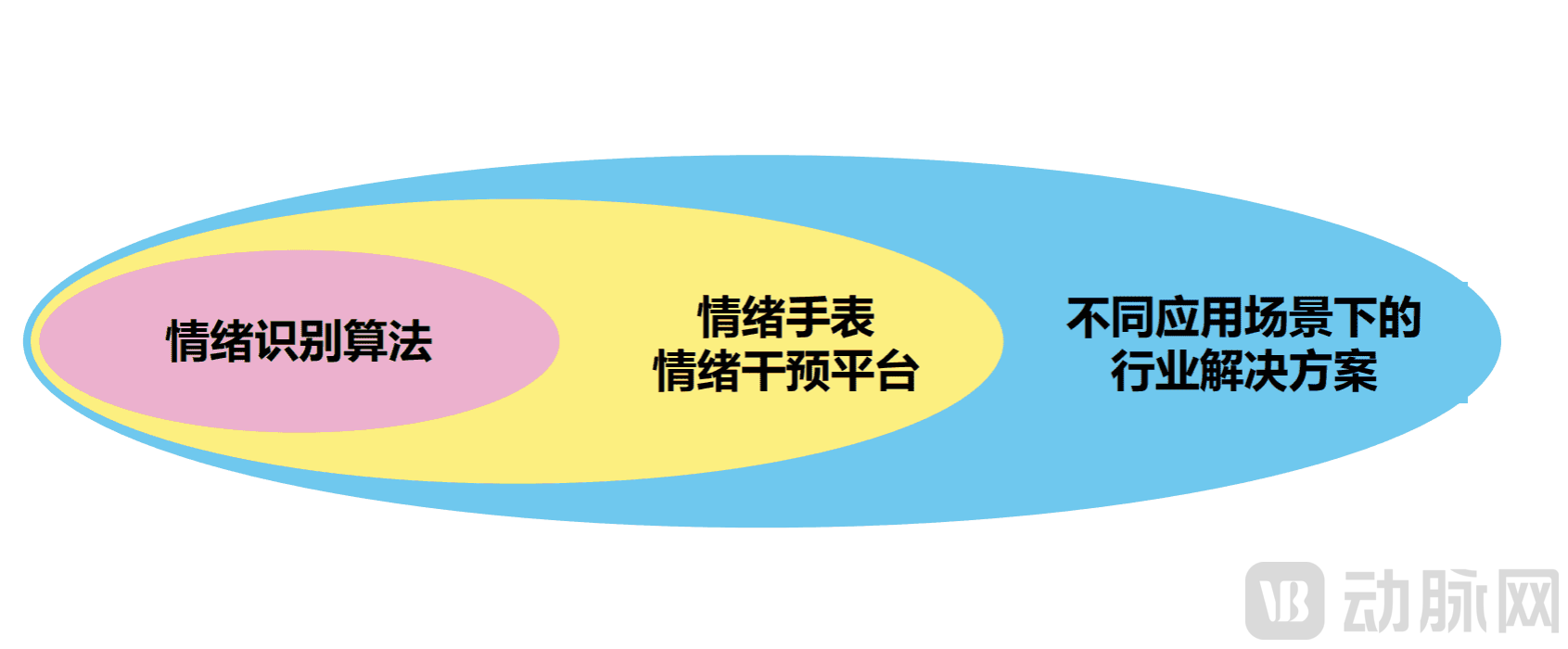
This means that emotion recognition algorithms are the foundation for all of Bi'an Mind's business operations.Therefore, before introducing the business of Bi'an Mind, we need to first understand what exactly Bi'an Mind’s emotion recognition algorithm is.
As previously mentioned, Bi’an Mind does not employ facial expression recognition technology to “measure” emotions; instead, it opts to identify emotions by measuring relevant physiological indicators. Furthermore,The intelligent emotion recognition AI algorithm adopted by Bi'an Mind is based on sympathetic-parasympathetic nervous activity for emotion recognition, thereby enabling rapid and accurate identification of basic emotions such as anger, sadness, happiness, and joy.
In the interview, Sun Haiyang also introduced to VCBeat that there are various methods for measuring physiological activity indicators under the control of the autonomic nervous system, not limited to the “sympathetic-parasympathetic nerve activity” measurement adopted by Bi'an Mind. Other methods include electroencephalography (EEG), galvanic skin response (GSR), and electromyography (EMG). However, compared with these measurement techniques, the meas-Measuring “sympathetic-parasympathetic activity” offers two major advantages: first, it is more portable; second, it enables continuous monitoring data acquisition.
Based on this, Bi'an Mind has adopted a technical approach centered on "sympathetic-parasympathetic" neural activity,This technical approach primarily leverages heart rate data as a continuous source of information to infer autonomic nervous system activity, and employs the "valence-arousal" theoretical framework to determine an individual's emotional state during a given period.
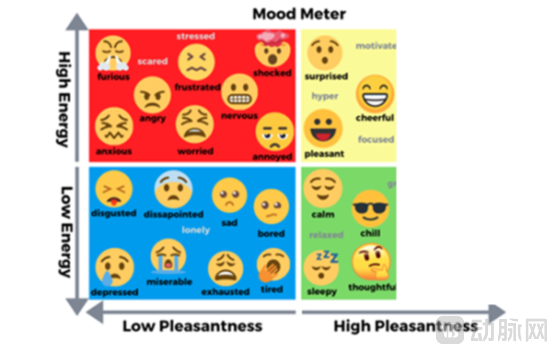
In brief, valence (emotional polarity) refers to the emotional state of an individual ranging from pleasant to unpleasant; whereas arousal represents the continuous change in an individual’s emotion from a non-activated to an activated state, which can be simply understood as the variation in emotional intensity.
The "Emotional Valence-Arousal" model of Bi'an Mind first categorizes emotions based on the fundamental framework of "arousal" and "valence," and then refines the granularity of this classification according to varying degrees or states of arousal and valence, thereby enabling the identification of diverse emotional states.
“Frankly speaking, individuals exhibit a variety of emotional states. The psychological industry experience accumulated by Bi’an Mind’s founding and R&D teams has enabled the company to develop a diverse set of emotional labels, thereby facilitating the recognition of multiple emotional states,” said Sun Haiyang. “This constitutes the core competitiveness of Bi’an Mind.”
Leveraging AI algorithms for intelligent emotion recognition, Bi’an Mind has pursued two commercialization pathways. The first involves integrating with smart hardware, such as wearable devices, to deliver software-based services to users. Under this model, Bi’an Mind’s primary direct clients fall into two categories: major smart hardware manufacturers and innovative smart hardware brands.
In collaborations with major smart hardware manufacturers, Bi’an Mindset primarily tailors its service offerings based on user needs. Given that innovative brands often have a relatively limited understanding of the consumer market, Bi’an Mindset assists these clients in designing specific consumer-facing service solutions.
For example,Leveraging Bi'an Mind's AI-powered emotion recognition algorithm, innovative smart hardware brands can provide end-users with interpretations of key emotional states, including mood, stress, and fatigue, on daily, weekly, and monthly cycles. Furthermore, users can review their emotional status at five-minute intervals at any time. Bi'an Mind also offers targeted interpretations for typical user states.
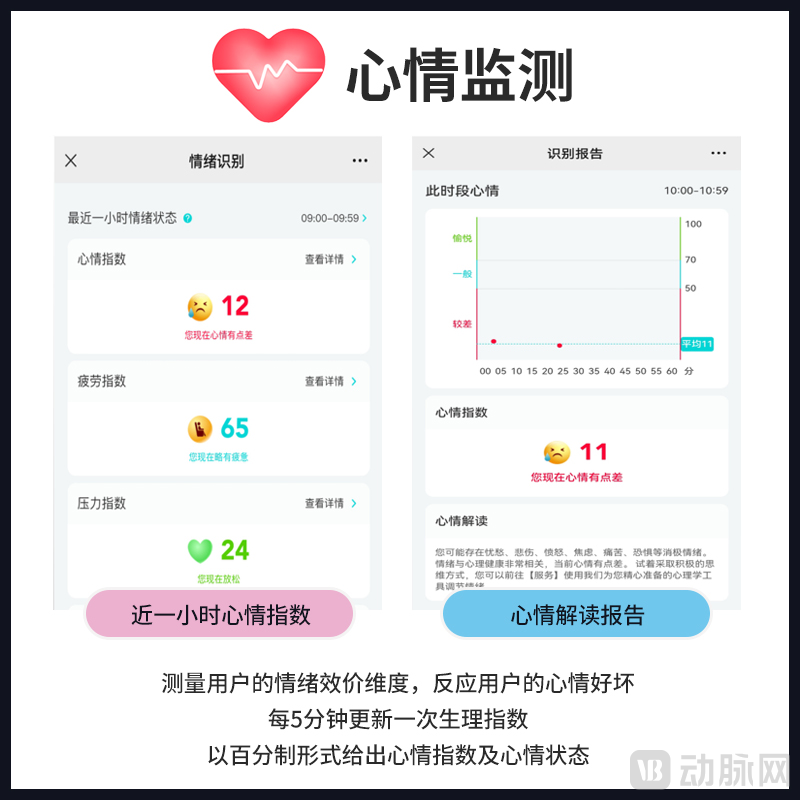
This means that, leveraging the Bi'an Mind intelligent emotion recognition AI algorithm, users can be informed of their current emotional state every five minutes and receive interpretations of typical emotional states, as well as daily, weekly, and monthly emotion reports. Furthermore, the emotional data collected at five-minute intervals serves to enhance the accuracy of the Bi'an Mind emotion recognition model.Currently, the accuracy rate of Bi'an Mind's intelligent emotion recognition AI algorithm has reached 95%.
Meanwhile, Bi’an Mindfulness is well aware that data collection and emotional state recognition aim to detect psychological issues in a timely manner for early intervention; thus, early detection and early intervention always appear together in the public eye.
In this regard,Bi'an Mind will also recommend that innovative brands implement an "Emotional Assistant" system, which can comprehensively analyze emotional data from C-end users and provide pop-up alerts for typical emotional states.
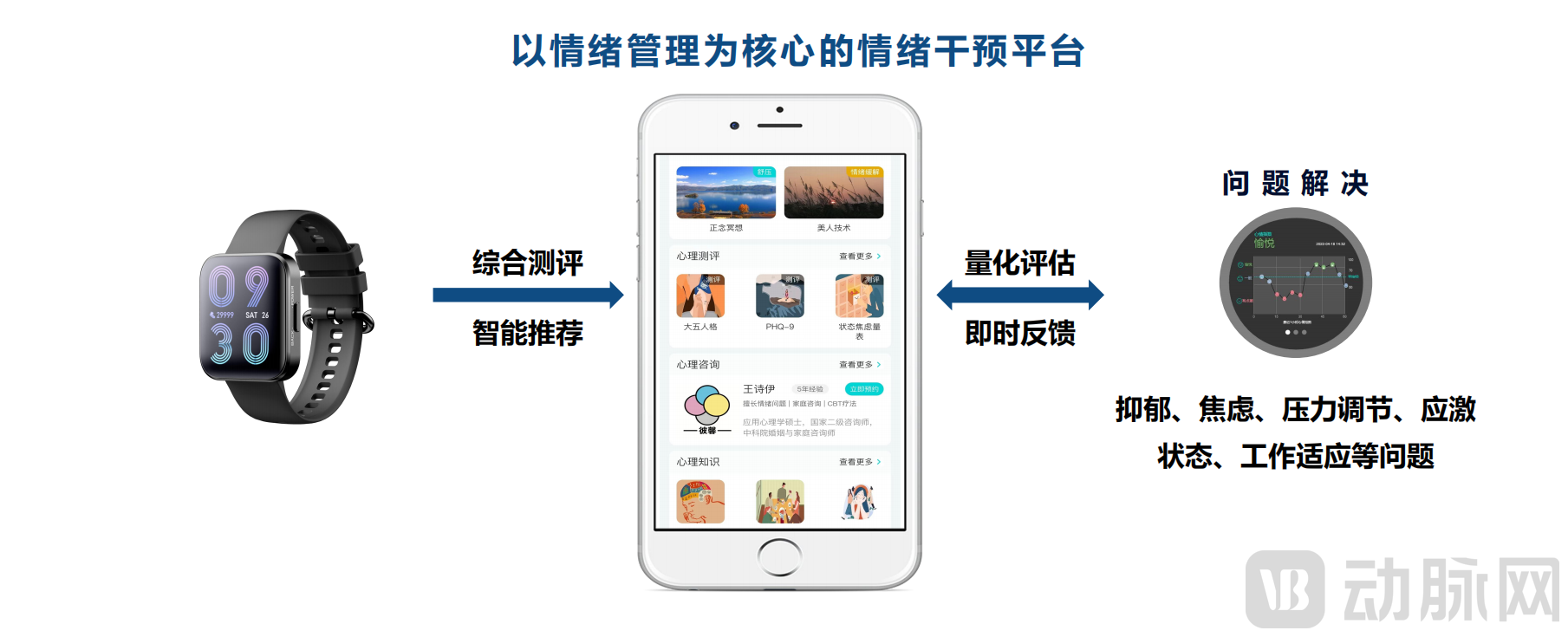
In addition,To make interventions more systematic and professional, Bi'an Mind is collaborating with ecosystem partners in the psychology industry to build an emotion-focused intervention platform. By leveraging emotion-sensing smartwatches equipped with emotion recognition algorithms to monitor and collect emotional data from consumer-end users, the platform will provide these users with psychological counseling, professional psychological assessments, popular science education on mental health, psychological knowledge courses, and psychological training services.Furthermore, according to Sun Haiyang, the emotional intervention platform built by Bi’an Mind will actively embrace digital therapeutics for mental health in the future. This initiative aims to provide patients with cutting-edge treatments while also promoting the adoption and development of digital therapeutics in the Chinese market.
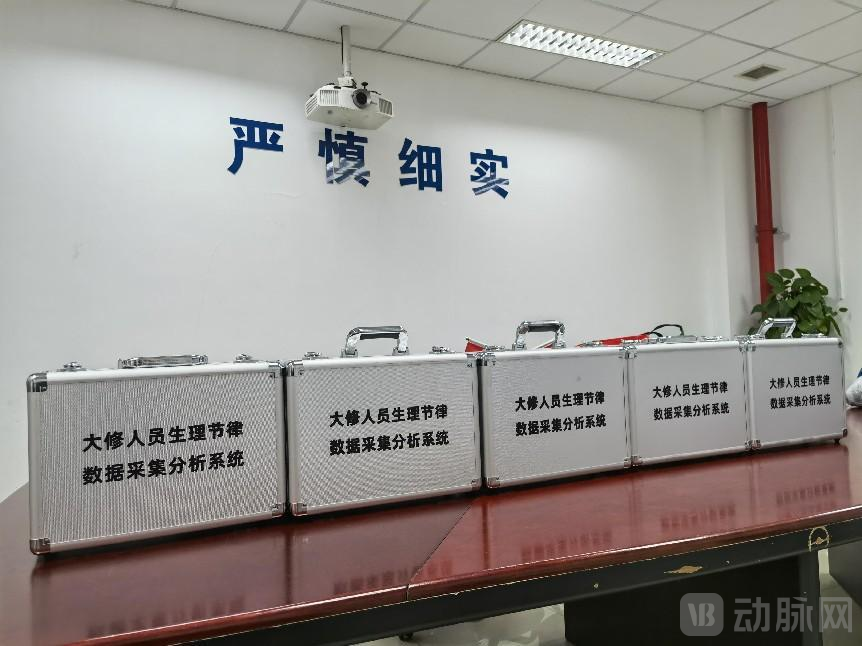
In addition to the consumer market, certain professional groups have urgent needs for emotion monitoring and management, such as nuclear power plant workers, drivers, public security, procuratorial, and judicial personnel, aerospace industry practitioners, as well as students, teachers, and psychological counselors at mental health institutions.
In this regard,Drawing on its years of experience in emotion recognition and the mental health industry, Bi’an Mind will also provide industry-specific solutions in these areas, such as nuclear power plant safety supervision systems, driver emotion detection systems, smart campus service solutions, and research-oriented service packages.
“In the future, emotion recognition and intervention will undoubtedly become standard features of wearable smart devices. This is beyond doubt. Moreover, early detection and intervention for mental health issues are imperative for high-stress groups such as nuclear power plant workers, drivers, students, and teachers. Emotion recognition plays an indelible and pivotal role in this process. Therefore, we believe that emotion recognition and intervention will have even broader prospects for development in the future. Bi’an Mind also hopes to collaborate with more partners to contribute higher-quality solutions to the industry,” summarized Sun Haiyang.