

How Are the Doctor-Supported Listed Companies Performing Amid China's Medical Sector Reforms?
Since 2023, a nationwide campaign to rectify corruption in the pharmaceutical sector has swept across China, driving transformative changes in the interaction mechanisms among physicians, hospitals, and pharmaceutical companies. During this period, some academic conferences have been affected, with announcements of suspensions or postponements.
However, in the Q&A on the centralized rectification of corruption in the national pharmaceutical sector, the National Health Commission also set the tone by stating that academic conferences in the pharmaceutical industry serve as an important platform for academic exchange, experience sharing, and promoting technological progress and innovative development in medicine. In accordance with relevant national regulations, well-regulated academic conferences and normal medical activities should continue to receive strong support and active encouragement.
In recent years, a wave of physician-focused platforms centered on medical education and academic exchange has grown rapidly, giving rise to several publicly listed companies—including MedSci, MedWelcome, and others—that have amassed millions of physician users. Amid this transformation affecting physicians nationwide, how are these physician platforms faring?
As offline activities for physicians were impacted, online learning pathways gained momentum, with physician platforms vigorously promoting user engagement in the digital space.
In fact, in recent years, doctors’ engagement in online activities has shown an upward trend. Acquiring medical information and supporting clinical decision-making through online channels have become integral components of clinicians’ professional and personal lives, with some physicians also actively participating in online teaching.
As of June 2023, Medlive had reached 6.4 million registered users, including 3.81 million licensed physicians; during the first half of the year, the platform’s monthly average number of unique active users reached 2.2 million. As of June 2023, the MedSci Health platform had 3 million registered physician users, with an average of approximately 2.8 million monthly active users in 2023.
As an online channel connecting physicians with pharmaceutical and medical device companies, physician platforms have laid the foundation for digital pharmaceutical marketing by leveraging their large user base and continuously growing user engagement. Meanwhile, as traditional marketing methods face increasing regulatory constraints, pharmaceutical and medical device companies are placing greater emphasis on digital marketing models to promote their products in a more cost-effective, efficient, precise, and compliant manner. Consequently, digital pharmaceutical marketing has become the primary revenue source for physician platforms.
Amid the growing trend of physicians’ increasingly active online medical practices, further unlocking the value of online physician resources to strengthen digital marketing capabilities has become a key priority for physician platforms since 2023.
First, enhance the capability to precisely reach physicians.Among the vast user base covered by physician platforms, doctors exhibit diverse online behaviors due to differences in their specialty backgrounds, seniority, and preferences. To reach physicians more precisely, platforms need to construct detailed physician profiles using richer data across a broader range of finer-grained dimensions.
For example, Medlive integrates omni-channel platforms—including its website, mobile app, social media official accounts, online communities, and electronic weekly newsletters—to establish a data warehouse system encompassing massive amounts of physician viewing behavior data. It also assists pharmaceutical and medical device companies in identifying target physicians and precisely delivering content to them through their preferred channels and at optimal times.
Benefiting from more precise targeting methods and an increase in business volume, the number of paid clicks on the Medlive platform (defined as clicks by target physicians, paid for by pharmaceutical and medical device companies) reached 4.27 million in the first half of 2023, a year-on-year increase of 34.3%. Revenue from precision marketing and enterprise solutions also grew synchronously, reaching RMB 158 million, a year-on-year increase of 33.5%.
Medi Welcome, whose core business is medical conference services, reported revenue of RMB 71.59 million from this segment in the first half of 2023, a year-on-year decrease of 35.7%. Nevertheless, Medi Welcome has strengthened its digital platform development. Since 2022, it has been integrating its digital platforms by introducing AIGC into its Giraffe Smart Medical Platform, building upon its self-developed products such as digital patient management, E-Conference, live streaming, Lu Ke (Deer Class), E-Chuang (E-Innovation), and E-Dongcha (E-Insight), with the aim of establishing physician clusters across various specialized disease areas. As of June 2023, Medi Welcome had accumulated 489,000 registered physician users, and its digital marketing solutions generated approximately RMB 6.1 million in revenue during the first half of the year.
Secondly, extend the chain of digital services.Historically, the digital marketing services that physician platforms have provided to pharmaceutical and medical device companies, leveraging their physician resources, have focused predominantly on post-launch “marketing” activities. In fact, physician platforms can also meet the needs of these companies beyond the marketing phase.
In October 2023, Medlive acquired Lingbo Consulting, a pharmaceutical market research firm, extending its business lines to the front end of the needs of pharmaceutical and medical device companies. Lingbo Consulting primarily provides multi-scenario research services for pharmaceutical and medical device enterprises, including market attractiveness assessment, new product concept testing, physician market segmentation, target physician positioning, usage and perception tracking, and market share monitoring.
By extending the digital service chain for pharmaceutical and medical device companies, physician platforms facilitate the integration of preliminary market research with subsequent physician education. This synergistic relationship fosters marketing solutions with greater market-oriented value.
Overall, digitalization has, on the one hand, enhanced the efficiency with which physicians access medical information and engage in academic exchanges; on the other hand, it has helped pharmaceutical and medical device companies establish efficient and precise marketing channels. Meanwhile, the traceable and auditable nature of digital platforms promotes greater transparency in communications between physicians and companies, thereby facilitating compliant interactions.
Academic conferences have been impacted in the short term, but it must be acknowledged that offline academic activities remain the mainstream model within the industry, as the many advantages of in-person events are difficult to replicate online.
Medlive, originally focused on its online platform, acquired a 50% equity stake in Shicheng Medical in June 2023, further expanding the depth and breadth of its services to pharmaceutical and medical device companies.
Shicheng Medicine established the CMAC (China Medical Advancement Committee) conference brand, with over 1,500 speakers and more than 6,000 industry professionals participating in the CMAC conference annually.
Over the past eight years, the China Innovative Drugs and Medical Devices Medical Conference and CMAC Annual Meeting have experienced rapid growth, driving high-quality development in domestic medical affairs and new drug R&D. Currently, Shicheng Medicine has established strategic partnerships with numerous pharmaceutical and medical device companies, as well as healthcare industry associations.
Following its acquisition of Shicheng Medicine, Medlive can further expand its business scope into offline conferences, providing more comprehensive solutions for the upstream and downstream segments of the pharmaceutical industry.
Prior to this, Medlive acquired Zhuanchuang Xin in June 2022. Zhuanchuang Xin primarily focuses on the publication of clinical guidelines, pharmaceutical research, and related planning and execution services within the healthcare and pharmaceutical industries. The acquisition of Zhuanchuang Xin represents a significant step in Medlive’s business expansion, enabling deeper industry penetration and synergistic collaboration by leveraging resources from leading experts, academic and professional associations, as well as its specialized medical planning capabilities.
At in-person academic conferences, attendees can engage in face-to-face communication, exchange, and interaction; they can ask questions during Q&A sessions or after the conference, and even get hands-on experience with new technologies—advantages that online or remote conferences cannot match.
Certainly, future academic conferences will face higher demands regarding authenticity, legality, compliance, rationality, and value. Organizers must evaluate conferences from multiple dimensions, and this is even more critical for invited experts.
For enterprises engaged in academic conference services, high quality and professionalism have become higher barriers to entry. In this context, conferences and organizers with low compliance may be adversely affected, while those with high academic value and strong compliance are better positioned to attract greater participation from physicians, experts, and other industry stakeholders, thereby fostering a more orderly market landscape.
In traditional marketing approaches, pharmaceutical and medical device companies prioritize “public relations” with physicians as a key, if not the sole, marketing activity, primarily due to the high barriers to medical knowledge, significant information asymmetry between doctors and patients, and the fact that prescribing authority and treatment selection power rest in the hands of physicians.As the digitalization of the healthcare sector accelerates, information asymmetry is narrowing, enabling patients to participate more actively in the diagnosis and treatment process and, to a certain extent, influence physicians’ decision-making.
Nowadays, pharmaceutical and medical device companies increasingly incorporate patient education into their marketing and promotional activities, with physician platforms naturally assuming this role as a connecting link.
For example, Medlive provides chronic disease management services as part of its intelligent patient management solutions, offers patient education on diseases and monitoring of treatment adherence through its internet hospital, and collaborates with non-profit organizations to deliver patient education services tailored to specific medical conditions.
In the first half of 2023, Medlive’s Internet Hospital launched the “Yi Zhi Xing” expert video consultation platform. The platform brings together numerous clinical experts with associate senior titles or above from China’s top 100 hospitals, leveraging video consultations to closely replicate the in-hospital medical consultation experience and enhance users’ health advisory services.
Currently, Medlive’s internet hospital-based chronic disease management primarily focuses on breast cancer, lung cancer, ovarian cancer, Parkinson’s disease, lymphoma, stroke, and diabetes, with plans to gradually expand to other chronic conditions in the future. As of June 2023, Medlive’s chronic disease management service platform had onboarded 89,000 physicians and accumulated approximately 311,000 users.
Medi Welcome launched the Medi Welcome Yi+ platform and the Yi+ Doctor app, providing internet hospital services and developing digital out-of-hospital management products and services for patients with chronic diseases. As of June 2023, the number of patient users reached 264,000, representing a 31.6% increase from June 2022, and its internet hospital services also generated certain revenue.
Patient education and patient management can extend healthcare services from in-hospital to out-of-hospital settings, shifting care from single, low-frequency interactions to multiple, high-frequency engagements; this helps minimize the risks of patients discontinuing medication on their own or failing to adhere to prescribed dosages and schedules after discharge.
Physician platforms collaborate with pharmaceutical companies to serve patients, aiming to improve patient adherence for better treatment outcomes and quality of life. Additionally, continuous patient management reduces dropout rates and optimizes Days on Therapy (DOT), thereby helping pharmaceutical companies achieve their marketing objectives.
In this process, as compliance restrictions within hospital settings become increasingly stringent, building a personal brand outside of hospitals has become one of the demands for doctors. Joining doctor platforms to provide patients with services such as online consultation and medical science popularization content precisely meets the needs of doctors to build their personal IP.
From any perspective, physician platforms are no longer exclusively targeted at physicians; patients have become a key demographic.
Amid the anti-corruption campaign in the healthcare sector, physicians are exercising greater caution in prescribing, placing increased emphasis on patient efficacy and clinical benefit. The use of adjunctive medications, particularly those with marginal necessity, will face further restrictions, while therapeutic drugs are expected to gain greater recognition.
This drives enterprises to strengthen innovation and R&D, particularly for pharmaceutical and medical device products that address rigid, genuine market needs. In the commercialization phase, it compels companies to reduce their reliance on relationship-based sales tactics, allowing the clinical value of their products to stand out more prominently in competition and achieve faster and greater sales volume growth.
So,How can the clinical value, safety, and efficacy of products be better demonstrated? Real-world studies (RWS) have become an important approach.
In the first half of 2023, Medlive continued to expand its services in real-world studies (RWS), trial design and protocol writing, medical monitoring and manuscript support, data management and statistics, and physician-led research, achieving notable progress in the fields of oncology, hematology, neurology, pediatrics, and cardiovascular disease.
In the face of increasingly complex clinical questions to be addressed by real-world studies (RWS), more diverse clinical scenarios, and higher demands for data quality, Medlive leverages its team’s extensive experience in the clinical research industry, along with its medical and statistical expertise, to provide customized trial designs that align with the medical strategies of pharmaceutical and medical device companies. Furthermore, tailored patient follow-up procedures, data collection workflows, and monitoring and medical review processes are designed for each project based on the specific indications, research centers, and patient characteristics, thereby enhancing the efficiency and speed of the trials.
Real-world studies (RWS) address predefined clinical questions by collecting health-related data on study subjects or aggregated data derived thereof in real-world settings. Through analysis, RWS generates clinical evidence on drug utilization, potential benefits, and risks, serving as a key approach to demonstrating the clinical value of pharmaceuticals and medical devices. Therefore, physician platforms integrate their RWS solutions with digital marketing initiatives.
For example, MedSci Healthcare offers precision omnichannel marketing and Real-World Studies (RWS) solutions for pharmaceutical and medical device companies. Certain products can be integrated to analyze the academic highlights of these products, generate clinical evidence and pharmacoeconomic data through RWS, and further promote such evidence via digital and academic marketing channels. As business operations deepen, a stronger synergistic effect between these two areas is expected to emerge.
Medicine is a vast system, and its development should be driven by the close collaboration of physicians, hospitals, and pharmaceutical companies. Of course, compliance is the prerequisite for all such collaboration.
Throughout all stages of new drug development and clinical trials, only through close collaboration and joint efforts between pharmaceutical companies and clinical expert teams to conduct valuable clinical research can patients be better served.
Taking rare diseases and genetic disorders as examples, this has been a particularly active area in the development of life sciences over the past decade.
The government has consistently provided strong encouragement for the research and development (R&D) of innovative drugs, particularly orphan drugs targeting rare diseases. The urgent treatment needs of patient populations with various rare diseases remain largely unmet. This field urgently requires greater participation from pharmaceutical companies, as well as enhanced communication and collaboration between these enterprises and physicians.
Under the collaborative mechanism involving physicians, hospitals, and pharmaceutical companies, physician platforms are increasingly demonstrating significant value in areas such as efficient communication, process reengineering, traceability, and online-offline integration.
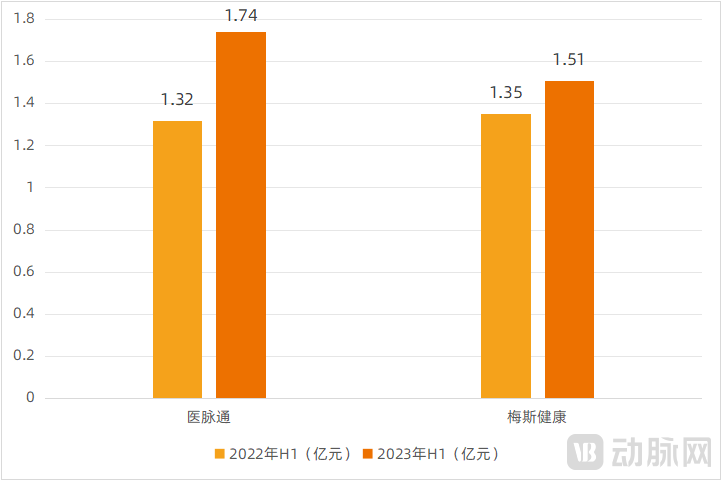
Revenue Changes of the Doctor Platform, Data Source: Company Financial Reports
As can be seen from the previous analysis, in the process of reshaping the collaborative relationship between healthcare and pharmaceuticals, physician platforms have achieved growth in user base, operating revenue, and other metrics by leveraging diversified solutions, demonstrating significant commercial value.Citing an analysis by CITIC Securities, in the short term, anti-corruption efforts in the healthcare sector are expected to catalyze a surge in industry scale; in the long term, this subsector holds immense growth potential.
In the future, by upholding compliance as a baseline and contributing to a healthy industry ecosystem, physician platforms can achieve sustainable commercial returns.
References:
Corporate Financial Reports and Announcements
Physicians' Daily - Experts from the Medical and Legal Fields: Jointly Exploring the Path to Compliant Academic Exchange