

Gynesonics Files for IPO Following $42.5M Funding to Advance Minimally Invasive Uterine Fibroid Treatment

Gynesonics
Minimally Invasive Solutions Developer for Uterine Fibroids
Uterine fibroids have become the most common benign tumors of the female genital tract.
Historically, the treatment of uterine fibroids relied on surgical interventions, including hysterectomy and myomectomy. Due to the significant surgical trauma and prolonged recovery periods associated with these procedures, they often exert considerable adverse effects on patients’ physical and psychological well-being. Scholars Wu Qiaozhi and Guo Suiqun have pointed out that, with societal development and increased awareness among women, a growing number of patients of reproductive age are inclined to choose minimally invasive treatments that preserve the uterus while offering reduced trauma and faster recovery.
Seizing this unmet medical need, Gynesonics has rapidly advanced its minimally invasive, incision-free, uterus-preserving, transcervical diagnostic and therapeutic technologies. Headquartered in California, USA, Gynesonics is a women’s healthcare company dedicated to researching treatments for uterine conditions. Its mission is to provide patients with uterine fibroids a safe and effective incision-free alternative, sparing them the trauma and pain associated with invasive procedures such as hysterectomy or myomectomy.
In the treatment of uterine fibroids, pharmacological and hormonal therapies can alleviate symptoms or temporarily reduce fibroid size, but they cannot completely eliminate the fibroids. Long-term use of these medications and hormones may cause certain side effects, such as headache, nausea, diarrhea, and menstrual irregularities.
The most common treatment for symptomatic uterine fibroids is the removal of all fibroids by performing a total hysterectomy. This procedure is typically conducted under general anesthesia and requires a recovery period of up to six weeks. Hysterectomy results in permanent infertility and may also have certain negative psychological impacts on patients. Furthermore, surgical intervention carries the risk of injuring surrounding organs, blood vessels, and nerves, potentially leading to intraoperative or postoperative complications. It may also disrupt endocrine balance, making it not the optimal treatment option for uterine fibroids.
Myomectomy allows for the removal of uterine fibroids while preserving the uterus; however, this procedure is typically performed under general anesthesia and requires an abdominal incision, resulting in relatively significant surgical trauma, substantial blood loss, and the potential for permanent abdominal scarring.
Uterine Artery Embolization (UAE) involves injecting tiny particles into the blood vessels surrounding the uterus to block blood flow, thereby causing uterine fibroids to gradually shrink or undergo necrosis. Although this therapy is effective, it may lead to severe discomfort and increase the risk of pregnancy-related complications.
According to a national survey of affected women published in the American Journal of Obstetrics and Gynecology, women delayed seeking treatment for an average of 3.6 years, with 32% waiting more than 5 years. Regardless of their desire for future fertility, women tended to prefer uterine-preserving treatment options. Specifically, 79% of women wished to avoid invasive surgery for uterine fibroids, and 66% expressed concern about the impact of the condition on their work.
Gynesonics’ flagship product, the Sonata System, is designed to address the aforementioned challenges. It integrates an intrauterine ultrasound system with advanced radiofrequency ablation technology, enabling precise localization and ablation of uterine fibroids via a transvaginal approach without incising the uterus, with the entire procedure performed within the cervical canal. This scarless procedure does not require the excision or removal of any tissue and allows for uterus preservation.
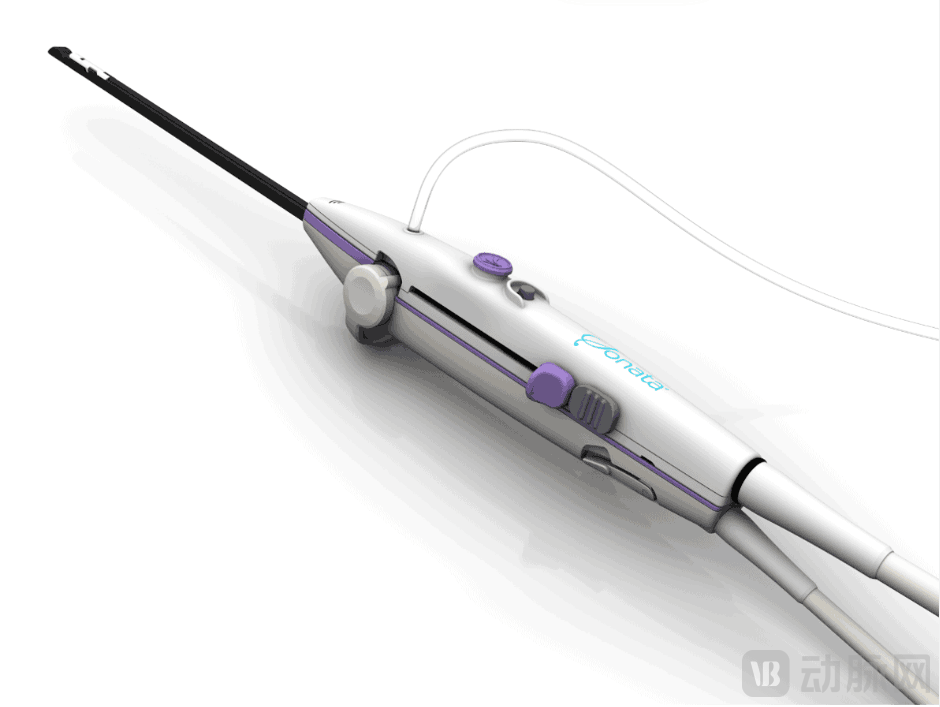
Sonata System. Image source: Gynesonics official website
Sonata Therapy, as an incisionless treatment method, has been clinically proven to effectively alleviate the symptoms of uterine fibroids. This treatment can address uterine fibroids of various types, sizes, and locations, and multiple fibroids can be treated in a single procedure.
The Sonata Ultrasound-Guided Transcervical Fibroid Ablation System is a non-incisional, non-dilating transcervical approach that utilizes radiofrequency (RF) energy to ablate uterine fibroids. It consists of the Sonata Image-Guided Software (GGS), an RF generator, an intrauterine ultrasound probe, a radiofrequency ablation (RFA) handpiece, and other components.
The Sonata Image-Guided System (GGS) integrates the localization, ablation, and detailed planning for uterine fibroids. It features intelligent guidance capabilities that display graphical overlays of the ablation zone and thermal safety margins on ultrasound images, assisting physicians in selecting appropriate ablation targets and deployment positions to avoid thermal injury to normal tissue. An intrauterine ultrasound probe is used for precise localization of uterine fibroids, while an RF generator delivers radiofrequency energy and provides real-time control over the ablation area. The Radiofrequency Ablation (RFA) handpiece is used to control the SMART Guide and define the ablation zone; it connects with the Intrauterine Ultrasound (IUUS) probe to enable ultrasound-guided radiofrequency ablation. The duration of the Sonata procedure typically lasts less than one hour, depending on the number and size of the fibroids being treated.
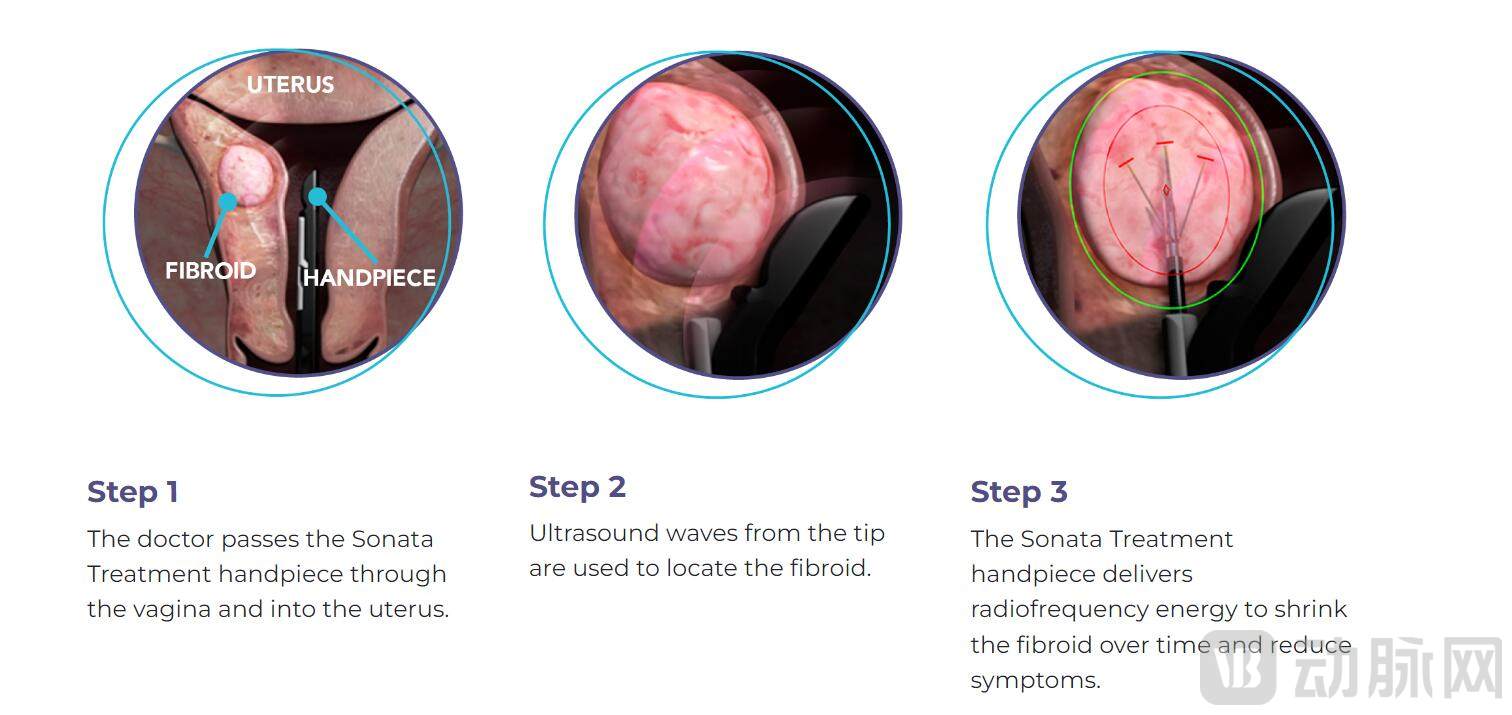 Sonata System Surgical Procedure Workflow. Image source: Gynesonics official website
During the procedure, the physician first advances the Sonata system’s applicator through the patient’s vagina into the uterus. The ultrasound transducer at the tip of the applicator is then used to scan the uterine cavity to determine the location, size, number, and shape of the uterine fibroids. This process can be performed without the need for contrast agent injection.
Next, under ultrasound guidance, the physician inserts a radiofrequency electrode into the center of the uterine fibroid to deliver high-frequency current, generating heat that raises the tissue temperature and induces coagulative necrosis.
To ensure therapeutic efficacy, the physician performs real-time examination and assessment of the ablated uterine fibroids using the intrauterine ultrasound probe of the Sonata system, and finally withdraws the radiofrequency electrode and ultrasound probe from the cervical canal to complete the treatment procedure.
To enhance the accessibility and convenience of Sonata therapy, Gynesonics has launched a “Physician Locator” service.
Patients can discuss their uterine fibroid symptoms with a Sonata Nurse Advisor via phone or email. During this approximately 15-minute consultation, the Nurse Advisor will help patients learn more about the Sonata treatment and assist them in finding a specialist physician to schedule a consultation. When patients see the physician, diagnostic tests may be recommended to determine whether the Sonata treatment is suitable for them.
Through the physician locator, you can find doctors currently available to perform Sonata procedures. To ensure that physicians actively use the Sonata system in their practice, Gynesonics has established an annual minimum number of Sonata procedures for each physician. Only physicians who have received training on the Sonata system and meet the annual minimum procedure volume are eligible to be listed in the physician locator. Currently, physicians offering treatment using the Sonata system are present in 25 states, including Colorado and California.
Clinical evidence for the Sonata system demonstrates that it significantly reduces heavy menstrual bleeding (HMB), lowers the rate of surgical reintervention, and is associated with short hospital stays and rapid recovery, enabling patients to quickly resume normal activities and work. Specifically, 52% of patients were able to return to normal activities by the second day post-procedure; 95% experienced significant improvement in HMB symptoms at 12 months post-procedure; 92% did not require subsequent surgery for HMB within three years; and 88% reported symptom improvement after three years.
As early as August 2018, the Sonata System received FDA approval for intrauterine diagnostic imaging and transcervical treatment of symptomatic uterine fibroids. Additionally, the Sonata System has obtained CE marking and is authorized for sale in the European Union, the United Kingdom, Switzerland, and the United States.
On October 17, 2023, Gynesonics announced that its Sonata Surgical System has treated more than 1,000 women in the United States and approximately 6,500 women globally since its launch. With UnitedHealthcare adding coverage in August, 19 of the top 20 commercial insurers in the U.S. now cover Sonata (representing a total of 275 million people).
On October 25, 2023, Gynesonics announced the completion of a $42.5 million (approximately RMB 310 million) financing round. Led by Amzak Health Investors, with participation from Runway Growth Capital, Kaiser Permanente Ventures, and others, the proceeds will support Gynesonics in further expanding its commercial operations to provide safe and effective minimally invasive treatments for millions of patients suffering from symptomatic uterine fibroids.
References:
1. Wu QZ, Guo SQ. Progress in the clinical application of ultrasound-guided radiofrequency ablation for uterine fibroids[J]. Journal of Molecular Imaging, 2023, 46(2): 375-380. doi: 10.12122/j.issn.1674-4500.2023.02.36