

Han Microbial Completes Over RMB 100 Million Pre-A Financing to Accelerate Development of Live Biotherapeutic and Metabolite-Based Drugs
VCBeat has exclusively learned that Hefei Hanmicroorganism Technology Co., Ltd. (hereinafter referred to as “Hanmicroorganism”), a company focused on the R&D of live microbiome and metabolite drugs targeting the gut-brain axis, has recently completed a Pre-A financing round exceeding RMB 100 million. The funds from this round will be primarily used to accelerate clinical trials of its drug pipeline and advance the development of early-stage R&D projects.Currently, Hanmicroorganism has established a diversified drug pipeline based on microbes and their metabolites, targeting immune and neuromodulatory functions. Among these, three drug candidates, including those for depression and autoimmune diseases, have entered the Investigator-Initiated Trial (IIT) clinical stage.Hanmicroorganism’s angel round was exclusively invested by Chende Capital, while this financing round was led by a fund under CICC Capital.
It is currently known that over 1,000 trillion gut microbes colonize the human intestine, secreting a variety of small-molecule compounds that act on receptors of immune and nerve cells or enter these cells, thereby regulating the body’s immune responses and neural activation. With the continued advancement of the Human Microbiome Project, academic publications on the association between gut microbiota and various diseases have grown exponentially in recent years. Meanwhile, the industry has gradually expanded clinical applications beyond infectious and metabolic diseases to include oncology, immunology, neurology, and other therapeutic areas. Abroad, startups such as Bloom Science and Kallyope have emerged, focusing specifically on drug development targeting the gut–brain axis.
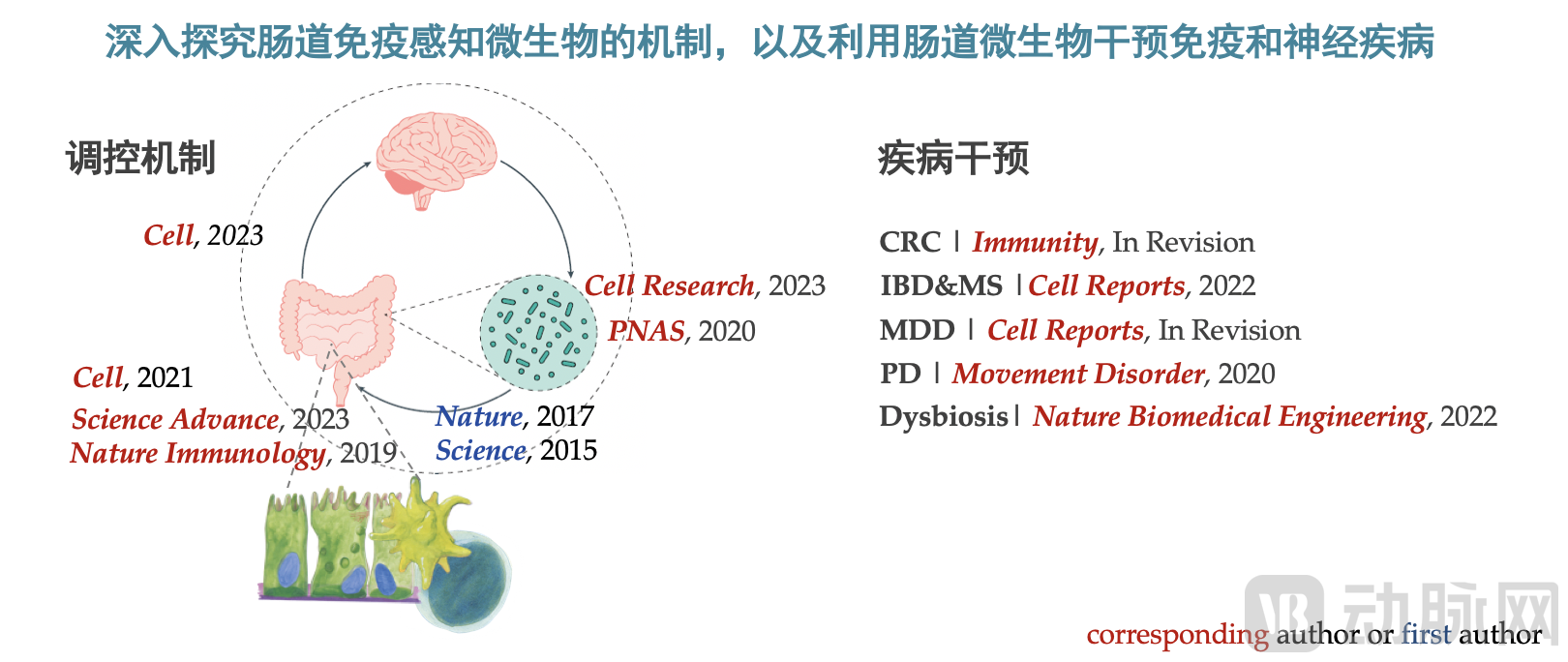
In 2021, Hanmicroorganism was established. Its founder, Professor Zhu Shu, is currently a professor and doctoral supervisor at the University of Science and Technology of China, Deputy Dean of the Institute of Health Sciences at the Hefei Comprehensive National Science Center, and a recipient of the National Science Fund for Distinguished Young Scholars. For many years, Professor Zhu has been dedicated to researching immune recognition and immune regulation by gut microbiota, as well as innovative microbiome-based therapies, and has published multiple original research papers in Cell, Nature, and Science.
In an interview with VCBeat, Professor Zhu Shu stated, “Based on years of scientific understanding and accumulation, we have recognized the potential therapeutic value of gut microbiota in human diseases. Although fecal microbiota transplantation (FMT) has been clinically proven effective for various conditions, including Clostridioides difficile infection, inflammatory bowel disease (IBD), and autism spectrum disorder, its mechanisms of action remain unclear. At Hanmicroorganism, our mission is to translate scientific discoveries into tangible therapeutics, thereby converting laboratory science into clinical value and unraveling the ‘black box’ of poorly understood gut microbiota mechanisms.”

Building on Professor Zhu Shu’s 17 years of academic expertise and the “academia + industry” talent team established since the founding of Hanmicroorganism, the company has formed a core R&D team comprising PhDs in microbiology, immunology, neurobiology, analytical chemistry, and medicinal chemistry from world-class institutions such as Yale University, Harvard University, the Chinese Academy of Sciences, Fudan University, and the University of Science and Technology of China. This team is complemented by R&D and management professionals with experience at leading companies such as GSK. Hanmicroorganism has currently established a series of specialized platforms, including screening for immune and neuromodulatory functions, analysis of single-strain metabolites, and synthetic biology engineering of natural products, along with a comprehensive team capable of handling strain isolation and identification, fermentation process scale-up, and clinical trial applications for drug registration.
Leveraging its unique functional screening and evaluation system, Hanmicroorganism focuses on immunomodulation and neuromodulation. The company has established multiple live biotherapeutic product pipelines, with three candidates—including those for antidepressant therapy and Crohn’s disease relief—already entering the Investigator-Initiated Trial (IIT) phase. Clinical efficacy data are expected to be released sequentially starting next year.
The development of microbial therapeutics has undergone multiple iterations, evolving from the initial fecal microbiota transplantation (FMT), which involved transplanting fecal microbiota from healthy donors into patients’ gastrointestinal tracts, to spore-based FMT (S-FMT), which entails isolating and purifying bacterial spores from healthy donor feces, and further to the currently prominent live biotherapeutic products (LBPs).
“Essentially, it is a process of transitioning from the laboratory to industrial application. For instance, S-FMT products contain an average of approximately 50 types of bacterial spores, posing significant challenges in terms of safety, quality control, and large-scale production. In contrast, LBPs are drugs with well-defined components, pre-screened for strain functionality and mechanism of action, thereby enabling process control and scalable manufacturing,” stated Professor Zhu Shu.“The next step will be an iteration from LBPs to microbial metabolites, namely utilizing compounds with clear druggability produced by bacterial metabolism to intervene in and treat diseases. Meanwhile, due to their distinct biological effects, LBPs and small-molecule drugs based on microbial metabolites can target different patient populations.” In this field, Hanmicroorganism has established two parallel drug development pipelines for neuropsychiatric disorders, featuring the synergistic development of LBPs and small-molecule microbial metabolites.
To establish a drug R&D platform based on live microorganisms, Hanmicroorganism has built a comprehensive industrialization system for microbes, covering isolation and culture, functional screening, mechanistic studies, and application. The company has independently established a strain library of over 15,000 entries, including gut microbiota from healthy individuals, gut microbiota from special populations, strains listed in food catalogs, and genetically edited strains of dozens of species. By integrating functional screening with mechanistic research, the team identifies novel functional molecules, new targets, and new pathway mechanisms, thereby clarifying effector molecules and accelerating the progress of its drug pipeline.
Professor Zhu ShuHe stated, “Live biotherapeutic products (LBPs) offer unique advantages in the treatment of major chronic diseases and in medication for sensitive populations, including children, the elderly, and individuals who are pregnant or breastfeeding. Furthermore, LBPs hold greater potential and promise as delivery vectors, as sources for drug development through their components or metabolites, and in enhancing the efficacy of other medications. Hanmicroorganism is accelerating its pipeline R&D with the aim of launching its first blockbuster LBP application as soon as possible. We welcome collaboration with all stakeholders to leverage our respective strengths, jointly develop and promote these therapies, and bring microbial and related treatments to benefit hundreds of millions of patients suffering from immune and neurological disorders.”
Chende Capital Investment Team“He stated, ‘Gut microbiota not only maintain intestinal homeostasis but are also associated with multiple physiological and pathological processes in the human body. Gut microbiota can regulate the metabolism of carbohydrates, lipids, and other substances; modulate the immune system to influence the efficacy of tumor immunotherapies such as PD-1 inhibitors; and participate in the regulation of the nervous system via the gut-brain axis. Recently, the first live biotherapeutic product was approved by the FDA for market entry, drawing increasing attention to the industry. Under the leadership of its founder, Professor Zhu Shu, Hefei Hanmicroorganism Technology Co., Ltd. has established a proprietary platform for screening live biotherapeutic products and developed multiple product pipelines covering neuroscience, metabolism, immunology, and other areas, with some candidates currently undergoing clinical validation. We are optimistic about the significant potential of live biotherapeutics in treating various diseases and hope to accelerate our R&D progress so that our products can reach patients sooner.’”
CICC CapitalProject LeaderDr. Xin-Hao ZhaoIt was stated that, from the perspective of basic research, microbiome-based therapeutics have completed the transition from studying disease correlation to establishing causality; basic research is gradually maturing and demonstrating translational value. In terms of industry development trends, rapid progress is currently being made globally across various disease areas, including neuropsychiatric disorders, metabolic diseases, autoimmune diseases, dysbiosis, and oncology. Regarding drug developability, new microbiome-based drugs received FDA approval for market launch last year and this year, respectively, providing initial validation of their pharmaceutical formulation. Standing at the starting point of the microbiome sector, we recognize Hanmicro’s global competitiveness and the growth potential of this track, filling us with hope for the future.
Hefei Hanmicroorganism Technology Co., Ltd. stands out in the microbiome sector, having achieved numerous breakthrough discoveries regarding the gut-brain axis and the relationship between autoimmunity and microbes. The company has conducted in-depth translational research in areas such as etiology, microbial intervention, and metabolite intervention, with preliminary clinical validation already completed. These accomplishments have established its competitive advantage in developing first-in-class (FIC) drugs in these fields. Through this investment, we aim to foster synergy between Shanghai CCI Investment Co., Ltd. and the company’s team, facilitating significant advancements in clinical translation and team building, thereby extending the benefits of microbiome-based therapeutics to a broader patient population.
About Chende Capital
Chende Capital is an investment firm focused on the niche sectors of innovative medical technologies and cutting-edge biotechnologies. Managed and operated by a professional team with extensive backgrounds in the healthcare industry, Chende Capital oversees multiple RMB and USD funds. Adhering to the investment philosophy of “focus, excellence, and reputation,” the firm leverages its deep industrial resources in the healthcare sector and years of in-depth research and cultivation to promptly identify the latest international technological trends and seize investment opportunities driven by technological innovation. Committed to discovering top-tier companies with the potential for industry leadership, Chende Capital employs an interconnected, win-win investment methodology and a precise, pragmatic post-investment value-creation system. By co-building an industrial ecosystem and growing alongside entrepreneurs, the firm aims to deliver sustainable, superior returns to its investors.
About CICC Capital
CICC Capital is the private equity fund management platform of China International Capital Corporation Limited (“CICC”), overseeing CICC’s domestic and overseas private equity fund businesses. It has grown into one of China’s leading private investment management institutions. Currently, its managed funds span a range of categories, including RMB-denominated corporate private equity funds, funds of funds (FOFs), infrastructure funds, and USD-denominated corporate private equity funds.