

Taizhou's Pharmaceutical Sector Gains Momentum with 9 IPOs in 5 Years: Bangshi Medical and Quanxin Bio File for Listings

Qyuns
Developer of Biologics for Autoimmune and Allergic Diseases

Asieris
Innovative Drug Developer
Yangtze River Pharmaceutical Group
Pharmaceutical and Health Service Providers
Recently, Taizhou has been abuzz with good news.
First, at the China International Import Expo (CIIE), AstraZeneca announced a new cooperation agreement with Taizhou. Building on last year’s RMB 180 million capital increase to construct a production line for Forxiga (dapagliflozin), the company will invest an additional RMB 190 million this year to build a new production line for Qtern (dapagliflozin/saxagliptin). This initiative aims to continuously introduce core technologies for diabetes medications and establish a complete product manufacturing and supply chain, with the goal of transforming Taizhou into AstraZeneca’s global production and supply hub for its diabetes portfolio.
And on the very next day after the signing, headquartered in Taizhou Medical High-tech ZoneBonss MedicalAnnounced its push for an IPO, though this is not the only such case recently; two weeks ago, another company from the Taizhou Medical High-Tech ZoneQuanxin BiologicsIt has also formally submitted its prospectus, aiming for a listing on the Main Board of the Hong Kong Stock Exchange.
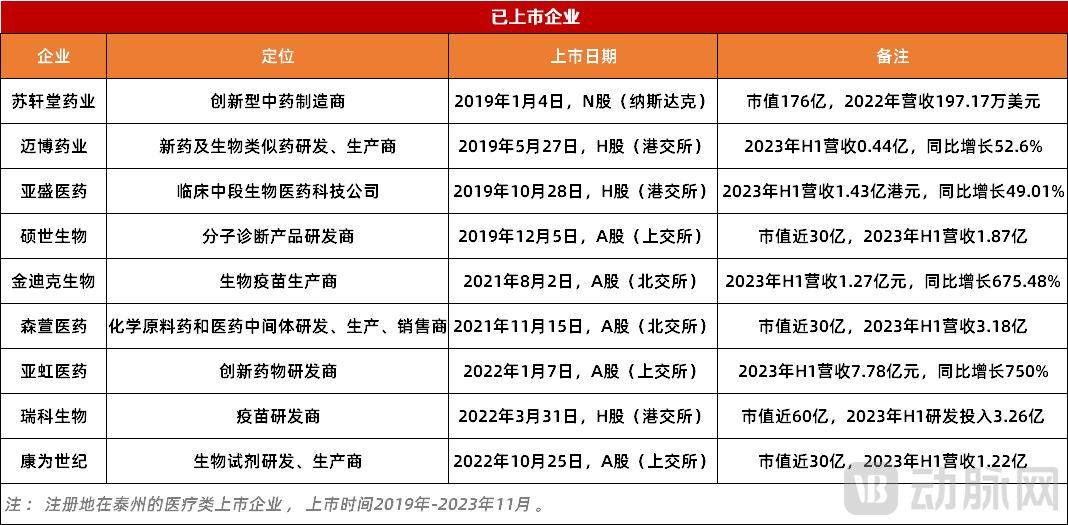 Figure 1. Listed Companies in Taizhou’s Pharmaceutical Sector Over the Past Five Years (Source: Artery Orange)
In fact, in addition to those queuing up for listing, Taizhou has seen a concentrated emergence of a number of listed pharmaceutical companies in recent years. According to incomplete statistics from VCBeat,From 2019 to 2022, Taizhou saw a total of nine pharmaceutical companies go public., including biological vaccine manufacturersJiangsu GDK Biotechnology Co., Ltd.and Innovative Drug DeveloperAsieris, It is reported that both listed companies have achieved significant success this year, with their first-half performance increasing by nearly sevenfold, highlighting their market potential.
Certainly, the buzz in Taizhou’s pharmaceutical industry is not limited to the secondary market; the primary market has also seen sustained momentum in recent years. According to incomplete statistics from the VCBeat Orange Database,Since 2021, Taizhou has completed 32 financing deals in the pharmaceutical and medical sector, involving 28 companies, with half of them having advanced to Series B or later stages.。
Does this mean that an investment opportunity harboring Taizhou's pharmaceutical industry has kicked off?
Taizhou Pharma: Not an "Unknown Name"
For the vast majority of pharmaceutical professionals, mentioning Taizhou may first bring to mindTaizhou Medicine, this established pharmaceutical company, founded in 1955 and with a history of nearly 70 years, plays a pivotal role in the pharmaceutical industry of Taizhou and even the entire Jiangsu Province.
Of course, having been established for half a century yet still insisting on neither raising external capital nor going publicYangtze River Pharmaceutical GroupIt is also a force to be reckoned with. As the “King of Banlangen,” Yangtze River Pharmaceutical Group Co.,Ltd. had already surpassed RMB 10 billion in revenue early in the 21st century and has repeatedly topped the list of China’s Top 100 Pharmaceutical Manufacturing Enterprises. In 2022, it achieved revenues of RMB 78.553 billion, accounting for 12.27% of Taizhou’s annual gross domestic product. Furthermore, among the nation’s Top 100 pharmaceutical enterprises,Jichuan Pharmaceutical、Jiangshan PharmaceuticalandSuzhong PharmaceuticalThey are also from Taizhou.
In addition to the presence of a number of major pharmaceutical companies,Taizhou is also home to China’s only national-level pharmaceutical high-tech zone established through joint construction by a national ministry and the provincial government—the Taizhou Medical High-Tech Zone., or it can also be referred to by another broader name, namely“China Medical City”。
It is reported that the planning and construction of Taizhou Medical High-tech Zone began in 2005, one year earlier than Suzhou’s BioBAY. As of now,The park has gathered more than 1,200 pharmaceutical companies from home and abroad., including 14 global multinational corporations such as AstraZeneca, Takeda Pharmaceutical, and GlaxoSmithKline, forming six specialized industrial clusters: vaccines, antibodies, diagnostic reagents and high-end medical devices, novel formulations of chemical drugs, modernization of traditional Chinese medicine, and health and cosmetic products.
It is precisely for this reason that the pharmaceutical sector has become Taizhou’s “most capital-attractive” industry. According to official data,In 2022, the scale of Taizhou's big health industry reached RMB 285 billion, with the pharmaceutical industry output value amounting to RMB 94.62 billion, accounting for approximately one-twentieth of the national total and leading Jiangsu Province for 19 consecutive years.。
So, in terms of specific niche sectors, what are the advantageous industries within Taizhou's pharmaceutical segment?
Through multi-dimensional observation, VCBeat first focuses on the vaccine industry. It is reported thatTaizhou Has the Highest Vaccine Industry Concentration in China, it has currently gathered 10 human vaccine enterprises and 4 animal vaccine enterprises, with nearly 50 various vaccine products. Meanwhile, Taizhou also hosts the nation's only pilot program for the clustered development of novel vaccines and specific diagnostic reagents, as well as the Vaccine Engineering Center—the largest vaccine achievement transformation base in China and the only one in Jiangsu Province.
Specifically at the enterprise level, in the vaccine sector, there are currently three targets in Taizhou worthy of attention, namely those listed in the past two yearsJiangsu GDK Biotechnology Co., Ltd.andRecbio, and those currently pursuing an initial public offering (IPO)Zhonghui Biopharmaamong which Hui'er Kangxin HRK-X®, the full-dose adjuvant-free quadrivalent influenza subunit vaccine independently developed by Zhonghui Bio, has recently been approved, marking it as the first quadrivalent influenza subunit vaccine approved for marketing in China.
Following Vaccines,Another notable niche segment in Taizhou is foods for special medical purposes.Currently, Taizhou is home to three manufacturers of foods for special medical purposes (FSMP): Nestlé Health Science, Kunyu Health, and CSPC Zhongnuo Pharmaceutical. These enterprises account for 30% of the provincial total and 15.8% of the national total in China. The city has obtained 12 FSMP registration certificates, representing 73.3% of the provincial total and 20% of the national total in China.
However, Taizhou is not content with the status quo; looking ahead, its competitive advantages in the FSMP (Food for Special Medical Purpose) industry are set to expand further. It is reported that Taizhou has designated FSMP as one of its two future characteristic industries, with rapid deployment of related infrastructure and supporting facilities underway. In January 2022, the Jiangsu Provincial Quality Supervision and Inspection Center for Food for Special Medical Purposes was officially established in Taizhou, marking it as the only provincial-level public technical service platform for FSMP in China. By the end of the same year, the Taizhou FSMP Laboratory was approved for construction, becoming the first key provincial laboratory under market supervision in Jiangsu Province dedicated to researching FSMP. Within just one year, from innovation to regulatory approval, Taizhou’s FSMP industrial chain has become increasingly comprehensive.
In addition, Taizhou also holds a competitive edge in areas such as antibodies, diagnostic reagents and high-end medical devices, and novel formulations of chemical drugs. For instance, the company that completed its RMB 300 million Series B financing round this JuneYingke Biotechnologytaking it as an example, the company is dedicated to R&D in pharmaceutical fields such as oncology, anesthesia, gene therapies, and diagnostic kits, as well as the production of active pharmaceutical ingredients (APIs) and formulations. Currently, several of its core products have been launched on the market. Among them, its Propofol Medium- and Long-Chain Triglycerides Emulsion for Injection is the first anesthesia-related product in China to pass the consistency evaluation, has been included in the fourth batch of centralized volume-based procurement, and has achieved commercial sales.
In the field of innovative medical devices, by observing the companies in Taizhou that have secured financing in recent years, theirImaging Equipment, Ophthalmology, Robotics, Neurointerventional, Orthopedics, Medical Aestheticsalso covering niche sectors.
Therefore, from any perspective, Taizhou’s pharmaceutical industry is by no means obscure. On the contrary, thanks to its early start and highly focused, in-depth industrial development, it has only recently entered a harvest phase, with investment potential in the pharmaceutical sector being maximally unleashed as a result.
Creating Opportunities Where None Exist: How Taizhou’s Pharmaceutical Industry Achieved a “Rags-to-Riches” Success?
As of August 2023, Taizhou had a total of 27 listed companies, ranking second to last among the eight cities along the Yangtze River in Jiangsu Province. This figure pales in comparison to Nanjing, Suzhou, Changzhou, and Wuxi, each of which is home to nearly 100 listed enterprises. However, a notable highlight for Taizhou is that despite the relatively small overall number of listed companies, as many as nine are in the pharmaceutical sector, with most having gone public in recent years. Coupled with several pre-IPO companies such as Jiangsu Bonss Medical Technology Co., Ltd. and Quanxin Biologics, Taizhou’s pharmaceutical industry landscape is poised for further expansion.
But in fact,Taizhou possesses no inherent advantages in the pharmaceutical industry; on the contrary, its “youth” has led to significant setbacks.。
It is reported that Taizhou was established as a prefecture-level city separated from Yangzhou in 1996, meaning its journey toward “self-sustaining development” has spanned only 27 years to date. Consequently, Taizhou was relatively weak in many resource areas in its early stages, particularly in terms of higher education resources.After the “split” from Yangzhou, Taizhou was left without a single university—not even a junior college.。
This limitation is particularly pronounced for industrial development, especially in technology-intensive sectors such as the pharmaceutical industry. However, Taizhou has not remained passive; instead, it has adopted a highly strategic approach by collaborating with nearby universities to establish branch campuses in Taizhou, thereby strengthening its own weaknesses.
It is reported that in the pharmaceutical field, Taizhou currently hasNanjing University of Chinese Medicine Hanlin CollegeandNanjing Medical University Taizhou Clinical Medical College, Recently, the Peking University Health Science Center (Taizhou) Medical and Health Industry Innovation Center also announced its official launch. In addition, Taizhou currently maintains varying levels of collaboration with domestic pharmaceutical universities such as China Pharmaceutical University and China Medical University.
A founder of an innovative drug company, who has been operating in Taizhou for six years, shared his deep reflections on this matter. He told VCBeat, “During the first one or two years of our startup journey, we primarily recruited for core technical positions from Nanjing and Suzhou. However, in recent years, we have encountered many skilled professionals locally in Taizhou. Some are graduates from Taizhou’s universities or related research institutes, while others came to Taizhou for employment opportunities facilitated by existing collaborations between their former universities or laboratories and the city. Regardless of the pathway, this trend holds substantial practical value for us.”On one hand, our talent acquisition has expanded its reach; on the other hand, we no longer need to conduct extensive external recruitment, significantly reducing both hiring difficulties and labor costs.。”
In fact, Taizhou has always demonstrated sincere commitment to attracting pharmaceutical talent. As early as ten years ago, the Taizhou Medical High-Tech Zone introduced multiple talent recruitment policies, including the “113 Special Plan for Pharmaceutical Talent” and the “Fengqi Gaoxin·Elite Talent Program.”Allocate 200 million yuan in special funds annually to support the development of local pharmaceutical talent in TaizhouThis September, Taizhou released the “Several Policy Measures on Further Accelerating the Aggregation of Youth and Talent,” also known as the “Eight Articles for Youth and Talent,” with a key focus on cultivating and uncovering young pharmaceutical talent. It is reported that the policy offers extensive incentives.Receive a one-time payment of RMB 1,000 upon completion of a verified interview.。
However, in the pharmaceutical industry, Taizhou’s “congenital deficiencies” extend beyond its lack of universities and talent resources driven by innovation; it is also “stretched thin” in the capital market. It is reported thatIn the years prior to its official designation as a prefecture-level city, Taizhou did not yet have any specialized investment institutions., it was not until after 2003 that a batch of local state-owned capital entities, represented by Taizhou Venture Capital and Taizhou Urban Construction Investment, began to be established successively.
How Did Taizhou’s Late-Starting Capital Market Stage a Comeback Against the Odds?
Just as many regions are currently ramping up their efforts in government-guided funds, Taizhou recognized this trend early on andA dedicated parent fund with a total scale of RMB 1.6 billion was established for the big health industry.. On this basis, Taizhou has also established a government-led industrial chain venture capital fund, while engaging in strategic collaborations with leading institutions such as China Everbright Limited and China Merchants Capital to set up market-oriented direct investment funds, bringing the total fund size to RMB 13.5 billion.
And in April this year,Taizhou Angel Investment Fund has also completed its filing with the Asset Management Association of China (AMAC). This is Taizhou’s first policy-oriented direct investment fund dedicated to early-stage sci-tech innovation investments, with a target total size of RMB 1 billion.One month later, Taizhou released the “Several Policy Measures of Taizhou City on Promoting High-Quality Development of Equity Investment,” which focuses on the entire process of fundraising, investment, management, and exit for equity investment institutions, as well as mechanism guarantees. It innovatively introduced 16 measures aimed at accelerating the aggregation and development of high-quality equity investment institutions.
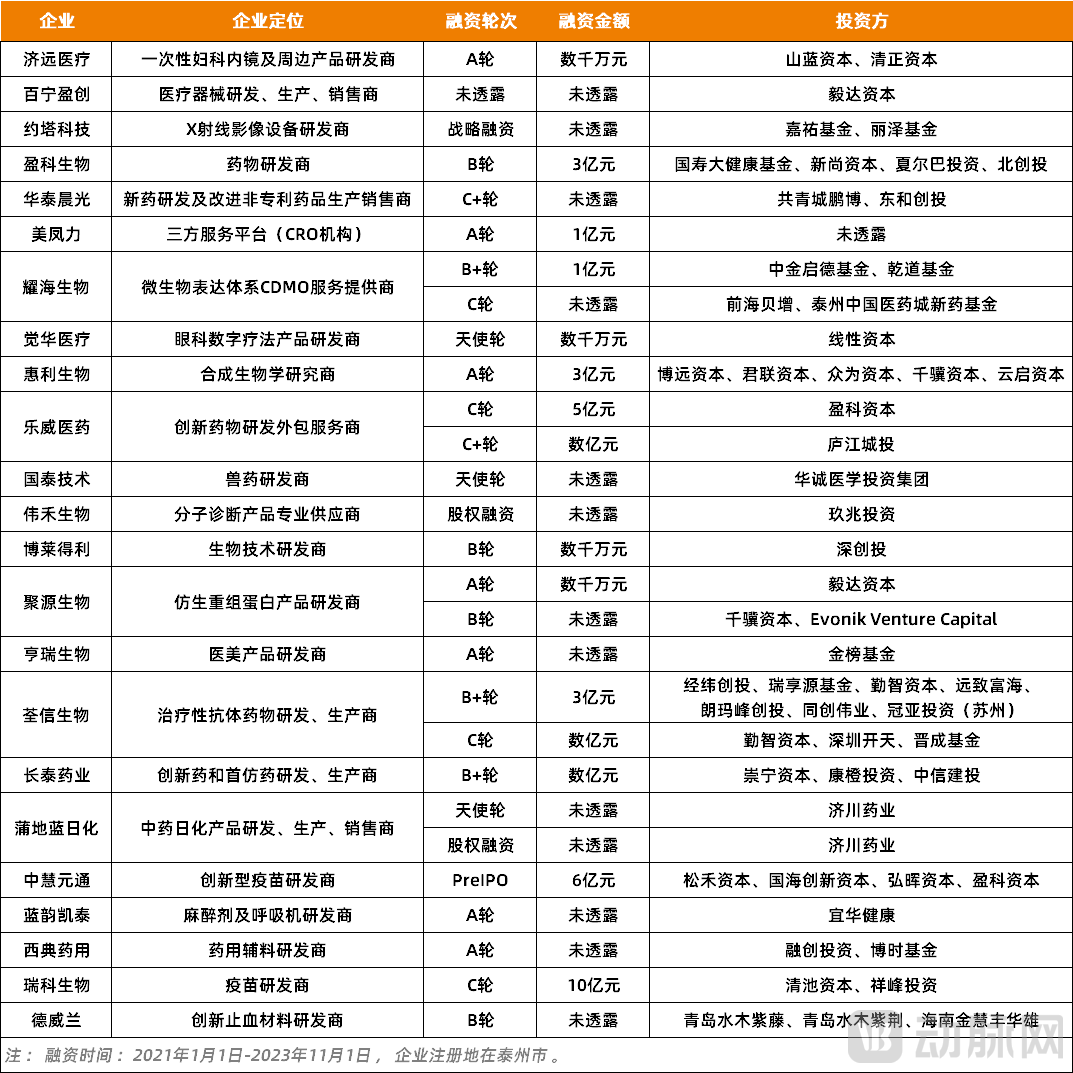 Figure 2. Financing in the pharmaceutical sector in Taizhou from January 2021 to November 2023 (Data source: VCBeat)
It is precisely for this reason that Taizhou has attracted a number of leading capital firms in recent years. Judging from investment trends in the pharmaceutical market over the past one to two years, includingShenzhen Capital Group, Legend Capital, Matrix Partners China, Yida Capital, Honghui Capital, Sherpa Capital, Beijing Capital Venturenearly 40 top-tier investors, including , have increased their stakes. In particular,Addor Capitalas an example, it established its presence in Taizhou as early as 2012 and has since set up five funds in the city, with a total scale of nearly RMB 4 billion. It recently completed an investment in a medical device developerBaining Yingchuangand Developer of Biomimetic Recombinant Protein ProductsJuyuan BiotechInvestment in Two Local Taizhou Enterprises.
So, looking back, what exactly makes Taizhou unique in the capital markets? The most direct answer, of course, comes from investors.
In this regard, a fund partner who settled in Taizhou earlier this year happened to discuss this point with VCBeat, “The relationship between local governments and market-oriented capital is actually a process of mutual selection. For us,What left a deep impression on us about Taizhou was the minimal constraints; at the fund level, we were granted significant autonomy in decision-making, including non-interference in the market-oriented operation of the fund and non-participation in investment decisions.. Of course, they can step forward promptly when needed. For instance, when introducing projects from other regions—particularly medical projects that involve licensing and regulatory filings, which are relatively tedious and complex—but"The investment promotion team in Taizhou is highly professional, with in-depth knowledge of local policies and industrial conditions. Their high efficiency has significantly reduced the challenges associated with our post-investment value-added services."。”
According to official data, as of the end of 2022, Taizhou City had 81 funds filed with the Asset Management Association of China (AMAC), with a total registered scale reaching RMB 44.38 billion. In May this year, Taizhou City explicitly stated thatBy the end of 2025, the city aims to gather more than 50 equity investment institutions, with managed fund assets exceeding RMB 60 billion and registered fund capital surpassing RMB 100 billion.. This also means that Taizhou’s investment market will become more mature and diversified, and as a key investment sector in Taizhou, the pharmaceutical industry naturally holds further potential to be tapped.
Jiangsu’s “Thirteen Guardians” Each Have Their Own Strengths: Differentiated Competition May Be the Only Way Forward
Since the beginning of this year, regions across China have been vigorously promoting the development of the pharmaceutical industry, driven by two fundamental underlying logics:First, in the post-pandemic era, regions across China are seeking new drivers of economic growth; second, as a highly technical industry critical to public welfare, the pharmaceutical sector holds immense future market potential.。
But at the same time, as industrial layout initiatives across various regions become increasingly frequent and investment efforts reach unprecedented levels, with hundreds of billions or even trillions of yuan in fund-of-funds emerging one after another, a voice is growing louder within the industry, namelyDo We Really Need So Many Locations to Develop the Biopharmaceutical Industry??
In this regard, Jiangsu Province, with its comprehensive development across the board, may have a significant voice. It is reported that Jiangsu is currently the only province in China where the GDP of every prefecture-level city has surpassed the RMB 300 billion mark. Precisely because of this, all thirteen prefecture-level cities in Jiangsu have become accustomed to operating independently, a trend that extends to the pharmaceutical sector, where each city possesses the strength to stand on its own.
A typical example isNanjingandSuzhouSuzhou needs no introduction; it has become a key pillar of China’s pharmaceutical industry and is home to world-class biomedical industrial parks such as BioBAY. As the capital of Jiangsu Province, Nanjing is equally competitive, boasting 17 listed companies in the pharmaceutical sector. In 2022, its biomedical industry generated RMB 182.12 billion in revenue, representing a 12% year-on-year increase.
In addition,WuxiandChangzhouThese two regions should not be overlooked either. Taking Wuxi as an example, it has already become a hub for many major domestic and international pharmaceutical companies and leading pharmaceutical CXO firms.WuXi AppTecStarting from Wuxi, a global pharmaceutical giantAstraZenecachose Wuxi as its first stop for development in China, having invested over $570 million cumulatively in the city to date; 80% of the company’s domestic sales products are manufactured in Wuxi.
andChangzhouIn recent years, it has been actively advancing the field of synthetic biology. In October alone, three synthetic biology industrial parks were established: the Jintan Synthetic Biology Industrial Park, the Yangtze River Delta Synthetic Biology Industry Innovation Park, and the West Taihu Lake Synthetic Biology Innovation Industrial Park. Concurrently, a RMB 2 billion synthetic biology industry fund was launched.
Of course, this article highlightsTaizhouThe same applies here. So, in the face of competition, how can local pharmaceutical industries stand out?
Admittedly, China’s pharmaceutical industry holds immense potential for development, but it is clearly not large enough to sustain thousands of pharmaceutical industrial parks. Industry insiders once revealed to VCBeat thatCurrently, more than half of the thousands of pharmaceutical industrial parks in China are redundant., and as China's pharmaceutical industry gradually transitions toward innovation-driven development, the requirements for pharmaceutical parks will become increasingly stringent,Some pharmaceutical parks with inadequate supporting facilities will gradually be eliminated in the industry's process of survival of the fittest.。
Therefore, to break through from within, it ultimately comes down to one point:To avoid homogenization resulting from simplistic “copy-and-paste” approaches, it is essential to thoroughly understand the characteristics of the pharmaceutical industry while gaining a deeper insight into the strengths and weaknesses of one’s existing industrial chain. Companies should continuously reinforce their weaknesses and maximize their strengths, ideally achieving deep integration with the pharmaceutical industry to ultimately transform these advantages into differentiated core competencies.。
In fact, this constitutes the fundamental survival logic of the entire pharmaceutical industry today, encompassing not only local governments and industrial parks but also enterprises and capital.
1. “VC/PE Investors Flock to Taizhou” — Xiao Fan Zhuo;
2. “The Many Faces of Biopharmaceutical Parks in 2023” — Deep Blue View;
3. “A-Share Capital Map: Taizhou Chapter — 17 Listed Companies with a Combined Market Cap of Nearly RMB 100 Billion, Over 70% of Which Are Leaders in Their Niche Segments” — Shidai Data.