

Promise Medical Secures Three Domestic-First Neuromodulation Devices Approval and Files for IPO
The “Special Examination Procedures for Innovative Medical Devices” stipulate that products meeting criteria such as “pioneering the primary working principle or mechanism of action in China, demonstrating fundamental improvements in performance or safety compared to similar products, achieving international leading technical standards, and possessing significant clinical application value” will be placed in a “separate queue,” thereby accelerating the registration testing process and enjoying priority in technical review and administrative approval.
In 2022, the National Medical Products Administration (NMPA) approved a total of 55 innovative medical device products for market launch. Relative to the vast landscape of medical device innovation, such approval represents a highly selective process, akin to choosing one in ten thousand.Under these stringent selection criteria, one company managed to have three consecutive products enter the Special Review Procedure for Innovative Medical Devices within a two-month period. This company is HANGZHOU GENERAL STIM BIOTECHNOLOGY CO.,LTD (hereinafter referred to as “General Stim”).
From June to July 2023, HANGZHOU GENERAL STIM BIOTECHNOLOGY CO.,LTD’s three innovative products—the “Implantable Sacral Nerve Stimulator” (NMPA Registration No. 20233120807), the “Implantable Sacral Nerve Stimulation Extension Lead” (NMPA Registration No. 20233120808), and the “Implantable Sacral Nerve Stimulation Electrode” (NMPA Registration No. 20233120809)—received registration approval from the National Medical Products Administration (NMPA) and were officially launched into the market.
One cannot help but ask: What is the “innovation code” behind the successive approvals of General Stim’s medical products?
To begin with, let us discuss the background behind the establishment of General Stim.Established in 2013, HANGZHOU GENERAL STIM BIOTECHNOLOGY CO.,LTD is a wholly-owned subsidiary of Zhejiang Nurotron Biotechnology Co., Ltd. (hereinafter referred to as "Nurotron").Nurotron is the first domestic company capable of independently developing cochlear implants, and it is also the fourth company globally and the first in China to achieve full age-group coverage and comprehensive commercial sales of cochlear implants.
Against this backdrop, leveraging and inheriting Nurotron’s leading technologies and core strengths in the field of neural electrical stimulation, General Stim has been deeply engaged in the field of neuromodulation technology since its inception, dedicated to the research, development, and application of neural stimulation technologies. Currently, General Stim has established a strategic layout with two product lines: urological system modulation and brain system modulation.
In addition to Nurotron's technical expertise, General Stim has also assembled a core team with extensive R&D and work experience in related fields.According to Li Hao, General Manager of HANGZHOU GENERAL STIM BIOTECHNOLOGY CO.,LTD, more than half of the current team members hold doctoral degrees and have postdoctoral research experience, with R&D personnel accounting for over 50% of the company’s workforce.
Backed by Nurotron and after a decade of deep industry engagement, General Stim has been recognized as a Zhejiang Provincial Technology Innovation Enterprise and successfully awarded the title of “Fledgling Eagle Plan” Enterprise in Hangzhou. The company currently holds 13 invention patents, 7 utility model patents, and 4 design patents. It has established long-term collaborative partnerships integrating industry, academia, research, and clinical practice with numerous renowned domestic clinical and research institutions, including national clinical medical centers for urology and neurological disorders, as well as key laboratories of medical engineering under the Ministry of Education at prestigious universities.
It is worth noting that HANGZHOU GENERAL STIM BIOTECHNOLOGY CO.,LTD has successively undertaken the National Key Technology R&D Program during China’s 11th, 12th, and 13th Five-Year Plan periods, dedicated to elevating the safety and precision of neuromodulation-based diagnosis and treatment to new heights through technological breakthroughs and product innovation.
The newly approved implantable sacral nerve stimulator, implantable sacral nerve stimulation extension lead, and implantable sacral nerve stimulation electrode collectively constitute one of the three major urinary control product solutions offered by General Stim.Implantable Sacral Neuromodulation System (SNM).
Sacral nerves primarily refer to the spinal nerves located in the sacrum, which control the anus, perineum, penis in males, and clitoris and urethra in females. Therefore, implantable sacral nerve stimulation systems can be used as an adjunctive therapy for adult urinary control, as well as for managing symptoms of overactive bladder (OAB) in patients who are refractory to or intolerant of conservative treatments.
Overactive bladder is a syndrome characterized by urinary urgency, often accompanied by frequency and nocturia, with or without urge incontinence. Currently, there is a large number of patients with overactive bladder in China, with a prevalence rate of 5.9% among the population aged 18 and above. The incidence increases with age, reaching 10% in those over 40 years old, which seriously affects patients' quality of life.
Implantable sacral nerve stimulation systems represent one of the most advanced approaches currently available for treating overactive bladder, with companies such as Medtronic and Axonics having long established their presence in this field. The specific therapeutic mechanism involves an implantable neurostimulator that delivers short-pulse electrical currents to inhibit hyperexcitability within neural pathways. This reduces afferent impulses, thereby modulating and regulating effector organs innervated by the sacral nerves—including the bladder, urethral sphincter, and pelvic floor—achieving a “neuromodulation” effect that improves organ function.
Compared with existing implantable sacral nerve stimulation systems on the market, HANGZHOU GENERAL STIM BIOTECHNOLOGY CO.,LTD’s implantable sacral nerve stimulation system adopts an industry-first 6-contact electrode. Compared with traditional 4-contact electrodes,The 6-contact electrode features high stimulation electrode density, offers multiple combinations of stimulation pulse signals, and provides more precise modulation ranges, thereby meeting the needs of diverse clinical treatment protocols.
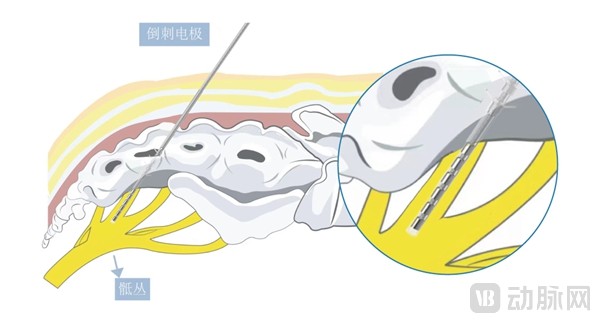
Industry-first 6-contact electrode therapy
Photo provided by the interviewee
Secondly, the implantable sacral nerve stimulation system employs far-field communication technology based on medical implant services, enabling non-contact adjustment of stimulator parameters. This makes treatment more convenient and flexible, significantly extends the programming distance during and after surgery, and eliminates the risk of intraoperative infection.
In terms of clinical trials, General Stim has successively established clinical collaborations with seven centers, namely Beijing Bo’ai Hospital of China Rehabilitation Research Center, Zhejiang Provincial People’s Hospital, The Second Affiliated Hospital of Nanjing Medical University, Tongji Hospital Affiliated to Huazhong University of Science and Technology, Qilu Hospital of Shandong University, The Second Affiliated Hospital of Xi’an Jiaotong University, and The First Affiliated Hospital of Wenzhou Medical University, all of which are large Grade 3A hospitals.
Results from the multicenter clinical trial showed that patients in the experimental group who received implantable sacral nerve stimulator therapy at 12 weeks post-treatmentComprehensive TreatmentThe success rate was 75.68%, compared with 27.78% in the control group., the experimental group was significantly superior to the control group, achieving significant clinical efficacy.
Also targeting overactive bladder, General Stim has developed a mini, portable, butterfly-shaped wearable transcutaneous tibial nerve stimulator (TTNS). This product is China’s first and only wearable TTNS device designed for multi-scenario use. It treats overactive bladder by stimulating the tibial nerve on the medial side of the ankle, thereby inhibiting afferent bladder activity and blocking the transmission of abnormal signals to the spinal cord and brain.
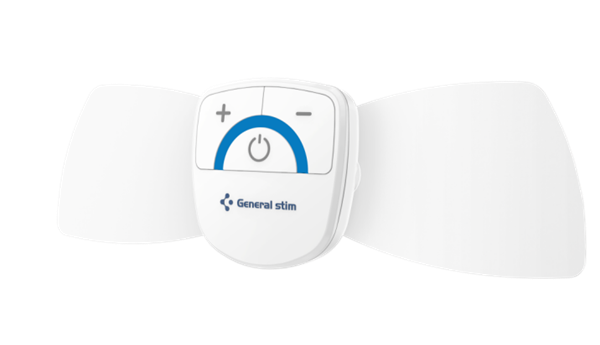
Wearable Percutaneous Tibial Nerve Stimulator
Photo provided by the interviewee
As a wearable medical device, the percutaneous tibial nerve stimulator can be used in multiple scenarios. It efficiently regulates bladder function and improves quality of life through once-daily, one-hour sessions of electrical stimulation therapy. Additionally, the system is equipped with a digital management platform featuring comprehensive parameter settings, customizable templates, scheduled treatment reminders, and treatment data statistics, enabling intelligent human-machine interaction.

Usage Scenarios
Photo provided by the interviewee
Another "first-in-China, internationally benchmarked" urinary control product solution from General Stim is the Intravesical Electrical Stimulator (IVES). This product is primarily indicated for underactive bladder (UAB), addressing symptoms such as difficulty urinating, weak urinary stream, prolonged voiding time, and diminished or absent sensation of bladder filling and voiding caused by various etiologies, including spinal cord injury, spinal dysraphism, intervertebral disc herniation, and trauma.
The primary mechanism involves inserting a urinary catheter equipped with stimulating electrodes into the bladder and using normal saline as a medium to stimulate the detrusor muscle. This stimulation leverages the remaining afferent neural pathways between the detrusor muscle and the central nervous system to induce the sensation of urination, thereby increasing efferent neural impulses to promote voiding or enhance urinary continence.
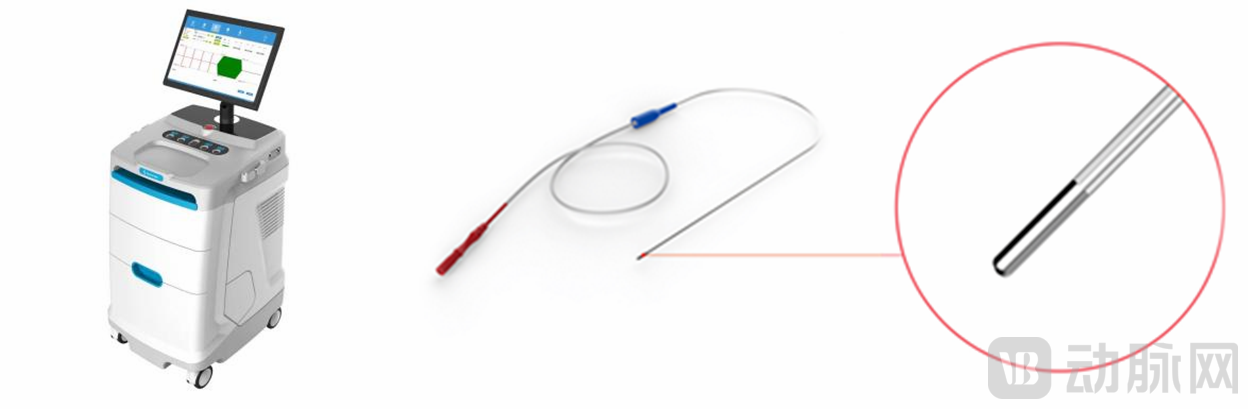
Pelvic Floor Rehabilitation Therapy Device, Bladder Stimulation Electrode
Image provided by the interviewee
Under the National Science and Technology Support Program during the 12th Five-Year Plan period, the intravesical stimulation therapy system developed by General Stim has completed multi-center clinical studies. The results demonstrated that the therapeutic efficacy of the experimental group was superior to that of the control group, both in terms of changes in post-void residual urine volume and improvement rates. Furthermore, the magnitude of this therapeutic benefit exceeded the reference values for pharmacological treatment of underactive bladder (UAB) in clinical practice. The relevant multi-center randomized controlled trial (RCT) has been published in BJU International, a top-tier journal in the field of urology.
In addition to urinary system diseases, the harm caused by a series of brain disorders, such as epilepsy and Parkinson’s disease, should not be underestimated. The global burden of brain diseases accounts for 23% of the total disease burden, ranking first in China.Against this backdrop, in addition to its dedication to the research and application of three major urinary control products, General Stim has also established a presence in the field of Deep Brain Stimulation (DBS), with related products having entered the clinical trial phase.
HANGZHOU GENERAL STIM BIOTECHNOLOGY CO.,LTD's Deep Brain Stimulation (DBS) System consists of three components: a programmer, an implantable neurostimulator, and physician control software for deep brain stimulation. By delivering low-intensity electrical pulses through electrodes implanted in specific functional nuclei of the brain, the system stimulates intracranial functional nuclei to modulate or restore brain function, thereby alleviating and intervening in disease symptoms.
In public interviews, HANGZHOU GENERAL STIM BIOTECHNOLOGY CO.,LTD disclosed that, as it continues to deeply explore application scenarios for neuromodulation systems, its R&D investment has approached RMB 200 million to date, with plans to further increase this commitment in the future.
Neurological disorders are a highly prevalent category of conditions, affecting nearly one billion patients worldwide. According to research by Global Info Research (GIR), global revenue from implantable neurostimulators was approximately $6.8322 billion in 2021 and is projected to reach $13.93 billion by 2028. However, due to high technological barriers within the industry, European and American companies, led by Medtronic—the earliest entrant into the neuromodulation device market—firmly control this multi-billion-dollar market.
In response, Li Hao stated at the end of the interview,“Although China’s neurostimulator industry started relatively late, it has now entered a phase of technological breakthroughs. HANGZHOU GENERAL STIM BIOTECHNOLOGY CO.,LTD has mastered multiple key technologies for active implantable Class III medical devices, and several of its neuromodulation products across various fields have obtained regulatory approval. This lays a solid foundation of technical expertise and clinical experience for China’s future rise in the field of neurostimulation technology, enabling it to compete with international giants such as Medtronic.”