

Hefei Hosts Future Healthcare Tech Conference for the First Time: How KEJI SILICON VALLEY Drives Pharmaceutical Ecosystem Development
BREATH MEDICAL
ENT Medical Device R&D Company
Recently, a medical device developer in the field of otorhinolaryngologyBREATH MEDICALAnnounced the completion of a Series C financing round worth tens of millions of yuan. Reportedly, this is the 12th financing deal completed in Hefei’s pharmaceutical sector this year. Looking at a longer timeline, according to incomplete statistics from the Artery Orange database,Hefei has completed nearly 60 financing deals in the pharmaceutical sector over the past three years, covering more than 50 pharmaceutical companies.。
Additionally, Hefei has also delivered standout performance in the secondary market in recent years; according to incomplete statistics from VCBeat,Hefei Has Welcomed Five Newly Listed Pharmaceutical Companies in the Past Two Years, including CRO developersWanbang MedicineIt was listed in late September this year, with its stock price falling below the IPO price on the first day of trading, and a total market capitalization of nearly RMB 5 billion.
In fact, the significant strides made in both primary and secondary capital markets are inseparable from the substantial investments made by Hefei and Anhui Province as a whole in the pharmaceutical sector in recent years. Not only have multiple key policies been promulgated to provide comprehensive support for industrial development, but several government-guided funds have also been established to continuously identify and nurture early-stage projects within the industry. It is reported that a cohort of local state-owned assets in Anhui Province, represented by Hefei Industrial Investment Group, Hefei Venture Capital Group, and Hefei High-Tech Investment Group, has invested in more than 30 early-stage pharmaceutical projects over the past three years.
In addition to policies and funding,Anhui Province also accomplished a “major feat” by officially establishing the “USTC Silicon Valley” in June 2022.According to official information, “USTC Silicon Valley” focuses on the transformation of innovative achievements, the incubation of innovative enterprises, and the optimization of the innovation ecosystem. Leveraging global alumni networks from universities and research institutions such as the University of Science and Technology of China (USTC), it gathers worldwide innovation resources, plays a leading role in scientific and technological system innovation, and, based on new urban spaces in Hefei, aims to build a demonstration project that serves as a source of technological innovation and a hub for emerging industries.
So, specifically in the pharmaceutical and medical sector, what exactly can “USTC Silicon Valley” bring to industrial development? By delving deeper into this question, we may gain a more multidimensional perspective on USTC Silicon Valley.
Why Was USTC Silicon Valley Established?
Across China, there are numerous local innovation hubs similar to “USTC Silicon Valley,” such as Shanghai Zhangjiang, Shenzhen Longgang, Hangzhou Yuhang, and Wuhan Optics Valley. After a period of development and consolidation, these hubs have now become iconic symbols of local industrial innovation.
So, what makes “USTC Silicon Valley” unique? To answer this question, we must first start with its name.
As is well known, “Silicon Valley” is a world-renowned hub for the high-tech industry and a global center for high-tech talent.“USTC Silicon Valley” draws its name from this heritage, reflecting its focus on technology and innovation and its ambition to gather high-tech enterprises.。
“USTC” is the abbreviation for the University of Science and Technology of China. As Hefei’s “intellectual powerhouse,” USTC has successfully transformed numerous cutting-edge scientific and technological achievements into practical applications since its relocation to Hefei in 1969. It stands as a quintessential symbol and comprehensive embodiment of Hefei’s innovative capacity, serving as a vital link connecting universities and research institutions worldwide.
Therefore,The name “USTC Silicon Valley” reflects the hope that this platform will foster a robust innovation and entrepreneurship ecosystem for faculty, students, and alumni of universities and research institutions such as the University of Science and Technology of China (USTC), while also anticipating that these institutions will continuously supply intellectual resources to the platform.。
This is crucial for Hefei’s pharmaceutical industry, which is still in its early stages. Specifically, over the past decade, Hefei has made bold investments—such as delaying subway construction to bet on BOE, committing hundreds of billions of yuan to ChangXin Memory Technologies (CXMT), and partnering with strategic investors to bail out NIO—not only rapidly joining the club of cities with a trillion-yuan industrial output but also fostering three national-level strategic emerging industry clusters: new display devices, integrated circuits, and artificial intelligence.
However, after years of rapid development, many core industries have now reached maturity, with increasingly apparent growth ceilings. In light of this, Hefei is actively seeking the next high-potential market, and the pharmaceutical sector undoubtedly stands out as a strong candidate. This is partly because the pharmaceutical industry is deeply rooted in hard technology, and partly because its substantial market size can fully support Hefei’s further advancement.
However, the objective reality is that Hefei’s pharmaceutical industry is still in its early stages. There is a significant gap between Hefei and neighboring cities such as Suzhou and Nanjing, both in terms of industrial accumulation and market scale. Furthermore, unlike the semiconductor and new energy vehicle sectors, the biopharmaceutical industry encompasses broader and more complex dimensions. This means that Hefei cannot simply replicate the introduction models used for BOE and NIO. Instead, it should leverage local industrial resources to incubate startup projects from the ground up, aligning with the investment philosophy of “investing early, investing small, and investing in hard tech” that has been widely advocated by the investment community in recent years.
And this is precisely what “USTC Silicon Valley” has always adhered to, namelyFocus on cultivating its own pharmaceutical industry ecosystem, nurture promising candidates within this ecosystem, and propel them to become chain leaders, thereby integrating the upstream and downstream segments of the industry. Furthermore, strengthen the connection between “sources of technological innovation” and “hubs for emerging industries,” thus empowering Anhui Province’s initiative to build the “Three Places and One Zone.”。
Aggregating Multiple Core Elements to Build an Innovative Ecosystem for the Pharmaceutical Industry
In the 2022 Anhui Provincial Government Work Report,It was explicitly proposed to strive to build the "USTC Silicon Valley" into a "testing ground" for reform of the science and technology system.So, when focusing on the pharmaceutical and medical sectors, what exactly can “USTC Silicon Valley” accomplish?
Based on the key elements driving the development of the pharmaceutical industry, the primary focus is on harnessing innovation. In this regard, “USTC Silicon Valley” has innovatively introduced the “Global Partners” model and, building upon it, established an operational system for innovation units structured around “teams + funds + platforms.” It is reported that“USTC Silicon Valley” has selected the first batch of 16 innovation unit partners from nearly 200 teams worldwide and has recommended over 200 innovative projects to date.。
In addition, “USTC Silicon Valley” prioritizes establishing deep connections with universities and research institutions worldwide. At present, it has collaborated with over 60 universities, represented by the C9 League, and established contact with 92 alumni organizations. Taking the Global Alumni Affairs Department of “USTC Silicon Valley” as an example, it was jointly established by the University of Science and Technology of China (USTC) and alumni organizations of leading global universities. The department will regularly carry out activities related to global alumni liaison, matchmaking, and services, and will recruit professional service management talent on a global scale.
In terms of specific platforms, “USTC Silicon Valley” has established seven innovation centers in Shenzhen and Hong Kong, China, as well as in Silicon Valley (USA), France, Japan, and other countries and regions, introducing nearly 50 cutting-edge technology projects.
With innovative seeds in place, fostering their robust growth requires the support of a comprehensive funding chain, which constitutes the second core element of “USTC Silicon Valley.” According to available data,The USTC Silicon Valley Guidance Fund has a total scale of RMB 30 billion, with an initial registered capital of RMB 1.5 billion, making it the first guidance fund dedicated to the commercialization of university-based scientific and technological achievements.. It is reported that the fund focuses on “early-stage, small-scale, and technology-driven investments,” targeting key industries, strategic emerging industries, and future industries in Anhui Province and its cities, with a particular emphasis on small, medium, and micro-sized technology enterprises with outstanding technological innovation capabilities established in the “USTC Silicon Valley.”
In addition,““USTC Silicon Valley” has also built a “fund jungle” with a scale of over RMB 200 billion, bringing together 34 equity investment funds to cover the full lifecycle fund system from enterprise incubation, seed stage, growth stage to maturity stage.. This point is particularly important, especially for an emerging industry like pharmaceuticals and biotechnology. A complete and systematic fund chain can not only more deeply tap into the innovation potential of early-stage projects but also provide continuous support for the development of mid- to late-stage projects, driving them further until they go public.
With a source of innovation and funding in place, the next step is to establish an implementation platform. To this end, “USTC Silicon Valley” has planned and constructed in the early phase“One Core, Two Parks, One Town”, differentiated according to their respective positioning and functions.
It is reported that the “One Core” refers to the core area of the “USTC Silicon Valley,” located in the Hefei High-Tech Zone, with a focus on deploying a batch of high-quality innovation and entrepreneurship platforms. The “Two Parks” are the Shushan Park and the Gaoxin Park. The Shushan Park aims to establish an incubation functional zone and an international cooperation zone, while the Gaoxin Park leverages distinctive spatial carriers such as the Institute of Advanced Technology, University of Science and Technology of China (USTC) and the Hefei Innovation Research Institute of the Chinese Academy of Sciences to build a concentrated area for alumni entrepreneurship incubation and the transfer and commercialization of technological achievements. The “One Town” is the “iFlytek Town,” positioned as a sci-tech innovation town that integrates production, living, and ecology into a harmonious, poetic living environment.
Therefore, from a holistic planning perspective, “USTC Silicon Valley” does not isolate industrial innovation; rather, it closely integrates industrial innovation with daily life to truly build an industrial ecosystem and retain talent. It is precisely this approach that maximizes the stimulation of innovation potential and unleashes greater momentum for the development of Hefei’s local pharmaceutical industry.
The final link is a robust ecosystem for innovation and entrepreneurship, primarily embodied by the diversified service capabilities of “USTC Silicon Valley.” It is reported that to better promote industrial development and provide multi-dimensional support for settled projects, USTC Silicon Valley has established seven major service systems, including “Sci-Tech Finance,” “Ecosystem Matchmaking,” “Achievement Commercialization,” “Talent Services,” “Brand Operations,” “Sci-Tech Services,” and “International Innovation.”
To make its services more professional and better aligned with market dynamics, “USTC Silicon Valley” has made significant efforts in team composition and has specially establishedUSTC Silicon Valley Service Platform Co., Ltd. is primarily responsible for facilitating a better integration of an effective government and an efficient market.。
This point is particularly crucial. As is well known, the pharmaceutical industry is relatively complex, often involving regulatory approvals and filings, which require proactive government intervention. At the same time, the pharmaceutical sector is highly market-driven; processes such as R&D, incubation, and investment must strictly adhere to market principles. To effectively bridge the gap between government and market forces, third-party service platforms are indispensable. These platforms must be well-versed in government policies while also possessing deep industry insights to identify genuine needs. Based on this rationale, “USTC Silicon Valley” has selected high-caliber professional teams, establishing a workforce of 60 individuals, over 80% of whom hold degrees from renowned universities both domestically and internationally, with more than 80% possessing postgraduate qualifications.
Overall, it is evident that “USTC Silicon Valley” is establishing an interconnected industrial service system based on the underlying logic of the pharmaceutical industry, forming a virtuous closed loop of government-enterprise collaboration. This will undoubtedly enhance the competitiveness and sustainability of its pharmaceutical industry development.
Fund Size Set to Exceed RMB 200 Billion: What Lies Ahead for USTC Silicon Valley?
Currently, “USTC Silicon Valley” has been established for nearly a year and a half. During this period, it has completed the foundational build-out from “0” to “1,” not only facilitating the implementation of multiple infrastructure projects but also achieving remarkable results in project sourcing and incubation.
However, this is only the beginning; there is even more room for imagination regarding the future of “USTC Silicon Valley.” According to its plan,By 2025, the “USTC Silicon Valley” initiative aims to attract over 100,000 high-caliber professionals and establish a multi-tiered fund system with a total scale exceeding RMB 200 billion.. Meanwhile, it has gathered more than 10,000 technology-based enterprises, new-type R&D institutions, and sci-tech innovation service providers; cultivated 1,000 high-tech enterprises; and fostered over 50 listed companies and unicorns. It has developed a batch of institutional achievements that are replicable and scalable, establishing itself as a national benchmark for scientific and technological system innovation in China.
The confidence of “USTC Silicon Valley” stems primarily from its close proximity to Hefei’s increasingly robust science and technology innovation resources. According to the latest data, in 2022, Hefei, with a GDP exceeding one trillion yuan, rose to 55th place globally in the “Science and Technology Clusters” ranking, an increase of 18 positions from the previous year, and reached 16th place among global “Science Cities,” moving up four spots. This achievement is attributable to Hefei’s substantial investment in research and development (R&D) in recent years. It is reported that in 2022, Hefei’s total social R&D expenditure reached RMB 46.95 billion, a year-on-year increase of 18.98%. The R&D intensity stood at 3.91%, which was 1.37 percentage points higher than the national average, placing Hefei among the leading cities in China.
It is precisely for this reason that Hefei has been able to rapidly achieve industrial upgrading in recent years, which has also provided the prerequisite conditions for “USTC Silicon Valley” to leverage this momentum and drive its development.
Furthermore, Hefei enjoys unique geographical advantages. It is reported that Hefei is currently participating in the Capital Cities Cooperation Action Plan of the Urban Agglomeration in the Middle Reaches of the Yangtze River, while also being integrated into the national strategy for the integrated development of the Yangtze River Delta. Alongside Nanjing and Hangzhou, it has become a sub-central city of the Yangtze River Delta urban agglomeration. In recent years, as the pharmaceutical markets in Shanghai and Suzhou have gradually reached saturation, a large number of projects are rapidly relocating to Hefei, which will inevitably provide a strong impetus to the development of Hefei’s pharmaceutical industry.
In addition, Hefei enjoys certain advantages—and is steadily expanding them—in terms of policy flexibility, the vibrancy of its capital market as a “Venture Capital City,” and the concentration of top-tier talent.
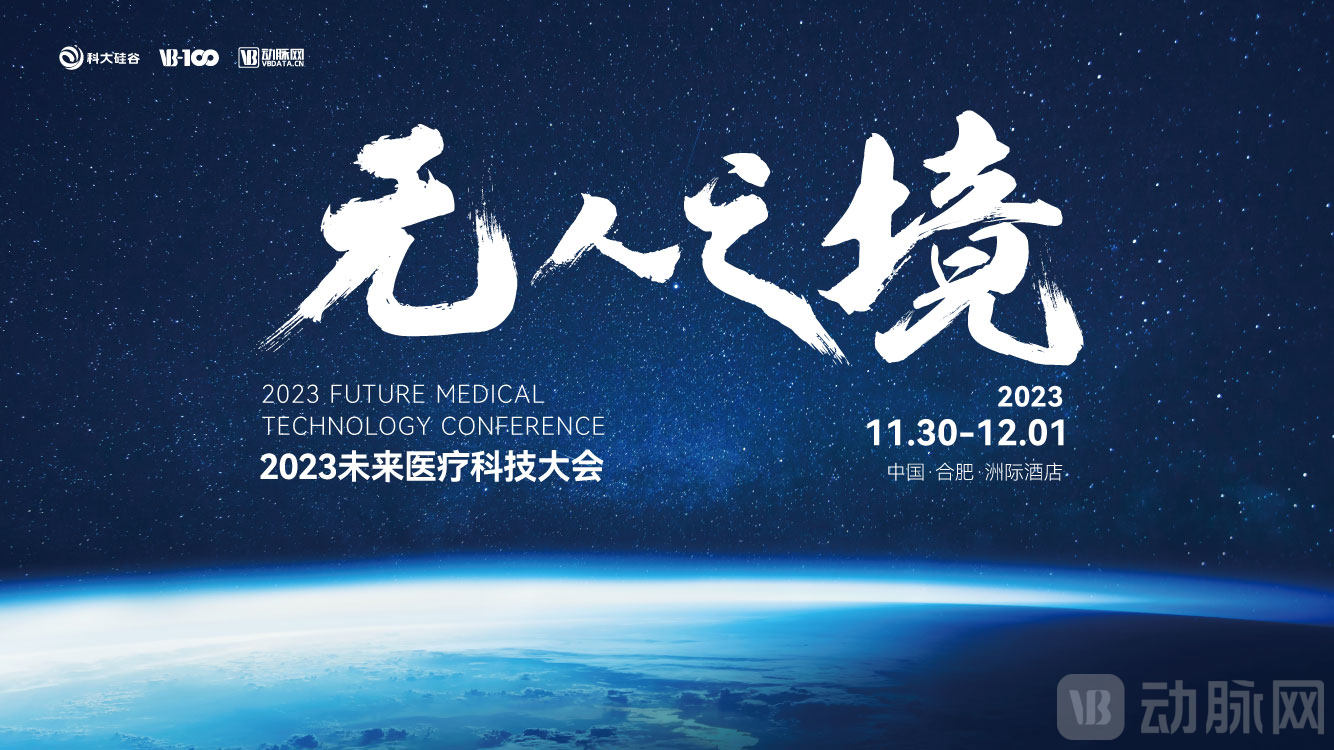
Driven by these first-mover advantages, the construction of “USTC Silicon Valley,” a key carrier of Hefei’s pharmaceutical industry, continues to advance in an orderly manner. For example,From November 30 to December 1, the 2023 Future Healthcare Technology Conference will be held in Hefei for the first time.It is reported that the conference will systematically review the 30 most noteworthy frontier technologies in the field of life and health, invite research scholars aligned with these technological trends to share insights on emerging technical directions, and create a technological feast featuring the release of cutting-edge technologies, the exhibition of innovative tech products, and ecosystem collaboration among medical technology enterprises.The conference has been successfully held for three editions. This year’s event is expected to attract 100+ influential figures in technology, 100 tech companies, and 800 professional attendees.。
This marks the inaugural science and technology conference in the pharmaceutical sector hosted since the establishment of “USTC Silicon Valley.” It not only underscores the pivotal role of the pharmaceutical industry within “USTC Silicon Valley,” but also sends a clear message to the entire healthcare sector: a new innovative pharmaceutical industrial cluster is rapidly taking shape!
Scan the QR code to register for the conference.