

Fifteen Years in the Making: Beicell Therapeutics' Origin and Future
Beicell Therapeutics
Cell Therapy Drug Developer
On April 13, 2022, Beijing was under a semi-lockdown.
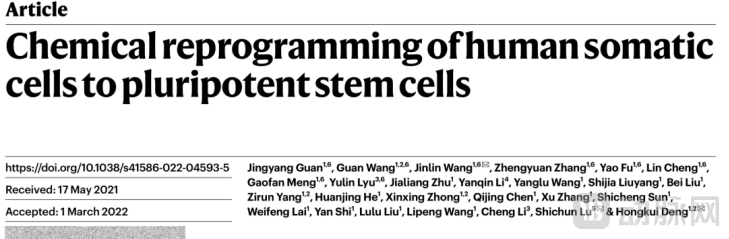
A single paper has stirred up the entire city and the world. Boya Chair Professor, Director of the Center for Stem Cell Research, Peking UniversityProfessor Deng Hongkuiin international academic journalsNatureThe journal published online a research paper titled “Chemical reprogramming of human somatic cells to pluripotent stem cells,” reporting for the first time internationally the use ofChemical Small Molecules Induce the Conversion of Human Adult Cells into Pluripotent Stem Cells(CiPSC), a breakthrough that has sent shockwaves through the international community.
That day, Professor Deng Hongkui called his former student, who works at Boyuan Capital: “Jiacong, let’s have a chat when you’re free.”
Dining in was still prohibited at restaurants in Beijing at the time, so the two had to sit on outdoor stone benches in Yuanmingyuan (the Old Summer Palace), drinking instant coffee. “In fact, Professor Deng already had a detailed plan for transforming the CiPSC platform from an academic project into a technological development platform and its downstream applications. Of course, the support of external capital was also indispensable,” said Guo Jiacong.
Chen Penghui, Founding Partner of Boyuan Capital, also watched CCTV’s report on CiPSC that day. “Professor Deng’s work is pioneering and well worth attention,” Chen immediately messaged Guo Jiacong on WeChat.
Soon, under the continuous guidance and support of the three partners at Boyuan, on July 1, 2022,Beicell Therapeutics(hereinafter referred to as Beicell Therapeutics) was established in the Life Science Park, Changping District, Beijing. It is a company dedicated to developing global innovative cell therapy drugs based on its chemical small molecule-induced pluripotent stem cell (CiPSC) technology platform,It is also Professor Deng Hongkui’s first startup company in the true sense.
“Fifteen Years of Grinding a Sword”: A Breakthrough in R&D
As early as 2013, Professor Deng Hongkui’s team had alreadyScienceThe journal published a groundbreaking research finding—reprogramming mouse somatic cells into pluripotent stem cells using small-molecule compounds. In that year, the study was rated as“Top Ten Scientific Advances in China”。
Without relying on endogenous cellular factors such as oocytes and transcription factors, the team successfully reversed the “developmental clock” of somatic cells and achieved their “reprogramming” by treating them with a combination of only four small-molecule compounds.
Therefore, this study also pioneeredNovel Somatic Cell Reprogramming System。
In the 1960s, British developmental biologist John Gurdon used enucleated oocytes to revert somatic cells to their initial embryonic developmental state, demonstrating the reversibility of cellular development. In doing so, he pioneered the first generation of cell reprogramming technology—“nuclear transfer.”
By 2006, Japanese scientist Shinya Yamanaka had established induced pluripotent stem cell (iPS) technology, which reprograms somatic cells into a pluripotent state resembling embryonic stem cells through transgenic overexpression of transcription factors, thereby advancing regenerative medicine to unprecedented heights. He was subsequently awarded the 2012 Nobel Prize in Physiology or Medicine.
However, nuclear transfer is difficult to translate into industrial applications due to ethical concerns. Meanwhile, iPS technology, which relies on reprogramming using endogenous genetic material within the cells, involves the integration of complex exogenous biomacromolecules. This process is difficult to control, and the resulting cells often exhibit genomic instability, making it challenging to achieve precise regulation of cell fate.
So how can cell fate be precisely regulated? — By leveragingSmall Molecule Compounds。
Compared with the former two approaches, small molecule induction offers several distinct advantages: First, because it does not involve genomic integration, chemical small molecules administered in vivo do not elicit immunogenicity, thereby enhancing safety. Second, chemical small molecules can directly act on intracellular targets via cellular uptake, making experimental manipulation highly convenient. Third, chemical small molecules enable combinatorial regulation of multiple targets, an effect that is difficult to achieve using genetic methods.
But at that time, the use of small chemical molecules to regulate cell fate could only be achieved in mice; how could this benefit humans?
“At that time, my primary goal upon returning to China was to develop these cells; transplanting them into patients could potentially reverse the condition.” Professor Deng Hongkui began focusing on this endeavor in 2001, and over the course of more than two decades, he has guided several generations of students.
Thirteen years ago, Guo Jiacong, who had once studied in Professor Deng Hongkui’s laboratory, witnessed the entire process. Guo told VCBeat, “As early as 2010, the PhD students and postdoctoral fellows in the lab worked around the clock in three shifts to optimize the screening system, all for this one goal. But to be honest, I didn’t believe it at the time; I thought it was like filming a Hollywood sci-fi movie.”
Finally, in 2022, Professor Deng Hongkui’s teamNatureReported in the journalChemical Reprogramming of Human Cells... work, successfully applying chemical small molecules to induce the dedifferentiation of human somatic cells and obtain human pluripotent stem cells.
This endeavor has gone beyond the traditional “ten years to sharpen a sword,” extending to fifteen years.
The Instant Alignment Between Scientists and Investors
Since joining Boyuan Capital in 2019, Guo Jiacong has witnessed the firm’s continuous evolution in its approach to evaluating talent, identifying trends, and assessing scientific innovation.
Even during the heyday of follow-on and incremental innovation, Boyuan Capital kept its focus on globally leading scientists. It began early on to systematically map and analyze principal investigators (PIs) at China’s top universities and research institutions, compiling a comprehensive database of university professors to identify experts and technologies with genuine global competitiveness. For instance, Boyuan’s first RMB fund invested in Shao Feng, an academician of the Chinese Academy of Sciences, who foundedYanming Bio, andBeicell TherapeuticsIts establishment and incubation represent the first case entirely incubated from scratch by Boyuan’s Phase II RMB Fund.
To date, Boyuan Capital’s database has encompassed nearly all top professors from universities across China. By accessing each scientist’s profile to evaluate and compare their research capabilities on a global scale, the final conclusion is—Truly original work at an internationally leading level remains exceptionally rare. 。
“True originality is not measured by the number of papers scientists publish in CNS journals, but by whether their discoveries propose an entirely new biological mechanism or fundamentally improve a technology, thereby opening a new door for the pharmaceutical industry,” said Guo Jiacong.
From an investor’s perspective, the willingness to explore truly “first-in-class” innovations is where the allure and strength of venture capital lie. Therefore, Boyuan Capital studied nearly all regenerative medicine startups on the market, particularly those in the iPSC sector, and ultimately found that one-third of the CEOs or scientific founders of these companies were students of Professor Deng Hongkui.
So why hasn’t Professor Deng Hongkui started his own venture?
Leveraging their teacher-student relationship, Guo Jiacong quickly got in touch with Professor Deng Hongkui. In 2021, when Guo first mentioned his entrepreneurial plans to Deng, the professor did not provide a direct response.
In fact, in recent years, there have been numerous cases of universities establishing companies to commercialize scientific research achievements. However, only a select few—less than one in a hundred, or even fewer—have truly succeeded. This may be due to the irreproducibility of research findings, inadequate team composition, or university professors applying laboratory management models to corporate operations.University Professors’ Entrepreneurship: A Fine Line Between Heaven and Hell。
Although initially declined by the professor, Boyuan Capital remained bullish on Professor Deng Hongkui. Chen Penghui advised Guo Jiacong to maintain ongoing communication with him. Consequently, every few months, Guo would meet the professor for coffee to catch up. This continued until April 2022, when Professor Deng, having completed his work on chemical reprogramming of human cells, decided to commercialize the technology. “It was an instant match between scientist and investor, much like Genentech.” After a brief one-hour conversation over coffee, Professor Deng established Beicell Therapeutics with the support of Boyuan Capital.
Behind this instant rapport lies the power of perseverance. Boyuan Capital and Guo Jiacong have finally received that “lucky phone call.”
Seizing the Key to Startup Success
Universities drive breakthroughs in cutting-edge technology, while companies are responsible for commercializing these achievements.
In the following months, the Peking University research team rapidly established the third-generation CiPSC induction technology. In April 2023, the latest generation of CiPSC research findings was published in Cell Stem Cell in the journal.The new induction cycle has been shortened from the original 50 days to under 30 days, with completion possible in as few as 16 days.This indicates that Beicell Therapeutics has significantly improved its induction efficiency, reaching up to 31%. Furthermore, tests conducted on somatic cells derived from 17 individuals with diverse genetic backgrounds and varying ages demonstrated consistently high induction efficiency.
“Boyuan Capital’s approach to early-stage investments is not the so-called ‘fund-assembled deal,’ where a hot trend is identified and a team is hastily cobbled together to pitch VCs a China-version story mirroring a U.S. biotech counterpart.” From day one of the company’s establishment, Guo Jiacong joined the management team of Beicell Therapeutics, serving as Chief Operating Officer (COO) on behalf of Boyuan Capital to help Professor Deng Hongkui translate scientific achievements into practical applications.
It is worth noting that, in order to avoid the company becoming a scaled-up version of the laboratory,Among the founding team of Beicell Therapeutics, only two members are students of Professor Deng Hongkui; the rest of the colleagues come from the industry.
Upon completing his Ph.D., Guo Jiacong joined the Oncology Immunology division of Bristol Myers Squibb (BMS) in the San Francisco Bay Area. This early-stage R&D team, based on the West Coast, developed Yervoy (known domestically as “Y Drug”), the world’s first CTLA-4–targeting immune checkpoint antibody, and Opdivo (known domestically as “O Drug”), the first PD-1 antibody.
Based on this work experience, Guo Jiacong clearly recognized: “Large pharmaceutical companies have a massive early research department to support their pipeline development. At the time, Bristol Myers Squibb’s (BMS) oncology immunology division had explored nearly all novel targets in both innate and adaptive immunity, with dozens of scientists each leading a project for parallel screening. Even so, only three to four candidates advanced to Investigational New Drug (IND) applications annually. After completing Phase I clinical trials for these three to four targets, it was already remarkable if just one could progress to Phase II. However, small companies do not have access to such resources. Therefore, during the early startup phase, companies must exercise extreme caution; they can afford at most one failure in their leading pipeline, as a second failure would leave virtually no chance for recovery.”
Therefore,A Uniquely Dominant Platform Is the Key to Startup Success“Genentech was initially the world’s leading company in antibody engineering, while Medarex and Regeneron possessed humanized mouse platforms.” Jiacong Guo cited these three startups, whose successes all underscored the power of platform technologies.
For Beicell Therapeutics, CiPSC represents a globally unique platform. Its safety and convenience make regenerative medicine readily accessible. Even undergraduate students can quickly master the methods for inducing and establishing CiPSC lines after just a few months of basic cell culture training.
Put the most important matters first.
In May 2023, Beicell Therapeutics first launched its independently developedCiPSC Induction KitUpon the launch of the CiPSC Kit, ACROBiosystems proactively engaged in active communication with the team at Beicell Therapeutics. “The human chemical reprogramming kit has shown promising initial results in our experiments. The kit is user-friendly; through straightforward technical exchanges, we successfully induced human primary CiPS cells within less than a month and a half, demonstrating that chemical reprogramming technology is advanced, easy to operate, and reproducible,” publicly stated Dr. Qi Zhen, Head of Aneuro Stem Cell R&D at ACROBiosystems.
Building on the continuous breakthroughs and achievements of its underlying technologies, Beicell Therapeutics will also launchGMP-Grade Clinical Seed Cell Products, continuously licensing partners to co-develop downstream pipelines for the treatment of major malignant diseases. It is reported that Beicell Therapeutics is in BD negotiations with multiple biotechnology and pharmaceutical companies worldwide.
Startups are a blend of idealism and reality, where scientists often possess both an innovative spirit and pragmatism. This is particularly evident in Professor Deng Hongkui. Guo Jiacong told VCBeat that before returning to Peking University, Professor Deng had worked in the industry for several years. In 1996, after the CCR5 receptor for HIV was discovered in Dan Littman’s laboratory, Professor Deng’s work attracted the attention of a Wall Street fund, and he was directly invited to serve as the Director of Molecular Biology at the startup ViaCell. Just four years later, ViaCell was acquired by another publicly listed company.
“Professor Deng has participated in the establishment of startups; he knows how to translate a university’s ‘idea’ into a ‘product.’” Guo Jiacong said that between him and Professor Deng Hongkui,There is virtually no so-called communication cost between scientists and investors.“Since Professor Deng Hongkui frequently travels abroad, he has a better grasp of international trends. In fact, it is he who keeps us informed of the latest developments in academia and industry, helping us implement updates,” said Guo Jiacong.
“Everyone is working with boundless energy.”
In the year he completed his Ph.D., Guo Jiacong went through the recruitment process at Genentech, a major global pharmaceutical company. Drawing from this nearly ten-hour, highly professional and high-pressure interview experience, he realized that in addition to assessing scientific competence, companies also seek to gain an in-depth understanding of candidates’ communication skills, entrepreneurial spirit, and values.
It was not until he became an interviewer at Beicell Therapeutics that he grew to increasingly endorse the industry consensus on scientist-led entrepreneurship—““A good scientist must not only have a solid foundation in science, but also possess mental resilience to withstand challenges from others, while learning to collaborate and interact effectively with peers; these qualities are all indispensable.”
Therefore, Beicell Therapeutics has also adopted similarly stringent interview requirements for its recruitment process.
Beicell Therapeutics, with every new hire, mustAfter being interviewed by more than six colleaguesFor candidates at the “PhD level,” interviews typically involve relatively “challenging” questions. “Some of these questions actually have no standard answers, but our goal is not to intimidate or scare off candidates; rather, we aim to assess their ability to respond under pressure—specifically, whether they can address difficulties and challenges calmly and logically while offering unique insights,” said Guo Jiacong with pride. “Currently, the PhD scientists at Beicell Therapeutics outperform me in their respective fields, and we are committed to maintaining this tradition.”
Recruiting is merely the first step in building a team; the real challenge lies in how to stimulate team vitality.
Guo Jiacong, who once worked in Silicon Valley, has repeatedly pondered several questions: Why does everyone at Silicon Valley startups work so hard? Why can companies in Silicon Valley grow rapidly? Why is Silicon Valley able to attract and retain talent from around the world?
Is it just about having more money? — Definitely not.
Top-tier talent should not only care about immediate cash; theyMore eager to see their talents fully utilized,Having one’s suggestions heard by colleagues and adopted by leadership, and creating products that change the world.
“Previously, the pattern was essentially that whenever a ‘first-in-class’ drug emerged in the United States, a ‘me-too’ version would quickly appear in China. After seeing so many ‘me-too’ and ‘fast-follow’ drugs, everyone’s eyes light up at the discovery of a genuine original innovation from China.” Regarding concrete actions, Guo Jiacong stated, “We are not required to clock in for work, yet every employee proactively works with immense enthusiasm. This is because all members of Beicell Therapeutics believe that our products can truly treat diseases and save lives, genuinely helping humanity overcome the inevitabilities of birth, aging, sickness, and death.”
For individuals, once they engage in an industry that aligns with their interests, it activates an internal mechanism.
In addition to the intrinsic motivation of its talent, Beicell Therapeutics also provides equity stakes to team members, enabling them to secure income far exceeding their current cash compensation.
ThereforeEstablish a benefit-sharing mechanism with clear rewards and penalties.This is the consensus between Boyuan and Beicell. At its inception, Beicell Therapeutics established a massiveStock Option Pool, every colleague who contributes to Beicell Therapeutics will be granted substantial equity and become a co-founder & partner of the company.
Within one year (October 2022–November 2023), Beicell Therapeutics has identified no fewer than five capable and responsible colleagues who have been promoted to co-founders of the company.
Beicell Therapeutics is still in its early stages. Guo Jiacong told Chengguo Bureau, “The team will continue to expand in the future. It is the shared goal of Boyuan and Beicell to bring cell therapy into every household and to present truly original Chinese-developed technologies on the international stage.”