

Comprehensive Overview and Product Landscape of the Bispecific Antibody Sector
Editor’s Note: This article is from SHC Insights, authored by Ding Yi and Wang Xiaofeng. Republished with permission by VCBeat.
Bispecific antibodies can simultaneously target two or more antigens, functionally achieving combined targeting and spatial bridging effects that monoclonal antibodies cannot. In 2021, the U.S. FDA issued the Guidance for Industry: Development of Bispecific Antibody Products, which established clearer approval requirements for the chemistry, manufacturing, and controls (CMC), preclinical, and clinical development processes of this class of drugs. This also marks the entry of bispecific antibody drug development into a phase of intense competition.
Table of Contents
I. Development History of Bispecific Antibodies
II. Structural and Functional Classification of Bispecific Antibodies
III. Bispecific Antibody Technology Platform
IV. Approved Bispecific Antibody Drugs
V. Recent Overseas Financing Activities
VI. Fund Perspectives
I. Development History of Bispecific Antibodies
The concept of bispecific antibodies was first proposed by Nisonoff in a 1960 article in Science. Over the following decades, this concept underwent extensive expansion and iteration within the field of protein engineering, leading to the development of more than 100 formats derived from antibody fragments. In 2009, the European Union approved the first bispecific antibody, catumaxomab (anti-CD3/anti-EpCAM), which activates T-cell function by bridging CD3. This antibody was withdrawn from the market in 2017 for commercial reasons. The second bispecific antibody to reach the market was blinatumomab (anti-CD3/anti-CD19), which belongs to the same class. Thus, the preliminary clinical efficacy of bispecific antibodies in oncology was established. The first significant bispecific antibody in non-oncology indications was Hemlibra (emicizumab), approved in 2017 for the treatment of hemophilia A (targeting FIXa and FX). To date, dozens of bispecific antibody drugs with diverse mechanisms have entered mid-to-late stage clinical development globally, poised for rapid growth in the future.
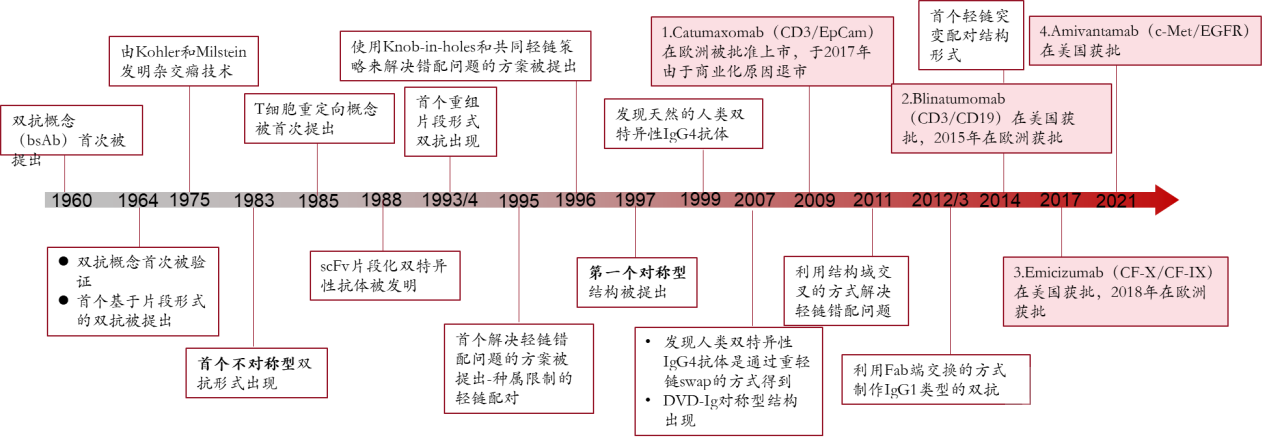
Source: AF Labrijn, ML Janmaat, et al. Nat Rev Drug Disc (2019)
II. Classification of Bispecific Antibody Molecular Structures and Functions
● Structural Classification:
As previously mentioned, bispecific antibodies exhibit diverse molecular structural types. They are categorized into two classes based on the presence or absence of an antibody Fc region: 1) Bispecific antibodies lacking an Fc region can be further subdivided according to the ratio of antigen-binding domains. Due to their low molecular weight, these molecules generally have a short half-life; for instance, blinatumomab, the first approved drug in this class, requires frequent infusions administered in a hospital setting. 2) Bispecific antibodies containing an Fc region can be further divided into symmetric and asymmetric formats. Asymmetric antibodies require optimization of the Fc region to facilitate the correct pairing of two distinct heavy chains. These antibodies more closely resemble natural IgG antibodies and are theoretically less likely to induce anti-drug antibodies (ADA). Symmetric bispecific antibodies do not require Fc region engineering; instead, they incorporate multiple antigen-binding domains in a 2+2 configuration. Among antibodies that have entered clinical development, Fc-containing bispecific antibodies are becoming the mainstream format. Their half-lives are more comparable to those of conventional monoclonal antibodies, allowing for dosing intervals of several weeks. Furthermore, in oncology applications, the Fc fragment retains effector functions such as antibody-dependent cellular cytotoxicity (ADCC) and complement-dependent cytotoxicity (CDC), contributing to tumor cell killing.
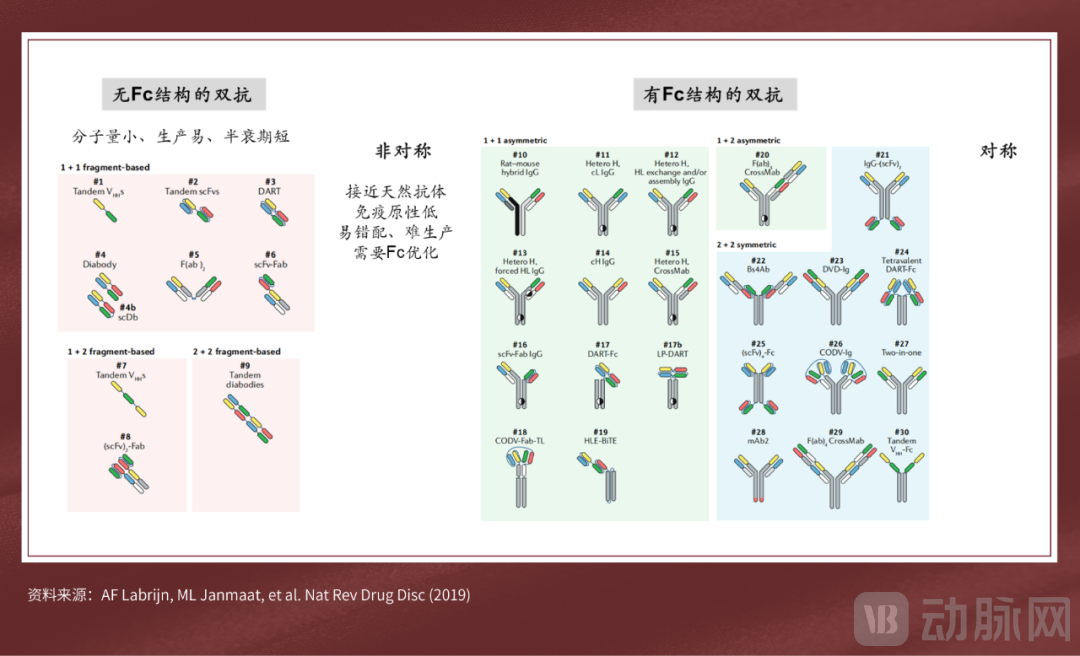 Data source: AF Labrijn, ML Janmaat, et al. Nat Rev Drug Disc (2019)
● Functional Classification:
In the FDA’s guidance documents, bispecific antibodies (BsAbs) are categorized into two major classes based on whether they link two cells. Cell-linking BsAbs typically recognize two distinct antigens located on separate cells, bringing the cells into close proximity via antibody-mediated bridging to facilitate intercellular interactions. Most drugs in this category are used in oncology; examples include approved CD3-engaging T-cell engagers, which can also bridge other cell types such as natural killer (NK) cells and macrophages. In contrast, the mechanism of action for non-cell-linking BsAbs is less direct. They may produce a synergistic effect (>1+1>2) by engaging similar signaling molecules on the same cell, or enhance functions such as endocytosis and transport. Their mechanisms must be analyzed individually based on the specific targets involved.
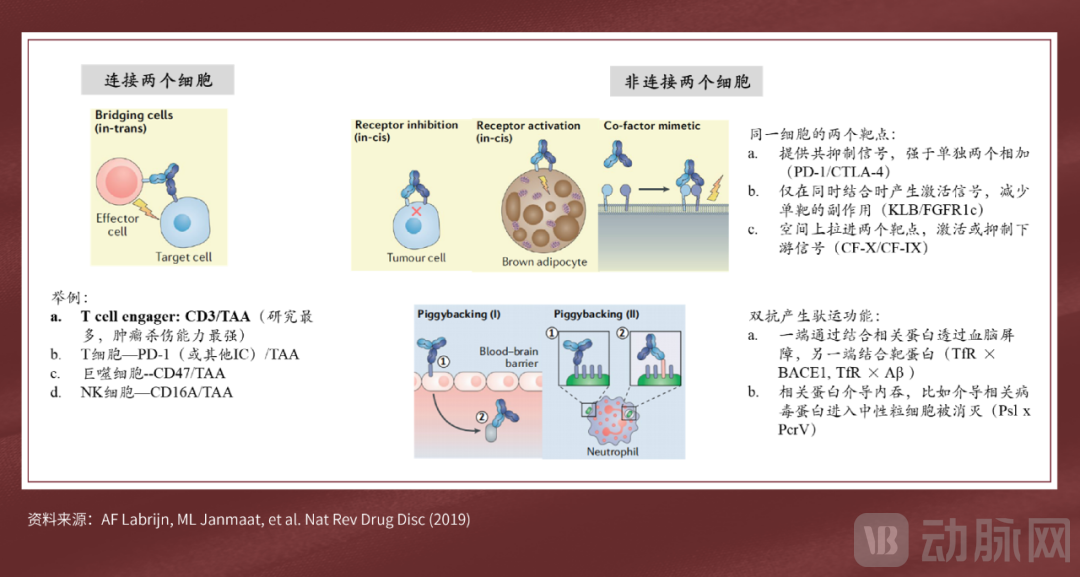 Data source: AF Labrijn, ML Janmaat, et al. Nat Rev Drug Disc (2019)
III. Bispecific Antibody Technology Platform
Bispecific antibody (BsAb) technology platforms are primarily established to address core challenges in BsAb development, including molecular format design and chemistry, manufacturing, and controls (CMC). There are various BsAb technology platforms available on the market, with Amgen’s BiTE being a typical example.®&HLE BiTE®、Genmab's DuoBody®and Roche's CrossMAb®. A brief introduction to the above three platforms is provided below.
1. BiTE® & HLE BiTE®:According to the introduction on Amgen’s official website, BiTE®BiTEThe molecule consists of three parts: two variable regions that target CD3 and TAA (tumor-associated antigen), respectively, connected by a polypeptide linker.®The biological mechanism of the molecule is as follows: The two Fab arms of the bispecific antibody bind to T cells and tumor-associated antigens (TAAs), respectively, thereby bridging immune cells with tumor cells and activating T cells to exert antitumor cytotoxic effects.
Leveraging BiTE®Molecules generated by this platform lack the antibody Fc region, resulting in a low molecular weight and rapid systemic clearance. Consequently, their half-life is limited to only a few hours, necessitating continuous intravenous infusion and repeated dosing to achieve therapeutic efficacy. A representative drug is Blincyto (blinatumomab), a bispecific antibody targeting CD3 and CD19. Approved by the FDA in December 2014 for the treatment of B-cell precursor acute lymphoblastic leukemia, it has a half-life of merely 2.1 hours and requires administration via continuous intravenous infusion using an infusion pump.
To further improve patient compliance, the HLE BiTE platform, a half-life-extended bispecific antibody development platform, was derived from the BiTE® platform.®。HLE BiTE®In BiTE®The addition of the antibody Fc fragment to its molecular structure results in a higher molecular weight, a longer half-life, and less frequent dosing. Based on this platform, Amgen is developing CD3-engaging bispecific antibodies for hematologic malignancies and solid tumors, including DLL3-targeted therapy for non-small cell lung cancer, PSMA-targeted therapy for prostate cancer, and CD33- or FLT3-targeted therapies for acute myeloid leukemia (AML).
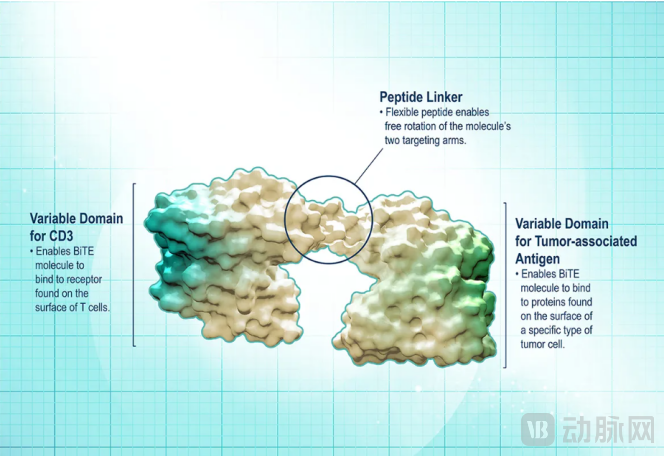
Image source: Amgen official website
2. DuoBody®:DuoBody®It is a bispecific antibody development platform developed by Genmab, which can be used for the research and development of drugs for oncology, autoimmune diseases, infections, and central nervous system (CNS) disorders. Currently, four approved drugs have been developed based on this platform: Rybrevant (targeting EGFR and c-Met, for the treatment of non-small cell lung cancer with EGFR exon 20 insertion mutations), Tecvayli (targeting CD3 and BCMA, for the treatment of multiple myeloma), Epkinly (targeting CD3 and CD20, for the treatment of diffuse large B-cell lymphoma), and Talvey (targeting CD3 and GPRC5D, for the treatment of multiple myeloma).
In DuoBody®The bispecific antibody structure developed on the platform resembles that of conventional monoclonal antibodies, adopting an IgG format; therefore, there are certain challenges in chain pairing during its manufacturing process. DuoBody®The platform addresses the aforementioned issues by introducing mutations into the CH3 region of antibodies and employing “controlled Fab-arm exchange” technology, thereby achieving bispecific antibodies with correct pairing rates exceeding 95%. This approach is applicable not only to small-batch production during early-stage research and development but also to large-scale commercial manufacturing.
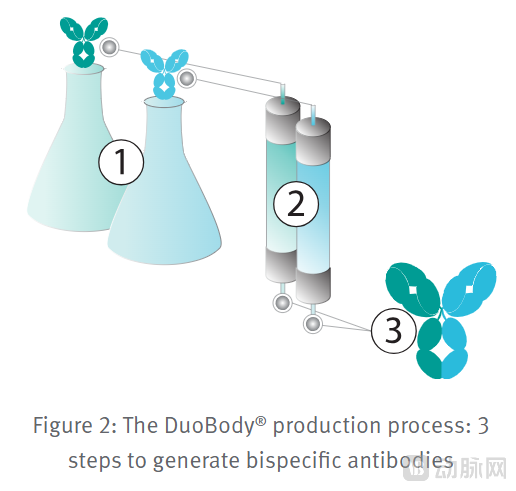
Image source: Genmab official website
3. CrossMAb®:CrossMAb®It is a bispecific antibody development platform developed by Roche. Marketed products developed based on this platform include Vabysmo (targeting Ang-2 and VEGF-A, for the treatment of neovascular wet age-related macular degeneration, diabetic macular edema, and macular edema secondary to retinal vein occlusion), Lunsumio (targeting CD3 and CD20, for the treatment of follicular lymphoma), and Columvi (targeting CD3 and CD20, for the treatment of diffuse large B-cell lymphoma).
with DuoBody®Addressing similar issues, CrossMAb®It also addresses the issue of antibody mispairing in CMC, but employs a different technological approach: CrossMAb.®The issue of light chain and heavy chain mismatch during production is addressed by swapping “molecular modules” between the antibody’s heavy and light chains; meanwhile, a proprietary Knob-into-Hole technology is incorporated into the molecular design, introducing mutations in the antibody heavy chains to resolve heavy chain–heavy chain mismatch during manufacturing.
 Image source: Roche official website
Based on the above introduction to three typical bispecific antibody platform technologies, it is evident that issues related to molecular format design (addressing short half-life) and CMC (including heavy chain/light chain mispairing, heavy chain/heavy chain mispairing during production, and commercial-scale manufacturing) have been largely resolved. Therefore, target selection becomes particularly critical in the early stages of bispecific antibody development, which will be discussed in detail below.
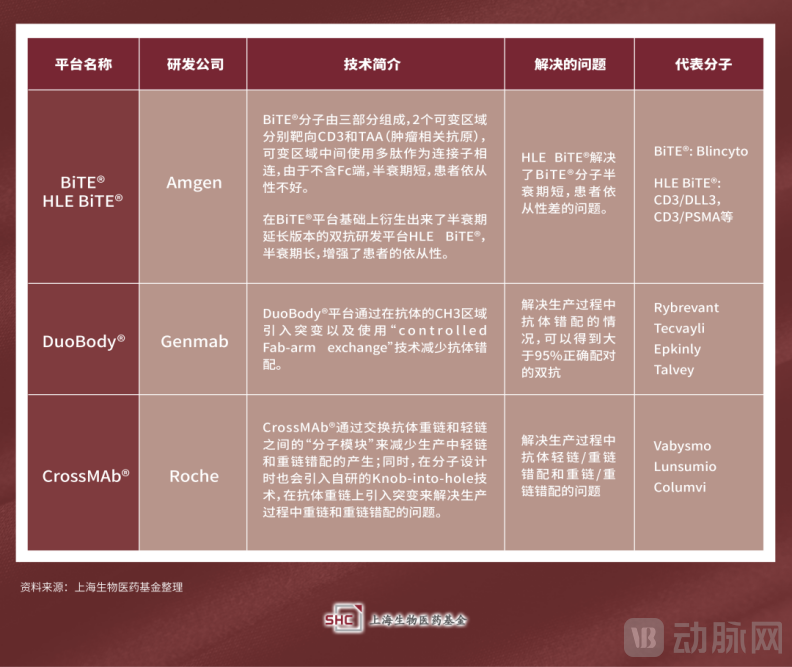 Data Source: Compiled by Shanghai Biopharmaceutical Fund
IV. Approved Bispecific Antibody Drugs
As of November 2023, a total of 12 bispecific antibodies have been approved for marketing worldwide. From the perspective of technical platforms, validated bispecific antibody technology platforms include BiTE®,DuoBody®and CrossMab®etc. From the perspective of targets, the vast majority of products are CD3-engaging bispecific antibodies. From the perspective of approval timelines, the bispecific antibody industry entered a harvest period in 2022 and 2023, with a significant increase in the number of product approvals compared to previous years. From the perspective of indications, the concept of bispecific antibodies has been largely validated in hematologic malignancies; it is expected that future R&D efforts will focus on solid tumors and non-oncological diseases.
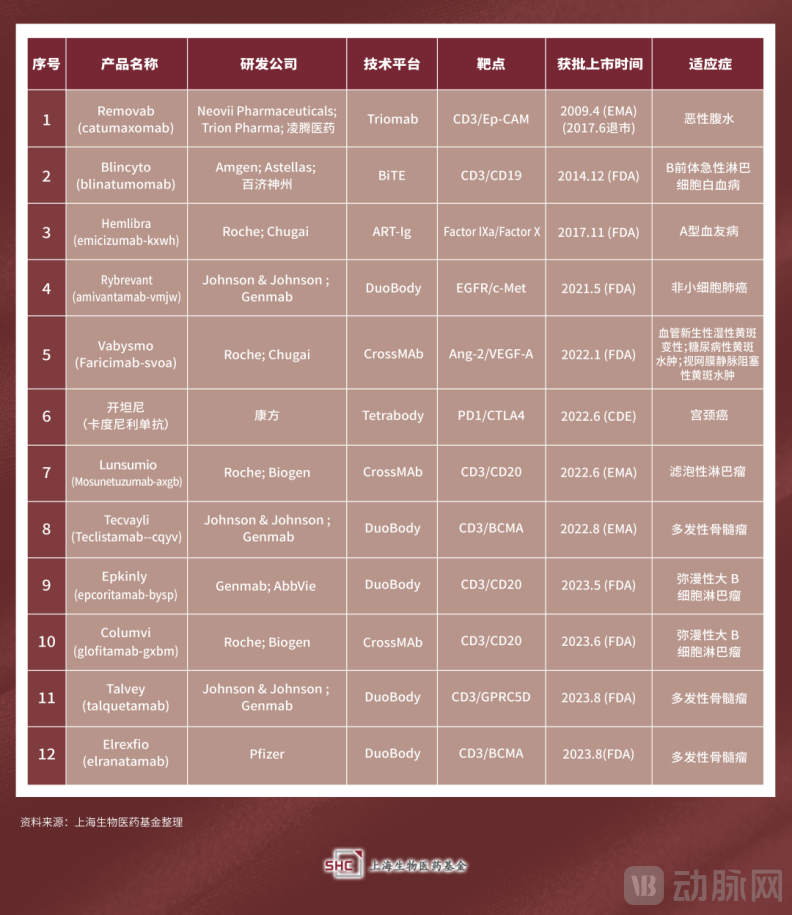 Data source: Compiled by the Shanghai Biomedical Fund
Here, we categorize approved products into two major types: bispecific antibodies and T-cell engagers, and provide a detailed introduction.
1. Dual-Target Antibodies
a) c-MET/EGFR bispecific antibody
Rybrevant (amivantamab-vmjw) is a bispecific antibody targeting EGFR and c-Met, developed by Johnson & Johnson and Genmab. Rybrevant operates through three biological mechanisms: first, it blocks the binding of EGFR and MET to their ligands, thereby inhibiting signal transduction in tumor cells; second, it promotes endocytic degradation of receptors on the surface of tumor cells, further reducing signal transduction; third, it triggers antibody-dependent cellular cytotoxicity (ADCC) and macrophage-mediated phagocytosis, promoting tumor cell death. Based on these principles, Johnson & Johnson has clinically investigated the therapeutic efficacy of Rybrevant in patients with various EGFR-mutated lung cancers. The first population demonstrated to benefit was patients with EGFR exon 20 insertion mutations. In the CHRYSALIS trial (NCT02609776), 81 patients with EGFR exon 20 insertion-positive non-small cell lung cancer (NSCLC) who had progressed after platinum-based chemotherapy received Rybrevant at doses of 1050 mg or 1400 mg. Efficacy analysis showed an objective response rate (ORR) of 40% (95% CI: 29%, 51%) and a median duration of response (mDOR) of 11.1 months (95% CI: 6.9, not estimable). Based on these data, the FDA approved Rybrevant in May 2021 for the treatment of NSCLC with EGFR exon 20 insertion mutations in patients who had progressed after platinum-based chemotherapy. Currently, Rybrevant is being evaluated for its efficacy in other EGFR subtypes, including its use in combination with lazertinib as first-line therapy for patients with EGFR sensitizing mutations, and in combination with lazertinib for patients who have developed resistance to osimertinib.
 Source: Rybrevant official website
b) FIXa/FX Bispecific Antibody
Hemlibra (emicizumab-kxwh) is a bispecific antibody targeting Factor IXa and Factor X, developed by Roche and Chugai. It was approved by the FDA in November 2017 for routine prophylactic treatment to prevent bleeding episodes or reduce their frequency in adult and pediatric patients with hemophilia A, with or without Factor VIII inhibitors. From a biological mechanism perspective, patients with hemophilia A lack Factor VIIIa, which prevents Factor IXa and Factor X from coming together to perform normal coagulation functions. Hemlibra mimics the physiological function of Factor VIIIa by simultaneously binding to Factor IXa and Factor X, thereby maintaining normal coagulation. In short, Hemlibra features an ingenious design that leverages the ability of bispecific antibodies to bind two different antigens, replicating the biological function of Factor VIIIa to exert the corresponding physiological effect. Hemlibra has also achieved significant commercial success, with global sales reaching $2.321 billion, $3.287 billion, and $4.002 billion in 2020, 2021, and 2022, respectively. This demonstrates that closely integrating the characteristics of bispecific antibodies with biological mechanisms is a crucial consideration in the development of differentiated bispecific antibody products.
 Data source: Hemlibra official website
c) ANG2-VEGF Bispecific Antibody
Faricimab, launched in 2022, is a bispecific antibody developed by Roche based on the CrossMab platform. It targets VEGF-A and ANG2 for the treatment of wet age-related macular degeneration and diabetic macular edema. By adding ANG2 targeting to previous anti-angiogenic agents, faricimab has been shown in preclinical models to further inhibit angiogenesis, leakage, and associated inflammation, thereby enhancing microvascular stability in the fundus. However, in multiple Phase III clinical trials, faricimab demonstrated only non-inferior efficacy compared to the positive control drug, aflibercept. Although some physicians believe that faricimab shows better outcomes than aflibercept in secondary endpoints such as macular leakage, it remains to be verified through clinical practice whether bispecific antibodies can truly achieve a synergistic effect (1+1>2). In many cases, the mechanistic advantages and efficacy benefits observed in preclinical studies are not fully replicated in clinical settings.
 Data source: EMBO Mol Med. 2016 Nov 2;8(11):1265-1288.
Data source: Roche official website
2、T cell engager
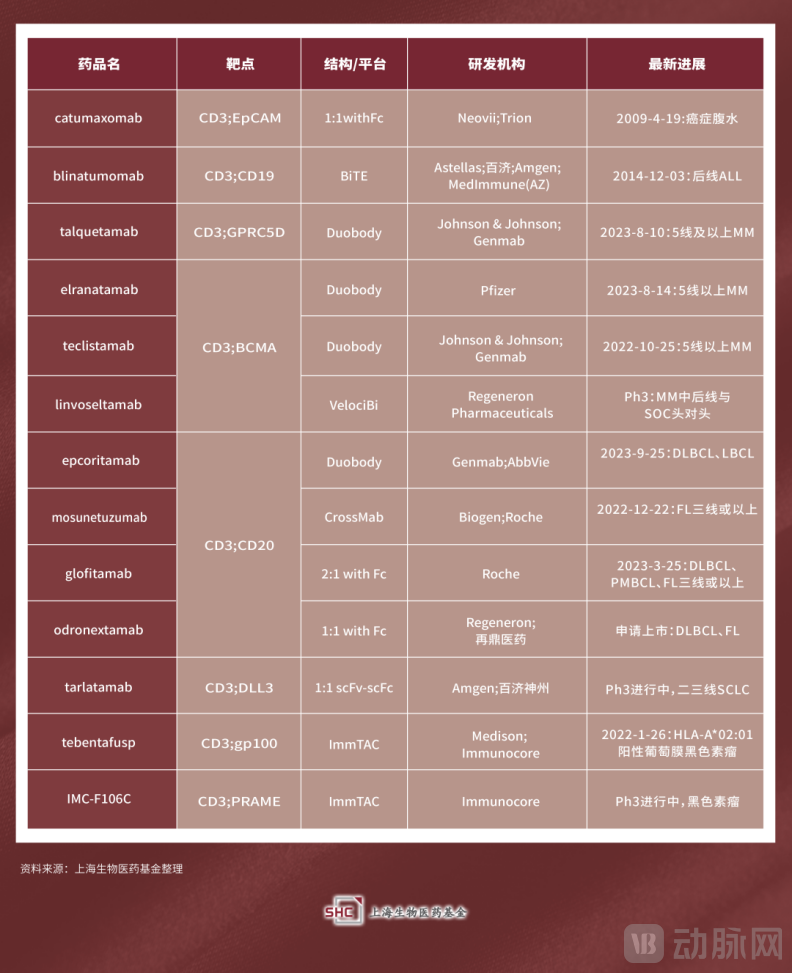
Bispecific antibodies that bridge and activate T cells via CD3 are known as T cell engagers, representing a highly significant category within the bispecific antibody landscape. Clinical-stage project data from databases reveal that over 100 T cell engager bispecific antibody candidates have entered clinical trials, with most major pharmaceutical companies having completed their strategic portfolios and currently advancing approximately ten projects each. In terms of target development, there is a high degree of target concentration, predominantly focused on hematologic malignancies.
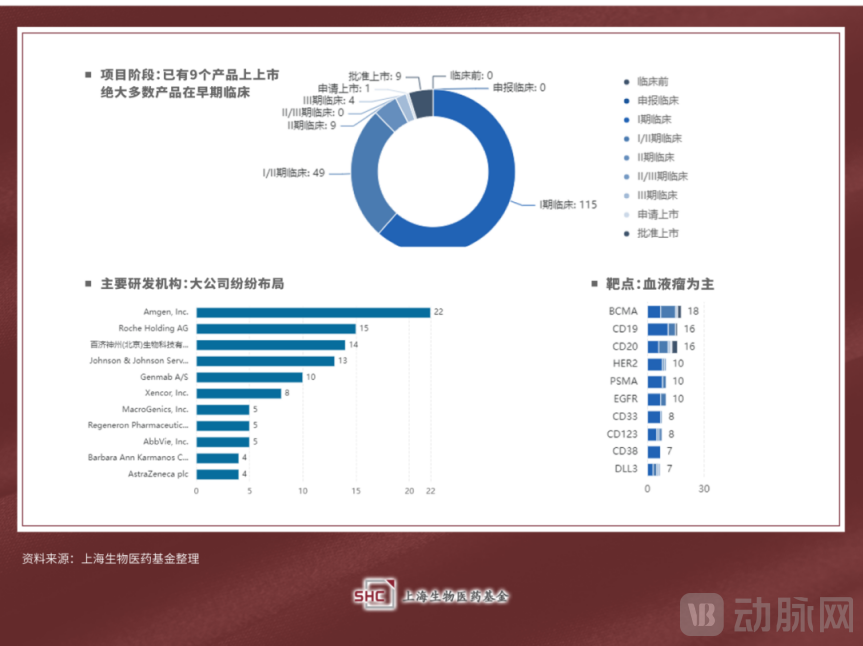 Source: Compiled by Shanghai Biomedical Fund
An analysis of projects that have advanced to Phase III clinical trials and beyond reveals the following trends:
1) Product focus is concentrated in the field of hematologic malignancies: In terms of approval timelines, seven of the eight products were approved within the past two years, with the exception of blinatumomab, which was first approved in 2014, indicating that these therapies have entered the commercial harvest phase. Structurally and platform-wise, they are predominantly IgG-like 1+1 bispecific antibodies developed using Duobody or CrossMab technologies. Notably, the advancement of these products has been supported by multinational corporations (MNCs), suggesting that major pharmaceutical companies have already established and validated their internal CD3-engaging bispecific antibody technology platforms.
2) Breakthroughs in the field of solid tumors have mainly stemmed from the TCR-CD3-based ImmTAC platform, although the approved indications target a relatively small patient population. Nevertheless, Immunocore’s market capitalization has recently remained outstanding, hovering around $2 billion, possibly due to its focus on solid tumors and its validated platform.
3) The clinical efficacy of traditional T-cell engager structures has not yet been validated in solid tumors: Based on the aforementioned target distribution, HER2, PSMA, EGFR, and DLL3 are the targets with the highest number of clinical programs. However, projects initiated during 2020–2021 have not yielded impressive clinical data, and many programs have continued their efforts beyond 2022.
 Source: Compiled by Shanghai Biomedical Fund
V. Recent Overseas Financing Activities
As analyzed in the previous chapters, there are still areas worth exploring in the bispecific antibody industry, including expanding indications beyond hematologic malignancies and leveraging the unique properties of bispecific antibodies combined with biological principles to design valuable products. We can also observe that overseas companies and capital are actively exploring these directions. According to statistics, multiple financing events for bispecific antibody companies have occurred in the overseas primary market over the past two years, with funding amounts ranging from $4.5 million to $135 million. An analysis of technological platforms, key pipelines, and their indications reveals that:
1. Indications of Interest in Overseas Markets: Primarily focused on oncology, particularly the treatment of solid tumors; additionally, companies targeting hematologic disorders have also secured capital support.
2. Technological approaches of interest in overseas markets: leveraging bispecific antibodies to activate immunity or relieve immunosuppression, modulating the tumor microenvironment, degrading relevant proteins, and targeting tumor neoantigens.
 Data source: PharmCube
VI. Fund Perspective
Bispecific antibodies, as a next-generation format of large-molecule therapeutics, have moved beyond the early phase characterized by a proliferation of technical platforms and are gradually entering the stage of clinical efficacy validation for individual programs. It is evident that “bispecific antibodies” are no longer merely a buzzword or a hyped therapeutic area; rather, they have become a widely adoptable modality for large-molecule drug development, akin to monoclonal antibodies and fusion proteins. Major pharmaceutical companies have established their internal R&D pipelines through in-house development, collaborations, and co-development efforts, with some agents already approved and generating commercial revenue. In the future, if biotech companies aspire to make significant strides in this field, they must not only possess protein engineering capabilities to optimize bispecific antibody molecules but also gain a deeper understanding of the synergistic mechanisms and biological rationale underlying the selected target combinations. Only in this way can they build distinctive pipeline assets and develop truly first-in-class therapies.