

Tidetron Upgrades Its Synthetic Biology Platform to Tackle Industrialization Challenges by Integrating the Full Industrial Chain
As a disruptive technology, synthetic biology has become a key engine for the new round of industrial upgrading.
With the maturation of genetic engineering technologies, numerous synthetic biology companies both in China and abroad have leveraged foundational technologies to build robust capabilities for targeted strain engineering, achieving laboratory-scale synthetic biological “creation.” As an increasing number of synthetic biology projects complete early-stage validation, it can be said that synthetic biology has passed the technological threshold and entered a critical phase of industrialization.
At the current juncture, establishing stable large-scale manufacturing capabilities and a mature market for end-product applications, and even integrating the upstream and downstream segments of the industry chain, have become critical challenges that synthetic biology companies must address.
Beyond the Technical Hurdle: Mass Production, Product Selection, and Supply Chain Layout Are Key to Competition
Amidst its vast market capacity and diverse application scenarios, synthetic biology has remained at the forefront of the industry in recent years. According to incomplete statistics from the VCBeat Orange Database, China’s synthetic biology sector completed 54 financing rounds in 2022, making it one of the most frequently funded subsectors within the healthcare segment.
Although investment in the synthetic biology sector remains robust, the current investment logic has shifted from pursuing cutting-edge technologies to prioritizing commercial certainty.。Summarizing the current stage of industry development,Industrialization has become the core mission of synthetic biology today.So, what core competencies must synthetic biology companies possess to cross the "valley of industrialization" and become the focal point of the new round of competition?
According to research by VCBeat, synthetic biology companies currently fall into two main categories: emerging innovative startups and traditional fermentation companies undergoing transformation. The former attempt to create entirely new product categories but face significant risks in subsequent industrialization and commercialization. The latter typically complete the entire value chain—from gene editing to application development—passively, as they introduce synthetic biology technologies to reduce costs and improve efficiency. These companies attract less financing interest and tend to favor relatively mature product categories in their selection strategies.
From the development paths of these two types of enterprises, we can also clearly see that,Mass production and product selection are the two major challenges for synthetic biology companies in achieving commercialization.
Zhang Zhiqian, Founder and CEO of TIDE TRON, an Emerging Enterprise in Synthetic BiologyIt was stated that, when addressing the risks associated with cost control and market integration, achieving high-efficiency mass production is more critical to breaking through current bottlenecks than merely expanding the range of “synthesizable” substances. Continuously enhancing scalable technology platforms—from upstream strain construction to downstream fermentation production—is highly significant for the industry’s future development and warrants focused investment.
Turning our focus to product selection, the journey of synthetic biology from new product development to commercialization is a long-cycle, capital-intensive process that requires careful consideration of multiple factors, including product lifecycle, market size, consumer demand, industry regulations, and risk management. For instance, Amyris, once one of the “big three” in synthetic biology, filed for bankruptcy in its biofuels business after the sharp decline in shale oil prices undermined the competitiveness of its products.
It is worth mentioning that,In addition to mass production and product selection, a company’s position within the entire industry is also critically important.Synthetic biology is interconnected, convergent, and integrated. While leveraging its own advantages, it must also focus on the industry as a whole, as only through coordinated industrial development can more opportunities and possibilities be created. Whether adopting a “purpose”-oriented engineering design approach or pursuing “application”-driven product development, the emphasis remains on the “alignment” between upstream and downstream sectors.
In summary, large-scale mass production technology, a mature application market, and integrated coordination across the upstream and downstream segments of the industrial chain will become the key capabilities enabling synthetic biology to achieve successful industrialization.
Redefining “Platformization”: An Open Platform Bridging the Upstream and Downstream of the Industry Chain
Nevertheless, traditional synthetic biology platform enterprises represented by Ginkgo continue to prioritize their technology platforms as the core. Leveraging the versatility of these platforms, they primarily provide technical services and engage in joint R&D with companies across various sectors. These companies are generally positioned upstream in the value chain, with relatively singular business models that mostly exclude end-to-end industry chain layouts encompassing proprietary products and applications, as well as scaled-up manufacturing.
According to VCBeat,TIDE TRON’s definition of platformization is different.TIDE TRON initially established its technological framework by integrating upstream component and strain libraries, midstream mutation and screening platforms, and downstream scale-up processes. This comprehensive technical route enables the rapid transition from synthetic feasibility to mass production, thereby enhancing the yield and efficiency of substance synthesis.
Having integrated its R&D capabilities, large-scale manufacturing capacity, product application expertise, and commercialization strength, TIDE TRON is now capable of developing a multi-pipeline product portfolio. It can seamlessly scale up production in its own facilities, ensure stable external supply, and offer diversified collaboration models. By achieving integration of R&D, production, and sales, and establishing a comprehensive layout across the entire industry chain, TIDE TRON has created a complete “mega-platform” by connecting upstream and downstream sectors.
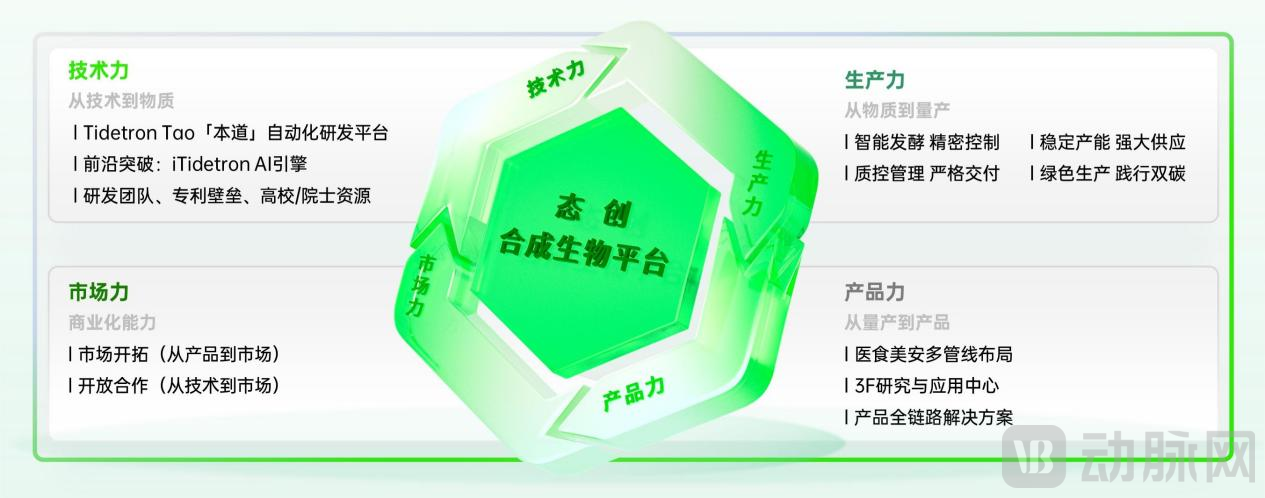
TIDE TRON Synthetic Biology Platform
On the technology front, TIDE TRON’s synthetic biology platform features modularity, engineering precision, automation, and broad applicability. It provides robust support for frontier breakthroughs and industrial innovation in synthetic biology while flexibly addressing R&D needs across diverse sectors. On the production front, the platform seamlessly integrates with R&D to achieve multi-product mass production, ensuring stable supply and green, low-carbon operations. It also offers open pilot-scale amplification facilities for experts to conduct technical validation and facilitate commercialization. On the product front, the platform has established a multi-pipeline layout spanning healthcare, food, beauty, and safety sectors, having already commercialized over 50 substances and delivering end-to-end lifecycle support services from inception to market.
Particularly in the market arena and through platform collaborations, TIDE TRON adopts an open approach to integrating resources across academia, research, and industry. This strategy helps consolidate collective efforts to tackle key challenges, such as the commercialization of cutting-edge scientific achievements and critical breakthroughs addressing domestic industrial demands. Leveraging its integrated advantages in R&D, production, and sales, TIDE TRON provides tailored full-chain services and solutions to meet the specific needs of different partners.
“For instance, through upstream open platform collaborations, we can provide customized R&D services for traditional fermentation enterprises. Downstream, we supply high-quality green raw materials to industrial clients and ensure stable production capacity, while also offering pilot-scale amplification validation and commercialization support to university professors and research institutions. As emerging brands embrace the trend of green sustainability, TIDE TRON delivers end-to-end service solutions spanning from upstream R&D to downstream product implementation and market launch,” said Zhang Zhiqian.
Leveraging its platform-based development and full-industry-chain layout, TIDE TRON has established unique advantages in cost control and efficiency enhancement. For instance, many external collaborative projects can achieve cooperation, implementation, and commercialization within the same year, forming a highly efficient and rapid platform operation system, which has become one of the company’s core competencies.
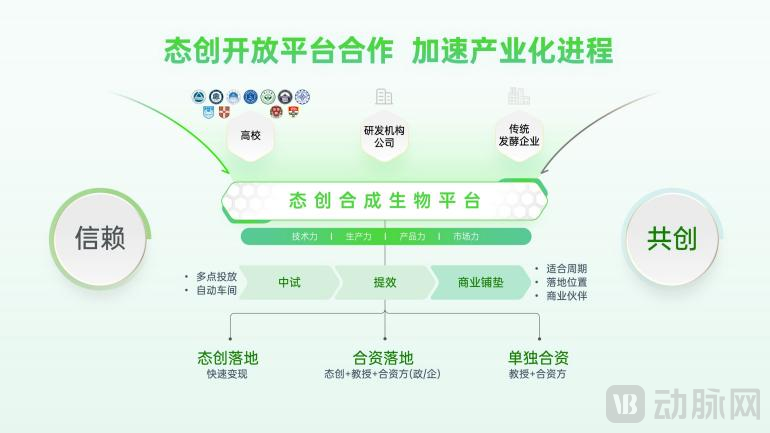
TIDE TRON Synthetic Biology Platform Collaboration Model
As synthetic biology advances toward commercialization and competition among enterprises intensifies, the platform-based model can deliver greater long-term value to companies and foster more sustainable industry development.
According to industry experts, scaled development can enhance efficiency, accelerate innovation, and reduce costs; diversified product applications and varied collaboration models can cater to the distinct needs of industry peers, academic experts, research institutions, traditional enterprises, and other stakeholders. From an industry-wide perspective, this facilitates industry-academia-research collaboration and the development of industrial ecosystems.
Strategically Positioning in High-Growth Aesthetic Medicine and Healthcare Sectors to Co-Build a Global Synthetic Biology Industry Ecosystem
Synthetic biology has a wide range of application scenarios, demonstrating significant potential in fields such as pharmaceuticals, food, cosmetics, and materials.
Taking the pharmaceutical sector as an example, the applications of synthetic biology can be broadly categorized into two main areas: the synthesis of drug intermediates and active pharmaceutical ingredients (APIs) (e.g., the biosynthesis of artemisinin, sitagliptin, and paclitaxel), and the use of engineered organisms for diagnosis and therapy (which is currently still in the research stage).
It is reported that synthetic biology can produce over 60% of the functional raw materials used in clinical medicine, cosmetic skincare, and health supplements. Meanwhile, the medical aesthetics and medical fields inherently impose higher requirements on product efficacy, safety, and substance purity, which constitutes a key advantage of synthetic biology.
According to BCC Research, the market size of synthetic biology in the medical field is projected to reach $5.022 billion in 2024, with a compound annual growth rate (CAGR) of 18.9%. iResearch’s “2022 China Medical Aesthetics Industry Research Report” also indicates that China’s medical aesthetics market grew to RMB 217.9 billion in 2021 and is expected to reach RMB 410.8 billion by 2025.
It can be said that,The market value of synthetic biology in the medical aesthetics and healthcare sectors is highly certain, representing a niche segment with genuine high growth potential and strong certainty.
Guided by its assessment of market potential and the strengthening of its core capabilities, TIDE TRON has leveraged its large-scale platform to extend into the medical aesthetics and healthcare sectors, pioneering a new future of health through synthetic biology-based intelligent manufacturing, and gradually gaining widespread attention and recognition on the global stage.
According to Zhang Zhiqian, “TIDE TRON previously developed two to thirty raw materials for cosmetics and personal care products, including certain peptide-based ingredients for cosmetics. Therefore, the company’s in-depth expansion into the medical aesthetics and medical fields is backed by substantial technical capabilities. For instance, the company initially synthesized a wide range of peptides, and after gradually accumulating technological advantages, it established a dedicated production line for peptide synthesis. This production line can also be used to manufacture pharmaceutical peptides, pharmaceutical intermediates, and other raw materials.”
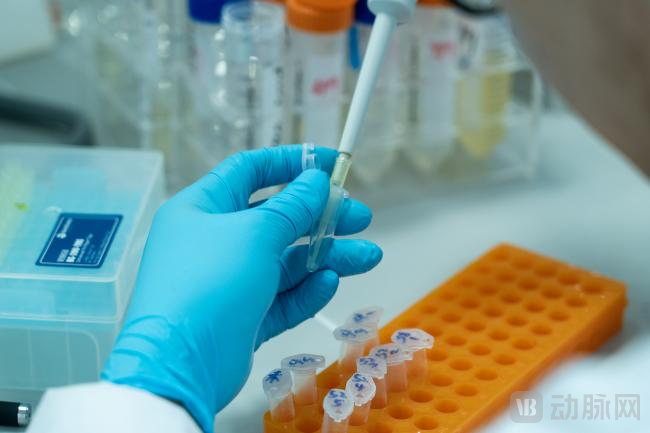
TIDE TRON R&D Personnel Conducting Experimental Procedures
Specifically regarding products, inIn the field of medical aesthetics, TIDE TRON has made significant progress in the structure, activity, and efficacy of recombinant humanized type III collagen.To avoid homogeneous fillers, the company is also attempting to develop longer-chain, more stable collagen and gradually delve deeper into medical device applications.
In the pharmaceutical sector, TIDE TRON is laying out its strategy for terpenes such as squalene, as well as certain traditional Chinese medicine ingredients.By connecting academic institutions’ terpenoid pipelines with internationally renowned pharmaceutical trading companies, the company facilitates the commercialization of core vaccine adjuvant components developed by these institutions. Additionally, it supports R&D efforts at international and leading pharmaceutical companies in identifying superior alternatives for substances such as squalene and traditional Chinese medicine (TCM) ingredients.
Furthermore, TIDETRON COMDEL, a multifunctional AI model for the prediction and mining of bioactive peptides developed by the company based on deep learning, has been officially released to the industry as a public welfare initiative on its official website, with the initial launch focusing on antimicrobial peptide (AMP) prediction. Leveraging TIDETRON COMDEL, TIDE TRON has also engaged in R&D collaborations with well-known brands in the food sector, while several projects in the medical aesthetics and healthcare fields are currently underway.
 Users employ the TIDE TRON COMDEL model for antimicrobial peptide prediction.
Zhang Zhiqian stated that in the field of medical aesthetics, TIDE TRON will be dedicated to the synthesis and mass production of more efficacious and highly active biomaterials, replacing existing chemical materials or traditional biomaterials. In the medical sector, TIDE TRON will prioritize entry through active pharmaceutical ingredients (APIs) and intermediates, gradually expanding into niche segments with high application value or strong market recognition.
TIDE TRON’s Vision for Synthetic Biology Is Becoming a Reality. By integrating upstream and downstream segments of the industrial chain, the TIDE TRON synthetic biology platform will provide end-to-end solutions across the healthcare, food, beauty, and safety sectors. Meanwhile, it continues to expand its global partnership network, working closely with partners to co-build a global synthetic biology industry ecosystem and advance toward a sustainable “Bio-Era.”