

Left Hand Harvard, Right Hand Clinic: The Mass General Brigham Translational Innovation Blueprint
In the northeastern United States, there is a city with an area approximately one-quarter that of Beijing’s Haidian District and an average density of over 100 PhD holders per square kilometer. It is home to two of the world’s top five universities, more than 1,000 life sciences startups, over 100,000 industry professionals, and has seen annual financing peak at $13.7 billion.
It is not difficult to guess that this city is called Boston.
But have you ever considered what kind of healthcare system exists in Boston, a major hub for the life sciences industry in the United States? And what model of innovation translation should such a system adopt?
Today, let us explore the path of innovation at Mass General Brigham.
1Robust Pillars and the Upper Dome
If Mass General Brigham is viewed as the overarching structure that harmonizes and coordinates scientific and medical resources like a dome, then the more than ten medical centers it encompasses serve as the sturdy pillars supporting this superstructure. The research network built around these medical centers endows Mass General Brigham with a multidisciplinary scientific foundation spanning clinical practice, basic research, physics, electronics, and other fields.
In the early 19th century, Massachusetts General Hospital (Mass General) and BaiHanThe Women’s Hospital and Brigham and Women’s Hospital were established in succession, ushering in more than 200 years of a love-hate relationship.
As premier academic medical centers in the United States and teaching hospitals affiliated with Harvard Medical School, the two institutions have long been fierce competitors. Over more than two centuries of rivalry, they have continuously innovated in clinical practice, pioneering numerous world-first clinical procedures.
This state of rivalry persisted until 1994, when the two hospitals decided to merge with the aim of reducing patient care expenses and medical education costs, operating under the parent company Partners Healthcare (the predecessor of Mass General Brigham).
In 2015, Partners Healthcare became one of the first healthcare systems in the United States to implement an Electronic Health Record (EHR) system, enabling physicians, nurses, and caregivers to access patient medical records more easily. This initiative digitized millions of health records within the system, which not only reduced costs and facilitated patients’ online access to their medical information but also improved the sharing of such information among caregivers, thereby reducing medical errors.
In 2019, 25 years after the establishment of Partners Healthcare, the system fully integrated its organizational framework, encompassing multiple clinical centers including Mass General and Brigham, under the new name “Mass General Brigham.” Thus, Mass General Brigham is supported by more than a dozen robust pillars, including two teaching hospitals, three specialty hospitals, and seven community hospitals.HanTop-level design declared complete.
Nowadays, Ma ZongbaiHanAs a nonprofit organization, it coordinates its network of medical centers to provide care for 2.5 million patients annually, generating over $18 billion in operating revenue and allocating more than $2 billion in research funding to conduct over 2,700 clinical trials.
The capital behind wielding such a massive sword lies in the prolific clinical innovations produced by two pillar hospitals over the past 200 years. Take the last 20 years as an example:
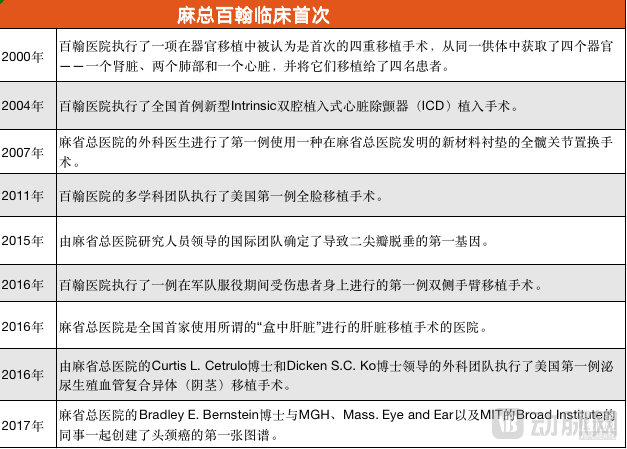
In recent years, Ma ZongbaiHanPrioritize breakthroughs in innovative therapies, including: Visudyne for macular degeneration, Enbrel for rheumatoid arthritis, Eloctate and Alprolix for hemophilia, Entyvio for Crohn’s disease, and total joint replacement solutions such as Durasul, Longevity, E1, and Vicacit-E.
2MESH Network Accelerates Academic Exchange
The top-level design enables cross-center resource coordination, while the MESH network built around this architecture facilitates smoother interactions among researchers at the micro level. As a top-tier framework coordinating multiple clinical centers, Ma ZongbaiHanBy connecting various clinical centers with innovative talent from major universities and enterprises in Boston through a vast network, we maximize the vitality of scientific research and innovation.
This network is composed of an interwoven MESH Network and MESH Core.
“MESH Network” is designed to link Ma ZongbaiHanAn online R&D platform for physicians and researchers across departments and disciplines within the system. The core component of this platform, “MESH Core,” is led by Ma Zongbai.HanLaunch of the Certified Official Course Innovation Bootcamp. The courses offered by this platform are designed for general managers of...HanFully prepare all clinical and research personnel within the system who meet the application criteria to facilitate their innovation translation.
“MESH Core” is a set of systems developed by Ma ZongbaiHanInnovative courses designed by in-house scientists specifically for early-career researchers and clinicians. In these courses, R&D professionals will systematically learn foundational knowledge, such as the process of establishing a new company, gaining insights into the digital health sector, building real-world AI demonstrations, mastering the fundamental processes of invention, and developing patent strategies.
Since its establishment in 2018, the “MESH Core” has been held annually. Today, at Ma ZongbaiHanThe system has attracted more than 1,700 innovators, spanning 21 medical specialties, and features over 20 exclusively designed courses.
Another key event within the “MESH network” is Ma ZongbaiHanOfficial Monthly Lecture. This monthly lecture is hosted by Ma ZongbaiHanLeading innovators within the system deliver educational and experiential sharing sessions open to all employees and the general public.
This open, inclusive, and diverse atmosphere for exchange enables clinical innovators to maintain real-time dialogue with their counterparts in the industry on a regular basis, sparking new ideas through continuous interaction.
3Innovators Research Funding Program: Igniting Innovation
Top-level design serves as the skeleton, while communication networks function as the meridians. Within this framework, scientific and technological innovators can thrive. Ma ZongbaiHanLeveraging its network of medical centers and a large pool of researchers, it has secured funding programs far exceeding those of other research institutions, establishing a sustainable, virtuous cycle.
For innovators aspiring to launch early-stage innovative projects, securing initial seed funding is often a significant challenge. Applying for government grant programs typically involves lengthy waiting periods and the preparation of extensive documentation.
As a vital hub connecting the extensive medical network, Ma Zong BaiHanOn one side are dozens of clinical centers led by Mass General and Brigham; on the other, Harvard Medical School’s research outposts.
This privileged location ensures a steady stream of clinically research programs funded by pharmaceutical companies, industry associations, and government organizations. After all, the high output and specialized expertise here serve as a strong guarantee for the returns on such funding.
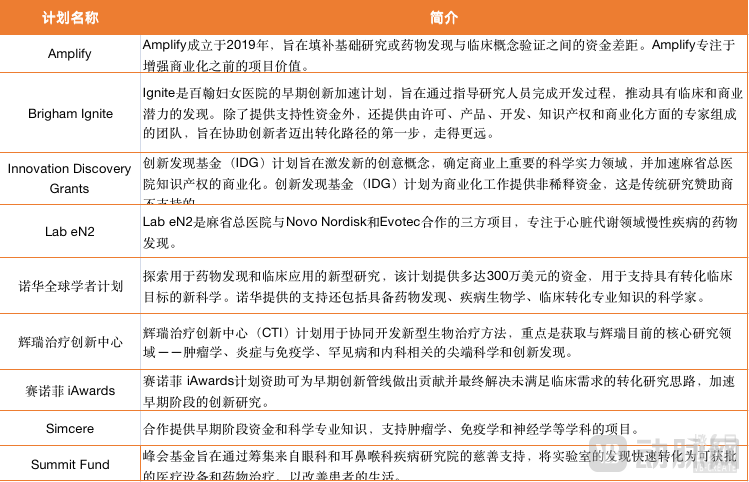
It is evident that many of today’s most prominent biopharmaceutical companies are among the sponsors. These sponsorship programs continuously provide researchers with a wealth of research topics and funding that are more clinically focused, while also enabling sustained, cutting-edge dialogue between enterprises and hospitals without information asymmetry.
4Maintaining Dialogue with the Industry: The Innovation Researcher Program
To maintain open dialogue with the industry, Ma ZongbaiHanSpare no effort. Among these initiatives, the flagship project is the Innovation Researcher Program.
Ma ZongbaiHanDesigned comprehensive rules and regulations to facilitate Ma ZongbaiHanfacilitate communication between the system and practitioners in fields such as biopharmaceuticals, medical devices, venture capital, and digital health.
For research-oriented applicants, Ma ZongbaiHanThere are stringent review requirements concerning energy commitment, time investment, professional alignment, and conflicts of interest. Researchers who pass the review will participate in practice-oriented research projects hosted by the organizing institution for a period of 6 to 24 months, based on their interests and qualifications.
In terms of industry, seconded researchers typically focus on areas such as drug or medical device development, care model redesign, clinical trial strategy, regulatory affairs, corporate financing and launch, reimbursement, and organizational management.
In the design of the plan, Ma ZongbaiHanAims to cultivate future leaders in translational medicine by providing them with valuable hands-on experience and enhancing their skills within collaborative team environments; developing competencies in drug development, regulatory affairs, commercialization, and transformation; fostering professional relationships with industry leaders under the guidance of personal mentors; and gaining access to clinical insights from world-class faculty.
Through these efforts, Mr. Ma BaiHan...maintains a vibrant flow of clinical innovators and industry practitioners within its ecosystem.
5Mass General Brigham Ventures: Born for Proof of Concept
Although innovation is the key to keeping an industry vibrant, not all innovations can succeed in commercialization. Therefore, conducting small-scale validation of technology and product concepts in the early stages of innovation is regarded as the most effective approach to mitigating risk and improving success rates.
At Ma ZongbaiHanWithin the ecosystem, Mass General Brigham Ventures serves as a proof-of-concept engine, acting as a transfer hub bridging the “last mile” of development and the “first mile” to market.In the Process of Clinical Innovation Translation。
Mass General Brigham Ventures, founded in 2008, is committed to advancing Mass General Brigham’sHanof innovative life science technologies to market, primarily investing in those based on Ma ZongbaiHanNext-generation life sciences companies incubated from intellectual property created within the research community, with total assets under management reaching $450 million. Its investment rounds are primarily concentrated in the seed and Series A stages, developing products across multiple categories including pharmaceuticals, medical devices, diagnostics, and digital health.
Nearly 25% of all U.S. digital health venture capital flows annually into Massachusetts, a fertile ground for life sciences startups, in the quest for the next unicorn. Among the early investors in these companies, Mass General Brigham Ventures is a prominent presence.
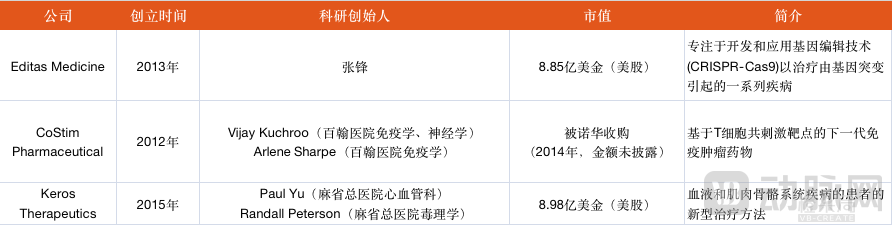
The following three companies are transformative and representative startups in the Mass General Brigham Ventures portfolio. They all leveraged resources from Massachusetts General HospitalHanof original intellectual property, and is expected to significantly address unmet clinical needs.
6Implications for the Translation of Research Outcomes in Domestic Research-Oriented Hospitals
From Ma ZongbaiHanFrom the perspective of its unique organizational structure and the geographical advantages of its industrial cluster, we can observe that Ma ZongbaiHanWe have developed an innovation commercialization model with distinctive characteristics.
Ma ZongbaiHanIt has maximized its role as a top-level architect and resource coordinator, enabling the cutting-edge achievements of academic institutions to be freely, rapidly, and seamlessly tested and validated within its affiliated clinical centers.
Meanwhile, Ma ZongbaiHanIt has also taken Boston’s innovative industrial ecosystem to the extreme. This is one of the world’s most renowned scientific innovation hubs, anchored by Mass General BrighamHanClinical innovation centers, represented by [Name], are a vital component of its ecosystem. As an indispensable link in bringing pharmaceuticals, medical devices, and innovative therapies to clinical practice, Ma ZongbaiHanApprovedBy actively engaging in frequent multi-stakeholder exchanges among academia, research institutions, and industry, as well as through innovation and funding initiatives, it has seamlessly integrated into the industrial ecosystem, ultimately channeling clinical achievements to more than a thousand life sciences companies in Boston.
Given this unique operational and geographical positioning, it may also offer valuable insights and reference for domestic teaching and research institutions with similar profiles:
Mobilize the human resources of scientific researchers within the system, and maintain their sensitivity to the market and industry as well as their channels for information acquisition;
Leverage its own advantages in clinical and research resources to create a Matthew effect, attract market-side collaborations, and continuously enhance its resource superiority;
Maximize market returns from innovation commercialization through market-oriented mechanisms such as equity investment, thereby establishing a virtuous positive cycle.
It is worth noting that similar models of translational innovation have already begun to take shape in some medical schools, affiliated hospitals, and research-oriented hospitals in China. However, whether it is the establishment of Boston’s innovation ecosystem or Massachusetts General Hospital’s...HanEstablishing a translation system is not an overnight achievement; replicating and implementing this model in China may require considerable time, as well as a combination of contingent and inevitable factors.