

HaoXinqing Debuts AI-Powered Facial Recognition System for Mental Health Risk Screening at 2023 Greater Bay Area Brain Science Industry Innovation and Collaboration Conference
Brain science is hailed as the “final frontier” for humanity’s ultimate exploration of nature and self-understanding, and is becoming a key focal point in current global technological competition. In recent years, a new wave of technological revolution—represented by artificial intelligence, quantum information, integrated circuits, life and health, brain science, biological breeding, aerospace technology, and deep-earth and deep-sea exploration—is reshaping the global industrial landscape.
Jointly organized by the Shenzhen Society for Brain Science, the Shenzhen Brain Science and Brain-inspired Intelligence Industry Alliance, VCBeat, VB100, and Eggshell Research Institute, the 4th Guangming Brain Science Conference—Bay Area Brain Science Industry Innovation and Cooperation Conference 2023, the 2nd Annual Meeting of the Shenzhen Society for Brain Science, and the Annual Meeting of the Neuroscience Research Technology Branch of the Chinese Society for Neuroscience was successfully held at the Guangming Culture and Arts Center in Shenzhen on November 16–17. Themed “Brain Diseases: Basic Research and Clinical Translation,” the conference featured a multidisciplinary dialogue integrating academia, clinical practice, and industry, focusing on topics such as research models for brain diseases and new drug development, brain and neuroimaging, prevention and treatment of cerebrovascular diseases, digital intelligent technologies for brain health, and neuroimmunology and endocrine metabolism.
Over the course of a two-day agenda featuring one main forum opening ceremony, two academic annual conferences, and seven industry-specific sub-forums, the event specially invited nearly 100 domestic and international experts in brain science and clinical medicine to attend in person. Distinguished guests included Mr. Erwin Neher, Director of the Neher Laboratory for Membrane Biophysics at the Shenzhen Institute of Advanced Technology, Professor at the University of Göttingen in Germany, and recipient of the 1991 Nobel Prize in Physiology or Medicine; Professor Wang Yongjun from Beijing Tiantan Hospital, Capital Medical University; and Professor Chen Xiaochun from Fujian Medical University. The conference gathered more than 500 leading representatives from academia, clinical practice, and industry, establishing a new platform for collaborative innovation among government, industry, academia, research institutions, medical practitioners, and capital sectors. Participants engaged in in-depth discussions on building a new ecosystem for the brain health technology industry and exploring future development trends in brain science and brain health. It can be said that this conference was not only rich in content but also of significant academic value and practical guidance.
On the morning of November 17, the sub-forum titled “Early Diagnosis and Non-Pharmacological Treatment of Brain Disorders: Opportunities and Challenges” explored new strategies for the diagnosis and treatment of neurological disorders, with a focus on the innovative application of digital intelligent technologies and psychosocial interventions in the early diagnosis of brain disorders. Distinguished attendees included Li Tao from the Affiliated Mental Health Center of Zhejiang University/Hangzhou Seventh People’s Hospital; Xu Qi from the Institute of Basic Medical Sciences, Chinese Academy of Medical Sciences; Xu Feng from Beijing Fine Hin Mobile Medical Technology Co., Ltd.; Wang Fei from Nanjing Medical University; Zhang Yan from the School of Life Sciences, Peking University; Zhao Min from Shanghai Mental Health Center; and Wang Kai from the First Affiliated Hospital of Anhui Medical University.
Beijing Fine Hin Mobile Medical Technology Co., Ltd., a digital technology company long dedicated to the field of psychological healthcare and wellness, was also invited to attend the conference. Together with other attendees, it explored the future development of the brain health diagnosis and treatment industry, sharing and discussing the latest research and practical advances in the early diagnosis and non-pharmacological treatment of brain disorders.
Founded in 2015, Fine Hin leverages digital technology and artificial intelligence as its core to empower its business segments, including internet hospitals, mental health services, and joint offline diagnosis and treatment centers. It has built a multi-scenario ecosystem spanning online to offline, B2C to B2B, and psychiatric care to mental wellness. Over the past seven years, it has accumulated a substantial user base of nearly 4 million individuals with mental disorders, along with more than 16 million text-and-image consultation records related to diseases and over 1 million minutes of audio-video data.
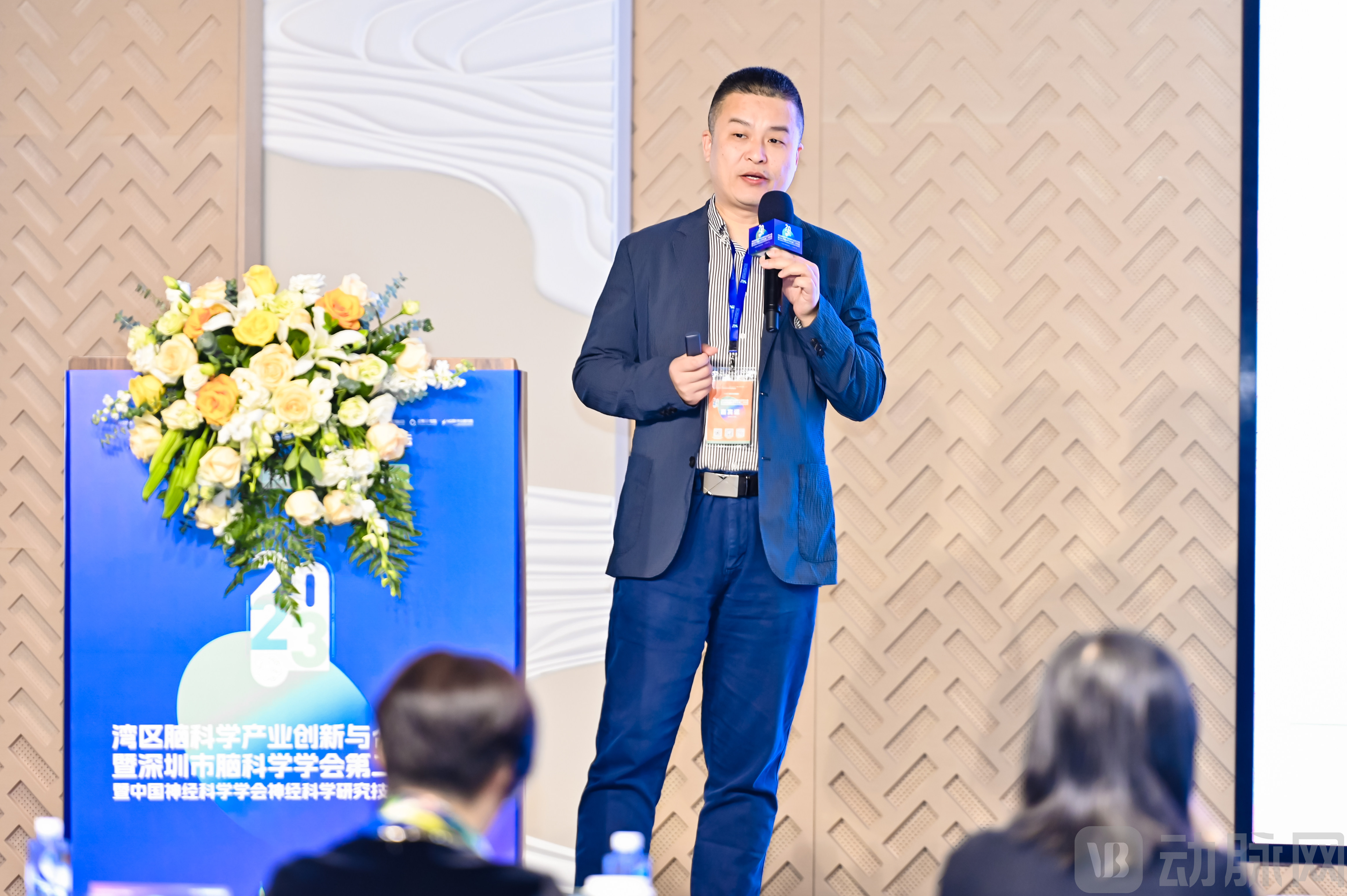
Traditionally, the diagnosis and treatment of mental disorders have relied primarily on clinicians’ observational assessments and pharmacotherapy. However, some patients require moderate psychological intervention during the course of treatment. Under the current healthcare system, effective delivery of such psychological interventions remains challenging. This is due to several factors: first, clinical psychiatrists and psychotherapists have extremely limited time, making it difficult to provide long-term psychological support to patients; second, low pricing for medical services in the reimbursement structure reduces clinicians’ motivation to engage in these activities. Furthermore, unlike standardized pharmacological treatments, psychotherapy relies heavily on the individual therapist’s skills, raising challenges in achieving standardized care.
How Does Artificial Intelligence Assist in Improving the Diagnosis and Treatment of Mental Disorders?
Fine Hin leverages facial recognition technology to rapidly and simply detect potential psychological disorders in users. The specific operational method involves calculating the spatial and temporal displacements of 68 facial landmark points to identify subtle changes in facial expressions. Currently, this technology operates entirely on empirical data and computational statistics, enabling the identification of more than ten common mental health conditions, including depression, anxiety, attention-deficit/hyperactivity disorder (ADHD), Alzheimer’s disease, and schizophrenia. With an accuracy rate of approximately 70%, the entire screening process takes only about 60 seconds, facilitating large-scale screenings.
AI-Companion Psychological Support: Significant Market Application Value
The adoption of digital tools can undoubtedly enhance physicians’ service efficiency, allowing them to focus more on patient diagnosis and treatment. Fine Hin is striving to alleviate the burden of labor costs for physicians by leveraging digital solutions to deliver certain psychological therapy and companionship services that were previously entirely dependent on human providers. To this end, Fine Hin has launched “Xinxin,” an AI-powered digital companion for psychological support. Built on third-generation conversational system technology and grounded in large-scale deep learning models, Xinxin learns emotional support techniques from extensive datasets, providing users with 24/7 psychological companionship and emotional counseling through interactive dialogue.
Future Highly Intelligent AI:
Easy to Train, High Responsiveness, Enhancing Diagnostic and Treatment Efficiency
By leveraging neural network training to learn authentic diagnostic and treatment workflows (inspection, auscultation/olfaction, inquiry, and palpation), and integrating generative artificial intelligence with digital human technology, a highly intelligent AI can be developed to further assist psychiatrists in diagnosis and enhance their work efficiency.
Through these digital applications, Fine Hin has achieved smoother integration across all stages of mental health service delivery, continuously enhancing patient satisfaction. However, due to the limitations of foundational neural network theories, AI can only learn and make judgments through experience and pattern fitting; therefore, it is not currently suitable for providing 100% precise and reliable conclusions.

The internet healthcare industry, characterized by pharmaceutical e-commerce platforms continuously advancing and exploring deeper into medical services, is evolving rapidly. As an early entrant in the medical services sector, Beijing Fine Hin Mobile Medical Technology Co., Ltd. (Haixinqing) will further leverage its innovative digital capabilities to better support precise diagnosis and treatment for patients. This symposium will provide a national academic exchange platform to promote advancements in the early diagnosis and non-pharmacological treatment of brain disorders, as well as the rapid development of internet healthcare.