Huamai Medical Enters the Regenerative Medicine Blue Ocean with China's First Animal-Derived Decellularized Matrix Composite Bone Graft
In recent years, regenerative medicine has become a focal point for both academia and industry, enabling the repair and reconstruction of biological structures ranging from cells and tissues to entire organs. According to Statista, the global regenerative medicine market was valued at approximately $16.9 billion in 2021 and is projected to reach $95.5 billion by 2030.Although China's regenerative medicine market started relatively late, it has developed rapidly, with the market size growing from RMB 8.2 billion in 2017 to RMB 28.5 billion in 2021.
At the national level, vigorous efforts are being made to promote the development of regenerative medicine. In 2021, the National Development and Reform Commission released the Outline of the 14th Five-Year Plan for National Economic and Social Development and the Long-Range Objectives Through the Year 2035 of the People's Republic of China,“Regenerative Medicine” is listed as a “fundamental and core field critical to national security and overall development” and a “frontier scientific and technological area for key breakthroughs.”In accordance with the aforementioned documents, the National Development and Reform Commission concurrently formulated and issued the “14th Five-Year Plan for Bioeconomy Development,” which highlights the development of new technologies such as gene-based diagnosis and therapy, stem cell therapy, and immune cell therapy, so as to promote the formation of new models in regenerative medicine and precision medicine.
Regenerative medicine is broadly defined, with regenerative materials, tissue engineering, and stem cells representing three major high-growth sectors. Among these, bio-regenerative materials have been widely applied in orthopedics (including sports medicine), dentistry, neurosurgery, and other fields. This has given rise to multiple listed companies such as Zhenghai Biotech, MicroPort MedBot, and Guan Hao Biotech, while other sector participants like Huamai Medical have rapidly secured multiple rounds of substantial financing.
Huamai Medical is a high-tech medical device and advanced biomaterials company oriented toward regenerative medicine. Over the six years since its establishment, the company has built core technology platforms and self-owned production lines, laying a solid foundation for product commercialization.In late June this year, the company obtained its first Class III medical device registration certificate, with its bone regeneration medical material product approved by the NMPA.. This product is the first animal-derived acellular matrix composite bone regeneration medical material in China, featuring excellent bioactivity, biocompatibility, safe and controllable immunogenicity, and complete biodegradability. It provides a safer and more effective treatment option for numerous patients with bone defects in China, offering broad application prospects.
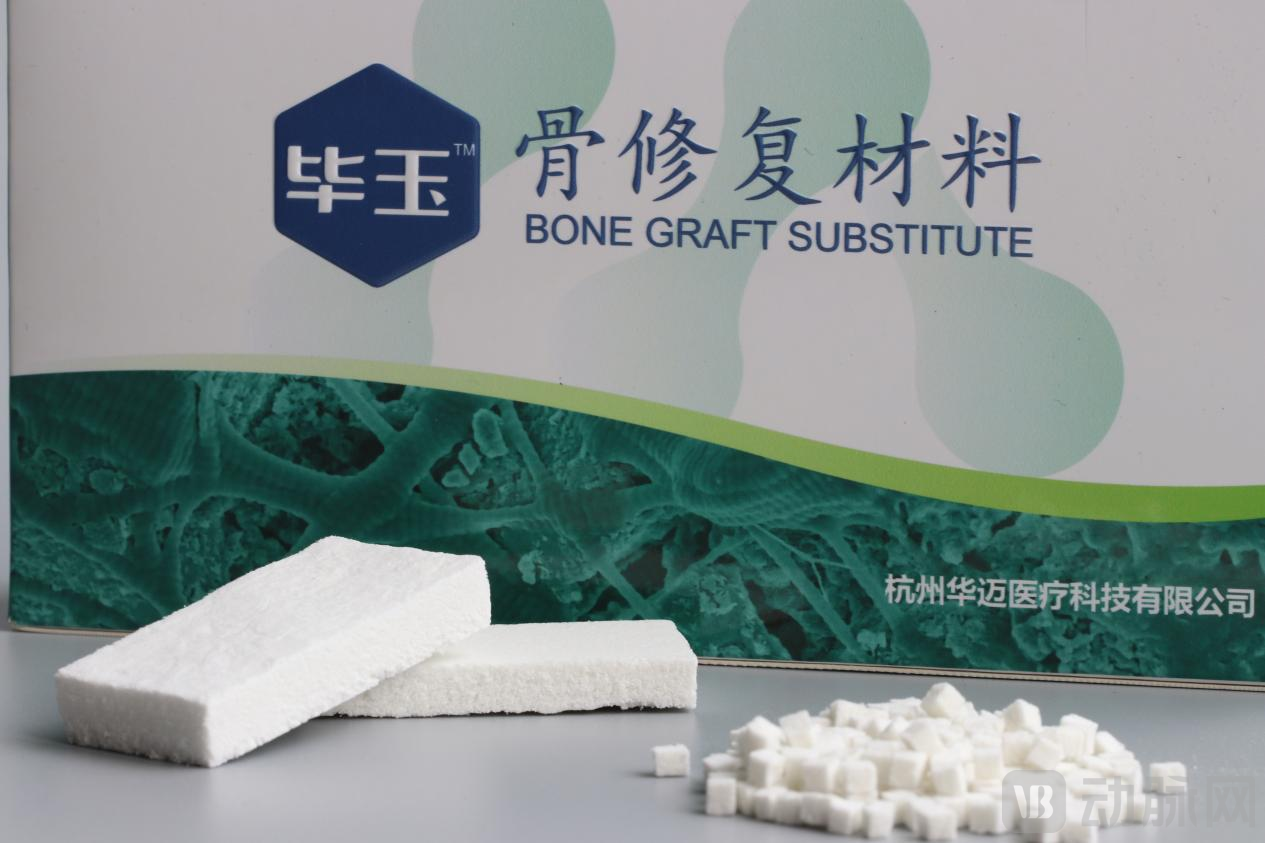 Huamai Medical Bone Regeneration Biomaterials
Bone repair materials are primarily applied in three major clinical specialties: orthopedics, dentistry, and neurosurgery. They are used in scenarios such as the repair of traumatic bone defects, spinal fusion procedures, alveolar bone augmentation for dental implants, and cranioplasty. With the rising prevalence of bone degenerative diseases due to population aging in China, an increase in sports-related injuries, and the implementation of centralized procurement for dental implants, the demand for bone defect repair is growing rapidly.
According to statistics from the Southern Institute,In 2018, the market size of China's bone defect repair materials industry was RMB 3.93 billion, and it is expected to reach RMB 9.69 billion in 2023.with the market size of the bone defect repair materials industry in orthopedics reaching RMB 5.34 billion. According to Guo Weiguang, Deputy General Manager of Huamai Medical, “In the field of orthopedics alone, the demand for bone defect repair surgeries exceeds 2 million cases.”
Bone repair materials mainly include three categories: autologous bone, allogeneic bone, and artificial bone. Among these, the supply of autologous bone is severely insufficient; in addition to limited availability, allogeneic bone carries risks such as immune rejection and disease transmission. In contrast, artificial bone offers a wide source, superior biocompatibility, and low immunogenicity, leading to its continuously increasing application rate.
Currently, artificial bone materials have advanced to the third generation. The first-generation artificial bones were composed of inorganic ceramic materials such as calcium sulfate, hydroxyapatite, and calcium phosphate, or consisted of composites of purified animal-derived type I collagen with calcium-phosphate ceramics. These materials mimic the three-dimensional porous structure of human bone tissue and possess osteoconductivity. Second-generation artificial bones include bioactive glasses, calcium-phosphate ceramics substituted with ions such as silicon or strontium, or composites comprising these inorganic components and animal-derived type I collagen. In addition to osteoconductivity, these materials enhance the ability to stimulate osteogenic differentiation of bone cells.Third-generation bone regeneration medical materials incorporate growth factors, cytokines, or other bioactive components into second-generation composite materials to enhance their osteoinductivity and osteogenic performance.。
Currently, first- and second-generation synthetic bones remain the mainstream in China’s artificial bone market, with multiple products approved and intense homogenized competition. In contrast, third-generation bone regeneration medical materials feature high technical and application barriers, leaving considerable room for development.
Huamai Medical positions its products as third-generation bone regeneration medical materials. The company’s founding mission is to address the shortcomings of second-generation synthetic bone grafts, specifically their insufficient osteogenic performance and osteoinductivity.Introducing a composite bone regeneration medical material featuring "animal-derived acellular matrix + calcium hydrogen phosphate," which can repair large-area defects without the addition of any growth factors or stem cells. It is the world's first bioactive bone regeneration medical material primarily composed of acellular animal tissue matrix.。
Acellular matrix refers to a biological scaffold composed of extracellular matrix components and structures, prepared by specialized processing to remove cellular components from tissues and antigenic components from the extracellular matrix, thereby ensuring the absence of viable cells. Previously, mainstream composite bone repair materials predominantly used purified bovine type I collagen as the organic component; these materials had a simple composition and were associated with issues such as insufficient bioactivity and the potential for long-term inflammatory reactions after implantation.
andHuamai Medical's independently developed mild decellularization process effectively removes immunogenic substances from animal tissues while well preserving the bioactive components within the tissue., such as type I and III collagen, abundant non-collagenous proteins, and trace amounts of growth factors, while preserving the natural triple-helix structure of collagen.。
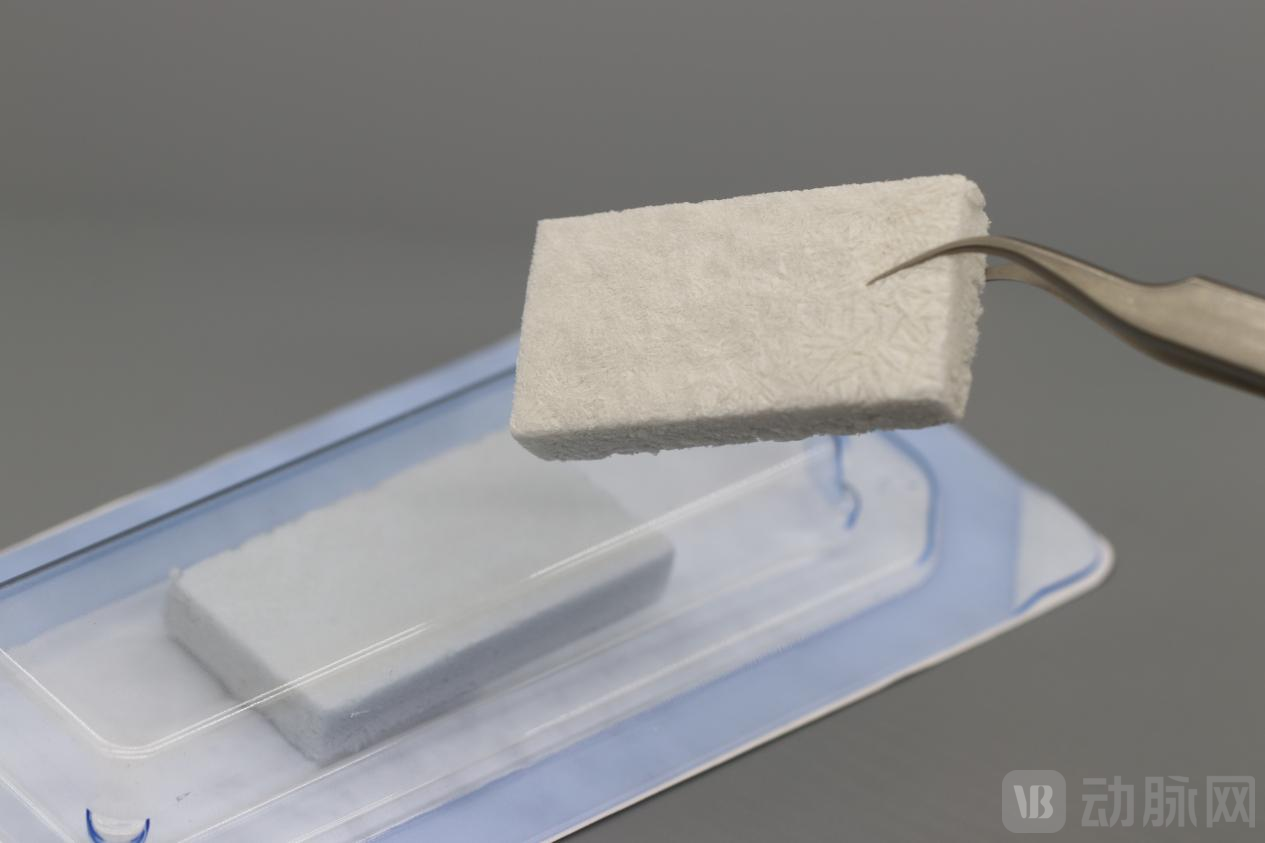
Meanwhile, Huamai Medical’s bone regeneration medical material products incorporate dicalcium phosphate, which enables a faster release of calcium and phosphate ions during the early post-implantation phase compared with materials such as hydroxyapatite, thereby further promoting osteogenic differentiation of human stem cells. Overall, Huamai Medical’s bone regeneration medical materials can mimic the composition and structure of autologous bone, exhibiting superior osteoconductivity, osteoinductivity, biocompatibility, mechanical properties, and biodegradability.
In preclinical animal studies,For the repair of segmental bone defects in mouse tibias, Huamai Medical’s bone regenerative medical materials have demonstrated efficacy far superior to that of mainstream comparable products in the U.S. market, with osteogenic volume reaching approximately ten times that of representative second-generation synthetic bone grafts.Meanwhile, clinical trial results demonstrated that Huamai Medical’s bone regeneration medical material products exhibit a significant advantage in new bone formation rate compared to representative domestic composite artificial bone materials.
With the approval of its bone regeneration medical material products, Huamai Medical has reached a new milestone in commercialization. Prior to this, the company had already been steadily enhancing its production capacity and building a marketing team, ensuring that its support infrastructure was poised for rapid deployment.
Huamai Medical independently develops production processes,Mastery of bioactive matrix production technology, miniaturization processing technology, and bioceramic synthesis and composite technology. Meanwhile, the company has established two GMP-compliant production bases, comprising three independent production lines for bone tissue regeneration, oral tissues, sports medicine, and other products, thereby laying a solid foundation for its future product pipeline. In this way, Shaanxi Huamai Medical Equipment Co., Ltd. can independently control product quality, production efficiency, and costs, ensuring regular, quality-assured deliveries. Currently,Huamai Medical can achieve an annual production capacity of 200,000 to 300,000 units of bone regeneration medical material products.。
At the market level, Huamai Medical is accelerating the expansion of its sales team and distributor channels. Currently, all members of the sales team are seasoned professionals in the healthcare industry, each with over five years of sales experience. Meanwhile, amid the normalization of centralized procurement, Huamai Medical aims to leverage this year’s national centralized procurement for bone repair materials to rapidly achieve market access and clinical adoption.
Jiang Tao, CEO of Huamai Medical, stated, “Volume-based procurement benefits domestic brands, with the potential to increase their market share. It also enables new brands to rapidly achieve market access and accelerate clinical adoption. Huamai Medical aims to deliver optimal clinical outcomes through superior cost-effectiveness.”
In the face of price reduction challenges posed by centralized procurement,Huamai Medical has established its own production base, granting it greater advantages in cost control. In addition to bone regeneration medical materials, the company is expanding its portfolio across multiple fields, including oral and maxillofacial biomaterials, sports medicine tissue regeneration materials, and soft tissue regeneration materials. This diverse product lineup includes items excluded from centralized procurement catalogs and even those addressing short-term market gaps, thereby enhancing the company’s resilience against risks.。
In addition to the domestic market, Huamai Medical is also actively expanding into overseas markets. CurrentlyBone regeneration medical material products are undergoing FDA registration filing, while the company is also preparing for EU market access.. In terms of international development, Huamai Medical also possesses distinct advantages. First, the company owns proprietary technologies and products that are free from patent restrictions, benchmarking against international leading standards and thus holding certain competitive advantages. Second, Huamai Medical has established a wholly-owned subsidiary in the United States, providing certain localized development advantages that facilitate market promotion.
Since its establishment in December 2016, Huamai Medical has consistently adhered to a development strategy oriented toward regenerative medicine. Starting from clinical needs, the company has continuously refined its product portfolio and developed multiple best-in-class or first-in-class regenerative medicine products. To date,Huamai Medical has rapidly expanded its presence across multiple fields, including orthopedics, dentistry, and sports medicine. The company’s two products in the spine and dental sectors have completed clinical follow-up studies and are expected to receive regulatory approval for market launch in 2024.。
In addition to single-product sales, Huamai Medical can also collaborate with other enterprises by providing biomaterials or customizing materials according to their needs, which has become the “second curve” driving the company’s revenue growth.
In the high-barrier field of regenerative medicine, Huamai Medical’s rapid growth has been driven by its strong team, independent R&D strategy, and accumulated clinical collaborations.
The company’s founding team has been deeply engaged in the field of regenerative medicine for many years. Founder Jiang Tao possesses a dual background in scientific innovation and industrial commercialization, having published over 30 high-impact, peer-reviewed academic papers. He previously worked at a renowned U.S. orthopedic device company, where he participated in the development and market launch of products for bone, cartilage, and ligament regeneration. Co-founder Dr. Sun brings more than 30 years of experience in regenerative medicine and is a serial entrepreneur with extensive startup experience in both China and the United States. Furthermore, the company’s R&D, production, and marketing departments are each led by seasoned industry veterans.
Leveraging its multidisciplinary team background and profound technical expertise, Huamai Medical adheres to independent research and development, havingDevelopment of Acellular Matrix Platform Technology and Composite Material Platform Technology, enabling rapid product development and iteration. Currently, the company's core technologies and materials have been granted more than 10 patents domestically and internationally, with nearly 20 additional patent applications filed.
Furthermore,The Company has established close collaborations with top-tier hospitals, including Peking University Third Hospital, the Chinese PLA General Hospital, Beijing Jishuitan Hospital, Shanghai Changhai Hospital, and the Second Affiliated Hospital of Zhejiang University School of Medicine., enabling timely receipt of clinical needs and feedback, as well as collaboration with experts in conducting clinical education, thereby accelerating market promotion.
Regarding future development, Jiang Tao stated, “To achieve our goal of becoming a global leader in the regenerative medicine materials market, Huamai Medical must, first, establish a comprehensive product portfolio and, second, possess leading technologies and products. We will continue to deepen our presence in orthopedics, dentistry, sports medicine, and other fields by developing first-in-class or proprietary products. In the coming years, we aim to secure one to two Class III medical device registration certificates annually, thereby expanding our coverage across broader clinical application markets.”
In the trillion-yuan blue ocean market of regenerative medicine, Huamai Medical has emerged as a "dark horse," gaining recognition from both clinical practitioners and investors.It is reported that the company has completed a new round of financing, with existing shareholders Shenzhen Capital Group, Tianfeng Capital, and Guoxin Innovation Equity continuing to increase their investments, while Hangzhou Binjiang 5050 Equity Investment Partnership (Limited Partnership) joined as a new investor.。
Shenzhen Capital Group Investment TeamStated: Following the previous round of investment, Huamai Medical’s profound technological expertise, robust execution capabilities, and highly effective strategic approach have further strengthened our confidence in the company and its team. The company’s unexpectedly rapid regulatory approval once again underscores the excellence of its products. In preparation for future commercialization, the Huamai team is fully ready, and we are confident that Huamai will continue to meet expectations and maintain steady progress.
Tianfeng CapitalIt is evident that the market for regenerative medicine materials is vast. As a platform technology enterprise with an early start in this field and proprietary bioactive matrix materials, Huamai Medical holds immense potential for future growth. Tianfeng Capital has partnered with Huamai for six years and will continue to empower the company, supporting Huamai Medical in achieving further breakthroughs. We believe that Huamai Medical will further strengthen its competitive advantage in the industry, accelerate clinical innovation, and realize greater commercial value.
Guoxin Innovation EquityStatement: Huamai Medical is an outstanding investment target that has garnered sustained and increasing attention from Guoxin Innovation Equity, representing a key strategic layout for Guoxin Innovation Equity in the healthcare sector. As an innovative technology enterprise backed by robust animal study data and clinical trial results, Huamai Medical not only boasts a strong R&D team dedicated to innovation but also brings together a group of medical marketing professionals with proven market development capabilities. We look forward to Huamai’s future commercial performance and the successful launch of more products.
Hangzhou Binjiang High-Tech JintouStatement: Huamai Medical has established deep roots in Hangzhou’s Binjiang District, standing out as an exemplary enterprise among the many innovative startups founded by returning scientists that have settled in the district. With the acquisition of its first Class III medical device registration certificate, Huamai Medical is poised to secure additional approvals and achieve broader commercialization. The Binjiang 5050 Fund holds strong confidence in the Huamai Medical team’s capabilities in product development and commercialization, and will continue to provide comprehensive support for the company’s future growth.
# Final Thoughts
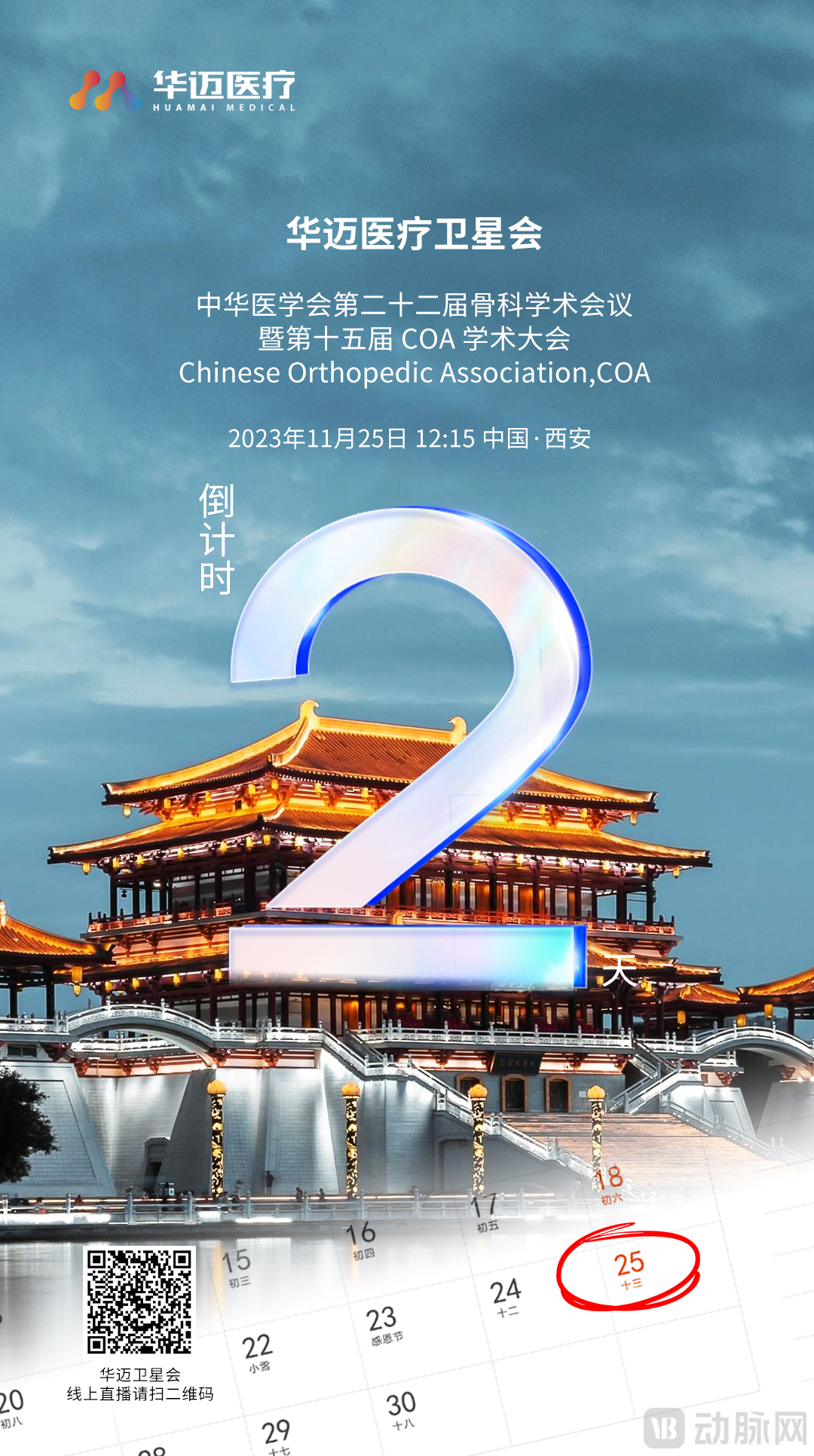
At the upcoming 22nd Academic Conference of Orthopaedics of the Chinese Medical Association and the 15th COA Academic Congress, Huamai Medical will set up a booth (Booth No. 1P-07) and host a satellite symposium and the launch ceremony for the post-marketing real-world study on bone regenerative medical material products at 12:15 on November 25 (this Saturday) in Conference Room 104B, Xi’an International Convention and Exhibition Center. Leaders and experts are cordially invited to attend and provide guidance, and to jointly explore the innovative applications and value of regenerative medicine technologies in the field of orthopaedics!