

Weimou Medical Completes Tens of Millions RMB Pre-A Financing to Accelerate Development of World-Leading Ophthalmic Surgical Robot

Oculotronics
Ophthalmic Microsurgery Robot Developer
VCBeat has exclusively learned that a globally leading enterprise in ophthalmic surgical roboticsGuangzhou Oculotronics Medical Instrument Co., Ltd. (hereinafter referred to as “Oculotronics”)Completed tens of millions of yuan in Pre-A round financing. The funds from this round will be primarily used for the clinical research and industrialization of the company's core product—a micrometer-level high-precision ophthalmic surgical robot—and will also drive the continuous development of Oculotronics across the entire chain of microsurgical ophthalmic procedures.
Oculotronics, established in December 2020, is an innovative enterprise dedicated to the independent innovation and high-quality clinical application of ophthalmic microsurgical robots and related technologies. The company is committed to developing “femtosecond-like” devices that provide high-precision, intelligent, and automated assistance for complex fundus surgeries.
Oculotronics’ core team hails from the Technical University of Munich, ETH Zurich, Sun Yat-sen University, and the Zhongshan Ophthalmic Center of Sun Yat-sen University. With over a decade of deep expertise in software automation, engineering, AI, and medicine, the team comprises numerous top-tier Sino-European scientists specializing in interdisciplinary medical-engineering fields, as well as senior clinical ophthalmology consultants. It also maintains long-term collaborations with institutions and companies such as Johns Hopkins University, Carl Zeiss, and Siemens Healthineers.
Based on the team's years of accumulated expertise, Oculotronics has independently developed its originalSerial-Parallel Surgical Robot Technology System, this system boasts exceptional stability and precision, enabling effortless micron-level positioning and ranking among the world’s leading technologies.
Fundus surgery is a high-difficulty procedure, with physiological tremor being the greatest challenge.。
Over the past two decades, driven by advancements in science and technology, the field of ophthalmology in China has experienced rapid development. Both diagnostic and therapeutic techniques for ocular diseases have undoubtedly reached unprecedented heights. However, treatments for fundus diseases, such as vitreoretinal surgery, remain highly complex procedures that are typically only available in major cities, large hospitals, or specialized eye centers. The training period for a fundus surgeon generally spans 8–10 years, and achieving a high level of expertise further requires inherent aptitude. Consequently, there is a severe imbalance between supply and demand in the treatment of fundus diseases in China.
Fundus surgery requires surgeons to perform various delicate maneuvers within the eyeball, which is about the size of a longan fruit, under a microscope; at times, puncture of blood vessels as fine as human hair is even required. Therefore, physiological tremor of the human hand poses the greatest challenge for surgical operators.
Taking subretinal injection as an example, surgeons must precisely insert a 41-gauge microneedle into the subretinal space and perform the injection steadily, all while compensating for physiological tremors of at least 100 μm. Any slight deviation risks causing iatrogenic damage to fundus structures and may even affect prognosis; therefore, such high-precision surgical procedures pose significant challenges to operators.
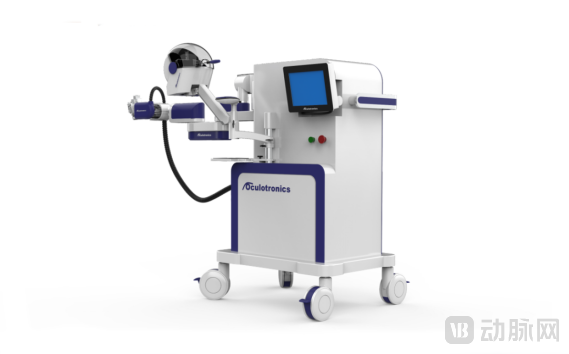
Based on the aforementioned clinical needs and pain points, Oculotronics has overcome multiple key technical challenges by leveraging over a decade of experience and technological accumulation, successfully achieving independent research and development ofCleberd®High-Precision Ophthalmic Surgical Robot。
It is understood that the company's exclusively developedSerial-parallel robot mechanical structure, enabling 5-degree-of-freedom operation and micron-level precise positioning,thereby filtering out hand tremors and jitters that are unavoidable for human operators,Repeat positioning accuracy is stably controlled within 10 μm., thereby assisting surgeons in completing procedures while minimizing incision tearing.
In addition,The unique Remote Center of Motion (RCM) design also enables high-precision control and accurate haptic feedback, facilitating precise, real-time dynamic RCM adjustments based on force feedback., to ensure surgical safety. Meanwhile, the compact and flexible robotic arms and end-effectors enable flexible intraoperative replacement of surgical consumables, thereby maximizing alignment with the surgeon’s natural operational workflow.
Based on modular design, Clipper®High-precision ophthalmic surgical robots are user-friendly and suitable for a variety of ophthalmic surgical scenarios. Surgeons can synchronously control the robotic arms and surgical instruments by manipulating the control handles to perform surgical procedures, thereby completing tasks includingVitreoretinal Surgery, Intravitreal Injection, Fundus Injection, Corneal Transplantation, Cataract Surgeryand other ophthalmic surgical procedures characterized by high technical difficulty, complex processes, and elevated risks.
The company has been honored with numerous awards, including the “Emerging Enterprise Award” among the “Top 50 Biotech Innovation Enterprises in the Guangdong-Hong Kong-Macao Greater Bay Area,” First Prize nationally and First Place in the Guangdong Regional Competition in the Application Integration Technology Track of the 6th “Bloom Cup” 5G Application Collection Contest, First Prize in the Advanced Manufacturing Sector of the China Shenzhen Innovation and Entrepreneurship Competition, Third Prize in the HKUST Million Dollar Prize (International) Entrepreneurship Competition, and Second Prize in the Guangdong-Hong Kong-Macao Greater Bay Area Medical Device Innovation and Entrepreneurship Competition.
Currently, the company has successfully developed independentlyThree major product portfolios: fundus surgery system, precision drug delivery system, and ophthalmic training system. Among them, the fundus surgery system was the first in China to pass type testing, successfully completed animal experiments on live rabbits and monkeys, and is about to initiate registration clinical trials.
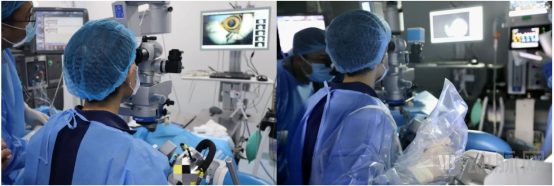
Oculotronics has successfully performed subretinal injections in experimental animals on multiple occasions.
Notably, on June 23 this year, the “5G Remote High-Precision Ophthalmic Surgical Robot,” jointly developed by Professor Lin Haotian’s team from the Zhongshan Ophthalmic Center of Sun Yat-sen University, Professor Huang Kai’s team from the School of Computer Science and Engineering at Sun Yat-sen University, and Oculotronics, was successfully deployed at Hainan Eye Hospital.The World's First 5G Remote Micron-Level Ophthalmic Surgery.After one month of postoperative observation, the patient has shown a favorable recovery. This transoceanic remote surgery not only validated the stability and safety of Oculotronics’ 5G-enabled, micron-level precision robotic system for ophthalmic surgery, but also introduced a novel therapeutic approach to the field. It holds promise for overcoming the temporal and spatial constraints traditionally associated with ophthalmic procedures, eliminating the need for extensive travel by both physicians and patients, and enabling high-precision remote ophthalmic care across vast distances. This innovation aims to alleviate critical challenges, including the scarcity of ophthalmic surgeons at primary-care levels and the difficulties patients face in accessing surgical treatment.
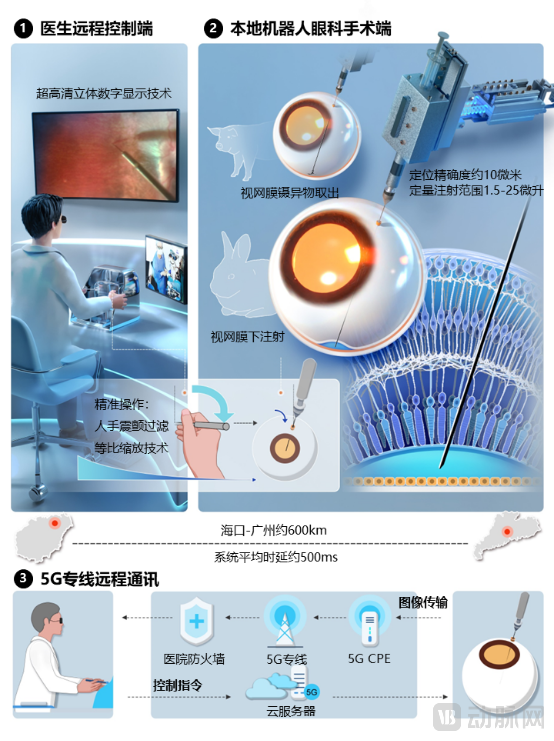
Schematic Diagram of Oculotronics' Self-Developed 5G Remote Surgical Robot System
Regarding the completion of this round of financing,Professor Yan Pisong, Co-Founder and CEO of OculotronicsIt was stated that ophthalmic surgical robots, by empowering and augmenting human capabilities and leveraging microsurgical system technologies to address therapeutic challenges faced by patients, fulfill physicians’ broader aspirations for the future of ophthalmic surgery. Building on the founding team’s extensive technical expertise in artificial intelligence, ophthalmology, and medical-engineering integration, Oculotronics initially focused on precision subretinal injection and membrane peeling procedures for assisted fundus surgery, gradually expanding its solutions to cover the entire workflow of microscopic ocular surgery.
We are delighted to have successfully completed this round of financing. The funds will accelerate the clinical research of our high-precision ophthalmic surgical robots and the continuous iteration of our technology. Minimally invasive, intelligent automation, personalization, and precision represent the development direction of ophthalmic microsurgery, as well as the unwavering path along which our company is committed to striving. In the future, Oculotronics will continue to leverage technological innovation to reduce the complexity of challenging ophthalmic surgeries, improve surgical success rates, and address critical bottlenecks in ophthalmic microsurgery, thereby delivering greater clinical benefits.
Ni Xinliang, Investment Director of the Wealth Healthcare Group at YiziLace Capital has been actively exploring early-stage investment opportunities in surgical robots within the healthcare sector, having previously invested in laparoscopic and needle-guided interventional robotic systems. Oculotronics represents another surgical robotics project in ophthalmology identified by Lace Capital. The company boasts a high-caliber team with composite backgrounds from Sun Yat-sen University, the Technical University of Munich, and the Zhongshan Ophthalmic Center. Its products feature exclusive patented technologies and demonstrate significant clinical advantages, effectively addressing current pain points in fundus surgery. We look forward to the accelerated industrialization of Oculotronics’ ophthalmic surgical robot in China and its subsequent expansion into the global market.
Luo Min, CEO of Shuling CapitalShuling Capital, the angel investor in Oculotronics, adheres to an investment service logic spanning from PIO (Plan-Investment-Operation) to IPO. We observed that the Oculotronics team has developed a solid plan, demonstrating pragmatism, humility, and high ethical standards. With its R&D capabilities consistently leading internationally and its dual-PI model progressing steadily, Shuling Capital has increased its investment in this round. Shuling Capital remains bullish on the microsurgery sector. Oculotronics boasts profound technological reserves, laying a foundation for expanding from ophthalmic surgical robots to other microsurgical fields. Furthermore, its integration of pharmaceuticals and medical devices offers significant benefits for the precise delivery of gene therapies and targeted drugs. As emphasized during the company’s unveiling ceremony with the motto “Excel in projects to benefit humanity,” technology is empowering healthcare at just the right time. We look forward to the imminent market launch of Oculotronics’ ophthalmic surgical robot and other products, bringing advantages to physicians and tangible benefits to patients.
Head of Minggui FoundationIt is well known that the fundus is closely connected to the base of the skull, making surgical interventions in these areas highly challenging “no-go zones.” Unlike brain lesions, which have a relatively lower incidence, many fundus disorders are associated with systemic diseases. Against the backdrop of an aging society, the prevalence of fundus diseases is rising, yet the distribution of ophthalmologists specializing in fundus treatment is severely imbalanced, leaving many elderly patients without timely diagnosis and care. As the saying goes, “A craftsman must sharpen his tools to do his work well.” With advanced tools, basic research, therapeutic approaches, and pharmaceutical developments for ocular diseases will be further promoted and advanced. However, most ophthalmic medical devices remain monopolized by a few major foreign brands. After more than a decade of research and translational development, Oculotronics’ products have undergone multiple stages of animal testing in the field of retinal fundus. Their operational efficacy, precision, control, and stability have been validated in both on-site and remote settings. Oculotronics’ dedicated efforts in this field are poised to break through the dominance of foreign products, achieving a breakthrough from zero to one. The founding team of Oculotronics boasts complementary expertise in hardware and software, as well as in healthcare and business. Their close collaboration is expected to drive continuous product improvement and successful commercialization.