

Era of Knowledge Democratization Dawns as Knowledge Matrix Leads the New Ecosystem of Short-Video Health Content Marketing

KNOTRIX
Operator of the Comprehensive Health Content Ecosystem
With the implementation of policies such as volume-based procurement and the two-invoice system, alongside the continuous advancement of anti-corruption efforts in healthcare, China’s digital medical marketing has surged amid these reforms. While delivering significant benefits to patients, this sector has not only achieved a “miraculous” tenfold expansion in market size over four years but also gradually established diverse, specialized key battlegrounds.
For instance, the emergence of social media platforms such as Xiaohongshu (Little Red Book) and Weibo, short-video platforms like Douyin (TikTok) and Kuaishou, and various pharmaceutical e-commerce channels has significantly altered how people access information and purchase consumer health products. Consequently, short-video and live-streaming content marketing have become two major battlegrounds in B2C digital healthcare marketing, standing alongside traditional text-and-image content marketing.
Meanwhile, similar to the development strategy of DXY, which firmly holds the top position in text-and-image content operations, ecosystem building has also emerged as a key component in the development strategies of numerous short-video content operators.
In 2020, Li Tiantian, founder of DXY, stated candidly in an interview with VCBeat: “DXY aims to collaborate and unite more professional expertise and industrial advantages to build a healthy, open industry ecosystem, thereby addressing downstream (disease-related) issues.” This September, Hangzhou KNOTRIX Information Technology Co., Ltd. (hereinafter referred to as “KNOTRIX”), which had just secured Series A financing, publicly unveiled its new corporate positioning for the first time as a “new media digital health ecosystem operator,” announcing that building a new media health content ecosystem would be its core strategic objective moving forward.
What Is the Allure of Ecosystem Building That Has Prompted Companies in the Graphic Content and Short-Video Marketing Arenas to Elevate It to a Strategic Priority for Corporate Development?

One afternoon in late November, Ding Zhaoliang, Founder and CEO of KNOTRIX, revealed the underlying rationale to VCBeat: “In fact, from the outset, we did not adopt a corporate development philosophy centered on ecosystem building. However, as our business continued to advance, we realized that focusing solely on a single business within a single segment would prevent us from consistently and precisely meeting customers’ increasingly segmented and personalized needs. In other words, our stickiness with customers would gradually decline. Therefore, leveraging our accumulated capabilities and resources, we have adopted an ecosystem-based development model.”
In its communication with Ding Zhaoliang, VCBeat found that the new media health content ecosystem being built and planned by KNOTRIX bears a striking resemblance to the ecosystem DXY has established in the realm of graphic and textual content marketing.
Having reached this point in the text, the term “ecosystem” has already appeared several times, and we are well aware of the importance of ecosystem building. But do we truly understand the meaning of the word “ecosystem” as used by Ding Zhaoliang?
For most people, the term “ecosystem” is likely both familiar and unfamiliar. Therefore, before detailing the similarities between DXY’s approach and the KNOTRIX ecosystem construction, we must first clarify the connotation of an “ecosystem” in direct-to-consumer (C-end) content marketing.
In the interview, Ding Zhaoliang once remarked, “In fact, whether it is graphic-and-text marketing or short-video/live-streaming marketing, the underlying logic is similar: both aim to expand the traffic pool and ultimately build a dedicated traffic base for the account itself by leveraging high-quality content on top of an existing traffic pool. Consequently, the ecosystem formed by either graphic-and-text marketing or short-video/live-streaming marketing must be rooted in this traffic foundation, where content operators, pharmaceutical companies, consumer health product enterprises, and other industry stakeholders jointly provide high-quality content and premium products to meet users’ vast and increasingly personalized health needs.”
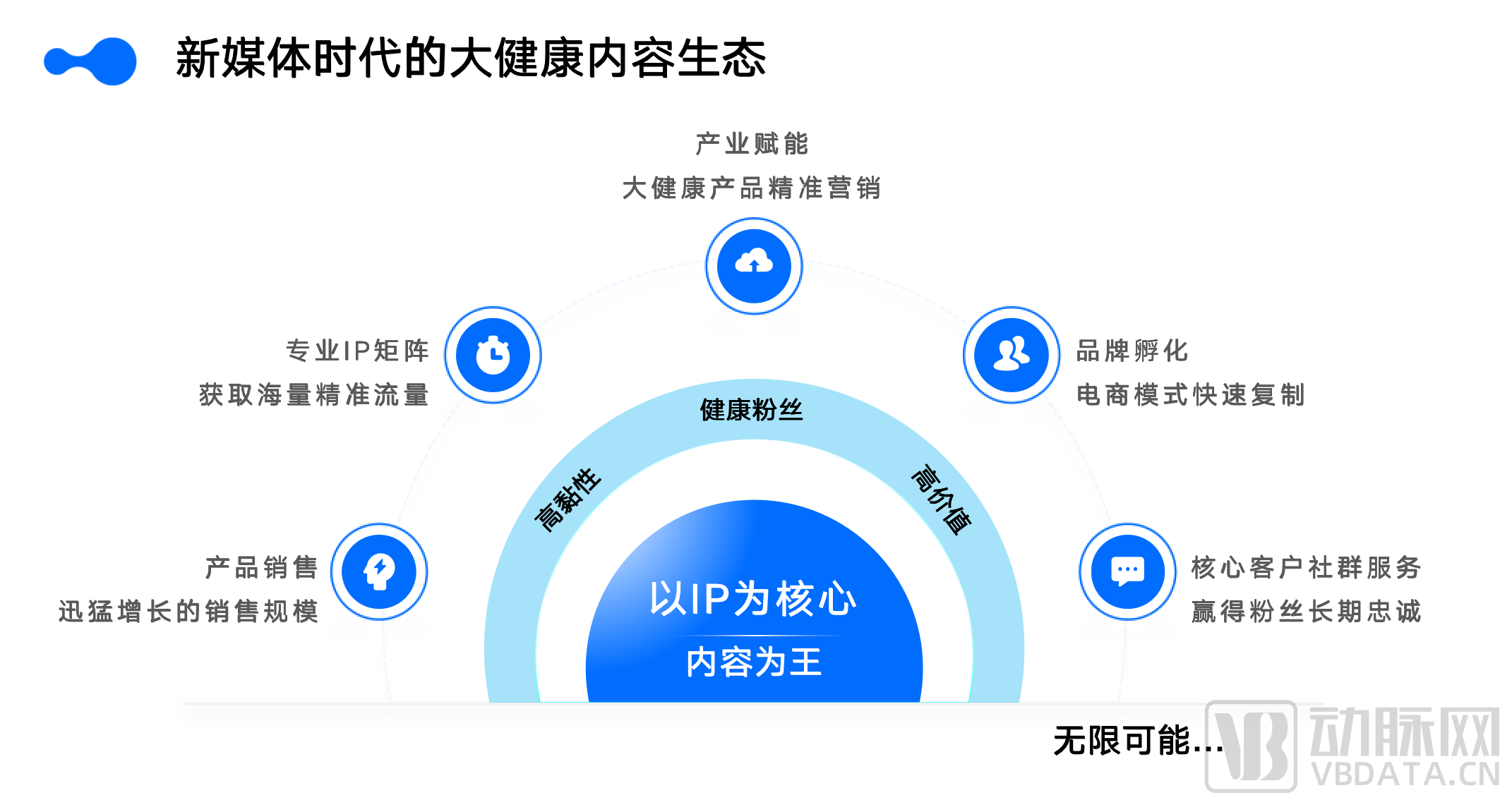
This means that in the content marketing ecosystem directly facing consumers (C-end), whether in the form of articles and images or short videos/live streaming, a key element is the traffic pool. Content operators such as DXY and KNOTRIX, along with upstream enterprises like pharmaceutical companies and consumer health product manufacturers, influence changes in the traffic pool through their supply of high-quality content and products.
Among these factors, one point deserves special attention: the “initial traffic pool” as described by Ding Zhaoliang. In medical digital content marketing that directly targets consumers (C-end), the initial traffic pool resides on social media or short-video platforms, rather than being exclusive to content operators. For instance, KNOTRIX focuses its primary efforts on platforms such as Douyin, Kuaishou, and Bilibili, whereas DXY concentrates its main presence on WeChat Official Accounts (note: although DXY has its own app, this reference pertains solely to its layout on the WeChat platform).
This means that the numerous doctors and influencer accounts on major platforms must leverage “intermediaries” such as social media and short-video platforms to achieve broad traffic coverage. Moreover, as consumer segments become increasingly refined, content operators are required to ensure both comprehensiveness and precision in their initial traffic outreach.
In this regard, although DXY and KNOTRIX operate in different niche segments, they have adopted similar strategies. Specifically, DXY, which initially built its business by serving physicians, has firmly secured access to this critical resource for digital healthcare content marketing. This approach not only ensures the authority and professionalism of its content but also establishes a brand image of professional expertise, thereby facilitating user trust.
KNOTRIX, grounded in the characteristics of the short-video and live-streaming industries, pioneers the “de-platformization” concept, comprehensively covering mainstream video platforms such as Douyin, Kuaishou, WeChat Channels, Xiaohongshu, Weibo, and Bilibili, thereby making “traffic ubiquitous.”
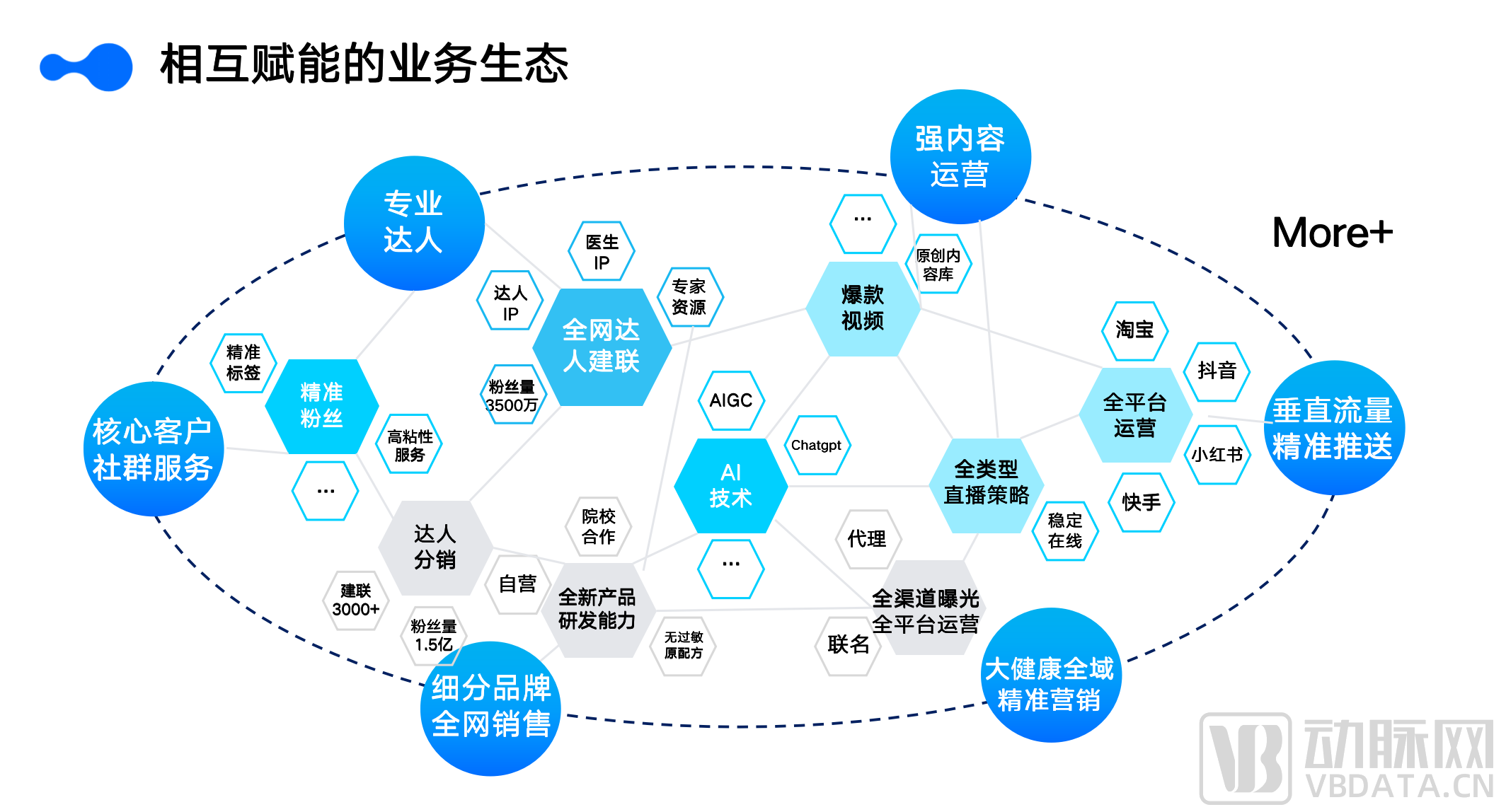
Secondly, corresponding to DXY’s mastery of the key resource of physicians, KNOTRIX also places significant emphasis on securing coverage of physicians and influential content creators. To date, KNOTRIX has independently incubated over 100 intellectual property (IP) brands and established collaborations with more than 3,000 influencers, whose combined follower count exceeds 150 million, demonstrating substantial initial traffic reach.
More importantly, KNOTRIX not only achieves extensive traffic coverage but also ensures precise targeting of desired audiences. In other words, KNOTRIX enables coverage of niche user segments. Just as DXY has reached diverse demographic groups by building a multi-account matrix including Dingxiang Doctor, Dingxiang Mom, and Dingxiang Life Research Institute, KNOTRIX has also established a rich new media account matrix to precisely reach its target audience.
Specifically, the target audience of KNOTRIX can be roughly divided into three categories—
One target group is parents of children aged 0–15. For this audience, KNOTRIX covers a wide range of accounts, including pediatricians, pediatric endocrinologists, child healthcare physicians, pediatric nutritionists, and pediatric sports coaches, comprehensively addressing the health needs of infants, toddlers, and children.
The second group comprises women in the preconception, pregnancy, and postpartum periods (up to three years after delivery). KNOTRIX covers a wide range of accounts managed by obstetricians, gynecologists, female urologists, postpartum rehabilitation specialists, postpartum nutritionists, and postpartum fitness coaches, thereby addressing the multifaceted needs of women during preconception, pregnancy, and postpartum recovery.
Thirdly, for women aged 45-55 in the early stages of aging, KNOTRIX also covers a vast array of resources from experts and influencers in fields such as Traditional Chinese Medicine (TCM) and orthopedics, addressing the core health needs of this demographic.
In other words, by covering vertical niche accounts, KNOTRIX can achieve precise reach to parents of children aged 0–15, women who are preparing for pregnancy, pregnant, or up to three years postpartum, as well as early-middle-aged women aged 45–55.
However, both DXY and KNOTRIX are acutely aware that achieving initial coverage of the primary traffic pool is merely the foundation for ecosystem building. What is more critical lies in attracting greater traffic inflow, enhancing user retention, and ultimately driving marketing conversions.
Attracting and retaining traffic is inextricably linked to the content produced. In this regard, both DXY and KNOTRIX have developed their own unique approaches to content creation.
Specifically, in the realm of digital medical content marketing, content production must meet several criteria, with medical accuracy and professional rigor being the most fundamental. To this end, DXY and KNOTRIX have both established comprehensive and stringent content review mechanisms. For instance, DXY has engaged over 1,000 physician authors in co-creating content, invited more than 3,000 physicians to conduct scientific reviews, and innovatively introduced peer-review processes into its content production workflow.
KNOTRIX has adopted a similar mechanism—not only is all content produced in strict accordance with medical guidelines, but physicians also participate in content creation and review. Furthermore, KNOTRIX has established its own in-house medical team to conduct a secondary review of the content’s medical accuracy and professionalism.
“In fact, all content produced by KNOTRIX must pass through three levels of review before it can be successfully published: first, physicians incubated by or collaborating with KNOTRIX; second, KNOTRIX’s in-house medical team; and third, platform operators such as Douyin and Kuaishou,” stated Ding Zhaoliang. “Therefore, we can guarantee with 100% certainty that the content published by KNOTRIX will not contain any violations of medical professionalism.”
However, in an era of information overload, merely offering professional credibility holds limited appeal for consumer-facing (C-end) users. In response, DXY has adopted a dual-pronged strategy focusing on narrative techniques and the orchestration of viral events. The former reflects DXY’s preference for argumentative essays across most of its content, based on the belief that storytelling can convey richer emotions and achieve greater dissemination impact. The latter refers to DXY’s series of highly viral articles addressing trending topics or key issues, many of which have gained widespread popularity across the internet.
Coincidentally, KNOTRIX’s content creation guidelines also emphasize the provision of emotional value and the ability to respond to social hot-button issues.
“In layman’s terms, the cost of traffic acquisition is becoming increasingly expensive. Against this backdrop, the ability to rapidly respond to consumer needs from the perspective of end-users will undoubtedly be one of the key trends shaping the future development of the industry,” shared Ding Zhaoliang.
Therefore, in consumer-facing self-planned science popularization initiatives, KNOTRIX accurately identifies user needs to deliver educational content, while timely integrating social hot topics to develop series that stay current with events, leveraging these trends for both science communication and marketing.
When serving B-end clients in marketing products/services to C-end consumers, KNOTRIX’s content creation capabilities demonstrate greater professionalism.
Taking the marketing of Minoxidil Tincture as an example, specifically, after fully understanding the needs of C-end customers, KNOTRIX first determines which keywords to target across the entire internet, such as dosage forms. It then defines the content entry points for different types of accounts. For instance, obstetrician accounts may focus on postpartum hair loss, while gynecologist accounts may address menopausal hair loss. Subsequently, KNOTRIX specifies content publication frequency and cycles based on the disease progression timeline, ultimately providing B-end clients with a long-term and comprehensive content marketing solution.
In the interview, Ding Zhaoliang also mentioned that during the keyword-locking phase, if the manufacturer of a marketed product is a single brand owner, it suffices to lock in only the product’s key active ingredient. However, if multiple manufacturers within the industry produce the same product, it is necessary to consider the differentiators between the client’s product and those of competitors to precisely identify keywords. In this way, KNOTRIX helps B2B clients improve their marketing conversion rates.
Moreover, just as actors and idols need to continuously release new works to avoid being forgotten, content operators must also maintain the activity levels of their incubated or partnered accounts. This requires content operators to possess the ability to create content rapidly and at scale.
In response, to enhance content creation efficiency, KNOTRIX has implemented an AIGC system capable of generating over 3 million words of video scripts annually. This has increased per-capita video production capacity by 50%, significantly boosting video output efficiency while maintaining the account’s original copywriting style.
As the efficient production of high-quality, authoritative content becomes feasible and has been implemented, KNOTRIX advances to a higher stage of ecosystem building—how can we further enhance the stickiness between accounts and followers? How can we improve follower loyalty?
In response, KNOTRIX has opted for private-domain operations and adopted a one-on-one customer service mechanism. This approach enables precise understanding of user needs while facilitating timely, targeted one-on-one product marketing.
Furthermore, drawing on years of experience in short-video and live-streaming content operations, KNOTRIX has found that for certain health needs of B2C consumers, the market either lacks precisely matching products or suffers from a shortage of high-quality offerings, thereby leaving certain market gaps or room for product upgrades and iterations.
Therefore, guided by the philosophy of filling market gaps and upgrading existing products, KNOTRIX has established a comprehensive supply chain product selection system and an in-house brand incubation framework, thereby creating a complete health brand matrix. Its portfolio includes co-branded and distributed brands such as the “Kuwan Baobei” series of diapers and the “Chunbenyuan” tea product line, as well as proprietary brands including “Yuanli Ban,” “Guanneng Li,” and “Chaoneng Yangyu Jia.” Meanwhile, KNOTRIX collaborates with high-quality supply chains to set up exclusive live-streaming studios, providing omni-channel traffic solutions for premium brands and products.
It is worth noting that the product research and development of KNOTRIX’s proprietary health and wellness brands have received strong support from numerous hospitals, research institutes, and universities. More importantly, KNOTRIX has established its own dedicated R&D team. This represents the most significant distinction between KNOTRIX and other medical digital content operators in terms of building proprietary brands.
“We established our own brand with no intention of engaging in OEM business. On the contrary, just as we meet users’ needs for accessing medical science popularization content with the highest-quality materials, we aim to address their health needs with premium products, thereby continuously strengthening user stickiness,” said Ding Zhaoliang candidly.
As time flies, when we examine the digital marketing of short-video and live-streaming medical content through the lens of KNOTRIX, we find that this industry has moved beyond its early chaotic era—marked by the prevalence of pseudoscience, public distrust, and stringent regulatory crackdowns. Although regulations remain increasingly strict, Ding Zhaoliang can still calmly state, “Business models that rely on crude and simplistic approaches inherently carry compliance risks. In the face of ever-tightening regulatory policies, there is only one thing we need to do: settle down and influence society with high-quality science popularization content and advanced health-oriented guidance.”