

2023 Future Healthcare Technology Conference in Hefei Draws Nearly 1,000 Industry Professionals
Next week, major developments are set to unfold in the healthcare industry.
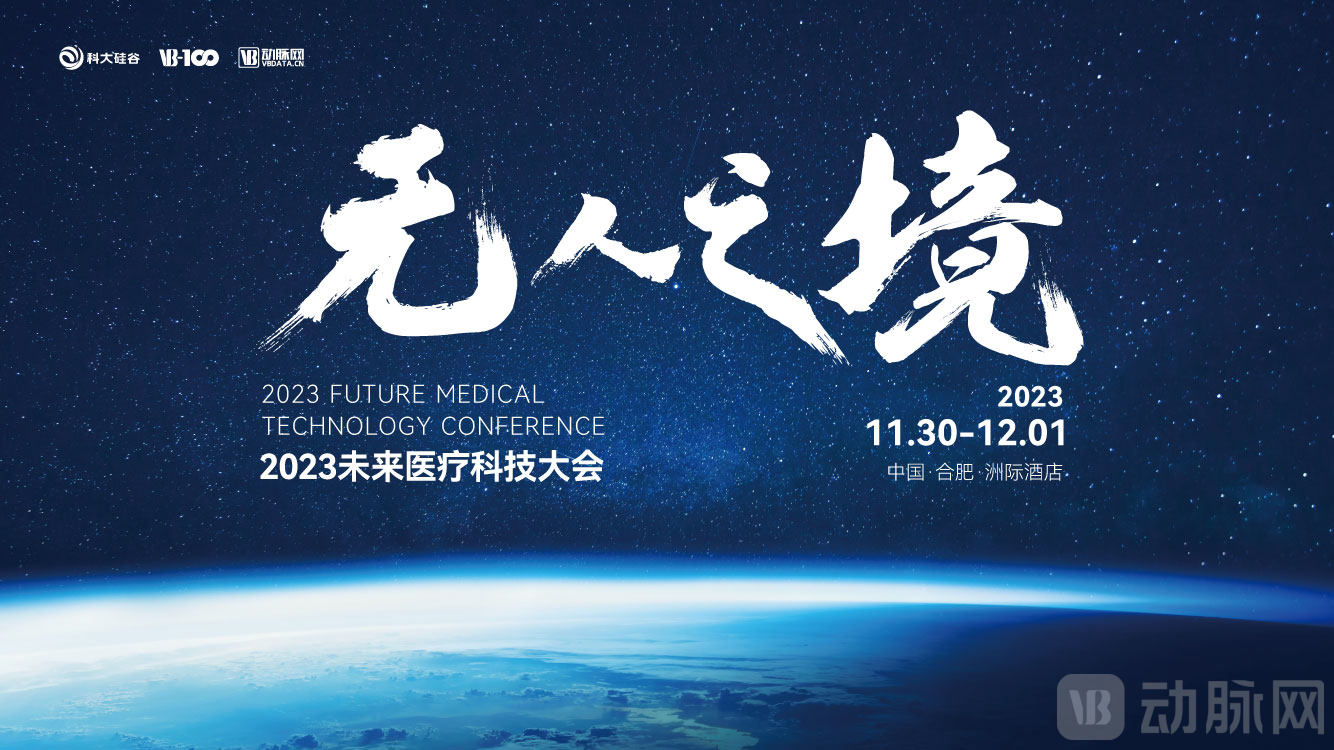
“2023 Future Medical Technology Conference” will be held in Hefei from November 30 to December 1. It is reported that this marks the first time the conference has been held in Hefei. The event will primarily focus on trends and applications of cutting-edge technologies in the medical field, having already attracted nearly 1,000 industry participants, including over 100 influential tech figures, more than 100 tech companies, and 800 professional attendees.
On the research front, there areDeng ZixinandYang Guangzhongwith the guidance of six academicians and numerous scientists or clinical experts; on the corporate side, it brings together founders from multiple multinational corporations, publicly listed companies, and prominent startups, includingYuan Zezhi, Vice President of Merck China Healthcare、Liu Chen Bai, Vice President and CIO of Eli Lilly China、Li Li, President of Aier Eye HospitalandWang Yingqi, CEO and Co-Founder of TopEye Medicaletc.; on the capital side,Legend Capital, Polaris Partners, GSR Ventures, Yuan Yi Capital, Haoyue CapitalNearly 20 leading institutions will also participate in full.
In fact, amid the current market downturn, stabilizing core operations has become the fundamental priority for all stakeholders across the healthcare industry chain. On this basis, identifying new growth curves is equally critical. The reason this technology conference has attracted numerous industry professionals from the healthcare sector lies largely in its representation of a new industrial trend, guiding scientists, entrepreneurs, and investors to clarify the development logic of frontier technological fields and find the greatest certainty amidst all uncertainties.
Therefore, this is not an ordinary industry conference; many key points warrant further deliberation.

Scan the QR code to register and view the detailed agenda for the Future Healthcare Technology Conference.
What Happens When the “Venture Capital City” Turns Its Focus to Medicine?
It is no coincidence that this technology conference was held in Hefei.
Over the past decade, Hefei has, throughSlowing Down Subway Construction, Betting on BOE, Investing Billions in CXMT, and Joining Strategic Investors to Take Over NIOSuch landmark investments have not only propelled it rapidly into the trillion-yuan output value club, but also fostered three national-level strategic emerging industry clusters: new display devices, integrated circuits, and artificial intelligence.
However, following rapid development in recent years, many core industries have reached maturity at the current stage. Taking novel display devices as an example, with the agglomeration of leading enterprises such as BOE, Visionox, and Corning, Hefei has become the industrial cluster with the most complete supply chain and the most advanced technological level in China’s novel display industry. Its annual output value has exceeded RMB 100 billion, with revenue from the main business of liquid crystal display (LCD) devices accounting for more than one-fifth of the national total.
As dominant industries gradually approach their ceiling,Hefei is also striving to identify the next high-potential market, with its focus quickly shifting to the biopharmaceutical sector., partly because the pharmaceutical industry is characterized by its strong hard-tech attributes, and partly because its massive market size can fully support Hefei in taking further strides forward.
Based on this, Hefei has begun to exert comprehensive efforts in the medical field in recent years, especially in the capital market, where its investment intensity is quite significant. According to data released by the Hefei Municipal Finance Bureau in March this year, as of February 2023, within less than a year since the establishment of the municipal government-guided fund-of-funds company,Hefei’s total fund scale has seen explosive growth, currently reaching RMB 154.6 billion, with 47 participating funds approved for establishment, including as many as 10 specialized biomedical funds.。
In addition to its large fund size, its investment model is also continuously evolving. In March last year, the Hefei High-Quality Development Guidance Fund was officially established with a registered capital of RMB 20 billion. To date,Hefei Has Built a State-Owned “Fund Jungle” Comprising “Government-Guided Fund-of-Funds + Angel/Sci-Tech Innovation/Seed Funds + Market-Oriented Funds”, the fund chain has become increasingly robust.
In response, local healthcare enterprises in Hefei expressed to VCBeat, “Hefei currently has corresponding funds for projects at different stages. The entire operational process, from pre-investment and during investment to post-investment, fully adheres to market-oriented principles, demonstrating a high level of professionalism and proactiveness. Additionally, there is strong inclusivity towards invested projects.”
It is precisely for this reason that Hefei has reaped substantial rewards in the pharmaceutical sector in recent years. According to incomplete statistics from the VCBeat Orange Database,Over the past three years, Hefei has completed a total of 30 financing deals in the pharmaceutical and medical sector., among which a group of Hefei-based state-owned capital firms, represented by Hefei Industrial Investment, Hefei Venture Capital, and Hefei High-Tech Investment, have been particularly active, accounting for more than half of the total investment volume, with most deals being early-stage investments prior to Series A.
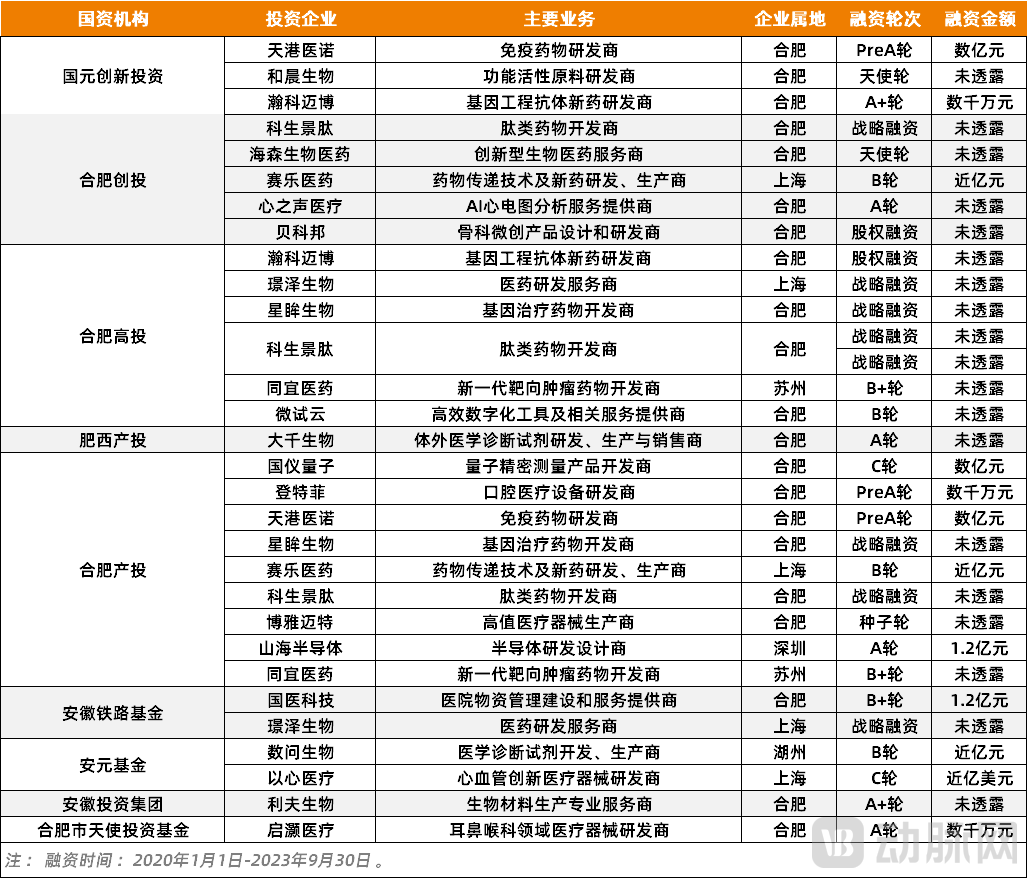
Figure 1. Hefei State-owned Assets’ Pharmaceutical Investment Trends in the Past Three Years (Data Source: VCBeat)
However, it is not only the primary market that is bustling; the secondary market is also witnessing continuous momentum. Recently,Wanbang PharmaceuticalSuccessfully listed on the ChiNext Board of the Shenzhen Stock Exchange, it is the first publicly traded company in Anhui’s CRO sector.It is also the fifth listed pharmaceutical company in Hefei in the past three years.。
Beyond its efforts in the capital markets, in promoting the development of the healthcare industry,Hefei also accomplished a “major feat” by officially establishing the “USTC Silicon Valley” in June 2022., which is also the venue for this Science and Technology Conference. It is reported that “USTC Silicon Valley” focuses on the transformation of innovative achievements, incubation of innovative enterprises, and optimization of the innovation ecosystem. Leveraging global alumni networks from universities and research institutions such as the University of Science and Technology of China (USTC), it gathers worldwide innovation resources, plays a leading role in scientific and technological system innovation, and, based on new urban spatial developments in Hefei, aims to build a demonstration project serving as a source of technological innovation and a hub for emerging industry clusters.
According to its future plans,By 2025, the “USTC Silicon Valley” initiative aims to attract over 100,000 high-caliber professionals across various fields and establish a multi-tiered fund system with a total scale exceeding RMB 200 billion.Meanwhile, on the industrial front, the plan aims to gather more than 10,000 technology-based enterprises, new R&D institutions, and sci-tech innovation service providers; cultivate 1,000 high-tech enterprises; and foster over 50 listed companies and unicorn enterprises.
These data also indicate that the healthcare industry holds significant development potential in Hefei and in USTC Silicon Valley, which is the core reason why a large number of enterprises and investors are currently flocking to Hefei. It is reported that to promote ecosystem collaboration, the organizers established a dedicated visitation segment for USTC Silicon Valley at this technology conference and concurrently held closed-door meetings on government-enterprise cooperation, with numerous partnerships expected to be implemented in the near future.
Focusing on Original Innovation: Incubating Startups from Scratch
In fact, Hefei has also encountered setbacks in its journey to develop the healthcare industry.
In 2013, Hefei announced a partnership with Peking University Weiming Group to jointly invest RMB 20 billion in building a pharmaceutical industrial park in Hefei. Reportedly, a key factor in Hefei’s decision to collaborate with Weiming was its endorsement by Peking University and the prestige associated with being a listed company. However, things did not go as planned. In 2019, due to a broken capital chain, Weiming Group declared bankruptcy restructuring. The latest update from Hefei came this January, when Hefei Weiming, a wholly-owned subsidiary of Weiming Pharma, proposed to sell real estate and parking spaces to revitalize underperforming assets.
Hefei, which hit a wall in Weiming, gradually realized thatIt is clearly unfeasible to drive pharmaceutical industry investments solely based on hype. This is because the unique characteristics of the pharmaceutical sector make it difficult for any single star company to spur the horizontal development of the entire industrial chain.。
In response, a professional from Hefei’s state-owned assets sector told VCBeat, “The biopharmaceutical industry differs significantly from the semiconductor and new energy vehicle (NEV) sectors. Although all three boast substantial market sizes, biopharma spans a broader range of fields and features more complex, multidimensional industrial structures. Unlike semiconductors or NEVs, which have clearly defined upstream and downstream supply chains and are highly vertical—making them relatively easier to build up.”
Based on this, Hefei is also adjusting its development strategy. According to insiders, Hefei has not devoted significant effort to relocating the headquarters of any major enterprise to the city, as such an undertaking is both operationally challenging and highly risky.In the past year or two, Hefei has focused more on itself, prioritizing the incubation of its own pharmaceutical industry ecosystem, nurturing promising candidates within this ecosystem, and propelling them to become chain leaders, thereby integrating the upstream and downstream segments of the industry.。
So, where exactly are the “top contenders” hidden? The answer lies within this technology conference.
It is reported that multiple thematic forums were held at this technology conference, coveringIntelligent Medical Devices, Gene Sequencing, Biotechnology and Intelligent Manufacturing, Generative AI, Neurosurgery, Cardiac SurgeryIn these specialized fields, the core discussions focus on original innovation and the translation of research findings into practical applications, or on identifying more innovative solutions within existing clinical scenarios.
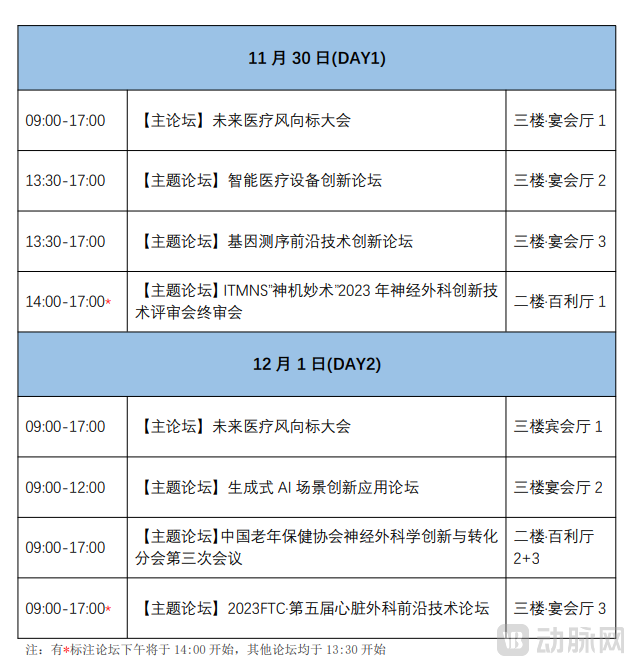
Figure 2. Agenda for the 2023 Future Healthcare Technology Conference
Taking the Generative AI Scenario Forum as an example, includingYidu Tech, Deepwise, DingTalk, Unisound, Yiduoyun, Nanjing Dajing Traditional Chinese Medicine, Fuxin Kechuangand other representative companies will all participate, while focusing on investments in this fieldYuan Yi CapitalandShanghai Guoke Longhui Private Equity FundIt will also examine the subtle shifts and future development opportunities in this cutting-edge field from a capital perspective.
In fact, Hefei boasts a substantial industrial foundation in the field of AI, currently possessingiFlytek, Huami Technologyincluding multiple industry-leading enterprises. It has gathered more than 2,000 companies across the upstream and downstream of the artificial intelligence (AI) industrial chain, among which 307 are high-tech enterprises. The core enterprises have achieved an output value of RMB 60.9 billion. In terms of infrastructure, Hefei currently boasts 77 provincial-level or higher AI-related innovation platforms, including five national-level key innovation platforms.
In other words, there is still significant investment potential to be tapped in the integration of generative AI with healthcare scenarios in Hefei. However, this is just one area; Hefei also holds substantial promise in the fields of intelligent medical devices and smart manufacturing.
As is well known, new-type display devices and integrated circuits are two characteristic industries in Hefei. These sectors can be organically integrated with the medical device industry, offering potential for industrial implementation in niche areas such as medical robots, intelligent wearable devices, and imaging equipment.
Taking medical robots as an example, this technology conference has invited numerous high-profile guests. For instance, on the research front, there areMr. Guang-Zhong Yang, Fellow of the Royal Academy of Engineering (UK), Chief Scientist at the Medical Robotics Institute of Shanghai Jiao Tong UniversityandMr. Zhang Mingjun, Tenured Professor and Doctoral Supervisor at Tsinghua University. On the industry front, the conference has further brought togetherAier Medical, Runmaide Medical, and other leading companies in the robotics sector.
Of course, in the field of biotechnology, includingGene Sequencing, Cell and Gene Therapy, Synthetic BiologyFrontier fields such as these were also key topics of discussion at this technology conference.
Therefore, it is evident that innovation has become the key word for Hefei in the medical field. Indeed, innovation is the foundation of industrial development as a whole. Especially amid the current capital winter and the market trend toward domestic substitution, the industrial value of innovation is more critical than ever. On the other hand, it is also clear that Hefei is making strategic choices based on innovation. The selection criteria are rooted in its own industrial reserves, namely, integrating as closely as possible with its advantageous industries. This approach offers several benefits: it eliminates the need to build capabilities entirely from scratch, helps mitigate industrial risks to a certain extent, and enables resource integration to maximize regional benefits.
Advancing the Translation of Cutting-Edge Achievements: Two Specialty Societies Join Forces
How to Unleash Innovation: A Major Challenge for the Current Healthcare Industry
According to the latest data released by the China National Intellectual Property Administration, as of September 2023, the number of valid invention patents and registered trademarks in China reached 4.805 million and 45.122 million, respectively; the annual number of copyright registrations in 2022 amounted to 6.353 million. The volume of PCT international patent applications has ranked first globally for four consecutive years. In the Global Innovation Index report published by the World Intellectual Property Organization, China’s ranking rose to 12th place, and the number of top-100 global science and technology innovation clusters located in China surpassed all other countries for the first time.
Turning our focus to Hefei, known as the “Venture Capital City,” its innovation capacity has been steadily strengthening in recent years. According to the latest data, in 2022, Hefei, with a GDP exceeding RMB 1 trillion, rose to 55th place globally in the “Science and Technology Clusters” ranking, an increase of 18 positions from the previous year, and ranked 16th among global “Research Cities,” moving up four places. This progress is largely attributable to Hefei’s substantial investment in research and development (R&D) in recent years. It is reported that in 2022, Hefei’s total societal R&D expenditure reached RMB 46.95 billion, a year-on-year increase of 18.98%, with the R&D intensity reaching 3.91%, which is 1.37 percentage points higher than the national average.
But beneath the veneer of high innovation lies, in fact, a low conversion rate.Especially in the medical field, the rate of translation of research findings into practical applications is relatively lower, basically maintaining at around 3%., which means that a large number of scientific research achievements will fail to be translated into practical applications。
In light of this, in recent years, both government bodies and industry players have been exploring ways to improve the translation rate of medical research achievements into practical applications. For instance, on the government side, taking Hefei as an example, the city has not only issued numerous targeted policies to support the commercialization of scientific and technological achievements but has also established the USTC Silicon Valley as a dedicated innovation platform. Leveraging the University of Science and Technology of China (USTC)—Hefei’s premier intellectual hub—as a key link, the initiative deeply connects with global sources of innovation, providing a steady flow of intellectual resources to the platform.
On the industry side, investors, for example, are extending their investment stages to earlier phases, beginning to focus on ultra-early-stage projects in universities, research institutes, and medical institutions. At the same time, they are continuously strengthening their own capacity to support early-stage projects, such as by connecting with more professionals and platforms to provide robust post-investment services for these early ventures.
Therefore,At the “2023 Future Medical Technology Conference,” the translation of research achievements into practical applications was also a key topic.. To facilitate exchanges, the conference has also specially invitedBranch of Innovation and Translation in Neurosurgery, China Association for Geriatric Health CareandCardiac Surgery Technology and Engineering Committee of the Chinese Medical Biotechnology AssociationTwo major specialty associations, focusing on the frontier fields of neurosurgery and cardiac surgery, have brought together more than 100 domestic experts, scholars, corporate representatives, and industry professionals to jointly discuss technological advancements and development trends, industrial innovation, and collaboration opportunities.
In fact, whether viewed from the development trends of the entire healthcare industry or from the intrinsic logic of Hefei’s pharmaceutical industry development, innovation and translation are crucial. This is precisely the significance behind the establishment of the “Future Medical Technology Conference,” which aims to identify frontier technological directions in the medical field and promote the translation of more cutting-edge achievements with clinical value and market demand.
Therefore, we look forward to seeing you at the “2023 Future Healthcare Technology Conference” from November 30 to December 1!

Scan the QR code to register for the conference.