

TuoDao Medical Showcases Hyper-fusion Orthopedic Surgical Robot System at COA 2023, Driving Precision and Efficiency through Integrated Innovation

Tuodao Medical
Surgical Robot Developer
Recently,Tuodao Medical unveiled its hyper-converged orthopedic surgical robot system, along with other major new products including the Tuoying mobile C-arm X-ray machine and the Tuoshu percutaneous puncture surgical robot, at the 22nd Academic Conference of Orthopaedics of the Chinese Medical Association and the 15th COA Academic Congress, attracting numerous attending experts and scholars.. The COA Conference was held in Xi'an, Shaanxi Province, during which Tuodao Medical alsoHeld a new product sharing salon and an ecosystem partner signing ceremony。
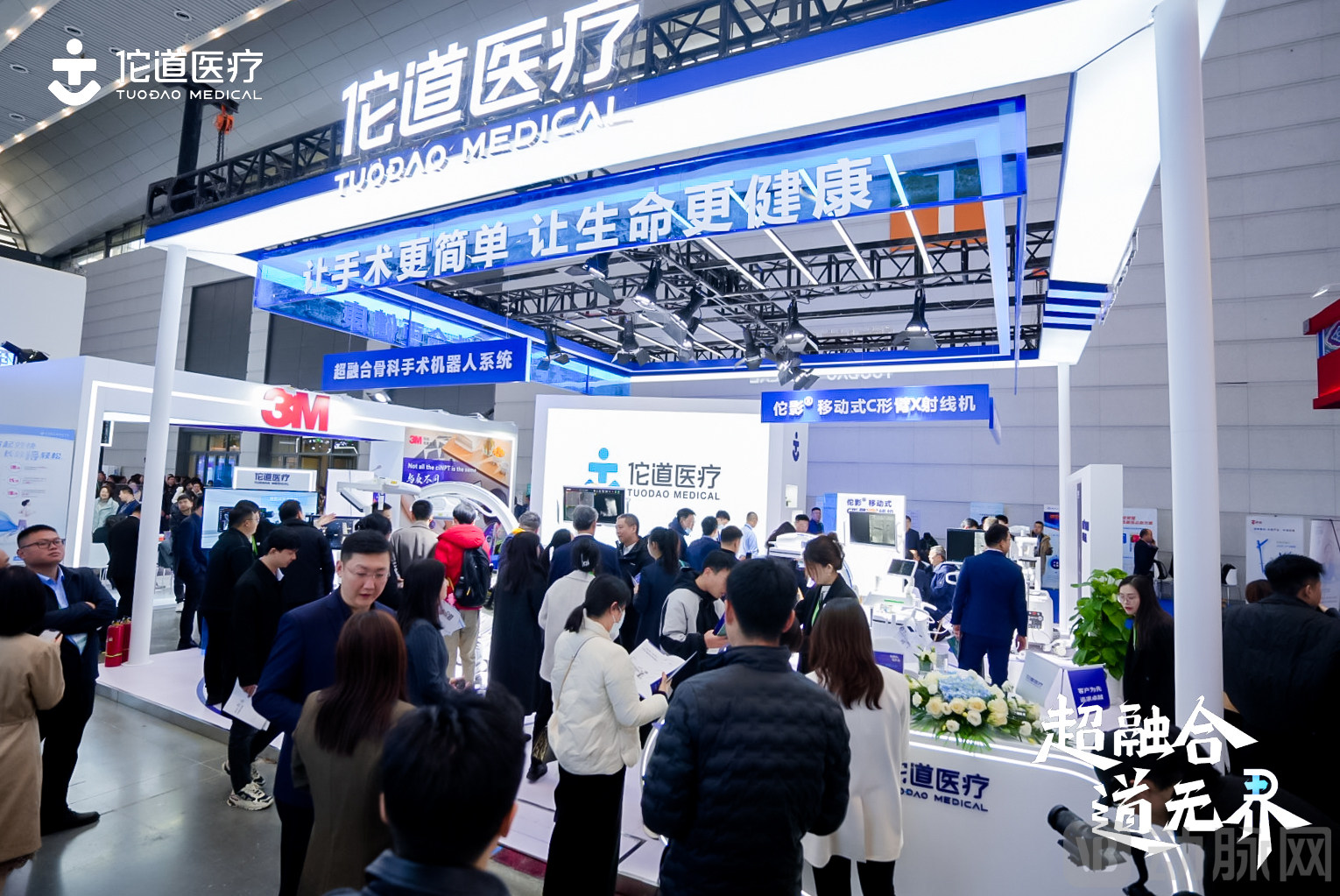
As an innovation leader in the field of surgical robotics, Tuodao Medical has developed a hyper-converged solution comprising “orthopedic surgical robots + intraoperative imaging equipment.” Building on its underlying technology platform, the company continues to expand its product lines of surgical robots and imaging devices, with related products receiving regulatory approvals in succession.Three New Products Have Received Certification This YearThe company has deeply cultivated the orthopedics sector, developing supporting equipment such as C-arms to meet the demands of robotic surgery and providing integrated solutions. Meanwhile, it is expanding horizontally across multiple clinical departments, striving to build a comprehensive surgical robot platform for all specialties and promoting precision and efficiency in clinical surgeries.
As population aging accelerates, the volume of clinical orthopedic surgeries is also growing rapidly. Minimally invasive techniques represent a major trend in orthopedic surgery, although they pose significant challenges in clinical practice. Orthopedic surgical robots serve as the surgeon’s “hands,” enabling greater procedural precision, while C-arm fluoroscopy systems act as the surgeon’s “eyes,” providing high-definition imaging. In particular, 3D C-arms offer stereoscopic imaging that better visualizes human anatomical structures and their spatial relationships with surgical instruments. The integration of these technologies is driving orthopedic surgery toward minimally invasive and precise interventions.
In most cases, clinical orthopedic surgical robots are paired with third-party 3D C-arm systems. However, existing C-arm products on the market are primarily designed for manual operation, and their underlying interfaces are not open to robotic companies. This results in poor interoperability, requiring physicians to manually adjust the equipment, which increases clinical operational complexity and prolongs surgical duration. Furthermore, while traditional C-arms focus on imaging quality, C-arms used in conjunction with surgical robots must also prioritize motion precision, controlling factors such as vibration during operation to avoid interfering with the robot’s movements.
Drawing on the experience of industry leaders such as Medtronic, who offer integrated solutions combining “surgical robots + intraoperative imaging devices,” domestic orthopedic companies in China have also begun to invest in the development of all-in-one systems in recent years. These companies are primarily either surgical robot manufacturers or medical imaging equipment providers. However, cross-disciplinary integration and innovation present high barriers to entry. Companies must not only master the core technologies and development capabilities for both orthopedic surgical robots and 3D C-arms, but also achieve seamless system integration between the two. The competitive moat for orthopedic surgical robots lies more in software, such as image recognition and motion control algorithms, whereas the barrier for C-arms is predominantly hardware-based, involving mechanical structure design and the production of key components.
Tuodao Medical has achieved first-mover and first-to-market advantages. During the clinical trials of its Tuoshou orthopedic surgical robot, the company identified the pain point of incompatibility between surgical robots and 3D C-arms. In 2021, it initiated the R&D of a 3D C-arm and spent nearly one year advancing its integration with the surgical robot in terms of structural design and software control. This ultimately resulted in the truly integrated Hyper-fusion orthopedic surgical robot system, delivering a “1+1>2” effect.
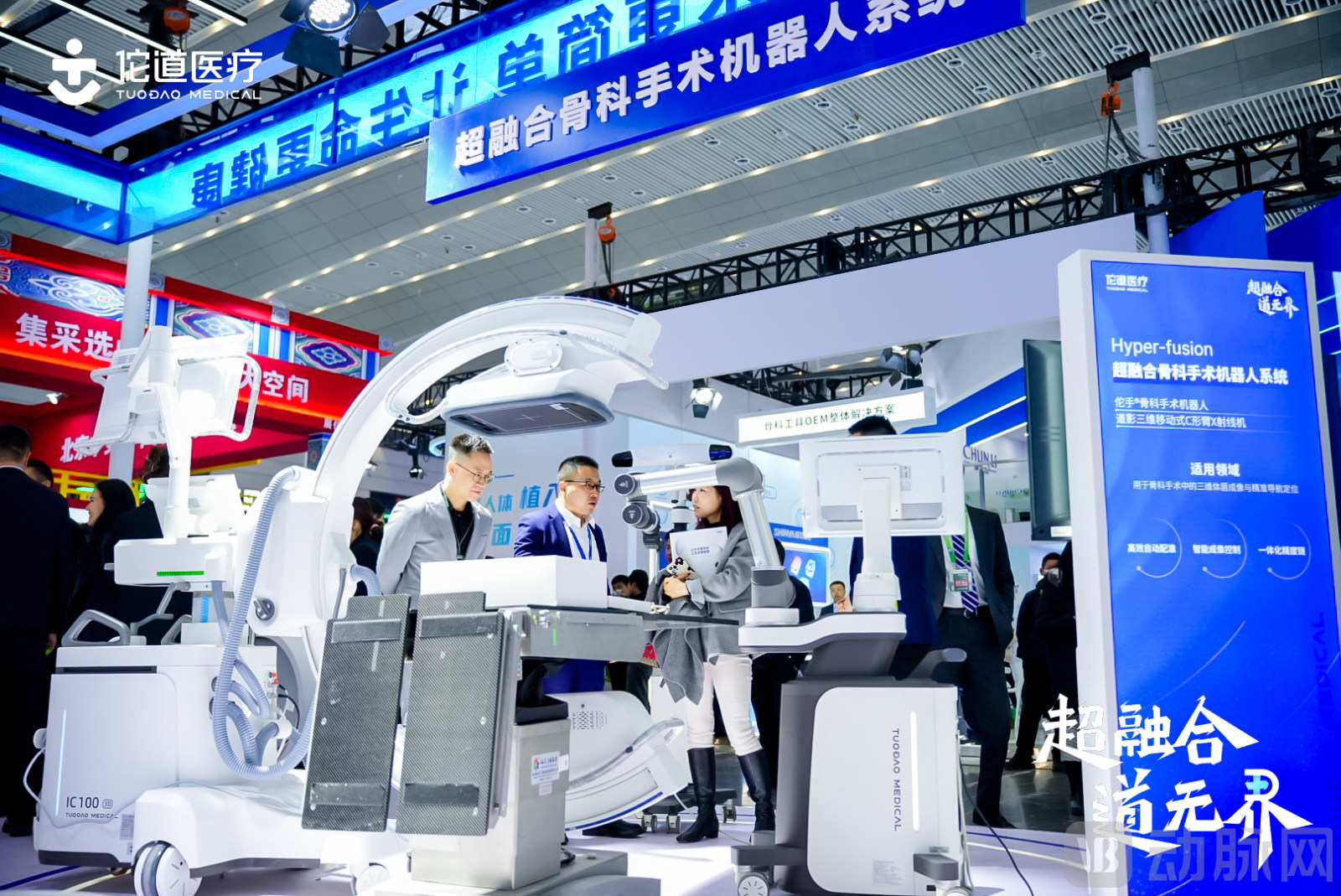
First is the breakthrough innovation on two “1”s. The Tuodao orthopedic surgical robot is highly integrated, compact in size, and offers high operational precision, with clinical positioning accuracy reaching the sub-millimeter level. The end-effector visual markers and channels of the robotic arm adopt an integrated design, avoiding issues associated with split designs such as complex sterilization procedures and displacement during disassembly and reassembly, thereby ensuring strong product stability. According toClinical trial results show that the Tuodao orthopedic surgical robot has achieved industry-leading performance in screw placement excellence rates and surgical precision.. The Daoying 3D Mobile C-arm features a 12-inchThird-Generation Flat Panel Detector, achieving an ultra-large 30×30 cm field of view and lossless 4K reproduction, while featuring10kW Ultra-High Power, achieving better resolution and continuous exposure time.
Next is the effective integration of the two “1”s.Tuodao Medical's Hyper-fusion hyper-converged orthopedic surgical robot system features a high degree of automation and simple operation. With one-click registration completed in as fast as 72 seconds, the system reduces robotic preparation steps while delivering high operational precision, thereby enhancing clinical consistency and surgical efficiency, and reducing surgical time.Meanwhile, the integrated structural design significantly reduces space requirements. Furthermore, the Hyper-fusion hyper-converged orthopedic surgical robot system lowers the barrier to entry for surgery and reduces system costs through its integrated design, thereby facilitating the widespread adoption of robotic orthopedic surgery at the primary care level.
Currently, the Tuodao orthopedic surgical robot and the Daoying 3D mobile C-arm have both received regulatory approval, and the Hyper-fusion hyperconverged solution has been progressively implemented in clinical settings.Installed or trialed at over 20 hospitals across China, including many top-tier tertiary hospitals and county- and district-level hospitals, receiving unanimous acclaim from experts. It is reported that in one county-level hospital, 80% of spinal surgeries utilize Tuodao Medical’s hyperconverged system.
Orthopedic surgical instruments are a core strength of Tuodao Medical, but the company is not limited to the orthopedic market. Driven by the clinical surgical needs for robotic systems,Tuodao Medical has strategically laid out its business across five major sectors: orthopedic surgical robots, laparoscopic surgical robots, puncture surgical robots, natural orifice surgical robots, and medical imaging equipment.。
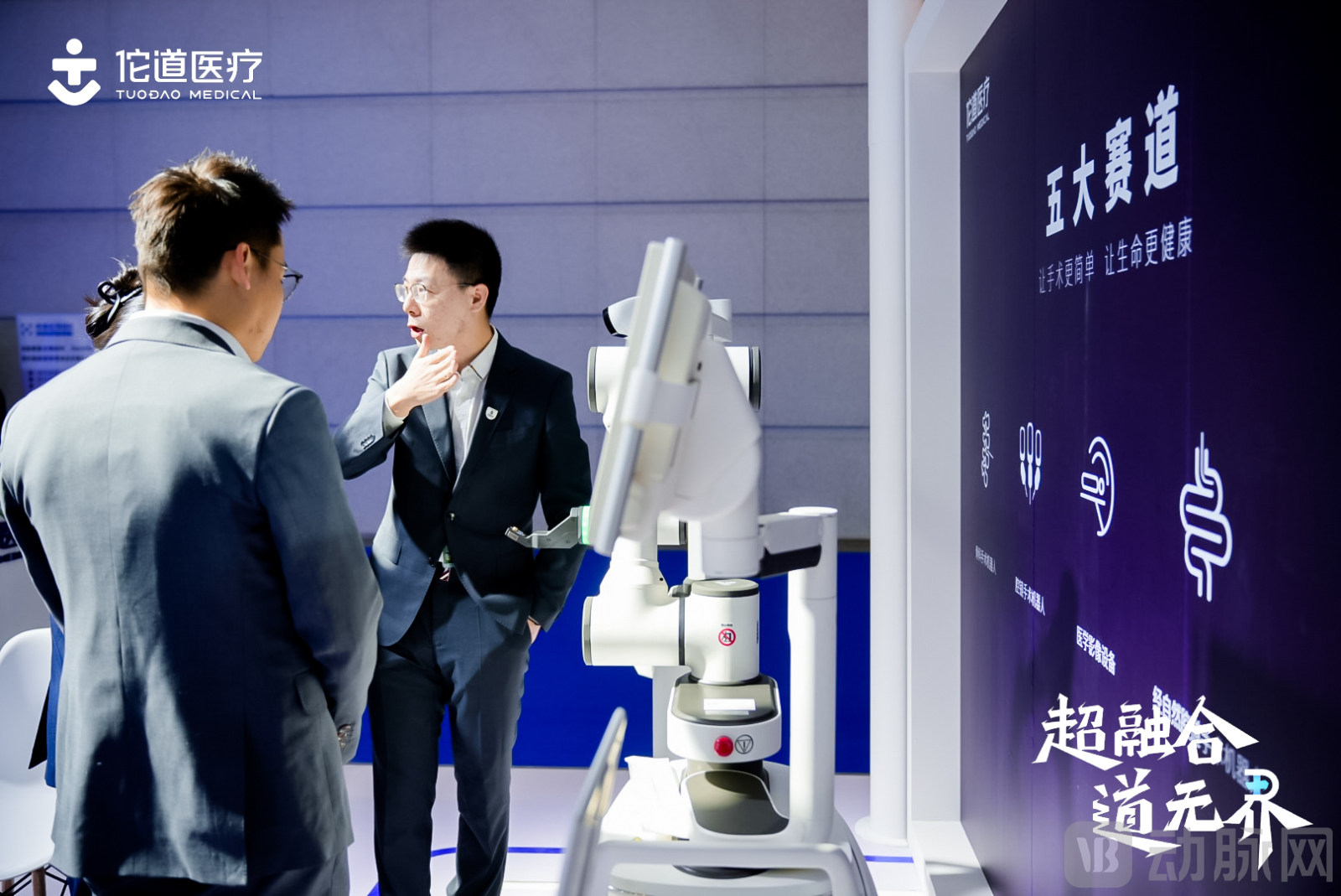
“Integration” and “Breakthrough” are the core philosophies guiding Tuodao Medical’s product research and development. In the field of medical imaging equipment, the company has integrated AI technology into intraoperative imaging, launching the Tuoying Mobile C-arm X-ray Machine. Driven by the clinical need for efficient and convenient operations,Tuo Ying C-arm features an all-in-one design, occupying only 1 m² of floor space and weighing just 250 kg, enabling flexible intraoperative transport.. Meanwhile, the Tuodao C-arm has achieved a unique design, first of allPlate rotated 45°, the axial imaging field of view is increased by 40%; secondly,Intraoperative Image Stitching, real-time display of long-segment imaging; thirdly,Wireless Cart, with real-time co-display of images.
Currently, small C-arm products on the market are limited by detector size, resulting in a restricted field of view (FOV). However, when examining areas such as the bilateral pelvis and entire lower extremities, physicians require a larger FOV, necessitating multiple imaging acquisitions during surgery. Tuodao Medical leverages AI technology to achieve intraoperative image stitching, providing physicians with more comprehensive imaging and reducing surgical time. The TuoYing mobile C-arm X-ray system received regulatory approval in July this year and is poised for rapid market expansion through Tuodao’s distribution channels.
Furthermore, Tuodao Medical is committed to providing robotic solutions for medical users across all clinical departments. Building on its surgical robotics technology platform, the company “integrates” diverse clinical application scenarios to deliver breakthrough solutions. The company’s Tuoshu percutaneous puncture surgical robot received regulatory approval in September of this year.
Clinical percutaneous puncture is technically challenging. Physicians must achieve precise needle targeting of lesions without direct visualization of the internal anatomy of organs. The mechanical deformation and displacement of human soft tissues and organs under force during instrument interaction can compromise procedural accuracy, while patients’ dynamic respiratory movements further affect lesion localization. Consequently, percutaneous puncture heavily relies on the operator’s clinical experience and typically requires multiple CT scans to adjust the puncture angle and depth.
In addition to meeting the requirements for precise navigation, positioning, and motion control algorithms, the Tuodao percutaneous puncture surgical robot also employs an algorithm capable of predicting and tracking patient respiratory curves. By integrating optical and pressure sensing technologies, it predicts respiratory movements and alerts physicians to the optimal timing for needle insertion.. This product is used in conjunction with CT equipment to assist physicians in formulating puncture plans, thereby improving the success rate of single-needle insertion and reducing intraoperative radiation exposure for both patients and medical staff.
With the widespread adoption of low-dose spiral CT, the detection rate of pulmonary nodules continues to rise, driving increased demand for lung cancer diagnosis. While lung tissue biopsy remains the gold standard for diagnosing lung cancer, percutaneous puncture surgical robots can effectively improve the success rate of lung biopsies and avoid complications such as pneumothorax and hemorrhage. Meanwhile, with the growing acceptance of precision medicine concepts, the volume of tumor ablation procedures is increasing, which will further promote the application of percutaneous puncture surgical robots.
At this COA Congress, Tuodao Medical unveiled the “Zhihe” Open Precision Navigation and Positioning Technology Platform, which integrates core functional modules and component development technologies for surgical robots, intraoperative imaging equipment, and other systems.Building on this foundation, Tuodao Medical can rapidly translate clinical needs into product solutions. Meanwhile, through its open platform, Tuodao Medical can collaborate with industry partners and clinical experts to create a new smart surgical ecosystem centered around robotics.
“Zhihe” represents a critical step in Tuodao Medical’s strategy to build a platform-based ecosystem. Currently, surgical robots are characterized by high unit costs and low utilization rates. From the perspective of clinical benefit, there are increasing demands for greater integration of surgical robots and enhanced intelligence in operating rooms. Surgical robots are gradually expanding their coverage to more stages of clinical diagnosis and treatment, while complementary surgical instruments are being launched successively.Integration is a major trend, ranging from the integration of hardware and software across devices to the convergence of the operating room ecosystem.。
Tuodao Medical is developing a carbon fiber operating table specifically designed for robotic surgery. The passive version of this operating table has already obtained Class I medical device certification, and the electric carbon fiber operating table is expected to receive Class II certification next year, integrating into the orthopedic surgical robot hyper-converged system. In addition to equipment integration, Tuodao Medical will also advance data fusion. Beyond intraoperative 3D C-arm imaging, the company will integrate preoperative CT and MRI scans, covering multi-dimensional information to provide more comprehensive support for surgeons’ intraoperative decision-making, thereby enabling them to perform procedures with greater efficiency and precision.
In addition to strengthening its internal capabilities, Tuodao Medical will continuously expand external collaborations, uniting industry, academia, and research institutions to co-build an intelligent robotic surgery ecosystem. “With combined strength, no challenge is insurmountable; with collective wisdom, no goal is unattainable!”