

Northeast China Emerges as a Medical Innovation Hub with 8 IPOs in Three Years

He Eye
Ophthalmology Medical Service Provider
Northeast China is breaking the stereotype that “investment does not cross the Shanhai Pass” in the field of medical innovation.
VCBeat has observed that,From 2021 to 2023, eight medical innovation enterprises in the three northeastern provinces of China successfully went public, breaking the record of zero listings during the 2018–2020 period and marking the best performance since 2000.These eight companies are Kingchem (Liaoning) Life Science Co., Ltd., Voolga, Liaoning Yisheng Biopharma Co., Ltd., Chunguang Pharmaceutical Packaging, He Eye, Jilin Province Xidian Pharmaceutical SciTech Development Co., Ltd, CDBIO, and Changchun Bcht Biotechnology Co. Among them, the first three listed on the secondary market this year.
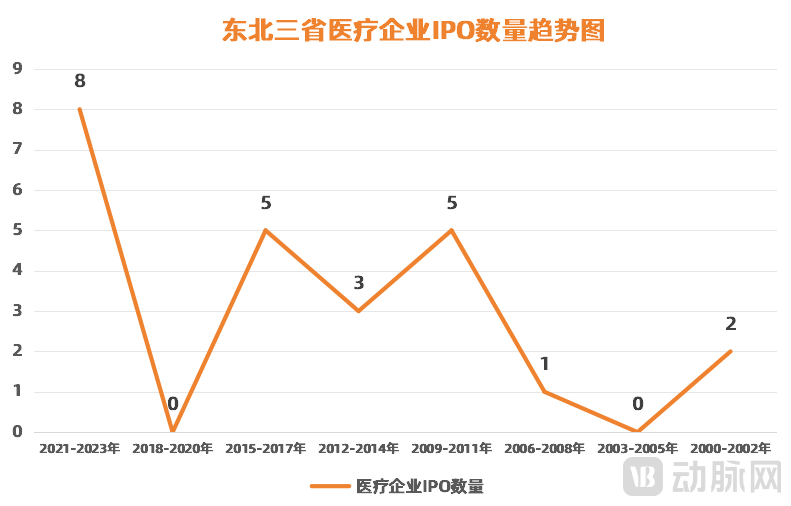 (Trend Chart of IPOs by Medical Enterprises in the Three Northeastern Provinces Data Source: VCBeat Database)
In the primary market, innovative healthcare enterprises in Northeast China are emerging.17 companies have secured financing in the past three years, with its backers including renowned institutions and enterprises such as OrbiMed, Neusoft Capital, Hillhouse Ventures, Matrix Partners China, Jiangsu Hengrui Medicine, Goldstone Investment, Legend Capital, Shenzhen Capital Group, Tonghe Chengfu Capital, Sino-Ocean Capital, and Joying Medical Fund.
“The Northeast once boasted a solid foundation in the pharmaceutical industry and made outstanding contributions to China’s biopharmaceutical sector,” an investment manager at an RMB-denominated fund told VCBeat. “Despite a prolonged period of stagnation, the region is seeing a surge in emerging enterprises and initial public offerings (IPOs), particularly in medical innovation, continuously projecting a more innovative and inclusive image to the outside world.”
A more significant signal comes from the intensive research visits and strategic deployments by senior leadership in Northeast China during the second half of this year, as the framework for a new round of comprehensive revitalization of the region becomes increasingly clear. Among these, “Technological Innovation Is Key to Driving the Comprehensive Revitalization of Northeast China”has become an important direction. This means that a broad range of innovation-driven opportunities is on the horizon.
At this new juncture, how will Northeast China write a new chapter in the resurgence of its biopharmaceutical industry?
Northeast China, once hailed as the “Eldest Son of the Republic,” holds a pivotal place in China’s industrial development history as the cradle of the nation’s industry. In the pharmaceutical sector, for instance, Northeast China has given rise to renowned enterprises such as Harbin Pharmaceutical Group, Northeast Pharmaceutical Group, Sunflower Pharmaceutical Group, and Jilin Aodong Pharmaceutical Group, all of which have consistently ranked among the “Top 100 Chinese Pharmaceutical Companies.”
However, from the onset of state-owned enterprise reforms in the late 1990s to the emergence of new technological waves such as the internet and intelligent manufacturing, Northeast China failed to seize the opportunities for more significant industrial upgrading, leading to a prolonged period of “stagnation.” Compounded by an initially poor business environment, the saying “no investment beyond the Shanhai Pass” has become a prevalent prejudice against the region.
Things are changing. The aforementioned investment manager told VCBeat that he clearly feltIn recent years, an increasing number of investors have been heading to Northeast China.“Whenever I travel to Northeast China for business trips and partnership negotiations, I always encounter peers from the industry. In addition, the business environment in Northeast China has gradually improved over the past two years, with corporate management becoming more standardized. The development of industries has also reflected a trend toward specialization and clustering. Taking the biopharmaceutical sector as an example, well-operated pharmaceutical industrial parks have emerged along the corridor from Harbin in the north to Dalian in the south.”
On one side, investment institutions are gradually pouring in; on the other, Northeast China boasts a solid foundation in the biopharmaceutical industry and engineering manufacturing. This combination provides fertile ground for the growth of high-quality medical innovation projects.
First,Northeast China is home to numerous institutions of higher learning and scientific research institutes., which is one of the key reasons for its long-term achievements in medical innovation: Heilongjiang Province is home to Heilongjiang University of Chinese Medicine, Harbin Medical University, Mudanjiang Medical University, Harbin Institute of Technology, and Harbin Engineering University; Jilin Province hosts Jilin University, Changchun University of Chinese Medicine, Jilin Medical University, and the Changchun Institute of Applied Chemistry, Chinese Academy of Sciences; and Liaoning Province includes China Medical University, Shenyang Pharmaceutical University, Dalian University of Technology, Liaoning University of Traditional Chinese Medicine, Dalian Medical University, and Jinzhou Medical University. The clustering of these institutions has provided a steady stream of talent and translational projects to the industry.
Take Harbin-based Shengnuo Medical, which secured tens of millions in Pre-A financing this July, as an example. Its sonodynamic therapy stems from the 15-year research achievements of Professor Tian Ye—a Ph.D. in Cardiovascular Medicine from Harbin Medical University and a postdoctoral fellow in Materials Physical Chemistry at Harbin Institute of Technology—in the cardiovascular field. Leveraging sonodynamic therapy, Shengnuo Medical has developed its first innovative medical device: the Intelligent Sonodynamic Diagnosis and Treatment System for Arterial Plaques.
Furthermore, after decades of accumulation,Northeast China boasts a comprehensive layout for its biopharmaceutical industry, with a complete industrial chain.Taking Harbin New Area as an example, the region boasts multiple mature industrial clusters, including chemical pharmaceuticals, biological products, traditional Chinese medicine (TCM), biotechnology pharmaceuticals, and foods for special medical purposes (FSMP). Similarly, by November of this year, Changchun New Area had gathered 55 national-level R&D institutions, five national key laboratories, and 100 provincial- and ministerial-level key laboratories, while collaborating with more than ten academicians from the Chinese Academy of Sciences and the Chinese Academy of Engineering in the field of biotechnology, thereby establishing a robust ecosystem for biomedical research and industrialization.
Not only that,Policy-wise, Northeast China has also been making frequent efforts.For instance, Heilongjiang Province issued the “Heilongjiang 14th Five-Year Plan for Bioeconomy Development” and “Several Policy Measures of Heilongjiang Province to Support High-Quality Development of the Bioeconomy” last year, proposing that by 2025, the bioeconomy will achieve doubled growth and become a strong driving force for high-quality development across the province. Jilin Province and Liaoning Province have also rolled out multiple significant policy documents in the past two years.
Where Good Projects Are, Investors Follow, which is a consensus in the venture capital industry. The Northeast’s increased investment in factors such as policy and talent is all aimed at fostering more and better medical innovation projects. When promising projects emerge, VC/PE firms will naturally flock to them.
From the data perspective,An increasing number of promising healthcare innovation projects in Northeast China are coming to light.So far this year, companies such as Shenda Endoscopy, Sonomed Medical, Bingshan Songyang, Chenhui Medical Aesthetics, Jiyuan Biology, and Huisheng Biology have secured financing. These enterprises span various sectors, including biopharmaceuticals, innovative medical devices, and healthcare services, and are predominantly in their early stages.
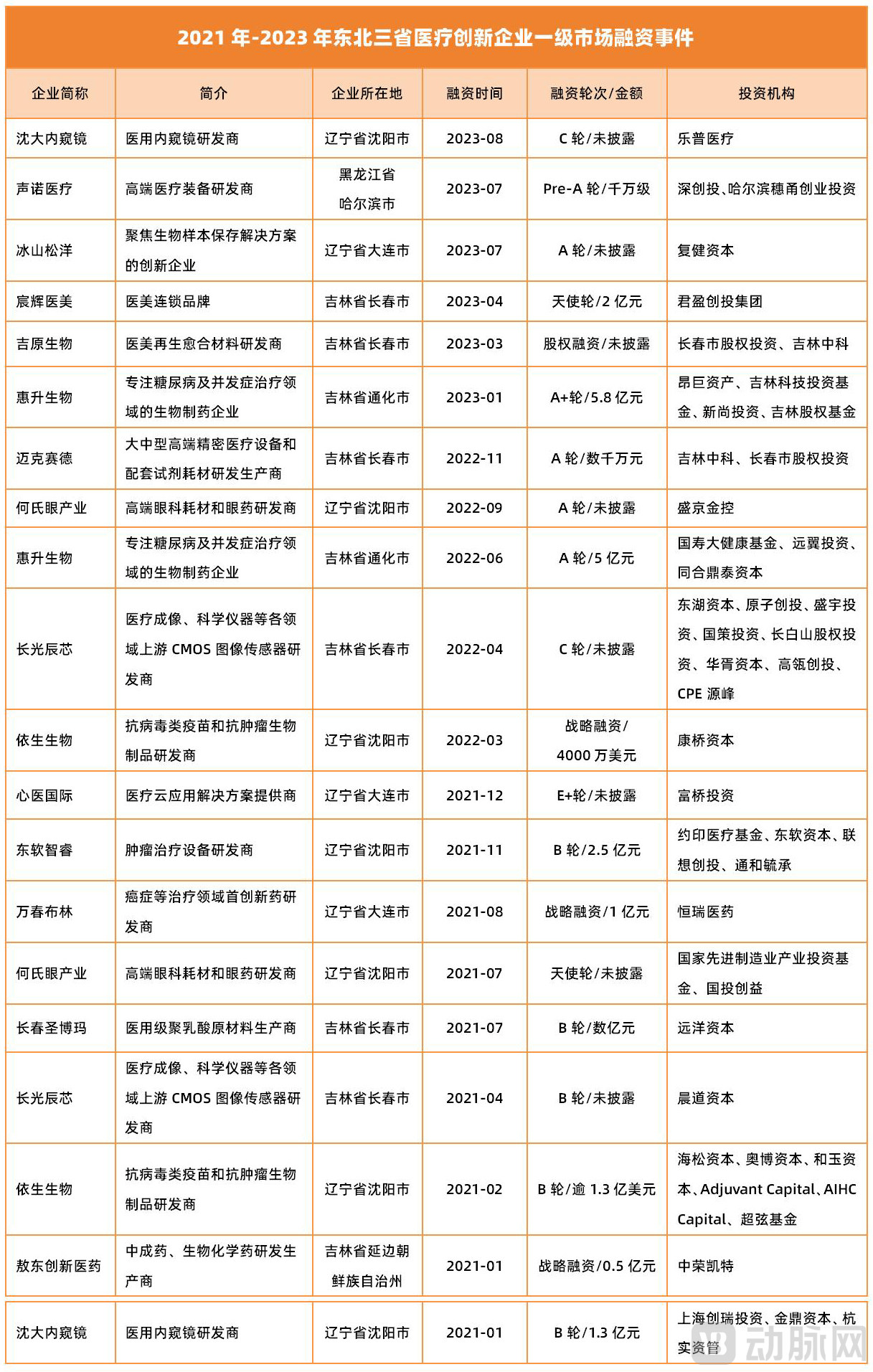
(Data source: VCBeat Orange Database, incomplete statistics)
Taking HuiSheng Biopharma as an example, it is a biopharmaceutical company focused on diabetes and its complications. It currently has a comprehensive portfolio of over 40 products for diabetes and its complications, covering full lines of second-, third-, and fourth-generation insulins and analogs, innovative products targeting SGLT-2, GLP-1, and other targets, as well as glucose-lowering drugs and complication treatments with various other mechanisms. Among these, JiaGelieJing (an SGLT-2 inhibitor) developed by HuiSheng Biopharma was submitted for marketing approval in China in 2022.
Take Chenhui Medical Aesthetics as another example. It adopts an operational model of “Regional General Hospital + Branch Hospitals + Beauty Salon Franchises,” and currently operates 16 directly-owned medical aesthetic institutions and over 1,000 service centers. Specifically, the Regional General Hospital is positioned as a leading medical aesthetic institution in the local area in terms of both scale and clinical standards. The platform of the Regional General Hospital supports physicians’ clinical skills and academic standing, builds brand influence within the region, and provides comprehensive technical output to branch hospitals. In turn, branch hospitals can rapidly expand brand visibility, accumulate customer resources, and capture market share in a relatively short period.
Shenda Endoscopy, established in the 1980s, is a technology-driven enterprise in China that was among the earliest to engage in the R&D, manufacturing, and sales of medical rigid endoscopes, minimally invasive surgical instruments, and medical electrical products. It is also the developer and manufacturer of China’s first set of fiber-optic cystoscopes, arthroscopes, and resectoscopes, as well as the innovator of the world’s disposable protection system for flexible endoscopes. Over its approximately 40 years of development, Shenda Endoscopy’s products have filled nearly 20 domestic technological gaps.
But that’s not all. Many industry insiders have stated,In Northeast China, particularly in Changchun, Dalian, Shenyang, and Harbin, there are numerous high-quality projects that rarely receive media exposure and operate quietly.
Although these high-potential enterprises are still in their early stages, they are poised to become a significant force driving medical innovation in Northeast China.
In addition to the growing activity in the primary market, healthcare innovation enterprises in Northeast China are also experiencing robust momentum in the secondary market.
As previously mentioned, if we take a three-year observation period, Northeast China is entering a harvest period for medical IPOs during the 2021–2023 timeframe:Eight companies have successfully listed on the secondary market, reaching a historical high.
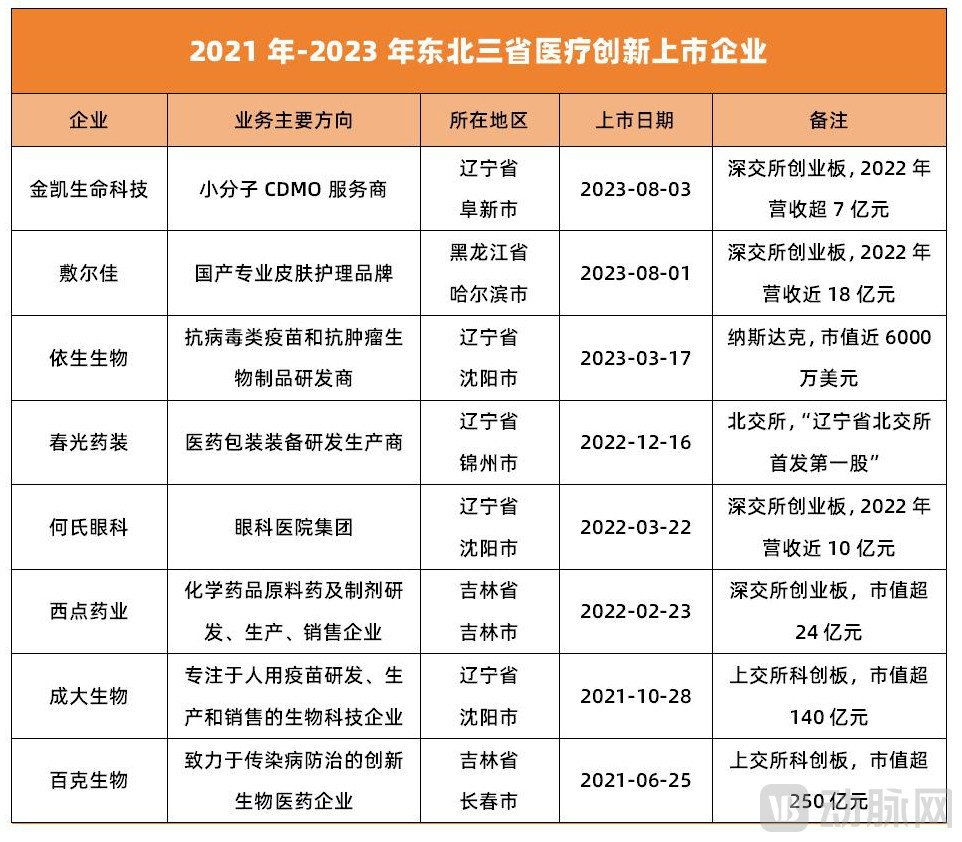
(Medical Innovation Enterprises Listed in the Three Northeastern Provinces over the Past Three Years; Data Source: VCBeat Database)
From the perspective of specific projects, unlike previous pharmaceutical companies in Northeast China that focused more on active pharmaceutical ingredients (APIs), generic drugs, and proprietary Chinese medicines, the companies going public this time are more inclined toward currently hot sectors such as biologics, CRO/CDMO, and medical aesthetics.
For example,Kingchem Life Science, located in Fuxin City, Liaoning ProvinceIt is a small-molecule CDMO service provider catering to clients in the global life sciences sector. According to its prospectus, Kingchem Life Science’s partners include major international pharmaceutical and biopharmaceutical groups such as Bayer, Johnson & Johnson, Novartis, Sanofi, Gilead, AstraZeneca, Pfizer, Merck, GSK, Eli Lilly, Takeda, and Boehringer Ingelheim. In addition, Kingchem Life Science provides multinational chemical groups such as BASF with supporting R&D and manufacturing services for pesticide intermediates, covering the entire spectrum from product testing to commercial application.
Voolga, located in Harbin, Heilongjiang ProvinceOperating in the medical aesthetics sector, Voolga has established a product portfolio comprising medical device-class dressings and functional skincare products. Its offerings are primarily centered on dressings, patches, and masks, while also encompassing other formats such as toners, serums, lotions, sprays, and freeze-dried powders. Since commencing independent operations in 2017, Voolga has captured the attention of mainstream consumers with its flagship “Medical Sodium Hyaluronate Repair Patch.” In 2022, the company generated revenue exceeding RMB 1.7 billion, rapidly emerging as the first publicly listed company to dominate the medical aesthetic mask market.
Changchun Bcht Biotechnology Co., located in Changchun, Jilin ProvinceFocusing on the research and development of biopharmaceuticals for the prevention and control of infectious diseases, its proprietary live attenuated varicella vaccine has undergone four generations of upgrades. It is the first varicella vaccine in China to eliminate animal-derived gelatin and the first globally with a shelf life of up to 36 months, maintaining one of the highest market shares in China for many years. In addition, Changchun Bcht Biotechnology Co. has launched a live attenuated influenza vaccine administered via nasal spray, filling the market gap for such vaccines in China. Driven by strong market performance, the company’s current market capitalization exceeds RMB 25 billion.
Meanwhile, the companies queuing for IPO includeSiZheRui, a domestic surgical robot unicorn enterprise based in Harbin, having already passed the review of the Shanghai Stock Exchange Listing Committee. Leveraging technology transfer from Harbin Institute of Technology, the company’s core technical team is one of the earliest research groups in China engaged in the R&D of surgical robots. It has currently developed and established a comprehensive portfolio of surgical robot products, including laparoscopic surgical robots, transurethral flexible surgical robots, transoral surgical robots, cochlear implant surgical robots, and spinal endoscopic surgical robots.
The surge in corporate IPOs or the wait for listings is also linked to the growing emphasis placed by government departments in China’s three northeastern provinces on facilitating enterprise listings.VCBeat’s analysis reveals that all three northeastern provinces have formulated specific plans and targets for corporate IPOs.
For example, in October 2019, Heilongjiang Province launched the “Work Plan for Accelerating Corporate Listings in Heilongjiang Province,” aiming to establish and improve a full-cycle mechanism for promoting corporate listings—encompassing “incubation, restructuring, tutoring, application, listing, and strengthening”—within approximately three years, under the initiative named the “Lilac Plan.” In early 2022, the Heilongjiang Provincial People’s Government again issued the “Opinions on Further Accelerating Corporate Listings in Heilongjiang Province” to expedite the process of corporate listings.
Both Jilin Province and Liaoning Province have successively introduced policies to encourage and support corporate initial public offerings (IPOs). For instance, the “14th Five-Year Plan for the Development of the Financial Industry in Jilin Province” proposes a goal to quadruple the number of newly added A-share listed companies by 2025. Liaoning Province has released the “Action Plan for Doubling the Number of Listed Companies in Liaoning Province,” aiming to increase the number of listed companies within the province to more than 120 by the end of 2025.
“Northeast China has achieved notable success in the financial sector in recent years, with a number of high-quality companies successfully completing initial public offerings (IPOs) and emerging as local chain leaders and industry pioneers, thereby gradually establishing a robust industrial ecosystem.“An investor who wished to remain anonymous told VCBeat, ‘However, compared with the Yangtze River Delta region, the Northeast still has a relatively scarce reserve of companies poised for IPOs. Therefore, in the coming period”The three northeastern provinces need to make greater efforts in both the quantity and quality of their reserve pool of companies preparing for initial public offerings.”
The Journey of Innovation Is Long. Despite the many challenges that lie ahead, Northeast China has taken an important step forward.
In recent years, the biopharmaceutical industry has garnered significant attention from local governments across China, with increased investment efforts. Among these,Cultivating emerging industrial clusters through “fund-of-funds investment promotion” has become a consensus among regions.Northeast China is no exception.
In June this year, Dalian, Liaoning Province, issued the “Administrative Measures for the Dalian Municipal Government-Guided Fund of Funds.” According to the Measures, Dalian City will establish the Dalian Municipal Government-Guided Fund of Funds, with an initial scale of RMB 10 billion, primarily invested in key industrial sectors such as technological innovation and strategic emerging industries.
Earlier, Changchun, Jilin Province’s RMB 30 billion fund of funds invested in three funds, including the Dongzheng Gaoxin Pharmaceutical Industry Investment Fund. Meanwhile, Heilongjiang Financial Holdings Group jointly launched the SCGC Heilongjiang Industrial Fund with Shenzhen Capital Group (SCGC), focusing on investments in regionally advantageous sectors such as biopharmaceuticals, chemicals, and new materials.
In addition to the government’s promotion of fund-of-funds, various industry stakeholders are also accelerating their collaborative efforts.On November 17, at the “High-End Forum on Innovation in the Upstream Biopharmaceutical Industry of the Three Northeastern Provinces,” Changchun New Area took the lead in collaborating with the Jilin Provincial Institute for Drug Control, Changchun Bcht Biotechnology Co., and GeneScience Pharmaceuticals Co., Ltd., among others.Proposal for the Establishment of the “Northeast China Biopharmaceutical Industry Alliance”, to build a biopharmaceutical industry ecosystem featuring demand alignment, business linkage, market integration, and operational synergy, thereby accelerating the integrated development of the three Northeast provinces and enhancing the overall competitiveness of the biopharmaceutical sector in the Northeast region.
It is evident that Northeast China is increasingly strengthening its support for medical innovation and enhancing collaborative efforts. Based on this trend, multiple investors and industry experts expressed strong optimism about the region’s future development prospects in interviews with VCBeat. However, they also acknowledged that considerable work remains to be done, which can be broadly summarized into three key areas.
First, foster an innovative atmosphere while respecting market dynamics.Specifically, in nurturing healthcare innovation enterprises, it is essential to break down entry barriers and local protectionism in certain niche sectors, enhance companies’ responsiveness and adaptability to changes in market demand, and maximize the innovation potential of domestic enterprises. A more vibrant innovation ecosystem will not only benefit the development of local businesses but also provide greater momentum for future investment promotion and capital attraction.
Second, continue to prioritize the recruitment of high-end talent.Medical innovation demands a substantial workforce, particularly high-level talent. Therefore, it is essential to introduce more preferential policies in areas such as research funding, startup loans, professional title evaluation, housing subsidies, and employment and schooling opportunities for spouses and children, so as to attract and retain talent.
Third, efforts should center on competitive industrial chains to cultivate more leading enterprises and chain-dominating firms, thereby fostering industrial synergy.For local governments and enterprises, it is essential to recognize local advantageous industries and endowments, identify industrial sectors that align with the evolution of frontier technologies for focused development, thereby mitigating industrial risks to a certain extent, while also integrating resources to maximize regional benefits.
For instance, from a broader regional perspective, Heilongjiang and Liaoning provinces possess solid foundational advantages in proprietary Chinese medicines and chemical drug formulations, while Jilin Province holds a first-mover advantage in vaccines and gene therapy drugs. Therefore, innovative enterprises in Northeast China can strengthen, supplement, and fortify these industrial chains to achieve faster and higher-quality development.
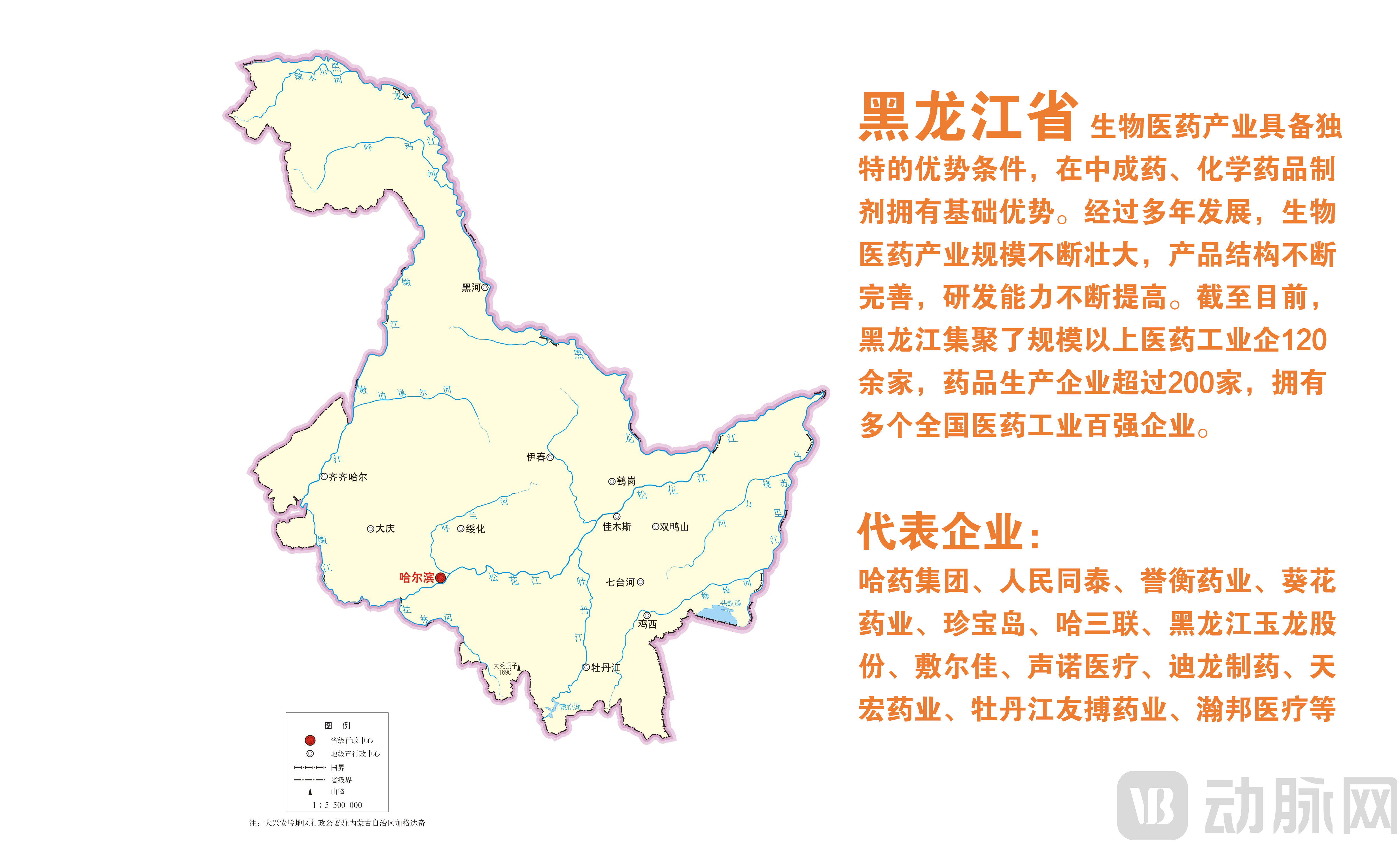
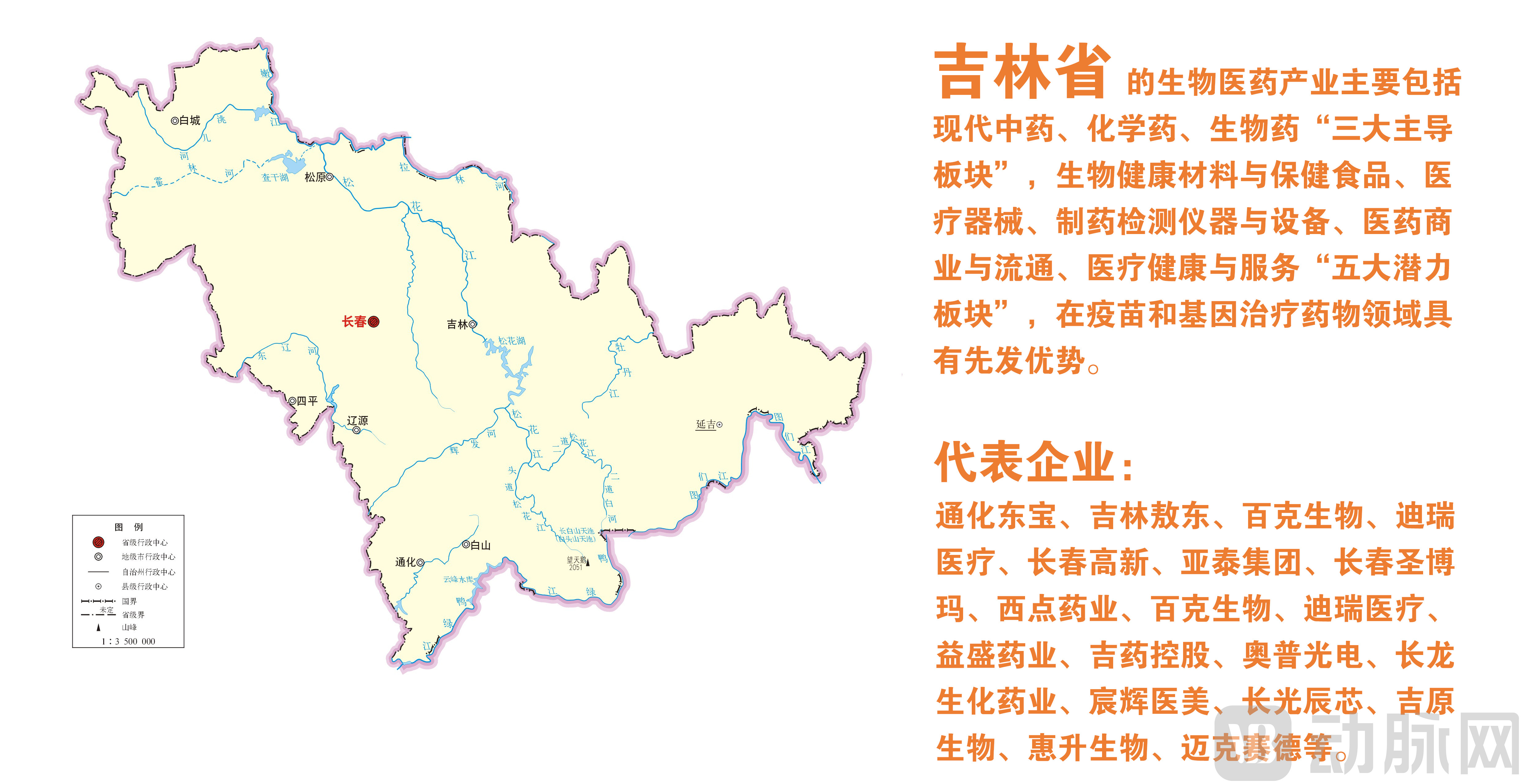
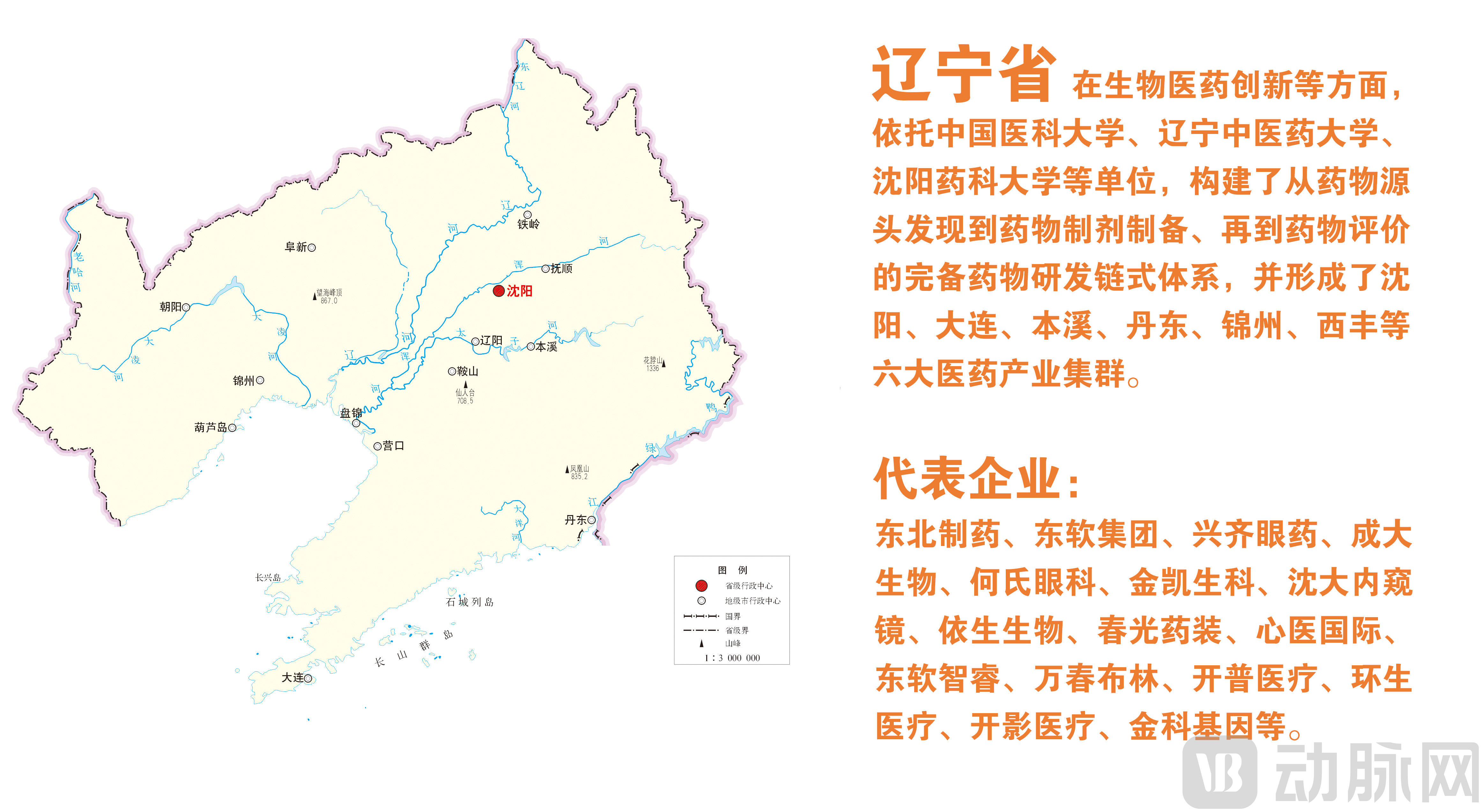
(Basic Overview of the Biopharmaceutical Industry and Representative Enterprises in Northeastern Provinces; Map Source: National Platform for Common Geospatial Information Services; Graphic by VCBeat)
Currently, the development of local pharmaceutical industries in China is in full swing. With multiple players entering the market, a new wave of innovation continues to surge, further expanding the growth potential of the biopharmaceutical industry.
In this process, the medical innovators forging ahead are bound to leave a brilliant chapter in the story of the resurgence of Northeast China’s pharmaceutical industry.