

Changmugu® Leverages AI to Digitally Transform Orthopedic Care with Intelligent Implant Matching, Reaching Deep into Grassroots Hospitals

Longwood Valley
Developer of Orthopedic Artificial Intelligence and Surgical Robot Solutions
Four years later, the “22nd Academic Conference of Orthopaedics of the Chinese Medical Association and the 15th COA Academic Congress” was successfully held in Xi’an, China, in late November 2023.
During the conference, Beijing Longwood Valley MedTech Co., Ltd. (hereinafter referred to as: Longwood Valley®) with “AIJOINT,” which had just obtained China’s first Class III registration certificate for an innovative AI-assisted orthopedic treatment medical device in late October®"Joint Replacement Surgery Simulation Software" Debuts at COA 2023.

COA2023 Longwood Valley®Booth
From the perspective of the conference theme “Innovation and Translation,” as China’s first original surgical simulation software for “AI-assisted total hip and total knee arthroplasty” with fully independent intellectual property rights, this product fills a global technological gap in AI-based 3D surgical simulation within orthopedic treatment. It liberates surgical procedures from dependence on the surgeon’s individual expertise, providing a replicable implementation model to enhance grassroots medical capabilities and promote the equitable distribution of high-quality medical resources.
During the exhibition, Longwood Valley®The on-site demonstration of the independently developed AI-powered comprehensive digital orthopedics solution attracted numerous experts in the fields of joint, spine, trauma, and sports medicine, such asProfessor Pei Fuxing from West China Hospital, Sichuan University; Professor Zhang Xianlong from the Sixth People’s Hospital Affiliated to Shanghai Jiao Tong University; Professor Chai Wei from the Department of Orthopedics, Chinese PLA General Hospital; Professor Sheng Puyi from the First Affiliated Hospital, Sun Yat-sen University; Professor Fu Kun from the First Affiliated Hospital of Hainan Medical University; Professor Li Zhong from the Affiliated Hospital of Southwest Medical University; Professor Sun Li from Guizhou Provincial People’s Hospital; Professor Guo Chang’an from Zhongshan Hospital Affiliated to Fudan University; Professor Lv Songcen from the Second Affiliated Hospital of Harbin Medical University; and Professor Zhang Chunlin from Shanghai Tenth People’s HospitalWe look forward to your visit.
Participants generally agreed that AIJOINT®Joint Replacement Surgery Simulation Software is a forward-looking, globally leading medical technology solution that helps improve the surgical skills of primary-care orthopedic surgeons and alleviates practical issues such as the scarcity of orthopedic medical resources at the primary care level.
Joint replacement surgery is a procedure requiring millimeter-level precision, and the accuracy of preoperative planning is one of the key factors determining its success.
Professor Pei Fuxing of West China Hospital, Sichuan University, stated, “Joint arthroplasty helps precisely restore patients’ joint structure and function through resection and reconstruction, osteotomy and reconstruction, and reduction and reconstruction. In traditional orthopedic surgery, imprecise execution during these three reconstructive steps often leads to deviations in reconstruction alignment, causing a series of complications that hinder postoperative recovery. Therefore, preoperative planning is crucial for orthopedic surgeries. It can be said that successful preoperative planning means half the success of the surgery.”
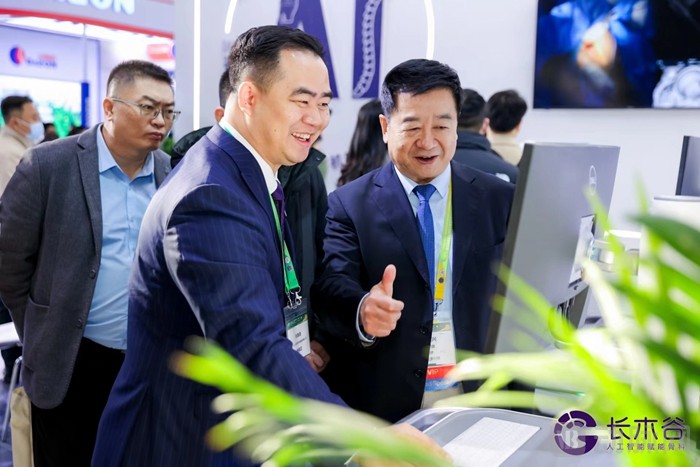 Right: Professor Pei Fuxing of West China Hospital, Sichuan University; Left: Longwood Valley®Chairman Dr. Zhang Yiling
Currently, most hospitals in China still widely use X-ray film-based simulation measurements or digital 2D template measurements for preoperative planning. However, objective factors such as inconsistent magnification rates of 2D images and non-standardized projection angles during imaging can compromise the accuracy and efficiency of preoperative planning, thereby increasing surgical risks.
The “outdated” nature of surgical tools forces orthopedic surgeons to mentally visualize models and rely on subjective experience to determine critical surgical parameters, such as osteotomy angles and ranges, as well as the positioning of implants, thereby making it difficult to ensure surgical precision and standardization.
“Due to variations in physicians’ experience, it is not uncommon in clinical practice for the materials selected during preoperative planning to differ from the trial implants used intraoperatively. This is particularly true for primary-care hospitals, where limited practical experience often means that joint replacement surgeries are performed without adequate preoperative planning, relying instead on intraoperative improvisation—a ‘crossing the river by feeling the stones’ approach that significantly increases surgical risk,” stated Professor Sun Li of Guizhou Provincial People’s Hospital.
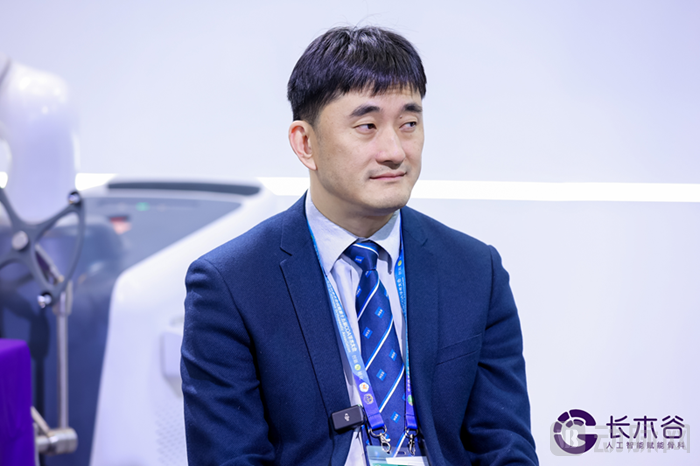
Professor Sun Li, Guizhou Provincial People's Hospital
Furthermore, due to the low reproducibility and high risk inherent in joint replacement surgery, multiple series and models of prosthetic implants are typically prepared preoperatively for each case in the absence of precise surgical planning. This allows surgeons to perform repeated trial reductions and adjustments intraoperatively, rather than relying on a one-to-one preparation strategy with precise matching. This approach not only increases the burden of preoperative preparation for surgeons and reduces operating room efficiency, but also elevates the incidence of postoperative complications such as joint instability, malalignment, and leg length discrepancy, thereby imposing additional economic burdens on patients.
Regarding the rapid advancement of artificial intelligence (AI) technology, Professor Sheng Puyi from The First Affiliated Hospital of Sun Yat-sen University shares this sentiment: “The evolution of surgery is inseparable from innovation in surgical tools. Benefiting from the technologies of the Fourth Industrial Revolution, frontier technologies led by AI are profoundly impacting people’s lives and reshaping the future of orthopedic surgery. They are driving orthopedic procedures toward greater precision, digitalization, and intelligence, thereby improving both short-term and long-term patient outcomes.”
Next, when discussing AIJOINT®of innovative value,Professor Sheng Puyi stated: “Longwood Valley®"As an industry leader, the company not only seized the era's trend of artificial intelligence at the forefront but also, through years of dedicated research and development integrating medicine and engineering, provided orthopedic surgeons with an innovative AI tool that enhances clinicians' operational experience and improves patient treatment outcomes."

Professor Sheng Puyi, The First Affiliated Hospital of Sun Yat-sen University
Addressing the clinical pain points highlighted by experts regarding preoperative simulation—namely, poor accuracy, low efficiency, and heavy reliance on experience—AIJOINT, as a “new weapon” for orthopedic surgery in the AI era®The joint replacement surgery simulation software has achieved innovative breakthroughs across multiple dimensions, transitioning from 2D to 3D, from manual to intelligent, and from suitable to optimal.Assists physicians in performing 3D reconstruction, segmentation, and automatic anatomical landmark identification on formatted raw CT images, thereby enabling 3D visualization, enhanced safety, minimally invasive approaches, and precision for complex surgical procedures.
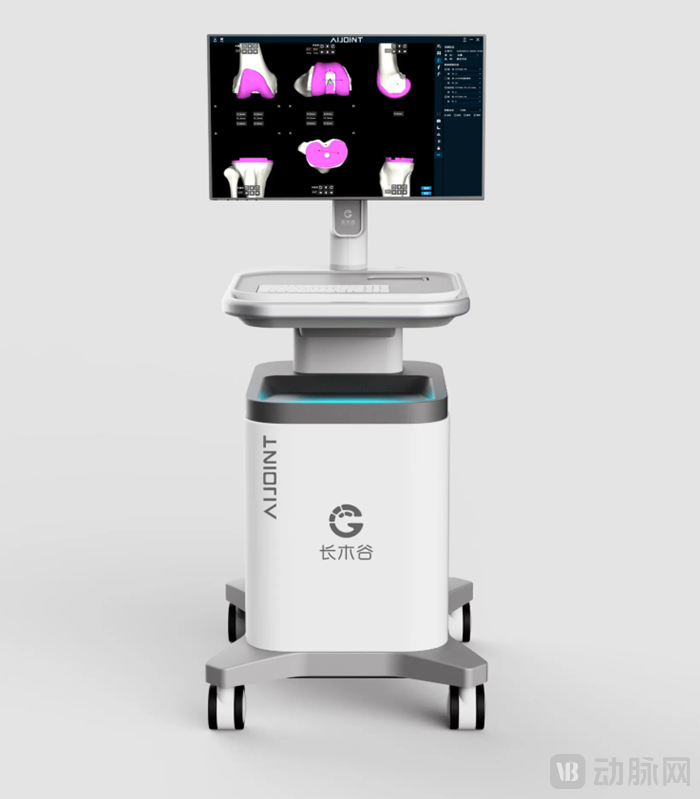
Longwood Valley®AIJOINT®Innovative Products
The Paradigm of Medical Innovation Is Evolving with Clinical Needs and the Integration of Medicine and Engineering.Longwood Valley®AIJOINT, developed through the deep integration of medicine and engineering®Addressing critical clinical challenges, the system not only performs intelligent image segmentation on models reconstructed by the 3D reconstruction and visualization module, accurately identifying and rapidly locating joint anatomical landmarks to help physicians clearly and comprehensively observe patient bone morphology and defects, but also leverages its prosthetic template matching module to automatically calculate prosthetic coverage based on the individual anatomical configurations of the acetabulum, femur, and tibia. This enables precise selection of prosthesis specifications and models, planning of optimal prosthetic positioning and osteotomy thickness, thereby significantly enhancing the accuracy of preoperative planning and reducing surgical errors and risks.
For physicians, there are numerous prosthesis manufacturers, each producing different models, while AIJOINT®It enhances the efficiency of preoperative preparation at the source, enables surgeons to simulate the entire surgical procedure, and allows for the determination of the optimal surgical plan beforehand. This approach eliminates the need for repeated trial reductions after opening the affected joint, thereby reducing operative time and associated risks inherent in traditional methods.
Professor Sheng Puyi also compared AIJOINT®and similar foreign products, stating, “Compared to closed systems abroad that only support prostheses from a single manufacturer, Longwood Valley®“Developed a more inclusive, open artificial intelligence system that accommodates the workflow preferences of a broader range of orthopedic surgeons and addresses the clinical needs associated with patients’ complex conditions, while also being better aligned with the disease characteristics of Chinese patients and the usage habits of physicians.”
For patients, on the one hand, AIJOINT®Formulating personalized and precise surgical plans for patients improves surgical efficiency, reduces intraoperative blood loss and hospital stay. On the other hand, this also enhances surgical outcomes, lowers the incidence of postoperative complications, and improves patient satisfaction and quality of life after surgery.
The development of digital and intelligent orthopedics has also played a significant role in improving the quality and efficiency of doctor-patient communication. In this regard, Professor Pei Fuxing cited Dr. Trudeau’s epitaph: “To cure sometimes; to help often.”
Professor Pei stated, “For physicians, in AIJOINT®With assistance, traditional joint replacement surgery is evolving toward greater precision, safety, and minimal invasiveness, expanding the original 95%–99% surgical success rate to nearly 99.99% and reducing uncertainty to one in ten thousand. Consequently, physicians are better able to alleviate patients’ preoperative anxiety during pre-surgical education. Furthermore, for patients, leveraging AIJOINT®three-dimensional dynamic visualization, enabling patients to intuitively understand different surgical options and preview postoperative outcomes, thereby alleviating their anxiety while enhancing their confidence in the surgery, the physicians, and the hospital.”
Primary healthcare institutions serve as the first line of defense in safeguarding public health, a frontline that urgently needs strengthening. Taking joint replacement surgery as an example, the annual surgical volume at county-level hospitals often amounts to only double-digit figures, whereas tertiary Grade A hospitals in first-tier cities perform hundreds of times more procedures annually than their county-level counterparts.
Chang Wanchun, President of Linzhou Wanfang Hospital, stated, “In fact, primary care hospitals serve a larger patient volume with more complex and varied clinical presentations. However, primary care physicians often lack hands-on clinical experience. This discrepancy results in lower surgical volumes and efficiency at these facilities, thereby indirectly exacerbating the challenges faced by grassroots populations in accessing affordable, convenient, and timely medical care.”

President Chang Wanchun, Linzhou Wanfang Hospital
Professor Sun Li, who has extensive experience in providing assistance to county-level hospitals in Guizhou Province, also stated, “Taking artificial joint revision surgery, which is complex and technically demanding, as an example, even physicians at large tertiary Grade A hospitals face significant challenges when performing such procedures, let alone grassroots and young physicians with limited surgical volume and insufficient experience. Therefore, precise preoperative planning is crucial for improving surgical success rates and reducing the incidence of patient complications.”
In response, China has continuously adopted policy-driven approaches, with a focus on primary care, to enhance the level of medical and health services. In August 2023, the General Office of the National Health Commission issued the Measures for Convenient and Beneficial Primary Healthcare Services, which called for “improving primary care diagnostic and treatment capabilities and service quality, and guiding residents to seek medical care at the primary level.”
In this context, as a national-level high-tech enterprise and a national-level specialized, refined, distinctive, and innovative “Little Giant” enterprise, Longwood Valley®Guided by the mission of “harnessing technology for the benefit of the people,” we closely integrate corporate development with national prosperity and public health, enabling more county-level hospitals and young physicians to comprehensively adopt digital orthopedics technologies, thereby advancing the digitalization and intelligent transformation of orthopedics in China.
Specifically, Longwood Valley®Transform the extensive surgical expertise of top-tier joint surgery specialists into standardized algorithms for deep learning by artificial intelligence, generating intelligent solutions that make high-quality medical techniques and the surgical experience of leading experts—previously difficult to replicate—a reality. This approach helps young physicians and primary care doctors acquire the surgical expertise of specialists from Grade A tertiary hospitals more rapidly and directly, shortening the learning curve and providing a replicable implementation framework for enhancing primary healthcare capabilities and achieving balanced distribution of high-quality medical resources.
Professor Pei Fuxing remarked, “The orthopedic surgical experience imparted through the mentor-apprentice teaching model sometimes comes at the cost of patient suffering. Through AIJOINT”®intelligent solutions that enable both resident physicians and interns to start from the same baseline, shorten the surgical learning curve, and accelerate, at its source, the development of high-quality hospital talent pools and national strategic workforce capabilities.”
President Chang Wanchun also believes: “In AIJOINT®“With this support, primary-care physicians can directly ‘apply’ expert-designed plans and conduct multiple standardized preoperative surgical rehearsals, thereby gaining a thorough understanding of the surgical plan as well as the patient’s anticipated intraoperative and postoperative course.”
From the perspective of medical costs for the vast grassroots patient population, in AIJOINT®With precise assistance, not only do patients reduce routine costs such as blood transfusions and hospitalization, as well as secondary medical insurance reimbursement expenses incurred from complications and revisions, but hospitals also correspondingly improve surgical turnover rates and bed utilization rates.
Of course, improving the quality of primary healthcare is not as simple as injecting funds and equipping hardware; it requires more supporting measures.In this regard, Longwood Valley®Through digital surgical demonstrations by clinical experts and the active promotion of orthopedic digital academic forums nationwide, hospitals in remote county-level areas—including Wushan County in Chongqing, Pingnan County in Guangxi, Tianquan County in Ya’an, Sichuan, and Qiannan Prefecture in Guizhou—have successfully performed joint replacement surgeries assisted by AI-based orthopedic surgical simulation software.Tens of thousands of patients have already benefited, truly enabling high-quality medical resources to reach grassroots levels.
How to Truly Drive Quality Improvement and Volume Growth in Orthopedic Surgeries at Primary Hospitals?“Perhaps surgical robots are not the optimal solution, as AIJOINT, which aligns with China’s national conditions, offers a more suitable alternative compared to surgical robots costing millions and imported software priced at hundreds of thousands.®“It is easier to reach grassroots levels. By helping primary-care physicians and young doctors conduct multiple preoperative simulations, we can continuously enhance their individual planning capabilities and build confidence, while also improving the safety and therapeutic outcomes of orthopedic surgeries at the grassroots level,” said Professor Sun Li.
On the eve of the conference, in addition to AIJOINT®In addition, Longwood Valley®Independently DevelopedAISPINE®Intelligent 3D Reconstruction System for Orthopedic SpineIt also received formal approval in November. The product’s functional modules include user management, data import, 3D reconstruction and visualization, template adjustment, and results display. It can perform 3D reconstruction and segmentation of CT images in compatible formats, and accurately match the model, specifications, placement angle, and depth of implant templates such as screws, titanium rods, cross-links, and interbody fusion cages.
Looking to the future, Longwood Valley aims to build a comprehensive AI-driven digital solution for orthopedics.®, the next step involves not only actively promoting the adoption of joint and spine products to cover a broader range of primary care hospitals, but also actively developing AI-powered orthopedic products in fields such as sports medicine, thereby achieving comprehensive coverage across the entire workflow and all domains of orthopedic surgery.
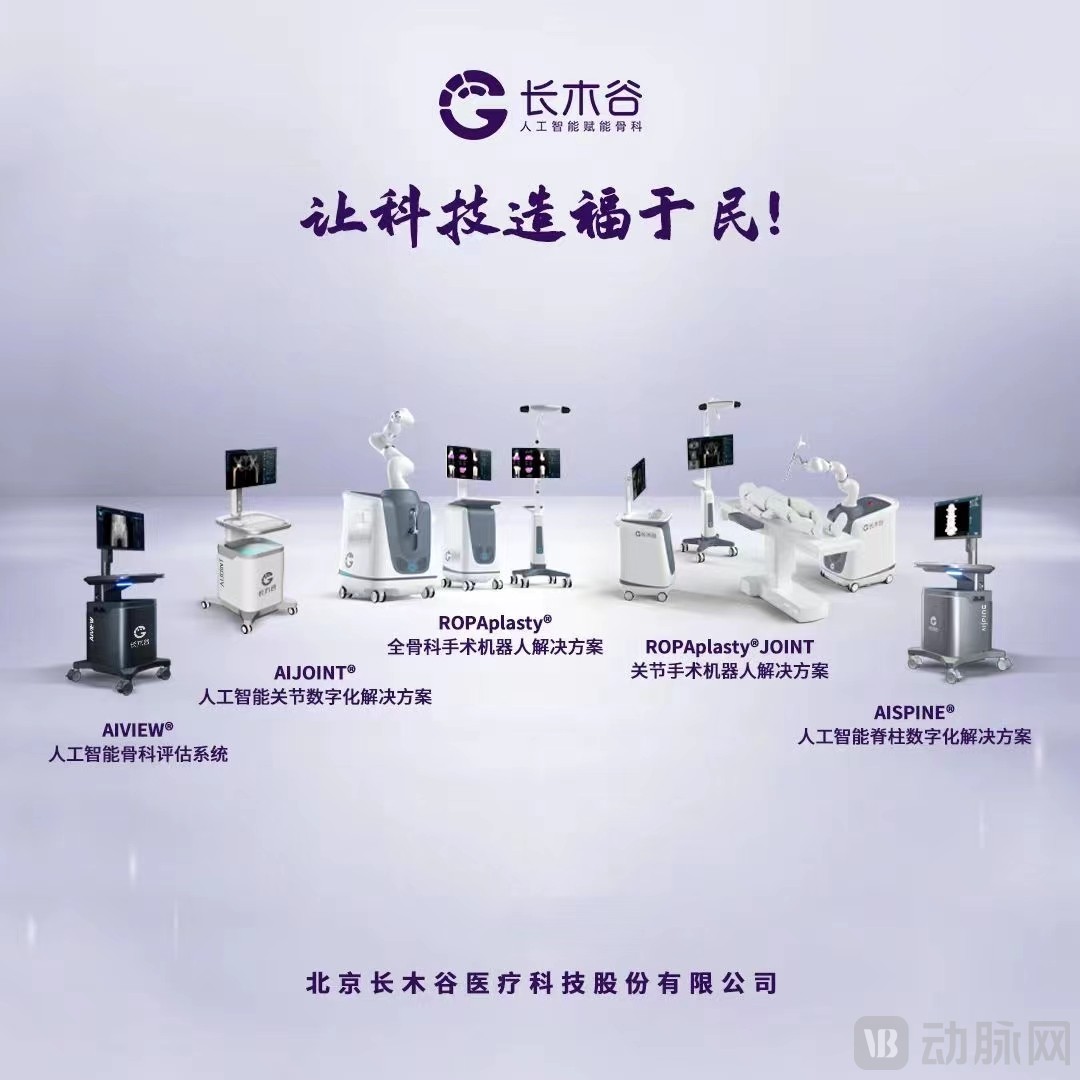
AI-Powered Comprehensive Digital Solution for Orthopedics
During the interviews, multiple orthopedic experts unanimously remarked that in a future where artificial intelligence is highly advanced, orthopedic surgeons might face unemployment, being replaced by AI and surgical robots.Longwood Valley®Dr. Zhang Yiling, Founder and Chairman, candidly stated, “Artificial intelligence has no values; it is ultimately a tool for physicians. I believe that orthopedic surgeons will not be replaced by AI in the future, but those who do not master AI technologies may be replaced by those who do.”
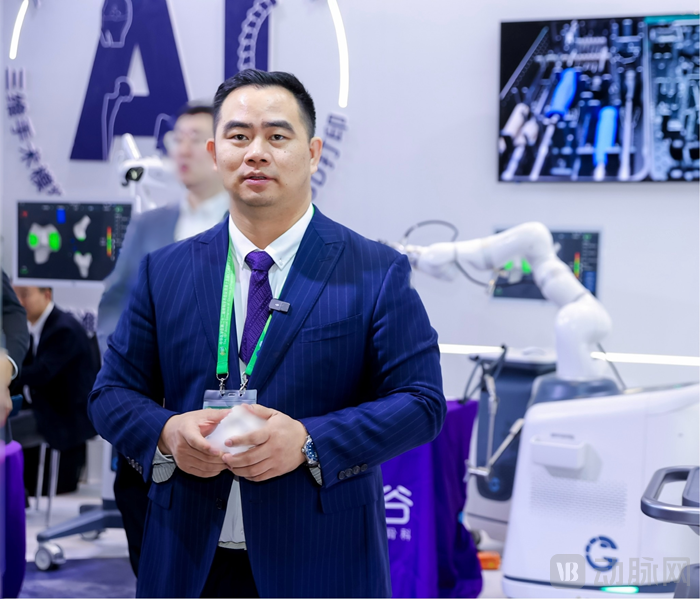
Longwood Valley®Chairman Dr. Zhang Yiling
Longwood Valley®We will continue to align closely with national development strategies, remain grounded in clinical needs, and address critical clinical pain points. We aim to pioneer more original, locally developed AI-driven digital healthcare products in China, establishing a new paradigm for AI-enhanced orthopedic diagnosis and treatment. By accelerating the decentralization of high-quality medical resources, we strive to make premium healthcare readily accessible and harness technology for the benefit of the public.