

Innovation Dialogue: How Basic Research and Original Innovation Empower Industrial Development

JOINN
Contract Research Organization (CRO)
SunNovo
Drug Research and Development Service Provider
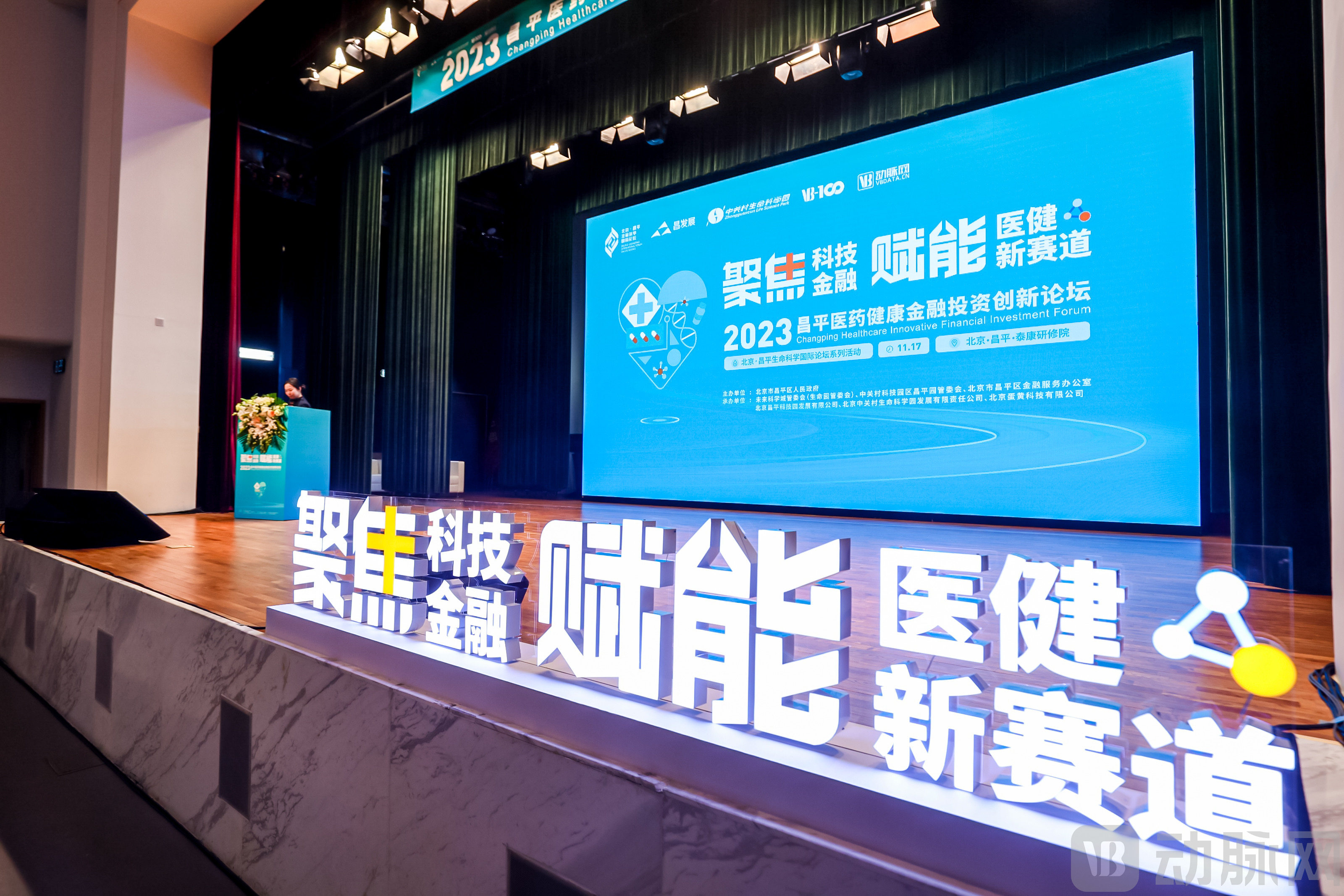
On November 17, 2023, at the 2023 Changping Pharmaceutical and Health Financial Investment Innovation Forum held in Changping, Beijing,Gao Dapeng, Executive Director and General Manager of JOINN,Li Qian, Chairman of Beijing Sunshine Nohe Drug Research Co., Ltd.,Liu Guoen, Dean of the Institute for Global Health Development at Peking University and Member of the Academic Division of the Chinese Academy of Medical Sciences,Xiao Zhi, Co-Head of the Life Sciences Team and Managing Director at SDIC Investment PromotionFour guests participated in the innovation dialogue session.
Strengthening basic research, highlighting originality, and encouraging free exploration are requirements put forward at the 12th National Congress of the Communist Party of China,During the “Innovation Dialogue” session, four panelists discussed the topic “How Basic Research and Original Innovation Drive Industrial Development,” focusing on the current state of the biopharmaceutical industry,It addresses how CROs can empower Chinese pharmaceutical companies, how universities can attract high-quality talent to engage in basic research, and provides recommendations for faculty entrepreneurship.

The following text is compiled from the on-site presentation, with some content omitted:
Xiao Zhi:Hello, everyone! It is a great honor to be invited by the organizers to participate in today’s roundtable forum. I have also been entrusted with the important task of engaging in discussion with the distinguished guests on stage.
First, I would like to invite each of you to briefly introduce yourselves, and take this opportunity to share your recent perspectives on the industry.Although today’s topic is focused on basic research and original innovation, the biopharmaceutical industry as a whole has encountered various challenges from last year to this year. We would also like to hear your perspectives on the changes you have observed within the industry.
Gao Dapeng:Good morning, everyone! It is a great honor to participate in this Changping Pharmaceutical and Health Investment Innovation Forum. I am Gao Dapeng from JOINN.
JOINN is a CRO company specializing in non-clinical research. In recent years, benefiting from the development of the biopharmaceutical industry, JOINN has expanded its service reach both geographically and across the industrial chain. Meanwhile, thanks to the growth of China’s capital market, JOINN was listed on the A-share market in 2017 and on the Hong Kong Stock Exchange in 2021. These two financing rounds have strongly supported our geographic expansion and the development of both upstream and downstream segments of our industry chain. I currently serve as the General Manager of JOINN. Thank you all!
The industry changes we have experienced are quite pronounced. I joined JOINN at an early stage and have remained with the company ever since. Based on my professional experience over the years, the development of CROs is inevitably synchronized with the advancement of China’s innovative drug sector. Within JOINN, we have consistently adhered to the motto of growing in tandem with the development of China’s pharmaceutical industry, and this is precisely what we have done. The past decade has marked the starting point for the rise of China’s innovative drug industry, characterized by a steep growth trajectory. This trend is also reflected indirectly in our company’s financial data.
JOINN’s headquarters is located at No. 5A, Rongjing East Street, Yizhuang, Beijing, covering an area of 15 mu. As a company deeply rooted in the CRO sector, we have developed our own insights into the innovative drug and CRO industries and made forward-looking strategic layouts. For instance, we established our Suzhou Taicang base outside of Beijing at an early stage, leveraging both Beijing and Taicang to support JOINN’s business development. Until last year, JOINN continued to experience this long-term growth trend. However, due to various factors, over the past two years, even leading CRO companies like JOINN, particularly in pharmacology and toxicology, have felt the industry’s downturn or trough. This pressure is also reflected in the financial data across the entire sector, a sentiment shared by investment professionals such as yourself, Mr. Xiao. Nevertheless, I believe this is the first trough encountered during the development of China’s innovative drug industry, and many may not yet be fully accustomed to it. In the long run, this is a relatively normal occurrence, as every industry experiences cycles, and the innovative drug sector is no exception. We should remain confident.
Xiao Zhi:Thank you, Mr. Gao. Now, please welcome our second expert, Mr. Li.
Li Qian:Hello everyone! I am Li Qian from SunNovo. SunNovo specializes in the areas not covered by Mr. Gao’s team, offering a comprehensive suite of CRO services ranging from drug discovery and pharmaceutical research to Phase I–IV clinical trials. The company was listed on the STAR Market in 2021. Additionally, it launched its manufacturing segment after 2014–2015, with sales approaching RMB 1 billion by 2022.
Regarding our perception of the industry-wide changes, as a smaller player in a growth phase, we do not feel the impact as acutely as JOINN does. Overall, this period inevitably represents a historical consolidation. Once this shakeout is complete, industry order will be re-established, gradually steering the sector onto a more robust upward trajectory.
Xiao Zhi:Professor Liu, I often see your comments in various major media outlets,Please briefly introduce yourself and share what changes you have observed over the past year or two.
Liu Guoen:Thank you for the invitation to this conference. I am from Peking University, where I am affiliated with two institutions: the National School of Development and the Institute for Global Health Development at Peking University, which has been in operation for three years. As its name suggests, the newly established Institute for Global Health Development focuses on global health. If you are interested, you may visit our website, where our logo bears the motto “One Health, One World.” In brief, “One Health” emphasizes that we must pay attention not only to human health but also to animal health and ecological health; it is through this tripartite integration that human health and development can become more sustainable. “One World” signifies that our focus extends beyond the 1.4 billion people living within China’s 9.6 million square kilometers—a region that is objectively a vital component of the global community. Instead, we aim to root our efforts in China while maintaining a global perspective. This is the mission of the Institute for Global Health Development at Peking University.
In recent years, China’s pharmaceutical industry has undergone significant transformations in innovation. The two young and promising entrepreneurs just spoke quite insightfully; my own observations align closely with theirs. However, I am not from the industry but rather from academia, and over the past few years, I have also been involved in the updates, adjustments, and negotiations of the National Reimbursement Drug List (NRDL). We have indeed observed that in the years preceding the COVID-19 pandemic, the development of China’s pharmaceutical industry could be described as “leapfrog growth” without exaggeration. This characterization is justified by the annual growth rates, as well as the scale and speed of financing, which truly reflected such rapid advancement. Consequently, multinational corporations often set growth targets for their Chinese subsidiaries at 15% to 20% or higher, considering anything less as stagnant growth. This seemed to be widely regarded as a natural and inevitable occurrence in China. Over the past three years, due to the impact of the COVID-19 pandemic and changes in the international landscape, China’s macroeconomic growth cycle has undergone structural shifts, transitioning gradually from high-speed development to steady growth. Against this backdrop, it is not surprising that the pharmaceutical industry’s performance has shifted from a state of leapfrog growth to a more stable trajectory; in fact, this normalization is entirely expected.
I particularly agree with the observations made by both of them; in fact, we should view industrial development from a long-term perspective. I believe that the more moderate pace, scale, and quality of development seen in recent years are more normal and sustainable compared to the past. In reality, all other markets outside China, including many emerging markets, do not possess such characteristics of rapid, explosive growth, making a downward adjustment inevitable sooner or later.
Furthermore, we must pay attention to a critical issue: regardless of whether the industry experiences rapid development or steady growth, one central theme will remain unchanged—namely, that long-term growth is primarily driven by technological innovation. In the case of PD-1 inhibitors, domestic R&D teams have adopted advanced original technologies from developed countries and further developed them through application-oriented innovation in China, launching numerous innovative products and making significant contributions. If the industry continues to adhere to this innovation-driven approach, there is every reason to expect that China’s pharmaceutical sector will mirror the broader macroeconomic trajectory of the country, with substantial growth potential in the future.
Xiao Treatment:Thank you very much, President Liu, for your remarks. I fully agree with your points. SDIC Innovation began investing in domestic innovative drugs around 2015–2016, coinciding precisely with a period of substantial growth in China’s innovative drug industry. What we now see encompasses various forms of innovation, ranging from follow-on to original innovation. Over the past seven to eight years, China’s biopharmaceutical sector has undergone what amounts to a complete cycle—from early-stage development through rapid expansion to a peak phase—and is currently in an adjustment period influenced by the global economic environment.We have also observed considerable statistical evidence indicating that investment volumes in innovative drugs and medical devices in the primary market have essentially returned to pre-pandemic levels. In terms of deal count, figures may even be slightly lower than before the pandemic. However, capital is becoming more concentrated, flowing toward companies with genuine innovative capabilities. Notably, many enterprises have secured global collaboration agreements with multinational corporations (MNCs). This reflects the phased achievements attained by China’s innovative drug sector after six to seven years of accumulation. Initially, many innovative drugs competed intensely within the domestic market; today, we are seeing numerous products gain recognition from MNCs and expand globally, resulting in significant international partnerships.
We sometimes examine the development cycle of innovative drugs in China by drawing parallels with that of the United States. Our internal team believes that, when reviewing the history of biopharmaceutical development in the U.S., the current situation in China bears resemblance to the first wave of biologic drug emergence in the U.S. during the 1980s. After a technological breakthrough drives industry growth, the introduction of national legislation often propels the sector into a period of rapid expansion. However, as capital withdraws and the macroeconomic environment shifts, the industry eventually returns to a more normalized growth trajectory. We may currently be at the tail end of the first full cycle, with all market participants anticipating the arrival of the second wave.
Xiao Zhi:Moving on to the second topic. Earlier, I invited all the guests not only to introduce themselves but also to share their insights into the industry. For this second topic, I would first like to ask Mr. Gao and Mr. Li. Since our discussion focuses on source innovation in China, it is worth noting that China’s pharmaceutical sector has evolved from imitative innovation to undertaking original innovation. As I mentioned earlier, many multinational corporations (MNCs) are already actively acquiring assets from Chinese biotech firms in the domestic market, signing licensing deals for innovative molecules at relatively early stages, such as those with promising results in preclinical development or Phase I clinical trials.From the corporate perspective, how can businesses support Chinese pharmaceutical companies in basic research and original innovation, and help them foster source innovation?
Gao Dapeng:Mr. Xiao just discussed the cyclical characteristics of the entire industry. Considering the development of China’s innovative drug sector over the past decade and JOINN’s actual business operations, it is evident that China’s biopharmaceutical or innovative drug industry is undergoing a complete cycle. JOINN’s core business is non-clinical safety assessment, an essential step for new drugs transitioning from the discovery phase to the clinical phase. Among the innovative drugs assessed by JOINN, which are numerous in both category and volume, we observe that only two or three out of every 100 evaluated drugs represent original innovation, with the majority following a follow-on strategy. This is understandable, as once an original innovation emerges, a follow-on strategy is often the most efficient and cost-effective approach, helping to steer China’s biopharmaceutical industry onto the right track. However, for further advancement, the focus must ultimately return to original innovation.
That said, as a public service platform enterprise in the industrial CRO sector dedicated to supporting innovation in China, JOINN has undergone a transition from following innovative trends to building its own core capabilities. While our strength lies in pharmacological and toxicological evaluation of drugs, we expanded our layout ten years ago by establishing specialized laboratories, such as our now highly mature ophthalmology and respiratory systems laboratories (both located in Taicang). Looking ahead, we plan to establish laboratories for isotope and radiopharmaceutical evaluation, and further expand our ophthalmology and respiratory systems facilities. This strategy has enabled us to combine our traditional strengths in pharmacology and toxicology with distinctive areas of innovation, thereby providing an optimal service environment for Chinese innovative drug companies. This approach helps shorten the R&D timeline for new drugs in China and accelerates product launches.
As a third-party service provider, we are constantly exploring ways to enhance our production efficiency. We are currently adopting cutting-edge technologies, such as AI, the Internet of Things (IoT), and intelligent systems, and striving to integrate these innovations into our actual production and operational activities. These innovations yield two key benefits: first, they improve JOINN’s internal efficiency; second, they accelerate our clients’ R&D processes, enabling faster and more effective progress. Additionally, given our involvement in animal experimentation, we are actively exploring the application of currently popular technologies such as organoids and organ-on-a-chip systems.
In summary, as an independent third-party evaluation agency, what we can do is to continuously enhance our own capabilities. Especially during industry downturns, it is even more critical to improve our efficiency, accelerate the progress of our clients’ projects toward clinical development, and thereby drive the growth of China’s innovative drug industry. These are some of the contributions that JOINN can make.
Li Qian:Regarding technological research, we have been observing a persistent issue in recent years. Over the past decade, China’s biopharmaceutical sector has likely experienced the most rapid growth, particularly since 2003 and 2005, when a large number of overseas talents returned to China, bringing with them advanced R&D and production concepts. This influx facilitated the establishment of numerous technology platforms within China over the preceding ten years. However, I believe there is currently a particularly alarming trend in China: a culture of “borrowing” and relentless copying. This has led to excessive duplication in R&D efforts, with multiple projects converging on the same therapeutic targets, thereby consuming substantial pharmaceutical and healthcare resources.
Over the past two years, I have come to realize that, when focusing solely on enterprises, the generation of truly innovative targets requires substantial investment in basic research. Without such foundational work and the serendipitous opportunities it often yields, the process is indeed capital-intensive. If left entirely to corporate entities, I believe most would adopt an opportunistic approach—acquiring ideas or targets from universities, research institutions, or private research organizations through commercial arrangements rather than originating them internally. However, such cases remain the minority, as our understanding of innovation has evolved significantly from previous perceptions. Since the National Medical Products Administration (NMPA) issued guidelines emphasizing clinical value orientation over the past two years, the concept of “clinical value” has become closely intertwined with future healthcare policies, particularly those related to national medical insurance reimbursement.
I believe we are no longer the same as we were 20 years ago. What is needed now is genuine clinical value that meets the needs of the general public, with improvements in healthcare, technical methodologies, and pharmacotherapy. We must move beyond the mere logic of “you have it, I have it, they have it.” This shift has led to the current situation where both academic and research institutions are dedicating themselves to in-depth exploration. However, such exploration is painful and capital-intensive. Over the next one to three years, investment firms and we, as a CRO, will gradually adapt to this new normal. The era when investments could be secured by simply assembling a small team of three to five people, or even without a laboratory, followed by continuous cash burn, is over and will not return. That narrative was deeply concerning. Returning to fundamentals will foster true innovation and strengthen basic research in China’s pharmaceutical industry, aligning us with essential logical principles.
Xiao Zhi:Mr. Li just raised an excellent topic: where do talents for basic research come from, and in what kind of environment should such talents be cultivated? I would like to ask Dean Liu, given your current setting within a university,How to Attract High-Caliber Researchers from Home and Abroad to Engage in Relatively High-Quality Basic Research?
Liu Guoen:This is a complex issue that cannot be adequately addressed in just a few words. Therefore, let me offer some preliminary remarks by sharing a few points for your consideration. Over the past four decades since China’s reform and opening-up, innovation in the pharmaceutical sector has been predominantly application-oriented. This approach aligned well with the characteristics of China’s early development stage, leveraged its comparative advantages, and was a prudent and effective strategy. Given that developed countries were far ahead, having already discovered many original novel targets, it was logical for China to follow up with application-driven R&D. This innovation trajectory was determined by the objective conditions of China’s development stage and is beyond reproach.Now, as we enter a new phase of development, the question arises: Can we transition and upgrade from follower-style, application-oriented innovation to original, pioneering innovation? I believe certain prerequisites must be met. The first is economic strength. For instance, regarding original scientific research and the generation of original ideas—as mentioned earlier—China’s population of 1.4 billion means that, by the law of large numbers, its potential for generating ideas should not lag behind that of other countries, except perhaps India, which has a comparable population size.
Another critical factor is capital investment, as original scientific research carries significantly higher uncertainty than applied research. The United States leads the world in original research, but where does the funding for such high-uncertainty basic research come from? The National Institutes of Health (NIH) allocates approximately 1% of the U.S. federal government’s direct expenditures to its annual medical research budget, amounting to over $48 billion (more than RMB 300 billion). This funding is accessible not only to American scientists but also to researchers from other countries; for instance, several major projects at Peking University have been directly funded by the NIH. What percentage of our public fiscal revenue is dedicated to advancing basic biomedical research? To my knowledge, it is particularly worth noting that the Chinese government once allocated more than RMB 6 billion to launch an unprecedented major initiative for innovative drug development, which yielded encouraging scientific achievements. However, this was a one-time substantial state investment rather than a routine national financing mechanism for medical technology R&D.
How to Encourage More Scientists, Particularly Those of Chinese Descent, to Return Home for EntrepreneurshipRegarding how to encourage more scientists—especially those of Chinese descent, including individuals like myself who pursued education abroad and subsequently returned to serve and conduct research in our homeland—to return home for entrepreneurship, I believe it hinges on several critical and achievable conditions. First and foremost is a secure work environment, along with stable family living conditions and access to schooling for children. In particular, a flexible environment that facilitates convenient international travel and smooth academic exchanges is of paramount importance. Having lived and worked overseas for extended periods, many returning scholars hold perspectives and behavioral norms that differ from domestic conventions. Providing them with a relatively relaxed academic space that encourages the active expression of scientific innovation will reduce the personal costs associated with self-adjustment and adapting to uncertainty. This approach will undoubtedly motivate more overseas-trained professionals to return and contribute their expertise. We have every reason to believe that the relevant national authorities are fully capable of further enhancing these support measures.
Xiao Zhi:Thank you very much, Director Liu, for your remarks. Earlier, various forms of innovation were mentioned—whether fundamental innovation or R&D—but ultimately, they all come down to the issue of entrepreneurship.In the current broader macroeconomic environment, capital may not be as active, from the perspective of two industry practitionersGuest, What advice does Professor Liu offer to entrepreneurs in higher education? What recommendations would he give to university professors who choose to start their own businesses?
Gao Dapeng:Drawing from JOINN’s practical experience, we relocated from Beijing to Taicang, Jiangsu, around 2010. At that time, I would characterize JOINN as still being in its entrepreneurial stage. Why do I say this? Because our annual sales revenue was only between RMB 20 million and RMB 30 million. Why did we believe then that Taicang would become the number one city in China for the biopharmaceutical and innovative drug industries? In retrospect, this judgment was absolutely well-founded. Governments at all levels demonstrated strong awareness and commitment to investment attraction and the development of innovative drugs. They could immediately recognize the industry we were in and its future growth potential, thereby providing us with substantial policy support to establish our operations there. Meanwhile, it was precisely thanks to the Taicang facility that JOINN was able to sustain its rapid growth over the next decade or so. This was a mutually beneficial process. After our relocation to Taicang, we gradually formed the Taicang Biopharmaceutical Industrial Park, with JOINN at its core. This park has been expanding year by year and has become a pillar industry for Taicang City.
From this case, we can summarize the following points:
1. In academia, there is still a significant gap between China’s original innovation capabilities and those of foreign countries. Nevertheless, the process must begin with universities; only by starting at the university level can ideas eventually evolve into genuine innovations and subsequently be commercialized.
2. In the industrial sector, it is also crucial for industry leaders such as JOINN to effectively translate ideas into practice, as implementation ultimately requires scale-up and industrialization, focusing on high efficiency and low cost, which can only be achieved through industrial capabilities.
3. Investors need to possess strong judgment capabilities, particularly when evaluating original initiatives that carry higher risks and involve longer time horizons. From an investment and financing perspective, it is advocated that investors support the development of original innovations.
4. Regulatory authorities and local governments must possess the discernment to accurately evaluate original innovations, thereby providing policy support that fosters genuine industrial growth. Simultaneously, by establishing clear channels for investor entry and exit, a complete industry chain can be formed, enabling true entrepreneurs to successfully navigate the journey from idea conception to implementation and subsequent expansion.
Li Qian:There are two types of entrepreneurs: social entrepreneurs and those from academia. Social entrepreneurs must be well-prepared; avoid launching ventures without adequate preparation, relying solely on passion. This is especially critical now, as securing investment has become more difficult, and this is a capital-intensive industry. I encourage entrepreneurs to maintain their own independent thinking during the startup phase. Entrepreneurship is arduous; for instance, when we began our innovation journey, we accepted minimal salaries, and even went "all-in," committing our entire personal assets during the first decade of the venture. If one’s primary motive is to use other people’s money to enrich oneself and realize personal ideals, the entrepreneurial attitude may not align with reality, making success unlikely. Of course, many valuable ideas emerge from small companies and teams, gradually gaining prominence and importance.
I have always held high expectations for universities. Universities, together with large state-owned research institutions, form the core ecosystem for basic researchers. However, national support for innovative R&D has amounted to only over six billion yuan in recent years. Many university faculty members and professors tend to channel their basic research efforts toward state-backed investment firms and enterprises at an early stage.Enterprises calculate their own costs; they estimate how much funding to allocate annually for innovation. This approach differs from pure venture capital, which often involves a high-risk, “nine deaths, one life” gamble. If success were easy to achieve, it would not be considered true innovation. Instead, a mindset capable of sustaining ten to twenty years of continuous investment before yielding a product or outcome is required. Collaborating with universities, alongside government and state-owned funds, could provide stronger incentives for academic institutions. It is somewhat putting the cart before the horse to expect universities to bear all the risks and have their faculty secure funding after obtaining projects. Rather, capable enterprises with sufficient tolerance for trial and error should proactively engage with universities to drive this aspect of innovation.
Liu Guoen:How Can University Scientist Teams Better Fulfill This Role?In fact, universities are the primary source of original research in all countries around the world, and this is especially true in China, given our positioning as a socialist market economy. In addition to universities, we also have the Chinese Academy of Sciences system, from which it is only natural that the core source of original scientific research should emerge. To motivate scientists to better conduct original R&D work and further integrate into the market for innovation and commercialization, at least three key words need to be effectively translated into action.First, intellectual property (IP) protection must be strengthened. An important condition for IP protection is transparency of rules. Regardless of whether the current rules are reasonable, they must be transparent and clear, so that everyone can make optimized decisions on resource allocation—such as time, budget, and expected returns—for R&D investment.Second is the rule of law. The enforcement of IP protection relies on the safeguarding provided by the rule of law. The development of the rule of law is closely linked to IP protection. Only when both scientists and corporate investors have clear expectations can strong and continuous motivation be provided. Human life is finite; everyone wishes to devote their limited lifespan to where it creates the most value.Third is inclusiveness. No individual is perfect, let alone institutions. Modern society requires a fault-tolerance mechanism, particularly for highly uncertain original scientific research. Recently, I came across a set of data: on one hand, we have the world’s largest pool of scientific researchers, and the number of English-language papers published by Chinese authors has surpassed that of the United States, which is encouraging. On the other hand, among retractions announced in English-language scientific literature due to irreproducible conclusions or suspected data fabrication, papers by domestic authors account for 30% to 40% of global retractions. Most seriously, the retraction rate in our biomedical field is as high as approximately 70%. Why is this the case? While there are many factors, the lack of a fault-tolerance mechanism is likely a particularly critical one. Scientific and technological research is inherently an exploration of the unknown, and original basic research involves a high degree of uncertainty. Objectively speaking, success is a low-probability event, while failure is far more likely. Without a fault-tolerance mechanism, if only success is allowed and failure is not tolerated, fraud may become an option for some. As the old saying goes, “Failure is the mother of success.”
Last week, at the Global Health Conference held at Peking University, Holden Thorp, Editor-in-Chief of the American journal Science, delivered a speech. I had the privilege of working alongside him during his tenure at the University of North Carolina. He emphasized the importance of establishing a fault-tolerant mechanism in scientific research. If published papers are found to contain data errors or inconclusive findings, acknowledging and correcting such unintentional mistakes should be regarded as a normal part of the scientific process, rather than being treated as a major risk that invites punitive measures against researchers. Such an approach often leads to cover-ups. If China could draw on these insights and establish a more proactive fault-tolerance system, thereby reducing the incentives for fabrication, it is believed that both the quality of scientific research and its output efficiency would significantly improve.
First, intellectual property protection. Second, the rule of law. Third, inclusive mechanisms. I believe that if Chinese scientists are provided with these favorable conditions to create a better working ecosystem, no other country can rival the collective intellect of 1.4 billion people. The potential is enormous, and expectations are high.
Xiao Zhi:Thank you very much, President Liu, for your insightful remarks. We are also deeply grateful to the organizers for inviting three distinguished guests to speak today. Let us give them a warm round of applause. Thank you!