

Alibaba Health's Strategic Move: Multi-Engine Growth Model Unlocks New Opportunities

AliHealth
Medical and Health Services Network Service Provider
"The Moves of Industry Leaders Often Signal New Opportunities."
On November 28, AliHealth released its latest interim results for the 2024 fiscal year. The performance demonstrates that AliHealth has maintained steady growth as usual. During the six-month period ended September 30, 2023, AliHealth’s revenue reached RMB 12.96 billion, a year-on-year increase of 12.7%; profit amounted to RMB 445 million, representing a year-on-year surge of 172.2%, indicating a significant enhancement in profitability.
Notably, another announcement released by AliHealth that evening constituted a major development! AliHealth has formally entered into an equity subscription agreement with Alibaba Group, acquiring the exclusive marketing review rights and ancillary rights for the healthcare category on Alimama for a consideration of HK$13.512 billion. This signifies that marketing-related services have been officially integrated into AliHealth’s business portfolio.
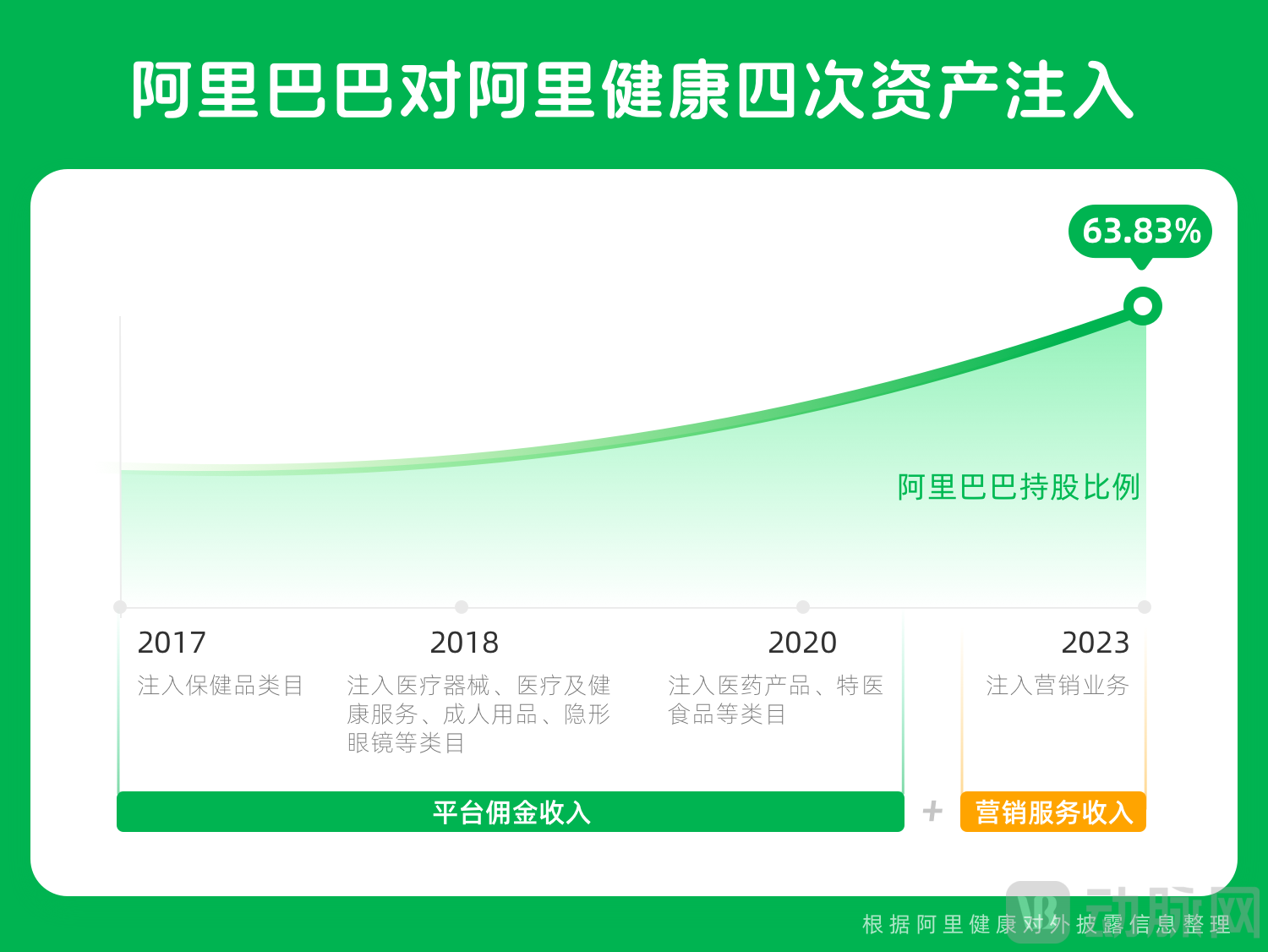
This is undoubtedly a strategic move of significant importance to the long-term positive growth of AliHealth’s overall business landscape. Through this equity subscription, AliHealth has established a multi-engine growth model in its pharmaceutical e-commerce segment, integrating “direct sales revenue + platform commissions + marketing services,” thereby opening up new prospects for revenue growth and profitability.
In recent years, internet healthcare has experienced rapid development, with AliHealth emerging as a leading platform in the broader health sector. As consumers’ demand for self-health management continues to rise, the traditional concept of “passive treatment” is gradually shifting toward “proactive health,” fostering a health management philosophy centered on “prevention first, combined prevention and treatment.” Meanwhile, the emergence of core digital technologies such as cloud computing, big data, and artificial intelligence has brought profound transformations to the industry, further unlocking the vast market potential for user-driven self-health management.
Internet healthcare has reached a new critical juncture. It is once again a pivotal moment for companies in the internet healthcare sector to make accurate judgments on their future strategic priorities and carry out forward-looking business layouts. A comprehensive review of AliHealth’s latest business expansion undoubtedly reveals three dimensions of growth potential.
Based on the latest publicly released semi-annual performance announcement, AliHealth’s business layout continues to adhere to its “Three Clouds” strategy, comprising Cloud Pharmacy, Cloud Hospital, and Cloud Infrastructure. From a revenue perspective, it presents a “One Body, Two Wings” structure. The “One Body” refers to its pharmaceutical e-commerce business, primarily consisting of the Tmall Health platform operations and self-operated pharmaceutical sales; the “Two Wings” are its healthcare services business and digital infrastructure business. Currently, AliHealth maintains steady growth, with its pharmaceutical e-commerce business standing out, while its healthcare and digital services businesses demonstrate significant potential.
The latest earnings announcement reveals that during the reporting period, AliHealth’s direct-sales pharmaceutical business generated revenue of RMB 11.45 billion, representing a year-on-year increase of 13.5%. The number of self-operated platform members has reached 77 million. The Tmall Health platform now serves over 32,000 merchants, with more than 64 million SKUs across its service categories—an increase of over 16 million compared to the same period last year.
Clearly, within its pharmaceutical e-commerce operations, the Tmall Health platform business is the undisputed leader in terms of industry scale, while the self-operated pharmaceutical business serves as the primary revenue driver. Following the aforementioned HK$13.512 billion transaction, AliHealth’s original revenue structure, predominantly composed of “self-operated sales revenue + platform commissions,” will undergo a significant transformation.
According to the announcement, AliHealth and Alimama have entered into an exclusive service framework agreement. Under this agreement, AliHealth has obtained the exclusive right to review marketing materials for the healthcare category on Alimama’s platform, along with ancillary rights to operate value-added marketing services. This enables AliHealth to provide marketing material review and value-added services to merchants in the healthcare sector. The covered healthcare categories include more than ten industry segments, such as over-the-counter (OTC) drugs, prescription drugs, health supplements, medical devices, family planning products, contact lenses, health check-ups, vaccines, and nutritional tonics.
Meanwhile, AliHealth charges Alibaba Mama a corresponding fee for marketing material review services, amounting to 20% of the “marketing service fees collected by Alibaba Mama from target merchants whose primary business category is healthcare and medical products, for product promotions within the healthcare and medical category.” According to the announcement, based on unaudited revenue for the fiscal year from April 1, 2022, to March 31, 2023, the annual marketing material review service fee collected by AliHealth was approximately RMB 1.202 billion.
Notably, according to AliHealth’s latest semi-annual performance report, its half-year profit amounted to RMB 445 million. The incremental revenue generated by this transaction is equivalent to replicating the entire profit base of AliHealth. Evidently, this will effectively bolster AliHealth’s financial performance, leading to improved fiscal results.
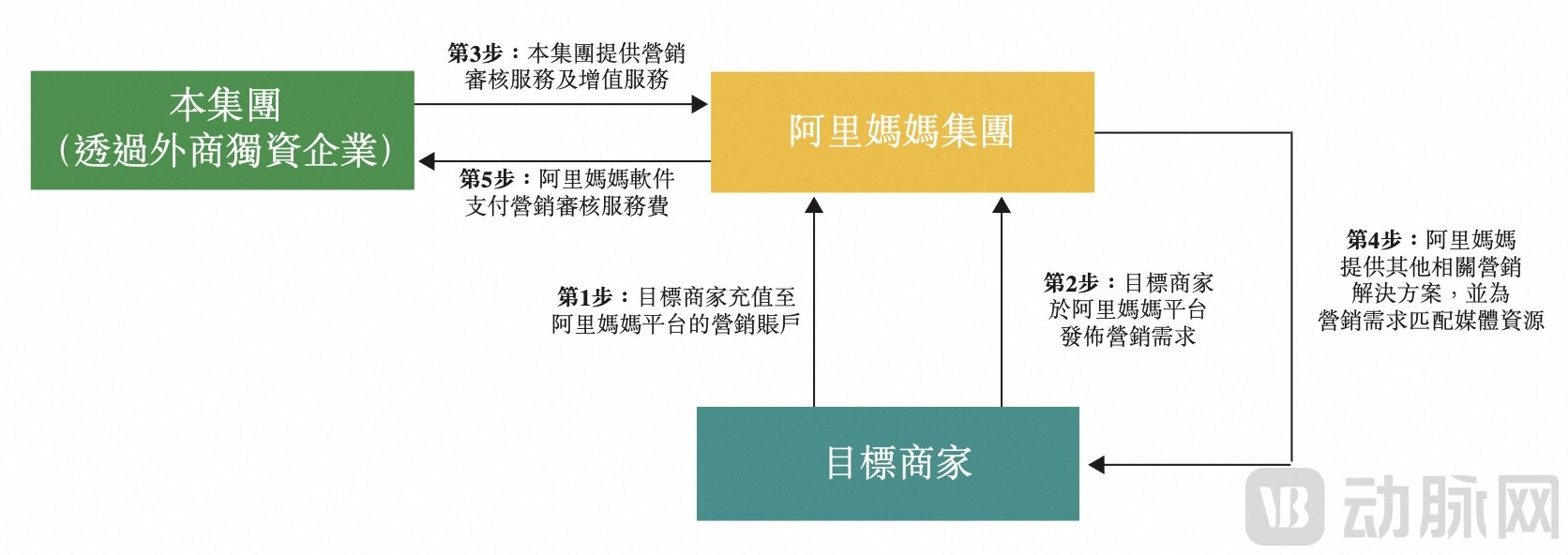
Post-Transaction Business Operation Model, Image Source: AliHealth Announcement
As stated in the announcement, “By leveraging the respective strengths of Alimama and AliHealth to jointly operate marketing services, we aim to provide comprehensive support that addresses the diverse needs of healthcare merchants throughout the entire consumer journey. Offering merchants a competitively positioned suite of services will enhance their marketing efficiency and return on investment.”
In the healthcare sector, AliHealth is undoubtedly the Alibaba-affiliated company with the most extensive operational experience and industry insights in the health category. By integrating marketing services into the closed-loop solutions for health brand merchants, it will directly enhance digital marketing efficiency, strengthen the stickiness and advertising scale of its 32,000+ big health merchants on the platform, further drive AliHealth’s business growth, and consolidate its market position.
AliHealth disclosed that the incremental profit generated from this transaction will be used to support user growth, enhance merchant experience, strengthen price competitiveness, and advance other innovative initiatives in the healthcare sector.
In other words, AliHealth has pioneered a new “user-first” approach for the upcoming cycle, entering ahead of schedule into the second half of high-quality growth in the internet healthcare industry. This aligns seamlessly with Alibaba Group CEO Eddie Wu’s new strategy of “user-first, AI-driven.”
From the user’s perspective, after three years of the pandemic, users have gained a more direct experience of the convenience offered by internet healthcare. The online medical and health user base has grown rapidly, enabling AliHealth to accumulate a long-term user base in the post-pandemic era.
From the perspective of the competitive landscape, traffic in the pharmaceutical e-commerce industry exhibits a pronounced Matthew effect. Leveraging Alibaba Group’s vast user base, AliHealth has continuously increased its penetration rate among group users, demonstrating significant traffic advantages. As disclosed in its performance announcement, AliHealth provides users with an integrated online-to-offline medical and healthcare service system, covering consumer-facing platforms such as Taobao, Tmall, Alipay, Yilu (AliHealth), Amap, DingTalk, Hema Fresh, and Quark Search.
Public data shows that Tmall Health has nearly 300 million annual purchasing users, with an average of more than five purchases per person per year and a transaction volume exceeding RMB 100 billion, making it the primary entry point for health consumption.
For internet healthcare platforms, the scale of online users is a critical factor in evaluating their service capabilities. A large user base necessitates ample product supply and a comprehensive service ecosystem. Over the past six months, AliHealth has been continuously strengthening these two core capabilities.
First is supply-side capability. To meet the diverse and complex needs of users, platforms must offer a wide range of products, including pharmaceuticals. An e-commerce platform with a more extensive product assortment will undoubtedly be more attractive to users. AliHealth has been continuously expanding its supply-side categories, the number of partner merchants, and SKUs. In the first half of fiscal year 2024, the Tmall Health platform served over 32,000 merchants, an increase of more than 4,000 compared to the end of September 2022; it offered over 64 million SKUs across various categories, representing a rapid year-on-year increase of more than 16 million.
Second, user insights and service capabilities. AliHealth has significantly accelerated the pace of its collaborations with pharmaceutical and healthcare enterprises, extending its reach in user health services beyond the sale of health products and traditional online medical services.
From June to September 2023, Tmall Health joined forces with Sinocare and other enterprises to launch the “No Finger-Prick Initiative” and the “15-Day Continuous Glucose Monitoring Plan,” focusing on the health of individuals with diabetes. In October, it partnered with New Horizon Health to provide 10,000 households with free at-home Helicobacter pylori test kits. In November, together with several leading pharmaceutical companies, it jointly initiated the “Initiative for Building a Digital Drug Information Ecosystem,” which included age-friendly modifications to drug package inserts.
Furthermore, AliHealth deeply recognizes that behind patients’ medication purchases lies an inherent demand for medical services itself. During the reporting period, AliHealth contracted with more than 210,000 licensed physicians, licensed pharmacists, and nutritionists to provide online health consultation services; and established “Health Care Centers” across 20 major disease areas, including oncology, hepatology, and gout, to fully meet patients’ diverse needs for medical services.
Amid the wave of digitalization, internet healthcare is ushering in new opportunities for industrial innovation, while advancements in AI technology are injecting fresh momentum into companies’ digital operational management. For most internet healthcare platforms, a major challenge lies in leveraging their large user base to address users’ actual health issues through more in-depth health services. AliHealth is no exception.
Digitalization may be the only path.
As early as in its 2022 fiscal year annual report, AliHealth first proposed the “Three Clouds” strategy, which leverages digital technology and digital operational capabilities, with “Cloud Infrastructure” as the foundation, “Cloud Pharmacy” as the core, and “Cloud Hospital” as the engine, thereby providing inclusive, convenient, efficient, and safe healthcare services to hundreds of millions of families.
Today, with the release of its semi-annual performance announcement for fiscal year 2024, AliHealth has demonstrated to the outside world that it is achieving steady development along its established trajectory. The synergistic effects of “Cloud Pharmacy” and “Cloud Hospital” are particularly evident, while “Cloud Infrastructure” fully embodies win-win ecosystem collaboration.
Leveraging its large user base on the pharmaceutical e-commerce platform and its capabilities in digital patient management services, AliHealth is increasingly gaining favor among pharmaceutical companies, becoming their preferred partner for exploring digital patient services in the out-of-hospital market. This May, AliHealth upgraded its strategic cooperation with AstraZeneca to jointly build a cardiovascular disease education and rehabilitation platform. The two parties will explore a range of patient services, including remote patient education, follow-up care, online consultations, and medication guidance. They will initially focus on breakthroughs in the field of cardiovascular diseases, providing each patient with a “personalized” out-of-hospital chronic disease rehabilitation platform. By addressing medical and medication needs through digital means, the platform helps patients manage their conditions independently in out-of-hospital settings, significantly improving medication adherence and disease control.
From a demographic perspective, which group stands to benefit most from digital health management? Clearly, it is patients with chronic diseases. This population is large in size, characterized by prolonged disease courses, complex etiologies, incurability, and frequent patient–provider interactions. The resulting demands for “broad coverage” and “high-frequency engagement” are precisely the challenges that the internet, rather than offline services, is well-positioned to address.
AliHealth Internet Hospital provides a disease management model for patients with chronic conditions through digital operations, offering services such as online consultations, prescription renewals, discounted high-quality medications, targeted education, precise follow-up, peer support, and after-sales assurance. Furthermore, it has independently developed an intelligent follow-up system that tracks patients’ disease management in real time, customizes personalized patient education content and frequency as needed, and encourages adherence to learning, follow-up visits, and medication regimens, ultimately improving patients’ clinical indicators. This approach not only enhances the practical implementation of patient management but also increases the overall scalability and applicability of the model.

Currently, AliHealth Internet Hospital has extended its digital patient management capabilities to 20 core disease areas, including hepatitis B, respiratory conditions, men's health, and chronic gastritis. It has partnered with 40 renowned domestic and international pharmaceutical companies, such as Nikken Chemicals & Pharmaceuticals, to establish new service channels for patients with chronic diseases, physicians, and pharmaceutical enterprises. Under the digital patient management model, patients are more readily motivated to take an active role in self-managing their conditions; improved medication adherence subsequently leads to significant enhancements in quality of life.
In empowering patients, the adoption of cutting-edge technologies is undoubtedly a critical component. In terms of innovative business initiatives, AliHealth began investing in the “chip” of medical AI—the construction of medical knowledge graphs—in 2020. These efforts encompass Chinese clinical terminology sets, drug terminology sets, and knowledge graphs for rational drug use. The performance announcement also disclosed that, under the guidance of regulatory authorities, AliHealth will conduct research on large language models (LLMs) tailored to the healthcare sector. By leveraging next-generation information technology, the company aims to upgrade its product and service capabilities for application in consumer health and medical services.
Clearly, AliHealth is targeting user groups ranging from Generation Z to the new and old elderly populations, providing them with diversified health consumption options across multiple scenarios. Meanwhile, it continues to lay out new digital healthcare infrastructure, further solidifying the foundation for its future strategic cycles. In the new economic environment and industry landscape, AliHealth’s roadmap for high-quality growth has already begun.