

Bone Regeneration and Wound Healing: Regenerative Medicine Restores Homeostasis
Currently, global economic competition is centered on technological rivalry. As the “last mile” of the entire innovation process, the commercialization of scientific and technological achievements is a core driver supporting economic development and promoting social progress. The success or failure of technological innovation largely hinges on the smoothness of this commercialization process.
Metabolic diseases are a major threat to the health of the elderly, leading to common comorbidities such as osteoporosis, diabetes, and hyperlipidemia, which severely compromise geriatric health and can be life-threatening. Serious complications include osteoporotic fractures and diabetic foot.
According to a report by the International Osteoporosis Foundation (IOF), one osteoporotic fracture occurs every 3 seconds worldwide. It is estimated that by 2035, the number of patients with osteoporotic fractures in China will reach4.83 millioncases, reaching approximately by 20505.99 millioncases.
Furthermore, diabetes is prone to causing microvascular complications, leading to ulceration of the foot skin tissue, difficult wound healing, and severe bacterial infections induced by hyperglycemia, leaving patients facing amputation as a life-saving measure. Therefore,Whether it is bone or wound regeneration and repair, both have becomeMiddle-aged and Elderly People in ChinaMajor health needs of the population.
Unfortunately, existing repair materials still lack the ability to actively intervene in and regulate the pathological microenvironment, leading to impaired regeneration and delayed healing, which in turn results in nonunion and refractory wound healing.
To address this pain point,Pan Haobo, Deputy Director of the Institute of Biomedicine and Biotechnology, Shenzhen Institutes of Advanced Technology, Chinese Academy of SciencesDevelopedSeries of Borosilicate Bioactive Materials, which can actively regulate macrophages and guide vascular reconstruction, ultimately achieving the clinical goal of in situ regeneration of both soft and hard tissues.
I. Fracture Repair: From Invasive to Minimally Invasive
A review of the evolution of surgery reveals a developmental trend shifting from invasive to minimally invasive procedures, and now progressing toward non-invasive techniques; this trajectory is equally applicable to restorative materials.
The spine is the weight-bearing bone of the human body, with nearly half of all fractures occurring in the vertebral bodies. The widespread clinical use of polymethyl methacrylate (PMMA) has brought significant benefits to patients with vertebral compression fractures. This polymer material possessesInjectable, curable, and compatible with minimally invasive visualization via the addition of contrast agentsclinical needs. The material exhibits good biocompatibility, can restore vertebral body height, maintain the mechanical strength of the vertebral body, and provide consolidation and support.
However, this traditional bone cement has certain drawbacks despite its efficacy: it exhibits a high elastic modulus and lacks bioactivity, preventing osseointegration. Over time, loosening may occur, posing a risk of in situ refracture.To provide patients with safer, more comfortable, and more effective restorative materials, Pan Haobo’s team embarked on a scientific research journey to address the limitations of bone cement.
II. Inspiration Derived from Dolphin Skeletal Structures
By 2007, Pan Haobo was still conducting research at the University of Hong Kong. On one occasion, while performing a routine bone mineral density test on a naturally deceased dolphin, he discovered that the animal, which was equivalent in age to an 80-year-old human, had remarkably intact bone structure and showed no signs of osteoporosis whatsoever. This finding caught his attention.
After consulting with marine experts, he discovered that this may be attributed to the alkaline environment of the ocean and the high strontium content in seawater. First, a mildly alkaline environment can promote the osteogenic differentiation of stem cells. Second, strontium contributes to angiogenesis and helps restore cellular function. Under the combined effects of these two factors, marine animals are able to correct imbalances in their bone metabolism, thereby rarely developing osteoporosis.
Based on this finding, Pan Haobo’s team developed a material by incorporating degradable bioactive glass and trace elements such as strontium and magnesium into the PMMA matrix. This formulation enables localized ion release to create a mildly alkaline microenvironment that modulates cellular activity, while the sustained release of functional ions promotes perimaterial angiogenesis and bone ingrowth, thereby leading to the development ofBioactive Glass-Composite PMMA Bone Cement. This research finding was also published inPublished in ACS Appl. Mater. Interfaces in 2022.
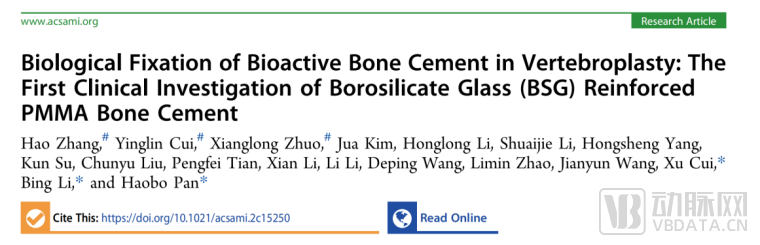 Paper screenshot (Image source: Shenzhen Institute of Advanced Technology, Chinese Academy of Sciences)
Pan Haobo introduced to Chengguo Bureau: “In addition to retaining the characteristics of traditional bone cement, such as minimally invasive operation and analgesia, active bone cement also possessesModulating the pathological microenvironment, promoting vascularization, and achieving directed differentiation of stem cellsadvantages. These three advantages work synergistically to further promote the regeneration and repair of the affected area.
To promote regeneration at the injury site, it is essential to first activate the resident cells available there. Pan Haobo offered a vivid analogy: “To cross a river and engage in battle, even with a million strong troops, one would be helpless without a bridge. Modulating the pathological microenvironment is akin to building that bridge.”
In adverse microenvironments, such as those seen in osteoporosis, extensive cellular necrosis occurs, and even normal cells fail to achieve their full functional potential. Bioactive bone cement can maintain cellular homeostasis at the lesion site through ionic interactions, thereby making more healthy cells available for therapeutic purposes.
Furthermore, the material releases functional ions during degradation, which can promote the repair and regeneration of blood vessels, bones, and skin.This characteristic of bioactive bone cement indicates that its applications are not limited to orthopedics but also extend to the field of wound repair.
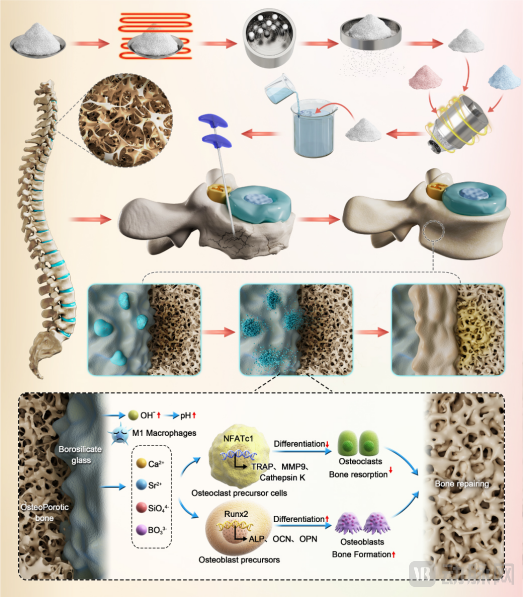 PMMA-based bioactive bone cement (Image source: Zhongke Haishiyu)
However, since the wound healing time differs from the bone repair time, the degradation rate of bioactive bone cement also needs to be appropriately adjusted. Pan Haobo’s team discovered that the ratio of boron to silicon can regulate the material’s degradation rate, thereby enabling customization for the affected site and meeting the requirements for materials in different environments. He stated:“Currently, bioactive bone cement can be personalized to meet patient needs, and in the future, it may also be used for joint replacement, dental fillings, and other applications.”
III. A Decade in the Making: PMMA-Based Bioactive Bone Cement Enters Clinical Practice
In 2013, Zhongke Haishiyu was established under the incubation of the Shenzhen Institute of Advanced Technology, Chinese Academy of Sciences, with active bone cement as its core technology.
In just 10 years, Zhongke Haishiyu has not only built its own 1,000-square-meter Class 10,000 cleanroom workshop, but also promotedBioactive PMMA Bone Cement Enters Clinical Trial PhaseMeanwhile, a variety of bioactive bone cement-derived products are further advancing toward commercialization. Among these, the bioactive 3D-printed bulk bone repair system series represents the current key research focus of Pan Haobo.
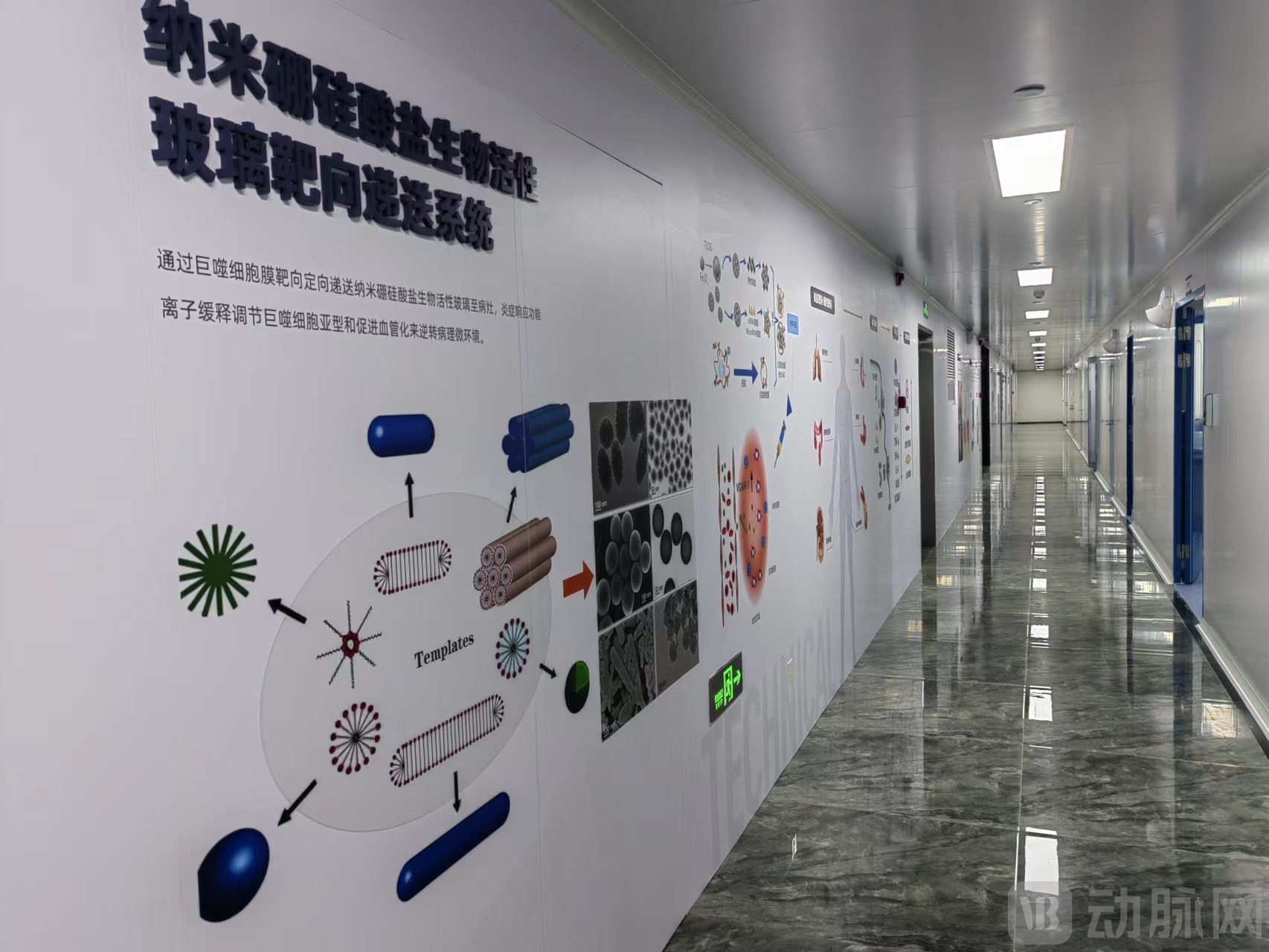 1,000 m² Class 10,000 Cleanroom Workshop (Image source: Zhongke Haishiyu)
Personalized precision medicine offers new directions and opportunities for bone repair research. Although bioactive bone cement can promote regeneration, its reparative capacity is somewhat limited in cases requiring substantial de novo bone formation, such as in patients with large-segment bone defects.
To meet the health needs of this patient population, Zhongke Haishiyu has combined bioactive bone cement with 3D printing technology to launchPersonalized Bioactive 3D-Printed Bone Repair Implants, which involves using bioactive bone cement as the raw material to 3D-print patient-specific implants for defective or severely damaged bones, followed by implantation into the body to accelerate bone repair. The project is currently in the preclinical evaluation stage.
In addition to the series of bioactive 3D-printed bulk bone repair systems, Professor Pan Haobo’s team is also actively developing and promoting the prophylactic applications of bioactive bone cements. Currently, many elderly patients with osteoporosis have not yet suffered fractures, but their bone structure is already severely compromised, characterized by significant porosity and microarchitectural deterioration.
In response, he stated, “Reinforcement and repair can be achieved using bioactive bone cement, thereby preventing fractures at their source.” This concept has currently gained recognition from multiple renowned hospitals and industry experts, completed clinical trials, and is poised for further promotion in the future.
IV. Epilogue
On the commercialization of bioactive bone cement, Pan Haobo believes it is inevitable: “Scientific research and the market are not two parallel lines; only through constant interweaving can new sparks be ignited.”
Of course, this is merely the first layer of reasons behind his commitment to bringing bioactive bone cement to market.
Although Otto Rhöm successfully synthesized PMMA in 1902, bone cement only entered the Chinese market as a medical material in recent decades. The late start and short application history have allowed overseas companies to maintain a monopoly on the research, development, and production of traditional bone cement, leading to dwindling competitiveness for domestic brands. This represents one of the pain points that cannot be overlooked in China’s medical industrialization.
Pan Haobo aims to make a breakthrough for Chinese-made bone cement brands on the international stage by commercializing bioactive bone cement. This is another reason why he has increasingly emphasized the commercialization of bioactive bone cement during his research process.
The localization of medical devices should not be limited to low- and mid-end products; it also requires leveraging strength to gain a voice in the industry.In the future, Pan Haobo will continue to advance the localization of bone cement materials, turning valuable patents into weapons for physicians in their fight against disease.