

Microsure Secures €38M Series B Funding to Advance MUSA-3 Robotic System for Sub-Millimeter Microsurgical Procedures

Microsure
Developer of Microsurgical Robots
On October 4, 2023, Microsure, a company in the field of microsurgical robotics, announced the completion of a €38 million (approximately RMB 290 million) Series B financing round. This capital will be primarily used for the development of its microsurgical robot, MUSA-3, and to support its regulatory registration and filing.
Previously, Microsure raised €2.7 million in its Series B financing to further develop and clinically promote the MUSA microsurgical robot. With the completion of these two funding rounds, Microsure has raised a total of €40.7 million.
Microsure is headquartered in the Eindhoven region of the Netherlands. Founded in 2016 by Eindhoven University of Technology (TU/e) and Maastricht University Medical Center, the company currently employs more than 30 technical professionals. Microsure is dedicated to transforming the landscape of microsurgery by developing innovative robotic systems that enhance the precision and efficiency of surgical procedures.
In 2019, Sjaak Deckers assumed the role of CEO at Microsure. At that time, Microsure’s upcoming MUSA-2 system was still immature. After a period of usability testing, it became evident that the MUSA-2 required further maintenance and updates, falling significantly short of the standards set by physicians.
Deckers clearly recognized that the R&D personnel “possessed specialized expertise but lacked industrial experience.” Prior to this, Deckers had already founded two companies: Sapiens, which was sold to Medtronic in 2014, and GTX Medical (now Onward Medical), which is currently listed on the Euronext exchanges in Amsterdam and Brussels. Deckers brings over 25 years of experience in R&D project management and product management.
Faced with the predicament surrounding MUSA-2 at the time, Deckers and the management team decided to shift strategy and develop a new, improved version. This decision shocked the company and investors at the time, but in light of current developments, Deckers’ gamble has proven worthwhile.
In fact, MUSA-1 was already developed before the establishment of Microsure.
In traditional microsurgery, it is difficult for surgeons to manually perform anastomosis of blood vessels with a diameter of less than 1 millimeter. Doctors need to magnify the surgical site 5 to 40 times under optical instruments to complete the procedure. Microsurgeons must suture extremely fine blood vessels and tissue structures; small blood vessels typically have a diameter of 0.5 millimeters or even smaller. To connect two veins, doctors must place at least four to five sutures within these barely visible vessels.
An article in *Nature Communications* notes that, thanks to continuous advances in microscopy and instrumentation, microsurgeons can now reconstruct lymphatic flow and perform vascularized tissue transplantation by anastomosing vessels with diameters ranging from 0.3 to 0.8 millimeters. Nevertheless, performance remains constrained by the precision and dexterity of the human hand.
When using a microsurgical robot, vascular anastomosis can achieve precision of less than 0.1 millimeters. Meanwhile, the use of robots can reduce surgeons' fatigue and eliminate hand tremors; it also provides haptic feedback to help surgeons perform procedures more effectively, taking over complex tasks such as vessel dissection, anastomosis, and transection from the lead surgeon.
The da Vinci system (Intuitive Surgical Inc.), as a widely used robotic platform in surgery, is primarily employed for endoscopic procedures and thus exhibits limitations in microsurgery. Previously, no robotic system specifically designed for reconstructive microsurgery had emerged in the medical community.
Recognizing this limitation, Eindhoven University of Technology (TU/e) and Maastricht University Medical Center commissioned Professor Maarten Steinbuch and his doctoral candidate, Raimondo Cau, to jointly develop a microsurgical robot named MUSA-1. The creation of MUSA-1 highlighted its market potential to TU/e, leading to the establishment of Microsure.
In 2017, Maastricht University Medical Center utilized an AI-powered robot manufactured by Microsure for microsurgical intervention. The surgical robot sutured vessels ranging from 0.03 to 0.08 millimeters in a patient with lymphedema. With the aid of this robot, the movements throughout the entire surgical procedure became finer and more precise.
Microsure has not disclosed further information about MUSA-1.
In 2019, Microsure launched the MUSA-2 robot. Its key features include motion scaling, tremor filtration, and compatibility with surgeons’ instruments, thereby enhancing precision and control.
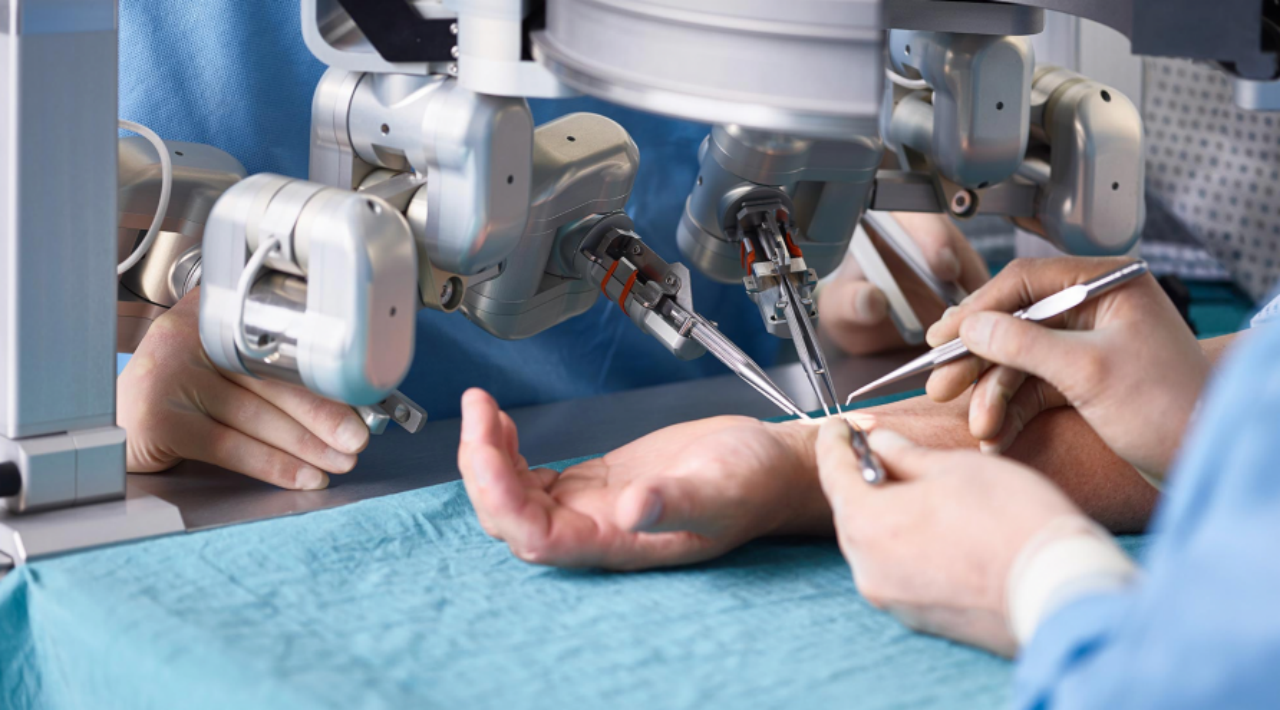
MUSA-2Microsurgical Robot. Image source:Microsure
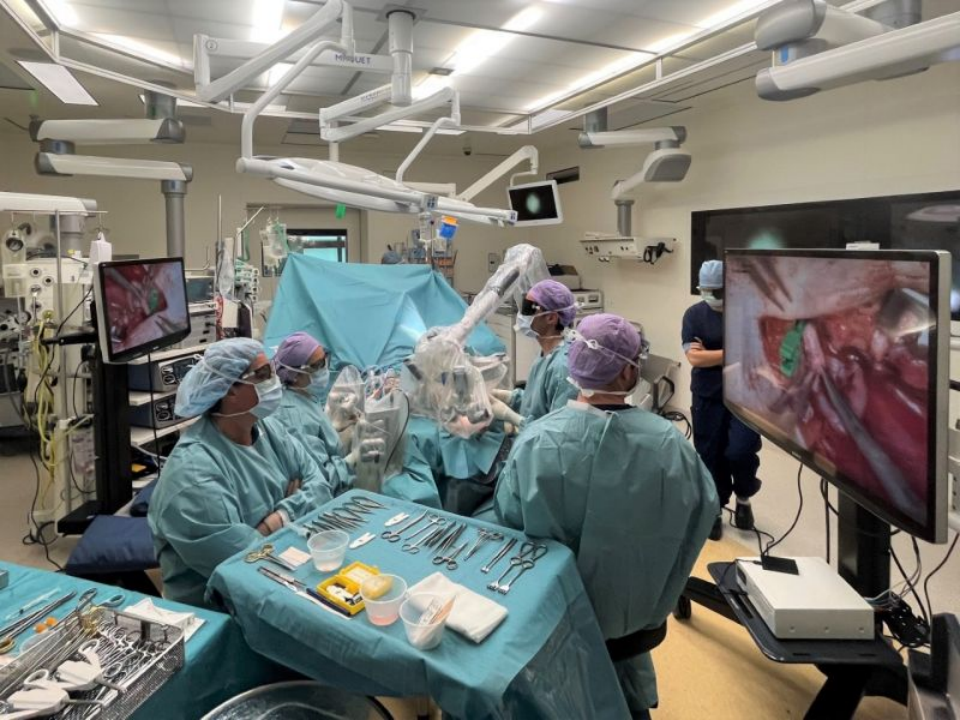
MUSA-2with OlympusORBEYE 4K 3Dcombined with surgical video microscopy,Free Flap Transplantation Surgery Image Source:Microsure
By minimizing hand tremors and filtering out natural vibrations, the system enables surgeons to suture extremely tiny, invisible blood vessels. This advancement enhances physicians’ ability to repair anatomical structures during microsurgery, thereby reducing surgical complications and improving postoperative patient care.
During surgical procedures, surgeons are required to work for extended periods at the operating table. Although the advent of MUSA-2 enables robotic assistance to enhance surgical precision, it still fails to provide a more comfortable working environment for surgeons.
Building on MUSA-2, MUSA-3 introduces improvements that eliminate the need for external surfaces to stabilize the hand, enabling surgeons to seamlessly perform complex procedures.
MUSA-3 consists of a robotic arm cart and a surgeon console.
Robotic Arm Trolley
When the wound plane is more vertical, it becomes challenging for surgeons to operate with their hands resting on a supporting surface. MUSA-3 enables surgeons to navigate various wound plane orientations while suturing with exceptionally high precision. The dexterity and stability of MUSA-3 allow physicians to maintain hand steadiness without relying on external surfaces.
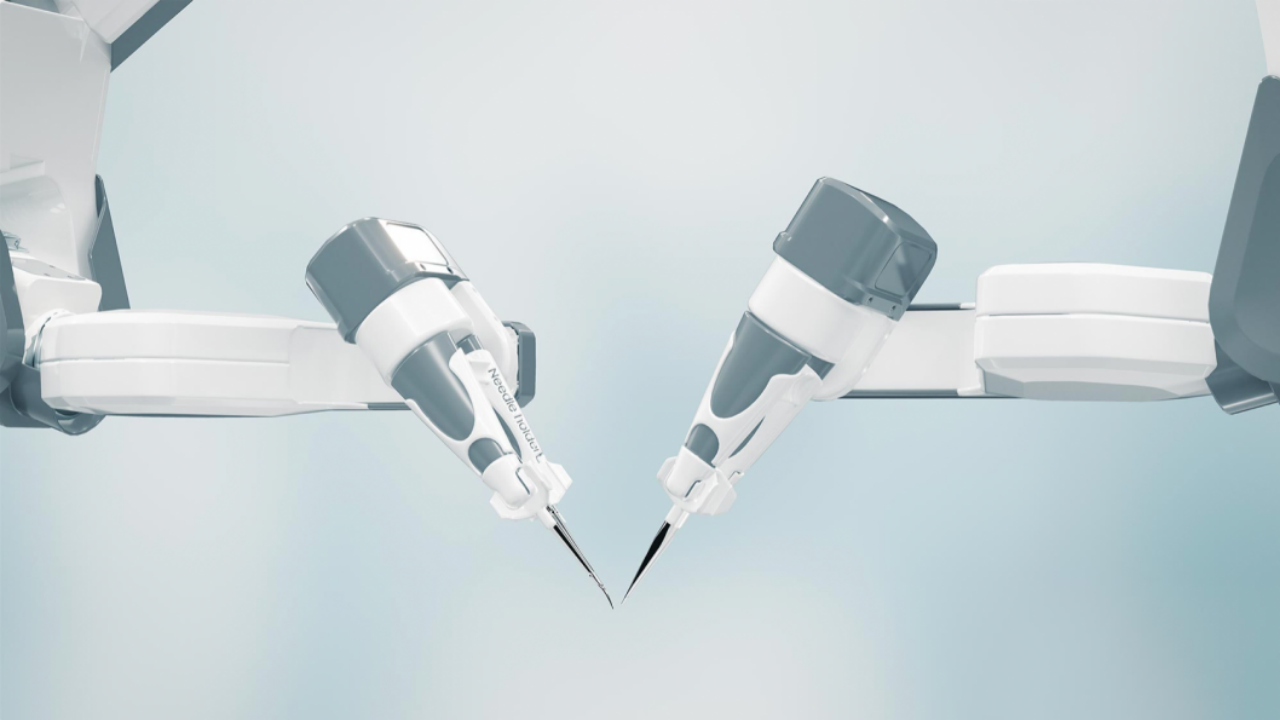
MUSA-3 Microsurgical RobotImage source:Microsure
Surgeon Console
MUSA-3 also combines surgeon operational comfort with improved ergonomics, enabling surgeons to work at a surgeon-controlled console equipped with digital endoscopes or hybrid surgical microscopes, thereby prioritizing surgeon comfort and control.
MUSA-3 is used in conjunction with a digital microscope. The surgeon views the digital or hybrid microscope screen and controls the MUSA-3 using a joystick; the joystick movements are translated to the robotic arm, leveraging motion scaling and tremor filtering to enhance operational precision.
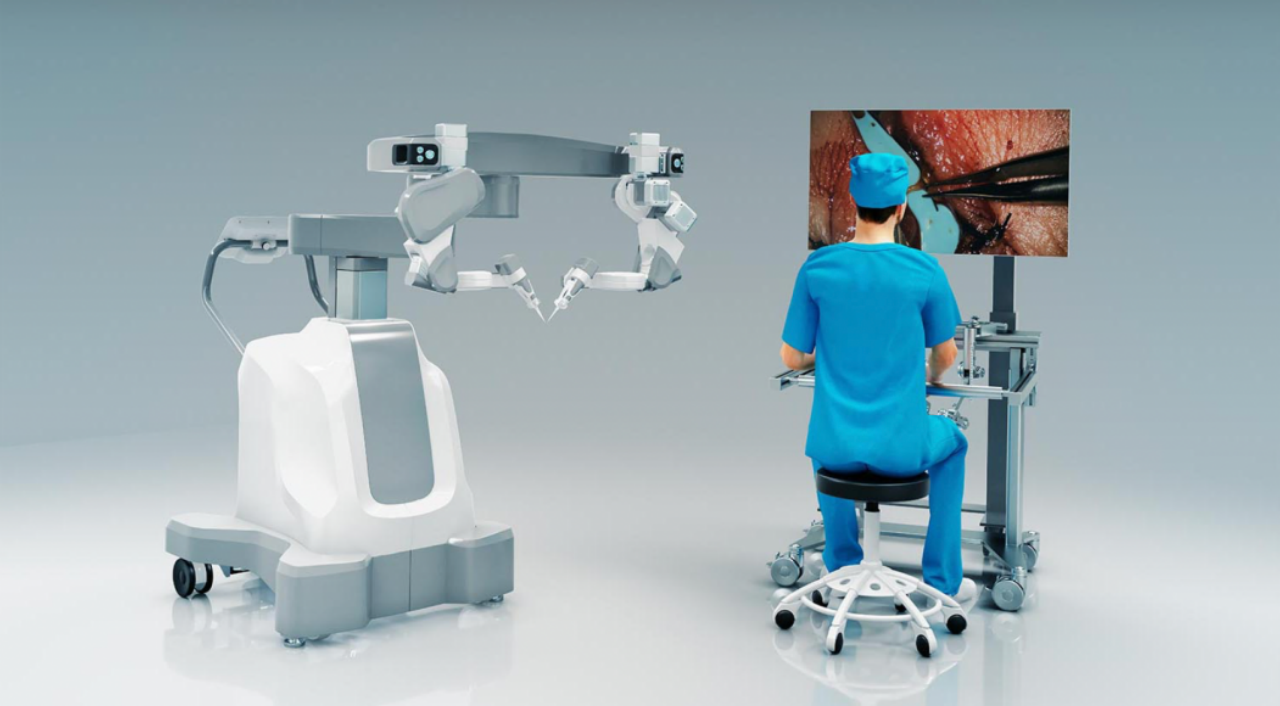
Surgeon Console Image Source:Microsure
MUSA-3 builds upon the first two generations of MUSA, offering greater flexibility and a wider workspace. It utilizes tremor reduction to enhance precision and integrates various existing micro-instruments used by surgeons, achieving a dual improvement in both surgeon comfort and surgical accuracy.
Today, MUSA is a lightweight, compact system that can be mounted on surgical tables and microscopes. It can be integrated into the operating room with only minor adjustments to the OR layout and organizational planning.
As of now, MUSA-3 has not yet been released and is awaiting approval and development by local regulatory authorities.
Currently, MUSA can be applied in scenarios including lymphaticovenous anastomosis, distal nerve repair, vascularized tissue transplantation, and many other complex microsurgical procedures. Clinical trials have demonstrated that MUSA is safe and effective for suturing blood vessels to reduce lymphedema.
On the international front, apart from the MUSA system developed by Microsure, only the Symani system launched by the Italian company Medical Micro Instruments (MMI) has obtained CE certification in the field of microsurgical robotics.
In China, two companies operating in this sector, Angtai Jingwei and Dishui Medical, have secured financing. Angtai Jingwei offers a portfolio of products including general-purpose microsurgical robots, ophthalmic surgical robots, and transgastrointestinal endoscopic robots. Dishui Medical entered the market through ophthalmic surgery and has since expanded deeply into the field of microsurgery.
Microsure’s exploration of the application of microsurgical robots has drawn attention to previously overlooked areas in surgical robotics, steering the market toward more refined technologies and enhanced clinical awareness in this field. We look forward to further innovative transformations in the realm of microsurgery.
References:
van Mulken, T.J.M., Schols, R.M., Scharmga, A.M.J. et al. First-in-human robotic supermicrosurgery using a dedicated microsurgical robot for treating breast cancer-related lymphedema: a randomized pilot trial. Nat Commun 11, 757 (2020).