

China's Artemisia Annua Essential Oil Standard Bridges Global Gap Through Integration of Tradition and Innovation
At the 2023 Shanghai Cooperation Organization Forum on Traditional Medicine, China’s first group standard for Artemisia annua essential oil was released. Developed by benchmarking against international standards through innovations in extraction technology, this standard features core key indicators that are at a leading international level. The release of this standard will help establish unified quality evaluation methods and standardized product certification systems within China’s essential oil industry, thereby comprehensively enhancing the reputation and competitiveness of Chinese plant-based essential oil products in both domestic and international markets.
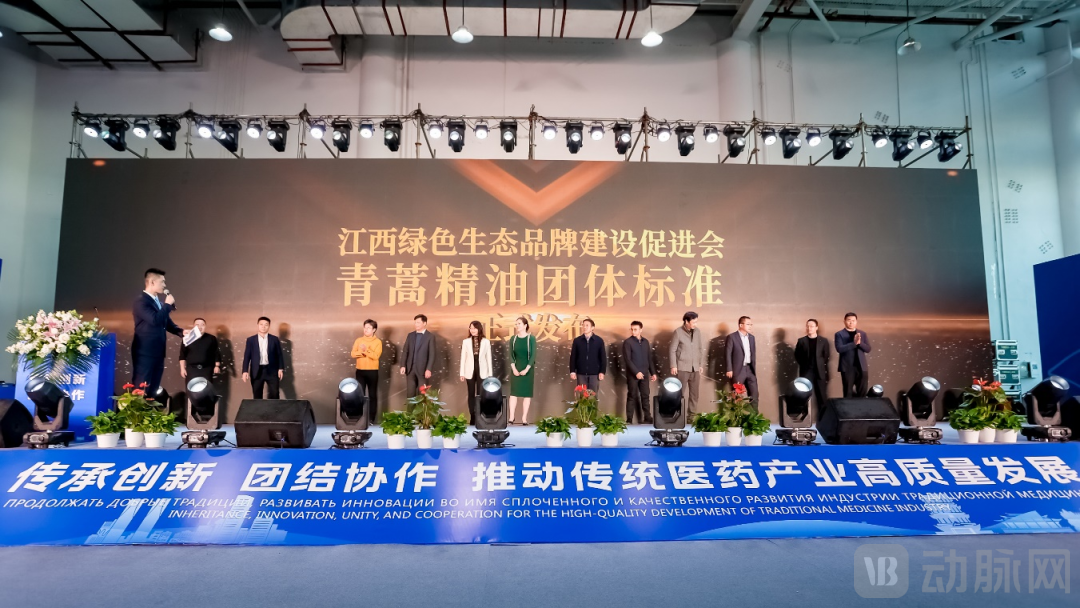
The Group Standard for Artemisia Annua Essential Oil was led by Jiangxi Ruixiulang Technology Co., Ltd. and jointly developed by 19 industry-academia-research institutions, including the Ganjiang Traditional Chinese Medicine Innovation Center, Jiangxi Institute of Quality and Standardization, Shanghai University of Traditional Chinese Medicine, Shanghai Skin Disease Hospital, Shanghai Jahwa United Co., Ltd., Shulei Biotechnology Co., Ltd., and Shanghai Microspectrum Chemical Technology Service Co., Ltd. It is China’s first group standard for Artemisia annua essential oil.
Julie Foster (UK), President of the International Beauty and Aromatherapy Quality Association (IBAQA) and Senior Education Director of the International Therapy Examinations Council (ITEC): “Currently, this artemisia essential oil is being used for teaching purposes in training centers across more than 38 countries. These include organizations regulated by ITEC, which enjoys government recognition, as well as training centers accredited by NAHA (National Association for Holistic Aromatherapy), one of the most prestigious standards organizations in the United States. I am confident that this remarkable essential oil will see even broader applications in the future.”
Former Vice President of the China Academy of Chinese Medical Sciences, Professor Fan Jiping: “There are currently no relevant international, national, industrial, or local standards for artemisia essential oil. The release of this group standard fills a gap in the field.”
The group standard for Artemisia annua essential oil is developed based on innovations in extraction technology and alignment with international standards, with its core key indicators (content and number of characteristic components) reaching an internationally leading level. According to the standard for Artemisia annua essential oil, there are six types of characteristic components, among which the content of β-pinene shall not be less than 8.16%, α-pinene not less than 10.61%, germacrene D not less than 0.25%, and 1,8-cineole not less than 13.78%. These requirements impose new technical demands on the extraction and production of Artemisia annua essential oil. The group standard also specifies the color and appearance, aroma, relative density, refractive index, optical rotation, miscibility, characteristic component indicators and their contents of Artemisia annua essential oil, describes the corresponding test methods and inspection rules, and makes provisions for labeling, marking, packaging, transportation, and storage, thereby ensuring standardized and regulated management of the quality of Artemisia annua essential oil.
Jiangxi Ruixiulang Technology Co., Ltd., the lead organization for the group standard on Artemisia annua essential oil, is the first project entity implemented under the strategic framework agreement between Ganjiang New Area and Shanghai University of Traditional Chinese Medicine. The company’s founder, Professor Miao Xiao, serves as the Dean of the China Aromatherapy Research Institute of the International Therapy Examination Council (ITEC) and as a Chief Physician at Shanghai University of Traditional Chinese Medicine. In March 2022, he was introduced under the “Ganjiang Haizhi” Talent Program and brought his enterprise to settle in the Traditional Chinese Medicine (TCM) Science and Innovation City of Ganjiang New Area.Focusing on Jiangxi Province’s advantageous aromatic plants, Ruixiulang has collaborated with Zhangshu City, known as the “Capital of Traditional Chinese Medicine,” and other regions to establish standardized planting demonstration bases for TCM essential oil raw materials. The company engages in collaborative innovation with industry-academia-research institutions both within and outside the province, including the Ganjiang TCM Innovation Center, Shanghai University of Traditional Chinese Medicine, Jiangxi Agricultural University, and Shanghai Skin Disease Hospital. Furthermore, it has established joint product research and development partnerships with brand enterprises such as Shulei Biotechnology Co., Ltd. and Xuelingfei, thereby supporting Ganjiang New Area in building a highland for R&D in the “TCM Plus” industrial development.Currently, Ruixiulang has successfully completed extraction experiments for various varieties, including Zhike flower (Citrus aurantium ‘Daidai’ flower) essential oil from Zhangshu City, Jinggang honey pomelo flower essential oil from Ji’an City, and navel orange flower essential oil from Ganzhou City. Some of these varieties have completed pilot-scale trials and are poised for mass production. By deploying the innovation chain along the industrial chain, Ruixiulang adheres to its “One Tripod, Three Legs” technological innovation system—where scientific research serves as the tripod, and intellectual property, standard setting, and digital informatization serve as the three legs—as a powerful engine for corporate development, gradually transforming innovative achievements into productive forces.
The group standard for Artemisia annua essential oil was jointly released by 19 entities, led by Jiangxi Ruixiulang Technology Co., Ltd., including higher education institutions, general hospitals, testing agencies, fragrance and flavor enterprises, cosmetic brand companies, and manufacturers. Artemisia annua essential oil and more than ten related formulation ingredients have been widely applied in fields such as dermatological diagnosis and treatment, cosmetic efficacy ingredients, infant skincare, functional fragrances, natural preservation, and flavors and fragrances, effectively promoting collaborative cooperation among industry, academia, research, application, and finance. Leveraging this group standard, Artemisia annua essential oil has also become a teaching oil used in training bases of certain international aromatherapy organizations across 38 countries, including the United Kingdom, the United States, and France, marking a solid step forward in the innovative global application of Traditional Chinese Medicine.
Amid the national policy framework actively promoting the healthy development of the traditional Chinese medicine (TCM) industry, Jiangxi Province aims to establish itself as a leading TCM powerhouse in China with global recognition. It has explicitly set forth the goals of innovating and developing TCM-based general health products and building a modern, green manufacturing system for TCM. The “14th Five-Year Plan” for TCM Development in Jiangxi Province proposes vigorous development of general health products such as cosmetics with specialized efficacy, TCM essential oils, and daily necessities. As public awareness of health and aesthetics continues to rise, TCM essential oil ingredients have gained a competitive advantage in the healthcare and beauty industries due to their unique aromas and therapeutic properties, witnessing rapid growth in both domestic and international markets. With the globalization of China’s economy and the advancement of the Belt and Road Initiative, exports of TCM products have been further boosted, ushering the TCM essential oil industry into a genuine “period of dividend growth.”
However, the cultivation of raw materials for traditional Chinese medicine (TCM) essential oils still predominantly follows an extensive model characterized by decentralized smallholder farming as the primary source and supplementary proprietary cultivation by essential oil manufacturers. This results in impure botanical taxonomic origins and difficulties in ensuring quality control. Furthermore, the lack of standardized controls in extraction methods and production processes means that there are no established standards for the active ingredients and concentration indices of essential oils across different batches, leading to significant variability. The absence of a comprehensive standard system covering all stages—from raw material cultivation to product stability—has resulted in a large volume of essential oil products failing to meet the demand for high-quality essential oils in both domestic and international markets.
The promulgation and implementation of this group standard will help foster industry consensus on quality standards for essential oils, encourage enterprises to organize production in accordance with unified standards, and enhance the universality and safety of essential oil products. It will also facilitate the establishment of unified quality evaluation methods and a standardized product certification system in the essential oil sector, thereby promoting and regulating market order. Furthermore, it will bolster the reputation and competitiveness of China’s plant-based essential oil products in both domestic and international markets, expanding opportunities and scope for international trade cooperation. The implementation of this group standard will further drive technological innovation among essential oil-related enterprises and promote the healthy and sustainable development of China’s essential oil industry.
As a national pilot zone for ecological civilization and a pioneer province for green development within the Yangtze River Economic Belt, Jiangxi Province has consistently adhered to the strategy of prioritizing ecology and promoting green development. Guided by this philosophy, Jiangxi Ruixiulang Technology Co., Ltd. led the drafting of the group standard for artemisia essential oil, which was released by the Jiangxi Green Ecological Brand Construction Promotion Association, striving to create artemisia essential oil products with low-carbon and green characteristics throughout their entire life cycle.
At the cultivation stage of *Artemisia annua*, the raw material for artemisia essential oil, measures such as "reducing chemical fertilizer use and minimizing pesticide application" are implemented to enhance the crop's carbon dioxide absorption capacity. At the pre-extraction stage, clean energy sources are adopted to replace traditional fossil fuels (e.g., substituting green electricity for thermal power) to reduce direct carbon emissions. During the extraction process, production techniques and workflows are optimized by replacing organic solvent extraction with technologies such as steam distillation, supercritical CO2 extraction, and molecular distillation, thereby improving essential oil yield and energy efficiency to achieve comprehensive energy conservation and carbon reduction. In the post-production phase, low-carbon practices including green packaging, storage, and transportation are employed to lower indirect carbon emissions.
By adhering to the core pathways and technological innovations centered on the application of green energy, green processes, and green materials, as well as the recycling of by-products, the traditional Chinese medicine (TCM) essential oil industry has transformed its linear economic development model and production methods characterized by “high input, high consumption, high emissions, and low output,” thereby meeting the growing global demand for green, healthy, and sustainable products.
Amidst the global wave of green development and sustainable innovation, the cosmetics industry is facing unprecedented challenges and opportunities. Chinese enterprises, adhering to the integration of traditional and modern elements, are sparing no effort in driving the industry to new heights through innovation.
At the launch event for the group standard on Artemisia annua essential oil, Professor Miao Xiao shared the journey of the standard from “project initiation to development and release.” Representatives from the Ganjiang Traditional Chinese Medicine Innovation Center, Shanghai University of Traditional Chinese Medicine, and Shanghai Microspectrum Chemical Technology Service Co., Ltd. introduced the technical challenges encountered during the drafting of the Artemisia annua essential oil standard and their corresponding solutions. Beauty brands such as Shanghai Jahwa United Co., Ltd., Shulei Biotechnology Co., Ltd., and Xuelingfei shared insights on “the green concept of Traditional Chinese Medicine and innovative R&D in cosmetics” from the perspective of standard application. The Jiangxi Institute of Quality and Standardization presented the pathway for standard development in the beauty industry. In her address, Ms. Julie Foster, Chair of the International Beauty and Aromatherapy Quality Association (IBAQA) and Senior Education Director of the International Therapy Examination Council (ITEC), introduced the current application of products compliant with this Artemisia annua group standard in international aromatherapy education institutions. Experts and scholars from medical institutions, including the Shanghai Skin Disease Hospital and Shanghai Shuguang Hospital, engaged in forward-looking discussions on the future potential of Artemisia annua essential oil in the diagnosis and treatment of dermatological conditions as well as in skincare applications. Officials from the Cosmetics Supervision and Administration Division of the Jiangxi Provincial Medical Products Administration and the Ganjiang New Area Traditional Chinese Medicine Science and Technology Innovation City elaborated on Jiangxi’s policies aimed at promoting the development of the beauty and fragrance industries.
This information-rich scientific sharing session reaffirmed the concept of ESG (Environment, Social, and Governance) and built consensus, highlighting the broad international vision and solid local foundation of Chinese enterprises. It has opened a new green chapter of sustainable development for the innovative application of traditional Chinese medicine in the beauty and general health sectors.
The release and implementation of group standards not only vividly demonstrate the modern interpretation and industrial paradigm of traditional Chinese medicine (TCM) in fields such as cosmetics, but also signal innovative applications and a profound commitment to sustainable development through the lens of contemporary technology. The green power of “from farm to vanity” is rising from Jiangxi and spreading across the world. Empowered by “TCM+,” the cosmetics industry is moving toward a greener, healthier, and brighter future.
At the press conference for the group standard of Artemisia annua essential oil, the inaugural launch ceremony of the "Guidelines for the Application of Traditional Chinese Medicine Aromatherapy" was held.
This practical monograph, edited by Professors Miao Xiao and Zhao Chen, features a team of contributors from diverse disciplines at Shanghai University of Traditional Chinese Medicine, including basic medicine, dermatology, tuina (Chinese therapeutic massage), and Chinese materia medica. Guided for many years by the traditional TCM theory of syndrome differentiation, the team has continuously explored the literature and applications of TCM aromatherapy. By integrating clinical diagnostic and treatment experience, they have summarized and systematized a set of scientific, standardized, and appropriate TCM aromatherapy techniques, thereby endowing TCM aromatherapy with new practical significance and cultural connotations. This book is thus a compilation of their accumulated expertise.
This monograph provides a comprehensive exposition of the theoretical foundations, commonly used medicinal substances, administration methods, and precautions associated with Traditional Chinese Medicine (TCM) aromatherapy, demonstrating both breadth and depth while integrating academic principles with practical application. Professor Tao Jiansheng, former Dean of the School of Chinese Materia Medica at Shanghai University of Traditional Chinese Medicine and doctoral supervisor, commented in his preface: “This book holds significant importance and practical value for the promotion, application, and scientific popularization of TCM aromatherapy.”
The publication of *Guidelines for the Application of Traditional Chinese Medicine Aromatherapy* carries the editorial team’s passion for and understanding of TCM aromatherapy, along with the enchanting fragrance of traditional Chinese culture, spreading across the world and perfuming humanity.