

SaviCred's SaviSafe® Safety Device Receives FDA 510(k) Clearance, Paving the Way for Global Expansion
Domestic innovation is accelerating its global expansion.
On November 22, 2023, Saiwei Bio’s SaviSafe®SaviSafe protection device successfully obtained FDA 510(k) clearance, becoming the first protection device made in China to receive FDA approval.®Safety Device is a single-use safety device designed for use with pre-filled syringes (PFS). Its primary function is to provide injection safety protection for users, safeguarding them from needlestick injuries and the associated risk of bloodborne pathogen infections.
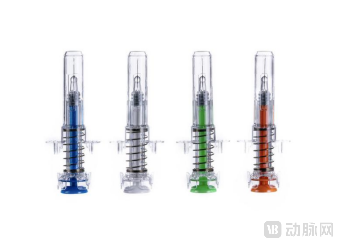
SaviSafe®Passive Protection Device
It is reported that SaviSafe®The safety device is the first of its kind, developed using original Chinese technology, to receive FDA approval. This approval not only signifies that Saiwei Biotech’s technical expertise and innovative capabilities in the field of injection delivery devices have gained international recognition—marking a new chapter in the company’s global expansion—but also establishes a “Chinese brand” in the injection delivery sector, showcasing the strength of Chinese innovation.
Saiwei Biologics is dedicated to providing innovative injection delivery solutions for pharmaceutical clients. The company currently offers three major product lines—safety devices, needle-free drug reconstitution systems, and auto-injector pens—and holds more than 30 invention patents.
The core team members of Saiwei Shengwu hail from international industry giants such as BD and West, bringing over 10 years of experience in the drug delivery device sector. After years of research and development, the company has established three product pipelines—safety devices, auto-injector pens, and medication preparation devices—with a portfolio comprising more than 10 products.
SaviSafe, which has received FDA 510(k) clearance®The needle protection device, a proprietary design by SaviBio, is intended for single-use needle protection on pre-filled syringes, safeguarding healthcare workers and patients from potential sharps injuries. Easy to use, the device allows users to administer injections by pressing the plunger; upon completion of the injection, the SaviSafe® protection mechanism releases a compression spring to retract the needle, automatically ensuring needle safety.
Its unique plunger design, which supports the injection of high-viscosity drugs; a larger drug viewing window designed to improve drug visibility; an extended finger flange; and an enhanced plunger all contribute to improved injection stability. Even patients with limited hand dexterity can operate it with ease.
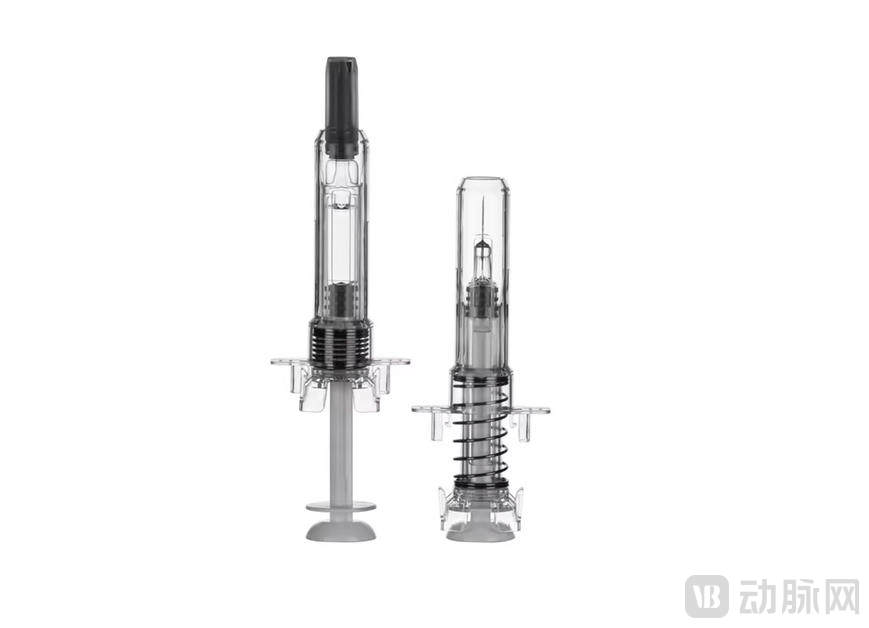
SaviSafe®Passive Protective Device
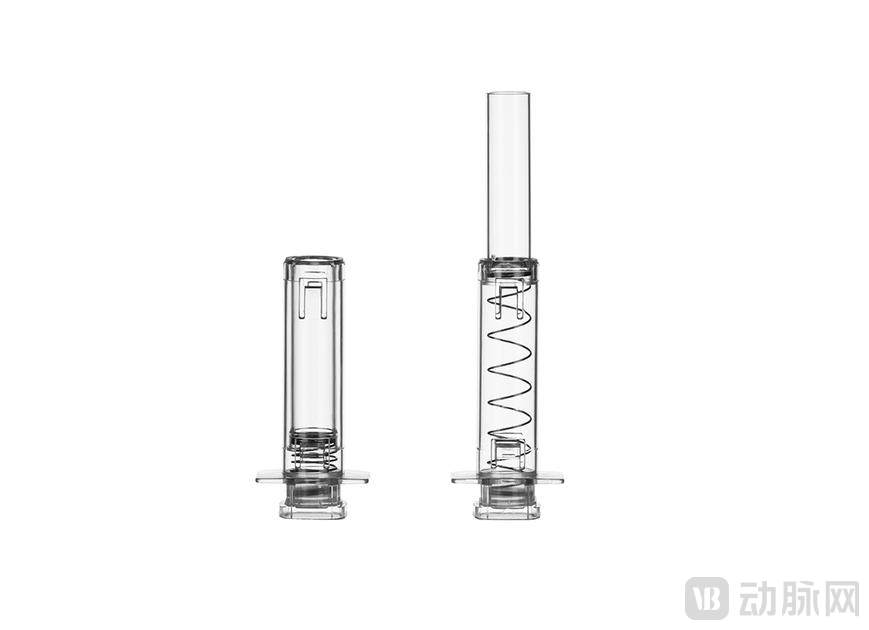
SaviVentis Active Protection Device
The SaviFort™ auto-injector pen is another flagship product from Saiwei Biologics. Featuring automatic needle insertion and retraction, it is simple, easy to use, and intuitive. Users can complete the injection in just two easy steps—“Pull (remove the bottom cap)” and “Press (administer the injection)”—thereby improving treatment adherence.
According to Lin Xiao, General Manager of Saiwei Biotech, traditional injection pens protect the needle by using a spring-loaded mechanism to eject the needle shield after injection is complete. However, if the device is not pressed vertically against the skin during injection, causing misalignment and poor skin contact, accidental activation may occur, leading to premature ejection of the needle shield. This can cause the needle to disengage from the skin before the injection is finished, resulting in injection failure. Furthermore, since traditional needle protection relies on a spring to eject and lock the shield, spring failure would compromise the protective function, posing a risk of accidental needlestick injuries to users.
Meanwhile, Saiwei Biology adopts needlesAutomatic retraction and integrated needle protection design.During injection, the user presses against the skin to administer the injection; upon completion of the injection, the needle retraction mechanism within the pen is activated.The automatic needle retraction mechanism ensures that the needle is withdrawn only after the medication has been fully delivered, eliminating the need for users to manually judge injection completion and withdraw the needle as required with traditional injection pens, thereby minimizing the impact of human operation. Furthermore, the integrated design mitigates risks associated with poor coordination between the separate spring and needle components found in traditional needles, enhancing the ease of use, overall safety, and efficacy of the injection pen. This user-friendly drug delivery solution facilitates optimal patient adherence to long-term treatment regimens.
Injecting large volumes of high-viscosity fluids through finer needles requires high injection force. Larger doses of high-viscosity drugs result in greater skin resistance, thereby subjecting the syringe to increased stress during the injection of high-viscosity solutions. This is particularly pronounced at the end of needle insertion and the beginning of plunger depression, significantly elevating the risk of glass syringe breakage. Saiwei Biotech’s QiaosiCushioning Design, upgraded the entire drug delivery injection module, which not only avoids conflicts with existing patented designs but also achieves smooth injection. In addition, Saiwei Biotech has ingeniously devisedSafety Lock Module, to prevent accidental activation of the medication in the injection pen due to impact, accidental drops, or collisions during transportation.
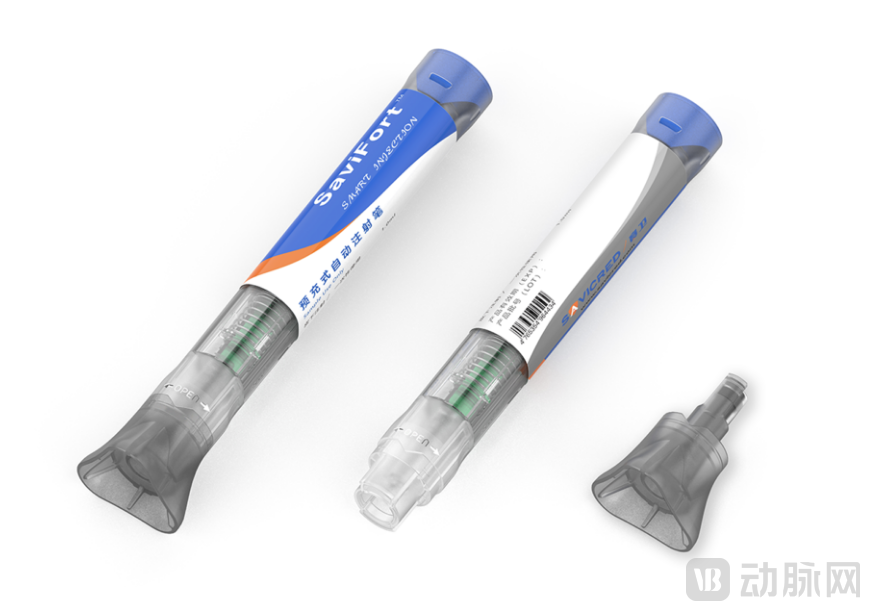
SaviFort™ Auto-Injector Pen
Currently, multiple drug products using auto-injector pens have been approved and launched in overseas markets. Furthermore, international giants such as BD, SHL, and Ypsomed established robust patent barriers around auto-injector technology in earlier years. Consequently, Chinese manufacturers developing their own auto-injectors often find it difficult to circumvent existing intellectual property rights, resulting in significant R&D challenges and prolonged development cycles.
“Imitative innovation” may be a “shortcut” for injection pen manufacturers to rapidly navigate the dense patent forest of overseas giants, but Saiwei Biotech was determined from the outset to pursue “original innovation,” doing what is difficult yet right.
What is unpredictable are concrete and feasible innovative solutions; what is predictable is the relentless succession of various difficulties.
Although the injection pen appears lightweight and compact, it is in fact a highly integrated, complex system. Due to its small size and high precision, there are significant technical barriers in areas such as component structural design and injection molding processes. Achieving intricate structural designs within the confined housing of an injection pen and ensuring smooth mechanical linkage is akin to “performing elaborate rituals inside a snail’s shell.”
Lin Xiao, General Manager of Saiwei Biotech, cited an example: the stroke of the plunger determines the volume of subcutaneous medication delivered through the needle. Since the plunger stroke is determined by the pen’s internal mechanism, dimensional control of the internal structural components is particularly critical. During the early stages of research and development, the Saiwei Biotech team assembled various combinations of locking, protective, and injection structures, conducted physical materials analysis and injection simulation analyses to identify the stress and load-bearing limit points within the structure, and then iteratively adjusted and validated the design through 3D printing and mold fabrication. This iterative process ensured that key quality attributes of the design were met, ultimately finalizing the internal configuration of the pen.
Ensuring dose accuracy is one of the most core functions of all injection pens. The ingenious design in the early stage is just the first step, while the mass production process in the later stage directly determines the quality of each injection pen in the hands of consumers.
The production process for injection pens encompasses mold design and manufacturing, injection molding, and automated assembly. To achieve stringent dose accuracy limits, manufacturing tolerances for mechanical components must be correctly allocated and feasible to avoid producing inconsistent, out-of-specification parts during processing and molding. As molds determine the quality of plastic components and are central to the injection molding process, Saiwei Bio has established a dedicated mold team to keep critical product quality control firmly in-house. This team conducts in-depth research into Design for Manufacturability (DFM) and Design for Assembly (DFA), proactively identifying and mitigating risks. Additionally, the company has independently developed multi-cavity molds, enabling it to maintain strict quality control while better meeting pharmaceutical companies’ cost requirements.
The manufacturing of auto-injector pen components not only involves high precision but is also typically carried out in large volumes. Therefore, high-precision injection molds, multi-cavity molds, hot runner systems, and precision molding injection machines are merely capabilities that ensure accuracy, scalability, and production capacity. Since the delivery timeline for auto-injector pens is critical to project schedules,Biopharmaceutical companies should consider seeking auto-injector pen partners with in-house mold-making and injection molding capabilities to avoid potential delays associated with communicating with third-party suppliers.Saiwei Bio’s in-house mold team enables more effective translation of designs into required molds, while helping biopharmaceutical companies safeguard intellectual property rights related to injection pens. The presence of an internal mold center staffed by experienced engineers also underscores the auto-injector company’s commitment to consistent quality.
Each auto-injector pen consists of different components and mechanisms, thus requiring customized assembly equipment. The design of such equipment must be robust enough to meet the demands of high-volume production while ensuring repeatability to guarantee quality. Common assembly solutions include semi-automatic and/or fully automatic assembly systems for both sub-assembly and final assembly. Following pilot-scale design validation, Saiweishengwu’s automation experts rapidly adjust assembly lines according to the scale of pharmaceutical manufacturers’ projects, providing technical and equipment support to meet capacity and equipment requirements across various clinical and commercialization stages.
“As centralized procurement enters a more profound phase, pharmaceutical manufacturers are becoming increasingly sensitive to cost control. Quality by Design (QbD) underscores that robust R&D is the fundamental driver of cost reduction,” Lin Xiao added. In a sense, costs are also determined during the R&D stage. For instance, designing products with fewer components facilitates manufacturability and enables automated testing and assembly, thereby reducing manufacturing costs and improving product yield. Thus, design dictates direct product costs; to reduce costs, efforts should first focus on R&D and design, followed by manufacturing optimization. This has been a key impetus for Saiwei Biotech’s unwavering commitment to continuous innovation.
With this SaviSafe®With the protective device successfully obtaining FDA 510(k) clearance, what are Saiwei Biotech’s plans for international expansion? How will it compete against foreign injection device manufacturers that hold first-mover advantages and strong local market presence?
Lin Xiao stated that the approval of this protection device in the United States signifies that Saiwei Biotech’s technical expertise and innovation capabilities in the field of drug delivery devices have gained international recognition. In the face of foreign competitors, Saiwei Biotech’s greatest advantage lies in its localization as a domestic company, enabling it to rapidly respond to the needs of Chinese pharmaceutical manufacturers and ensure a stable and secure supply chain. Compared with other domestic peers, although Saiwei Biotech has not been established for the longest period,However, the entire founding team possesses over 10 years of industry experience in drug delivery devices and a global perspective., with extensive experience and unique insights into technology, customer needs, regulations, production, and cost control.
“The injection device must be closely integrated with the drug; whether the drug can ultimately be delivered effectively into the patient’s body is entirely determined by this injection pen. It is not merely a standalone plastic component, but rather requires the R&D team to have a profound understanding of the drug, materials, mechanical structure, manufacturing processes, and more,” emphasized Lin Xiao.
“Biopharmaceutical companies need to understand how manufacturing capabilities impact their final products and select drug delivery device partners accordingly,” Lin Xiao, General Manager of Saiwei Biology, told VCBeat. Mold making and injection molding are core processes in the manufacture of injection pens. If pharmaceutical companies choose syringe manufacturers that outsource these core processes, it may not only affect the time-to-market and quality during mass production of the drug-device combination product, but also pose risks such as intellectual property disputes. Therefore, it is crucial to find partners who master core processes and hold relevant intellectual property rights.
Pre-filled syringes, as a novel packaging format for injectable medications, have been increasingly adopted by pharmaceutical companies and applied in clinical settings. With the surging popularity of drugs such as GLP-1 agonists, the volume of auto-injector pens is poised for significant growth. Domestic suppliers of innovative injection devices with independent intellectual property rights, represented by Saiwei Biologics, are well-positioned to capitalize on this momentum and rise prominently.
It is reported that Saiwei Biologics has established partnerships with more than 30 domestic pharmaceutical companies. In the future, Saiwei Biologics will further facilitate the expansion of Chinese biopharmaceutical enterprises into overseas markets, contributing its strength to the global competitiveness of local pharmaceutical companies.