

Minimally Invasive Cardiac Surgery Gains Momentum as Young Surgeons Focus on Enhancing Clinical Skills
From December 1 to 3, the China Forum on Asian Heart Valves, one of the most prominent events in the field of Asian cardiac surgery, was held in Chengdu, Sichuan Province. At the symposium’s session on interventional therapies, multiple cardiac surgery experts from China, France, Canada, Singapore, South Korea, and other countries presented academic reports on topics such as transcatheter aortic valve intervention and transcatheter mitral valve intervention, highlighting that minimally invasive interventional therapy is currently one of the key technical directions in valvular heart surgery. The event also featured live broadcasts of several surgical procedures, including valve replacement and valve repair.
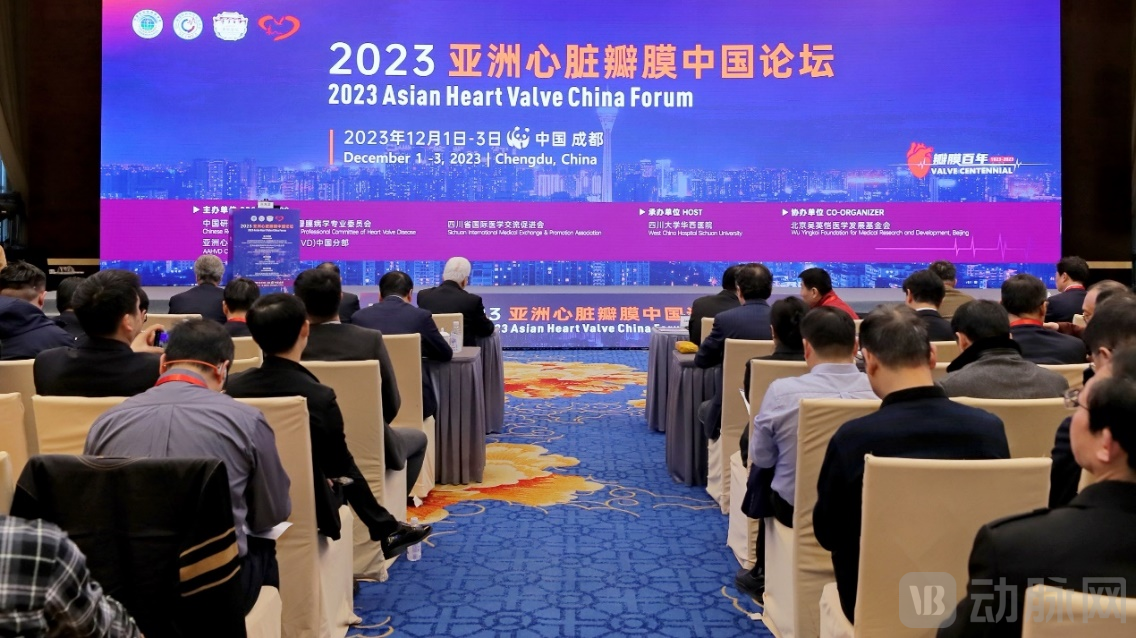
Figure: Scene from the China Forum of Asian Heart Valves
Valvular heart disease is a condition associated with high clinical morbidity and mortality. According to the "Report on Cardiovascular Health and Diseases in China," approximately 25 million people in China are affected by valvular heart disease. In recent years, thanks to advancements in medical technology, new techniques and therapies for treating valvular heart disease have emerged continuously. With the growing number of patients and the advent of innovative surgical procedures, enhancing the clinical skills of primary-care hospitals and young physicians has become a key focus in the medical community.
To this end, the forum hosted three major competitions: the “Transapical TAVI (Transcatheter Aortic Valve Implantation) Surgical Competition,” the “Rheumatic Mitral Valve Repair Surgical Competition,” and the “Young Physicians’ Excellence in Valvular Surgery Paper Competition.” Twenty-eight young cardiac surgeons advanced to the national finals and competed on-site.
The three major competitions aim to enhance the clinical and academic proficiency of young physicians through a training-by-competition approach. Taking the “Transapical TAVI Procedure Competition” as an example, the event spanned nearly one year, comprising five preliminary rounds and two semifinal rounds, and attracted 43 young physicians from 40 hospitals across China.
TAVI (Transcatheter Aortic Valve Implantation), fully named “Transcatheter Aortic Valve Implantation,” is a minimally invasive treatment for aortic valve disease. Aortic valve disease is one of the most common valvular heart diseases, primarily manifesting as two types of lesions: stenosis and regurgitation (insufficiency).
Zhang Ji, a former cardiac surgeon who currently serves as Chief Scientist of the Structural Heart Disease Division at JianShi Medical, explained that the common access routes for TAVI procedures are categorized into two types: “transfemoral” and “transapical.” Transapical TAVI offers distinct advantages; for instance, it is the only viable option for patients with peripheral vascular disease or when valve replacement must be performed under femoral arteriovenous bypass. Therefore, the transapical TAVI approach remains an irreplaceable surgical technique and is an essential skill for cardiac surgeons.
According to literature reviews and Frost & Sullivan reports, the number of patients with aortic stenosis in China reached 4.4 million in 2020 and is projected to reach 5.2 million by 2030. The number of patients with aortic regurgitation is comparable to that of patients with aortic stenosis. Globally, while there are numerous products available for treating aortic stenosis, options for treating aortic regurgitation are extremely limited. Currently, only one product, the “J-Valve Transapical Interventional Valve,” has been approved for market launch by China’s National Medical Products Administration (NMPA).
Currently, more than 400 hospitals in China are capable of performing transcatheter aortic valve implantation (TAVI) procedures, including both transfemoral and transapical approaches. The annual procedure volume has shown a year-on-year growth trend, exceeding 8,000 cases in 2022, representing an increase of over 18% compared to 2021. By the end of October 2023, the number of procedures had already surpassed 11,000. Nevertheless, there remains a substantially larger patient population in need of treatment.
Professor Zhang Haibo from Beijing Anzhen Hospital, the Chief Advisor of the competition, stated that the “Transapical TAVI Procedure Competition” aims to promote the standardization of this technique and further popularize interventional therapy for aortic regurgitation and stenosis in elderly patients. Through the competition, participants can accumulate experience in surgical strategy, intraoperative procedures, and postoperative follow-up, laying a solid foundation for their future clinical practice.
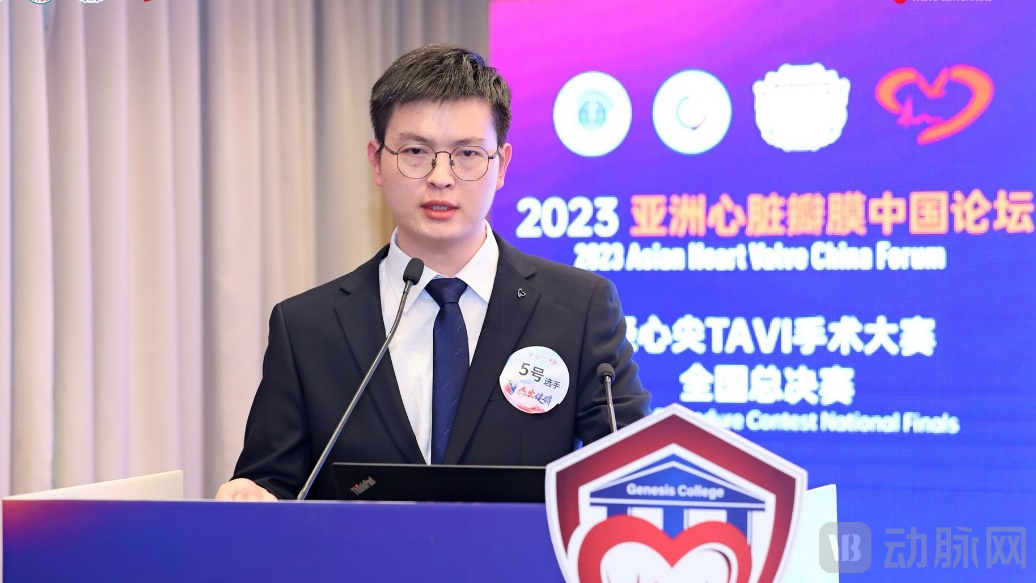
Pictured is Li Yuehuan, the overall champion of the "Transapical TAVI Procedure Competition"
According to the on-site introduction at the forum, the six finalists in the “Transapical TAVI Procedure Competition” underwent rigorous screening across theoretical knowledge, surgical strategy, and intraoperative adaptability. One week prior to the final round, each contestant independently performed valve replacement surgery on animal models. The top three winners were ultimately selected by a panel of expert judges based on a combination of hands-on surgical performance scores and case presentation results.
“Grand Champion of the Transapical TAVI Competition,” Dr. Li Yuehuan from Beijing Anzhen Hospital, stated, “In an era where cardiac surgery is becoming increasingly minimally invasive, young physicians must continuously expand their professional capabilities and master more innovative therapies. Through this competition, we have gained valuable experience, and we hope to apply what we have learned to improve health outcomes for more patients in the future.”