

Second China Digital Therapeutics Product Quality and Regulatory Symposium and 2023 Annual Meeting of the Digital Therapeutics Committee of China Association for Medical Devices Held in Shanghai

SLANHEALTH
Digital Therapeutics CDMO and Full-process Service Developer
On December 1, 2023, the Second China Digital Therapeutics Product Quality and Regulatory Symposium and the 2023 Annual Meeting of the Digital Therapeutics Professional Committee of the China Association for Medical Device Industry were held in Shanghai. The conference wasDigital Therapeutics Professional Committee of the China Medical Devices Industry AssociationHosted by,Organized by Shanghai Institute for Medical Device Testing, VCBeat VB100, Fenglin International Innovation CenterCo-organizer,Suzhou Yiduoyun Health Co., Ltd., Shanghai Tehuofen Intelligent Technology Co., Ltd., SLANHEALTH, Curative Medical Technology(beijing) Ltd., Viatris Pharmaceuticals Co., Ltd., Abbott Laboratories Trading(Shanghai)Co.,Ltd.Support hosting.

Conference Venue
Yang Xiaofang, Deputy Secretary-General of the China Association for Medical Devices Industry (CAMDI), and Gu Nan, Vice President of the Shanghai Institute for Medical Device Testing, attended the event and delivered opening remarks. Keynote speeches were delivered by Zhang Zhisheng from the Shanghai Center for Evaluation and Inspection of Medical Devices and Cosmetics; Jiang Tianjiao, Dean of VCBeat Research Institute; Chen Peng, Senior Editor at VCBeat and Senior Researcher at VCBeat Research Institute; Blaine Groat, Senior Scientist in Personalized Medicines at the Center for Excellence in Healthcare Quality and Safety, U.S. Pharmacopeial Convention (USP); Lv Yiming, Co-founder and Chief Marketing Officer of Shanghai Fudong Medical Management Co., Ltd.; Tao Hua, Technical Director of Shenzhen Mindray Bio-Medical Electronics Co., Ltd.; Cai Yi, Head of Patient Health Management Business, Digital Healthcare Division, Viatris China; Fang Qiuxue, Marketing Director of SLANHEALTH; and Niu Jiakun, Human Factors Engineer at the Shanghai Institute for Medical Device Testing. The conference was attended by more than 120 participants, including representatives from member enterprises of the Special Committee and domestic digital therapeutics companies. The meeting was moderated by Liu Chongsheng, Secretary-General of the Digital Therapeutics Special Committee of the China Association for Medical Devices Industry.

Certificate Award Ceremony for Newly Appointed Members of the Digital Therapeutics Committee

"2023 Digital Therapeutics Industry White Paper" Released
The certificate awarding ceremony for the 2023 members of the Digital Therapeutics Special Committee was held concurrently during the meeting. Yang Xiaofang and Gu Nan presented certificates to the representatives of enterprises whose members were newly added to the committee. In addition, the "2023 White Paper on the Digital Therapeutics Industry" was publicly released for the first time at the meeting.

Yang Xiaofang, Deputy Secretary-General of the China Association for Medical Device Industry
Yang Xiaofang, Deputy Secretary-General of the China Association for Medical Devices IndustryIn his address, he pointed out that digital therapeutics hold broad application prospects in China amid the current global economic landscape. As a bridge and link connecting government and enterprises, the China Association of Medical Device Industry (CAMDI) shoulders the important responsibility of promoting exchanges and cooperation. Over the past year, the Digital Therapeutics Committee has fully leveraged its platform role, pooling resources and strengths from all parties, removing development barriers, and facilitating the healthy growth of the industry. Although digital therapeutics currently face many uncertainties, it is hoped that all member units will work together to advance the research, implementation, and application of digital therapeutics technologies in China, thereby benefiting the medical device industry and improving public health.

Gu Nan, Deputy Director of Shanghai Institute for Medical Device Testing
Gu Nan, Vice President of Shanghai Institute for Medical Device TestingIn his address, he stated that the Shanghai Institute of Medical Device Testing would continue to promote research and innovative demonstration applications in the digital inspection and testing of medical devices. By working closely with experts and scholars in the industry, the institute aims to unlock the potential of innovative digital therapeutic models, actively facilitate the widespread adoption of digital therapeutics among the general public, enhance awareness of this innovative concept, and contribute wisdom and strength to the comprehensive development of the broader health industry.

Liu Chongsheng, Secretary-General of the Digital Therapeutics Professional Committee, China Association for Medical Devices Industry
Liu Chongsheng, Secretary-General of the Digital Therapeutics Professional Committee of the China Medical Device Industry AssociationIn the work report of the Special Committee, it was stated that over the past year, the Professional Committee organized and hosted five forum events, released two industry publications, conducted one training session, achieved three standardization outcomes, and maintained year-round government-enterprise communication, thereby promoting exchanges and development in the digital therapeutics industry through concrete actions. Moving forward, the Professional Committee will continue to support innovation, refine industry consensus, improve operational mechanisms, and explore opportunities for global cooperation. It plans to initiate the development of group standards, advancing standardization efforts based on disease types and medical departments; publish case reports on government-enterprise collaborations; and continuously carry out activities such as training, forums, and surveys. In the future, the Committee will remain committed, working collaboratively within its ranks to sustain diverse industry interactions and give back to the industry and society.

Chen Peng, Senior Editor at VCBeat and Senior Researcher at VBInsight
Chen Peng, Senior Editor at VCBeat and Senior Researcher at VBInsightThe report states that digital therapeutics (DTx) are in a phase of rapid development, with expanding application areas and promising long-term prospects; however, challenges such as establishing clinical evidence and optimizing technology delivery must still be overcome to achieve commercialization. China is poised to become a fertile ground for the future of DTx, where there is an urgent need to unify clinical trial standards for DTx while continuing to explore underlying mechanisms and identify sustainable business models.

Zhang Zhisheng, Reviewer at the Shanghai Medical Device and Cosmetics Evaluation and Inspection Center
Zhang Zhisheng, Reviewer at the Shanghai Medical Device and Cosmetics Evaluation and Inspection CenterIt is suggested that, as an emerging medical product, digital therapeutics software should be reviewed with a focus on core requirements such as software-driven mechanisms, medical evidence, and therapeutic functions, while paying attention to software-specific characteristics including cybersecurity, data usage, and software performance. This year, the Shanghai Center for Medical Device Evaluation has successively issued the Technical Review Guidelines for Class II Independent Software Medical Devices in Shanghai and the Guidelines for Submission Materials for Class II Independent Medical Software in Shanghai, providing reference and guidance for digital therapeutics companies.

Jiang Tianjiao, Dean of VCBeat
Jiang Tianjiao, Dean of VCBeat InstituteIt is pointed out that the digital therapeutics (DTx) industry is currently at a critical juncture. On one hand, the sector faces cash flow pressures and challenges following the cooling of capital investment; on the other, a divergent trajectory in DTx development is emerging between China and the United States. Although the U.S. DTx model was once ahead, its spontaneous and fragmented approach has proven unsuccessful. The bankruptcy of PEAR Therapeutics is merely a surface manifestation; the core issue lies in the lack of government support for DTx development in the United States. In contrast, the Chinese model is flourishing, driven by significant government attention and robust policy support. The Chinese model is poised to achieve broad coverage and relatively low pricing, leveraging accelerated adoption to control healthcare costs and improve public health—a distinct advantage of this approach. Fundamentally, the foundation of DTx development rests on evidence-based medicine. There is a progressive relationship among therapeutic mechanisms, clinical evidence, commercial value, and business models. The immaturity of current business models essentially stems from insufficient emphasis on clinical value. Furthermore, the design of the “delivery vehicle” for DTx is crucial. Gamification currently represents the most promising direction for exploration. Additionally, the use of VR, MR technologies, or smart hardware as delivery platforms holds promise for enhancing user adherence and clinical outcomes.
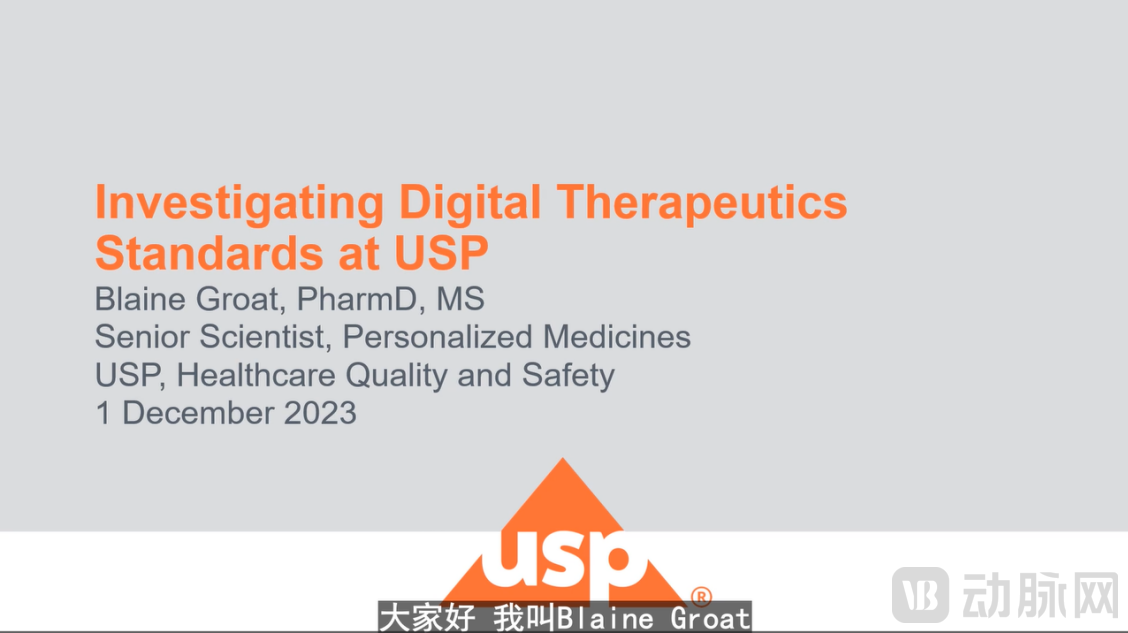
Blaine Groat, Senior Scientist for Personalized Medicines, Center of Excellence in Healthcare Quality and Safety, United States Pharmacopeial Convention
Blaine Groat, Senior Scientist, Personalized Medicines, Center of Excellence for Healthcare Quality and Safety, U.S. Pharmacopeial ConventionShared via video, the United States Pharmacopeia (USP) has been committed to ensuring the quality and safety of pharmaceuticals in the United States and more than 140 countries worldwide. Since initiating research on digital therapeutics in 2017, USP held a roundtable discussion in 2019 to address standardization issues in this field. In 2021, USP conducted further research in the area of digital therapeutics, identifying standardization needs such as software components of digital therapeutic products, product categorization, and definitions of clinical outcomes. In 2023, USP developed a work plan for establishing quality standards for digital therapeutic products, opened it for public comment in early 2024, and initiated the procedure for developing digital therapeutics standards. Throughout this process, the public and stakeholders have participated jointly in commenting on and revising the draft standards, working together to improve the quality of digital therapeutic products.

Lv Yiming, Co-founder and CMO of Shanghai Fudong Medical Management Co., Ltd.
Lu Yiming, Co-founder and CMO of Shanghai Fudong Medical Management Co., Ltd.Using the company’s products as case studies, this article highlights numerous pain points in home-based rehabilitation for orthopedic patients after discharge, such as insufficiently detailed rehabilitation plans, untimely feedback, and low levels of personalization. Through its independently developed hardware and software solutions, the company has implemented an integrated digital rehabilitation management system that spans both in-hospital and out-of-hospital care. This solution enables highly customized rehabilitation plans for individual patients, allows real-time adjustment and tracking of training progress, and facilitates proactive patient management aimed at improving adherence and ensuring adequate rehabilitation duration. Preliminary successes have already been achieved in several Grade A tertiary hospitals. Moving forward, the company will continue to refine its products to realize its vision of truly benefiting a broad patient population.

Tao Hua, Technical Director of Shenzhen Mindray
Tao Hua, Technical Director of Shenzhen MindrayThis article outlines the varying levels of difficulty associated with the registration and regulatory compliance of software products in international markets. Among these, the United States imposes the most stringent and complex registration and regulatory requirements. In South Korea, while the registration process is relatively straightforward, regulatory oversight is extremely strict. Russia features a simple registration procedure but entails complex regulatory compliance. In European Union countries, requirements vary significantly due to differences among certification bodies. These insights offer valuable reference for enterprises when selecting target markets and formulating strategies for global software expansion. Overall, the registration and regulatory barriers encountered in the internationalization of software products cannot be overlooked, and companies must undertake thorough preparatory work in advance.

Cai Yi, Head of Patient Health Management Business, Digital Healthcare Division, Viatris China
Cai Yi, Head of Patient Health Management Business, Digital Healthcare Division, Viatris ChinaThe presentation highlighted that Viatris, as a pharmaceutical company, aims to implement lifestyle interventions for patients with chronic diseases through digital means, recognizing this as a critical foundation for chronic disease management. To this end, the company has developed “Key Health,” a digital product integrating evidence-based medicine, patient management, and wearable devices. By combining assessment with personalized prescriptions, the product facilitates adjustments in patients’ lifestyles, including diet, exercise, and sleep, yielding promising initial therapeutic outcomes. Its distinguishing feature lies in striking a balance between the diversity of patients’ daily lives and clinical efficacy to deliver personalized prescriptions. Overall, digital technology has introduced novel approaches to traditional lifestyle interventions, holding significant promise for playing an even greater role in the treatment of chronic diseases.
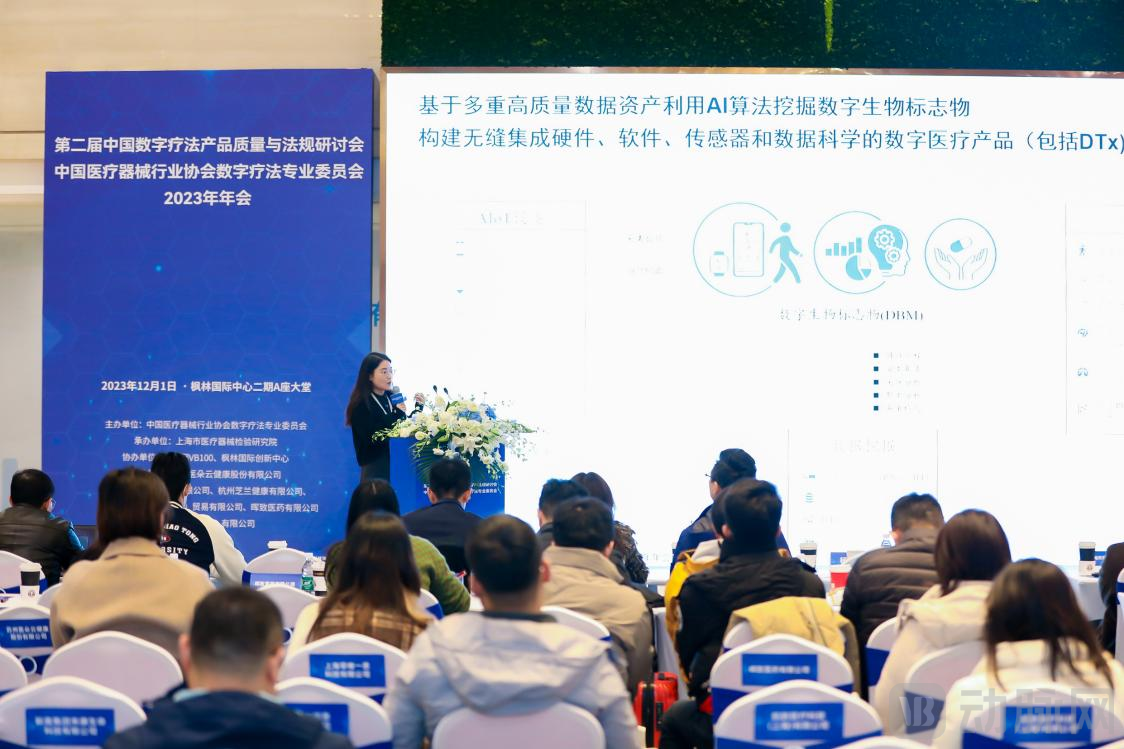
Fang Qiuxue, Marketing Director at SLANHEALTH
Fang Qiuxue, Marketing Director at SLANHEALTHFirst, SLANHEALTH was introduced as a platform service provider in the field of digital therapeutics, dedicated to offering clients end-to-end services for digital therapeutic product development and data analysis, ranging from solution design to clinical validation. Then, the concept, application scenarios, and working mechanisms of digital biomarkers were elaborated in detail. Digital biomarkers can collect physiological and behavioral data through smart wearable devices, establish correlations between data and diseases, and assist in the design of digital therapeutic products. SLANHEALTH has already deployed applications of digital biomarkers across multiple disease areas. Finally, successful cases of SLANHEALTH assisting clients in designing clinical trials for digital therapeutics, as well as facilitating product registration and market launch, were presented. These cases demonstrate SLANHEALTH’s capability as a platform to integrate resources and provide rapid, efficient support for clients throughout the entire process of digital therapeutic product development, from R&D to commercialization.

Niu Jiakun, Human Factors Engineer, Shanghai Institute of Medical Device Testing
Niu Jiakun, Human Factors Engineer, Shanghai Institute of Medical Device TestingStarting from the concept and origins of usability, this article introduces the importance of usability in medical devices. As medical devices become increasingly complex, usability design that considers human-computer interaction and user experience is particularly necessary to avoid serious consequences caused by use errors. Meanwhile, combining relevant domestic and international standards, it elaborates on the overall process of medical device usability engineering, documentation output requirements, and verification and validation steps, with particular emphasis on the importance of understanding target users and usage scenarios. Furthermore, based on the usability engineering maturity assessment scale, a specific roadmap for implementing usability tools is provided for digital therapeutics companies. In summary, medical device usability design and validation are an indispensable part of product development, and it is hoped that more digital therapeutics companies will incorporate these considerations in the future.

Group Photo of the Conference
In conclusion, the corporate representatives attending the meeting affirmed that the destiny of China’s digital therapeutics (DTx) enterprises remains firmly in their own hands. Regardless of the external environment, by staying true to their original aspirations, innovating products, and empowering the industry, China’s DTx sector holds immense potential. Looking ahead, the Digital Therapeutics Professional Committee of the China Association for Medical Devices Industry will continue to deepen its services for enterprises, drive innovation in the DTx industry through concrete actions, and contribute sustained momentum to the development of China’s DTx system.