

Clinical Adoption of Multiplex Fluorescent Immunohistochemistry Reaches Maturity with Clear Pricing Standards
From targeted therapy to immunotherapy, the paradigm of tumor diagnosis and treatment is continuously evolving, creating a clinical need for more new technologies toA detailed understanding of the tumor and its micro-Environment.Multiplex Immunohistochemistry (mIHC) is a technology that enables the simultaneous detection of multiple antigens, providing both qualitative and quantitative information while preserving the complete spatial architecture of samples. By facilitating multidimensional data acquisition, this technique allows for a deeper understanding of the interactions between tumor cells and the surrounding microenvironment, thereby offering additional contextual insights and reference bases for clinical tumor diagnosis and immunotherapy.
Multiplex fluorescence immunohistochemistry is considered a next-generation pathology (NGP) technology, with strong demand for clinical applications. However, the lack of a standardized pricing system remains one of the major barriers to its widespread clinical adoption.
Recently, there have been further breakthroughs in the pricing standards for medical services related to multiplex fluorescent immunohistochemistry technology. In September 2023, the National Health Commission, the National Administration of Traditional Chinese Medicine, and the National Disease Control and Prevention Administration jointly issued the "Notice on Printing and Distributing the Technical Specifications for National Medical Service Items (2023 Edition)," which included multiplex fluorescent immunohistochemistry technology. This inclusion provides strong support for the clinical popularization and standardized development of this technology.
Emerging clinical laboratory tests lacking clear fee schedules can lead to inconsistencies in test nomenclature and opaque pricing across regions, thereby hindering the clinical application and development of innovative technologies. Therefore,The pricing system is often the primary issue to be addressed in the clinical application of new technologies.
It is understood that the "National Technical Specifications for Medical Service Items (2023 Edition)" provides technical support for scientific calculation of medical service costs and performance management, helps improve missing and unclear elements in local existing medical service price items, standardizes criteria, unifies industry standards, and guides medical institutions to regulate their charging practices.
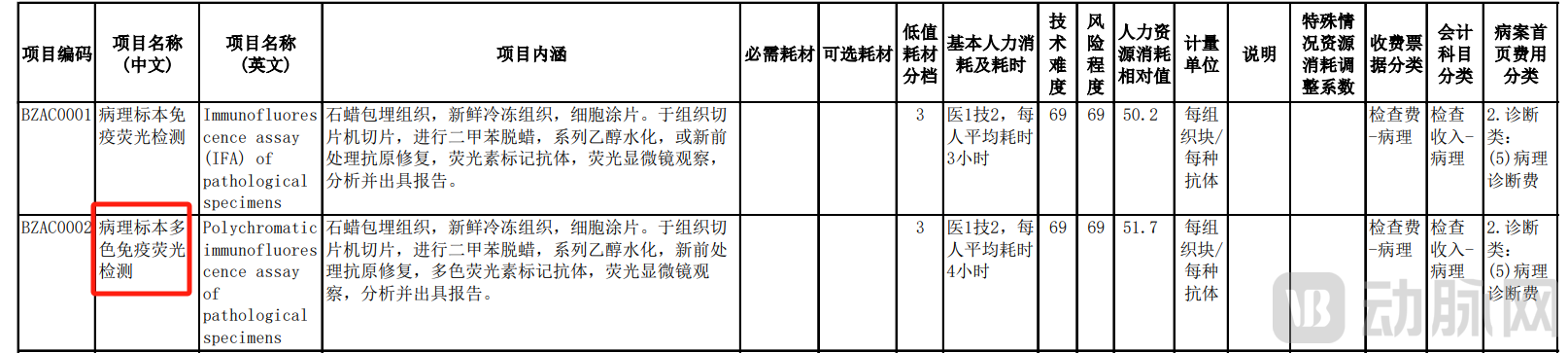
Multiplex Fluorescent Immunohistochemistry Technology Included in the National Technical Specifications for Medical Service Items
The inclusion of multiplex fluorescent immunohistochemistry in the National Technical Specifications for Medical Service Items signifies official recognition of its clinical value by national regulatory authorities. Consequently, standardized guidelines are now established for pricing and clinical application of related procedures. This development is particularly significant for a technology at a critical juncture in its transition from research to clinical practice.
Furthermore, multiplex fluorescent immunohistochemistry has established fee standards in Jiangsu Province, where it is classified as a "market-regulated medical service" with pricing determined independently by hospitals.

Multiplex Fluorescent Immunohistochemistry Has Established Pricing Standards in Jiangsu Province
Multiplex Fluorescence Immunohistochemistry is a typical representative of Next-Generation Pathology (NGP) technologies and is also considered the next-generation pathology technology most likely to achieve clinical implementation.As regions refine the fee schedules for related medical services, the clinical adoption of this technology will accelerate, which is a significant boon for companies like Kuoran Biomedical Technology (Shanghai) Co., Ltd. that have been deeply engaged in the clinical translation of multiplex fluorescent immunohistochemistry technology for several years.
It is worth noting that multiplex fluorescent immunohistochemistry has not yet been clearly adopted for large-scale clinical application abroad. The refinement of the relevant pricing system in China will help the country take the lead internationally in this field.
Certainly, the factors influencing the widespread clinical adoption of new technologies are multifaceted; beyond fee schedules, health insurance coverage is also critical. VCBeat believes that there is strong feasibility for multiplex fluorescent immunohistochemistry to be included in national health insurance coverage in the future.
NGS has undergone a rather tortuous process in establishing pricing standards and gaining inclusion in medical insurance coverage. To date, only a very small number of regions have included NGS in their medical insurance schemes. This is largely due to the substantial price disparity between large-panel and small-panel NGS tests. In contrast, the price differences among various channels in multiplex fluorescence immunohistochemistry are minimal. From this perspective, it is relatively easier for multiplex fluorescence immunohistochemistry to be included in medical insurance coverage.
However, incorporating new technologies into the national medical insurance scheme is no easy feat and requires multifaceted considerations. Moving forward, multiplex fluorescent immunohistochemistry technology still needs to establish charging standards across various provinces and municipalities, complete price filing procedures, while continuously accumulating clinical evidence and optimizing costs.
Numerous advanced technologies with clinical value have not yet been included in the official fee schedule. This is because the government exercises caution when approving new billable items, taking into account the financial burden on patients and fiscal expenditures.
When applying to add new medical service items, it is generally necessary to demonstrate the innovation, reliability, and safety of the new items compared with similar ones, and to provide appraisals of clinical research results and certificates of clinical efficacy signed by authoritative departments. Against the backdrop of the pandemic having consumed substantial resources, the addition of new billable medical services has become even more challenging.
Therefore,Newly included clinical laboratory tests in the fee schedule must either offer sufficient precision or significantly enhance medical efficiency, providing advantages unmatched by conventional technologies.Multiplex fluorescent immunohistochemistry precisely combines these advantages.
First, multiplex fluorescent immunohistochemistry has enabled increasingly profound clinical understanding of the tumor microenvironment. Conventional immunohistochemistry cannot accurately analyze correlations among various proteins and cells, allowing only qualitative interpretation; immunofluorescence techniques are incapable of multi-parameter analysis, limited to labeling two or three markers; and flow cytometry and genetic testing lack the original spatial contextual information of the obtained data.
Overall, conventional techniques cannot simultaneously obtain information on cellular composition, cellular localization, and cellular function within the tumor microenvironment.
Multiplex Fluorescent Immunohistochemistry Technology Achieves Breakthroughs in Multi-Label Staining, Spectral Imaging, and Intelligent AnalysisMultiplex fluorescent immunohistochemistry technology has achieved breakthroughs in multi-label staining, spectral imaging, and intelligent analysis. It offers advantages such as multi-parameter quantitative analysis, high sensitivity and specificity, spatial analysis, and multi-channel imaging. This technique enables immunofluorescent staining of 7–9 biomarkers on a single tissue section, allowing for the quantitative assessment of cellular composition, localization, and function within the tissue. By comprehensively characterizing the tumor immune microenvironment and the in situ spatial relationships between cells, it facilitates a deeper understanding of tumorigenesis mechanisms, enhances the prediction of tumor response to immunotherapy, and enables precise identification of patients likely to benefit from immunotherapy.
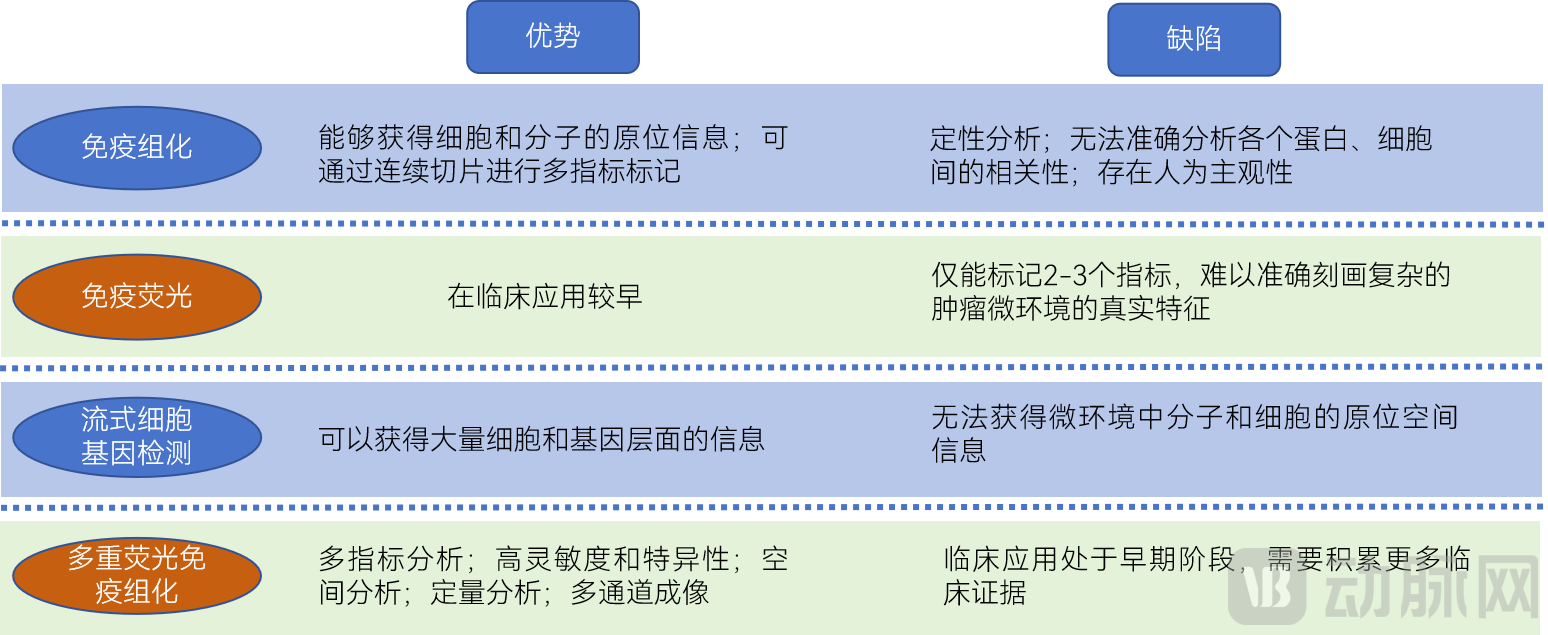
Multiplex Fluorescent Immunohistochemistry Demonstrates Significant Advantages in Clinical Applications
Secondly, against the backdrop of uneven distribution of pathology resources and excessive workloads for pathologists, hospitals’ enthusiasm for establishing digital pathology departments has risen rapidly.Multiplex fluorescence immunohistochemistry offers controllable detection throughput with no startup throughput limitations, and by integrating instruments, reagents, software, and services, it can meet the requirements for building digital pathology departments., not only helping pathology departments improve the precision of tumor diagnosis and treatment, but also achieving interoperability of patient data, ensuring system and data compatibility and integration, as well as supporting comprehensive patient reporting for assisted diagnosis.
More importantly, the clinical application conditions for multiplex fluorescent immunohistochemistry technology itself are already mature.Kuoran Biomedical has been conducting clinical translational research since 2019, making substantial efforts to ensure product compliance and the completeness of its solutions.
Based on multiplex fluorescent immunohistochemistry technology, Kuoran Biomedical integrates Kreep™Multiplex Immunofluorescence Kit, Krast®Fully Automated Multifunctional Immunohistochemistry Stainer, KR-HT5®High-Throughput Fluorescence Digital Pathology Scanner, KRIAS®Pathology Analysis System: A Comprehensive Solution for Holistic Analysis of the Tumor Microenvironment, Providing Complete Product and Service Offerings for Clinical Practice.
In terms of compliance, in November 2023, Kuoran Biomedical's KR-HT5®The high-throughput fluorescence digital pathology scanner has obtained China’s first Class II medical device registration certificate based on a multispectral scanner. The company has also obtained the Kreep™ multiplex immunofluorescence assay kits (3-color, 4-color, 5-color, 6-color, 7-color, 8-color, and 9-color), Krast®30 filings and production licenses, including for the fully automated multifunctional immunohistochemistry stainers (Krast 300, Krast 600).
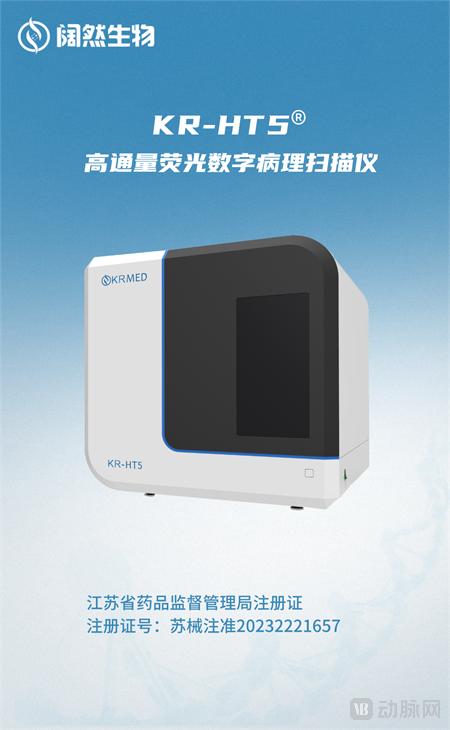
It can be said that Kuoran Biomedical has gained a first-mover advantage in the clinical market, leveraging its leading positioning in multiplex fluorescence immunohistochemistry product portfolios and regulatory compliance.
Policy support for the pathology industry continues to strengthen. According to statistics from VCBeat, China has issued multiple policies concerning the development of pathology departments over the past decade. Among these, the precise and efficient advancement of pathological diagnostic technologies and digital smart pathology have been key policy priorities, effectively driving the development of next-generation pathological technologies.
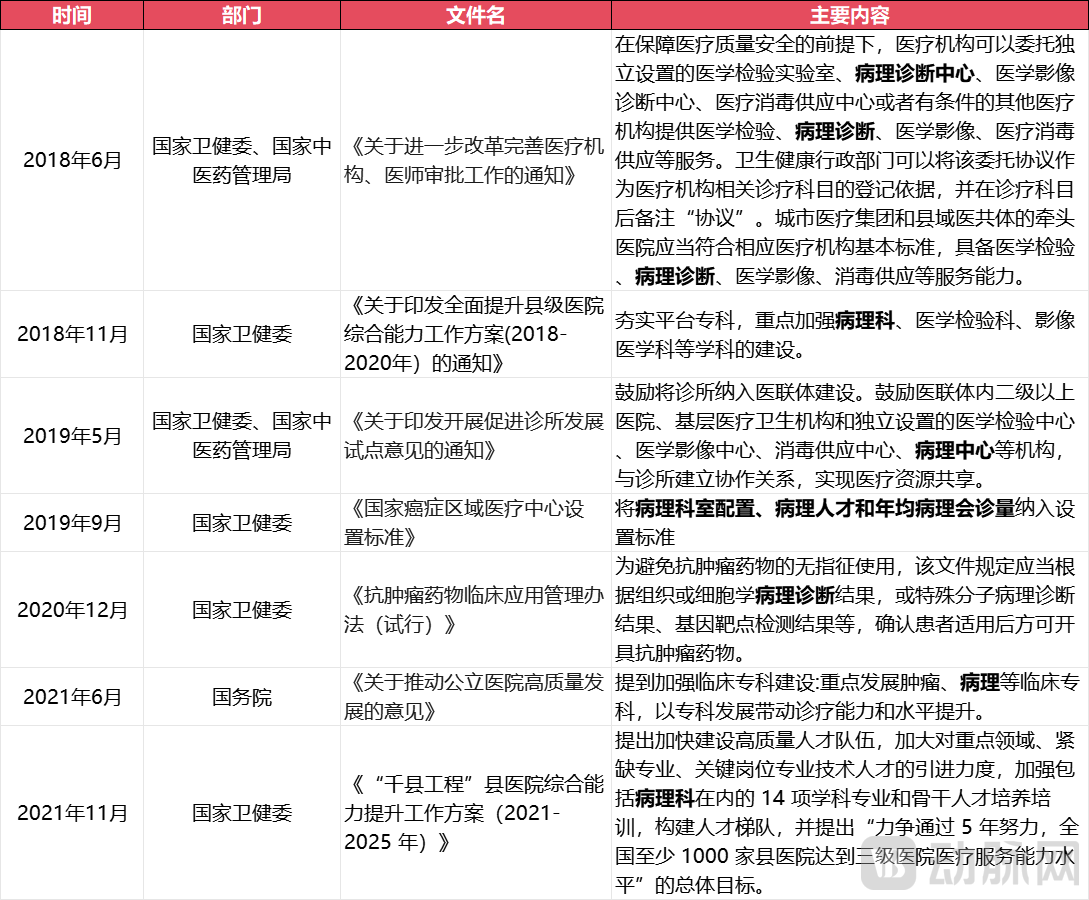
In 2018, the National Health Commission issued the "Standards and Specifications for Hospital Information Construction Nationwide (Trial)," which set forth explicit requirements for pathology information management. Pathology departments in Grade III Class A hospitals are required to have capabilities for: automatic acquisition of equipment data; and seven informatization indicators covering specimen packaging, labeling, transport, registration, receipt, verification, and monitoring.
Regarding expert consensus, the "Expert Consensus on Postoperative Recurrence Prediction in Non-Small Cell Lung Cancer Based on Molecular Markers," published in the Chinese Journal of Lung Cancer, points out that multiplex fluorescent immunohistochemistry has become one of the important research tools for studying the tumor microenvironment, affirming the clinical value of this technology.
It can be seen that,Driven by multiple favorable factors, multiplex fluorescent immunohistochemistry has reached the tipping point for large-scale clinical application.
Kuoran Biotechnology’s multiplex fluorescent immunohistochemistry products have been adopted by numerous hospitals. Given the varying positioning and specialties of pathology departments across different institutions—for instance, some excel in lymphoma diagnostics while others specialize in lung cancer—the demand for multiplex fluorescent immunohistochemistry solutions differs accordingly. To address these diverse clinical needs, Kuoran Biotechnology offers customized development services tailored to each hospital’s specific requirements.
For example, a Grade 3A hospital in Jiangsu Province sought to develop a multiplex fluorescent immunohistochemistry (mF-IHC) panel for lymphoma subtyping and commissioned Kuoran Biomedical Technology (Shanghai) Co., Ltd. to undertake customized research and development. After extensive discussions to finalize the staining protocol, Kuoran Biotech proceeded with preliminary experimental design, optimized and determined the key parameters for automated stainers, and completed on-site instrument testing at the hospital. The customized assay developed by Kuoran Biotech is currently in routine clinical use at this hospital.
Policy support and increased investment by leading enterprises are accelerating the compliance and standardization of multiplex fluorescent immunohistochemistry technology, hastening its transition to clinical use. In the future, Kuoran Biomedical will continue to focus on tertiary hospitals to further promote the clinical application of multiplex fluorescent immunohistochemistry.