2023 TCM Digitalization Industry Research Report: Digital Empowerment of a RMB 700 Billion Market Unleashes New Momentum for Traditional Chinese Medicine
Preface
With the rapid advancement of technology, the traditional Chinese medicine (TCM) industry stands at a new historical starting point. In recent years, the state has attached great importance to the inheritance and innovative development of TCM, introducing a series of policies aimed at promoting the modernization and transformation of TCM through technological innovation.
This report delves into the connotations, challenges, and opportunities of digitalization in Traditional Chinese Medicine (TCM) through in-depth research and interviews with multiple TCM digital enterprises, with a particular focus on the digital transformation of TCM diagnosis and treatment. By thoroughly analyzing the development trends and technical bottlenecks associated with TCM digitalization, this report aims to provide valuable references and recommendations for the digital transformation of the TCM industry.
Focusing on Diagnosis and Treatment: TCM Digitalization Enters a Phase of Deep Technological Integration
The digitalization of Traditional Chinese Medicine (TCM) refers to the application of advanced digital technologies—such as artificial intelligence, big data, cloud computing, the Internet of Things, and blockchain—to the field of TCM through modern information technology. This process involves the digital transformation, recording, analysis, storage, and dissemination of traditional TCM knowledge, including theories, diagnostics, treatments, and herbal formulations, thereby providing robust technical support for TCM. This digital transformation aims to offer clear and quantifiable solutions to address the inherent subjectivity in the traditional TCM diagnostic methods of “inspection, auscultation and olfaction, inquiry, and pulse-taking,” as well as the potential ambiguity in evaluating therapeutic efficacy.
Market Size of China's Traditional Chinese Medicine (TCM) Medical Services Industry (in RMB 100 million)
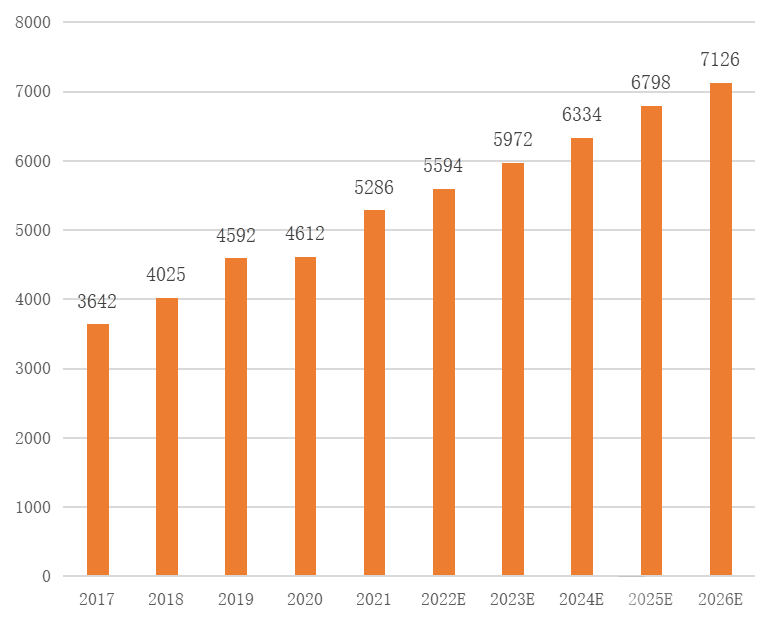
(The market size of traditional Chinese medicine medical services refers to the total expenses incurred throughout the entire process of patient diagnosis and treatment, including outpatient fees and prescription drug costs paid during this process)
Data source: China Health Statistics Yearbook 2022, compiled by VCBeat.
Clinical Visits Continue to Surge, Making Traditional Chinese Medicine an Essential Need
In 2022, there were approximately 4,779 TCM hospitals, which were the primary contributors to outpatient visits. In terms of patient volume, TCM hospitals far exceeded TCM clinics and TCM outpatient departments. The number of outpatient visits at TCM hospitals has been on a steady rise since 2015, reaching a total of 586 million in 2019. Due to the impact of the pandemic, this figure declined to 518 million in 2020. However, as pandemic-related disruptions gradually subsided, outpatient visits climbed again in 2022, reaching 599 million. A review of historical data shows that outpatient visits at both TCM hospitals and TCM clinics have demonstrated a stable upward trend.
As a unique medical treasure of the Chinese nation, Traditional Chinese Medicine (TCM) plays a significant role in the prevention and treatment of common diseases, frequently occurring illnesses, chronic conditions, refractory disorders, and major infectious diseases. In the post-pandemic era, driven by shifts in public health awareness, further relaxation of fertility policies, and the pronounced trend of population aging—coupled with the substantial value demonstrated by TCM during the fight against the COVID-19 pandemic—TCM services have gained widespread recognition among the general public.
Severe Inversion Between the Supply of Traditional Chinese Medical Resources and the Demand for Diagnosis and Treatment
At present, China continues to face uneven distribution and insufficient supply of traditional Chinese medicine (TCM) medical resources, resulting in a severe imbalance between the demand for TCM diagnosis and treatment and the supply of TCM medical services.
From the supply side of traditional Chinese medicine (TCM) medical services, the primary cause of the mismatch between supply and demand lies in the fact that the investment and development of TCM medical resources have long relied on government promotion, lacking market-based allocation. Although the state has introduced multiple policies in recent years to support the development of grassroots TCM services, further institutional and mechanistic innovations are still required to fundamentally address the issue of uneven regional distribution. Currently, there is a significant structural contradiction between the supply of TCM medical services and the growing public demand for diagnosis and treatment. It is necessary to continue expanding the scale of supply under policy support and fully leverage the role of the market to effectively improve resource allocation efficiency, thereby achieving a balance between the supply side and the consumer side.
State Council’s Guiding Documents Drive a Virtuous Cycle in the Digitalization of Traditional Chinese Medicine Industry
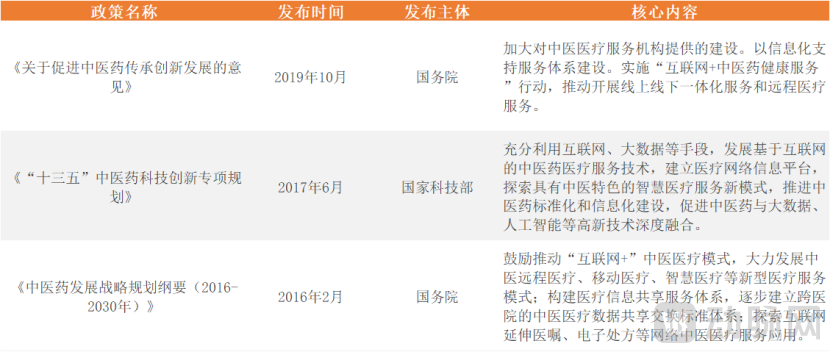
As early as February 2016, with the approval of the State Council, the “Outline of the Strategic Plan for the Development of Traditional Chinese Medicine (2016–2030)” was released. The document specifically highlighted the development of intelligent TCM health service products by leveraging information technologies such as cloud computing, mobile internet, and the Internet of Things (IoT). As a programmatic document guiding the development of China’s TCM industry over the subsequent decade and one of the most comprehensive national-level development plans in this field, it has laid a solid foundation for the digitalization of TCM and charted the course for the inheritance, innovation, and development of TCM in the new era.
Policies on the Digitalization of Traditional Chinese Medicine Systems
Data source: Artery Orange Database, produced by VCBeat.
Since the outbreak of the COVID-19 pandemic in early 2020, China has vigorously advocated leveraging information technology to support epidemic prevention and control and improve medical services, placing greater emphasis on top-level design and holistic platform construction for the digitalization of Traditional Chinese Medicine (TCM). By breaking down data silos among TCM systems, this approach facilitates interconnectivity, sharing, and utilization of TCM medical data resources, thereby providing a significant opportunity for the digital development of the TCM system.
In recent years, a series of policies on Traditional Chinese Medicine (TCM) have been continuously issued, emphasizing the use of technological innovation to drive the modernization and transformation of the TCM industry. The "Opinions on Promoting the Inheritance, Innovation, and Development of Traditional Chinese Medicine," released in October 2019, stands out as a significant policy document in recent years. It explicitly proposes supporting the construction of the TCM service system through informatization, implementing the "Internet + TCM Health Services" initiative, leveraging digital tools to diagnose challenges and prescribe solutions for TCM development, enhancing the level of TCM informatization, vigorously advancing the digitization and informatization of TCM systems, and promoting interconnectivity and information sharing between TCM and national health information platforms.
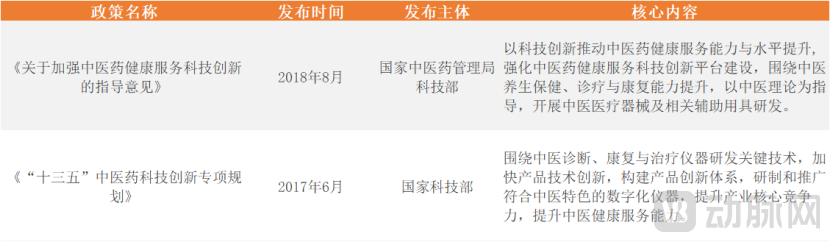
Relevant Policies on the Digitalization of Traditional Chinese Medicine Practices
Data source: Artery Orange Database, produced by VCBeat.
The “Guiding Opinions on Strengthening Scientific and Technological Innovation in Traditional Chinese Medicine (TCM) Health Services,” issued in 2018, emphasizes “building upon inheritance while pursuing innovation,” and calls for adherence to the inherent development laws of TCM, as well as enhanced integration of TCM health services with modern technology. It encourages enterprises to carry out scientific and technological innovation and facilitate the translation of research outcomes, improve the theoretical knowledge system and technical service framework for TCM health services, enrich and expand the range of TCM diagnostic equipment products, and develop TCM medical devices, assistive tools, and systems. Focusing on enhancing TCM-based health preservation, diagnosis, treatment, and rehabilitation capabilities, and guided by TCM theories, it promotes the research and development of TCM medical devices and related assistive tools, with priority given to developing a series of intelligent pulse diagnosis instruments, tongue diagnosis instruments, and other diagnostic equipment, as well as digitalized, miniaturized, integrated, and intelligent TCM therapeutic devices.
Relevant Policies on the Digitalization of Traditional Chinese Medicine Equipment and Devices

Data source: Arterial Orange Database, produced by VCBeat.
The traditional Chinese medicine (TCM) industry remains under the guidance and impetus of government policies. Policy support has brought TCM, once a niche field, into the public spotlight. A series of policy measures will continue to be introduced in the future to promote the digitalization of TCM. These policies will focus on financial support, technological research and development, talent cultivation, and integrated promotion, thereby facilitating the further development of digital TCM initiatives.
Population Aging Drives Up Demand for Chronic Disease Management, Highlighting the Advantages of Traditional Chinese Medicine
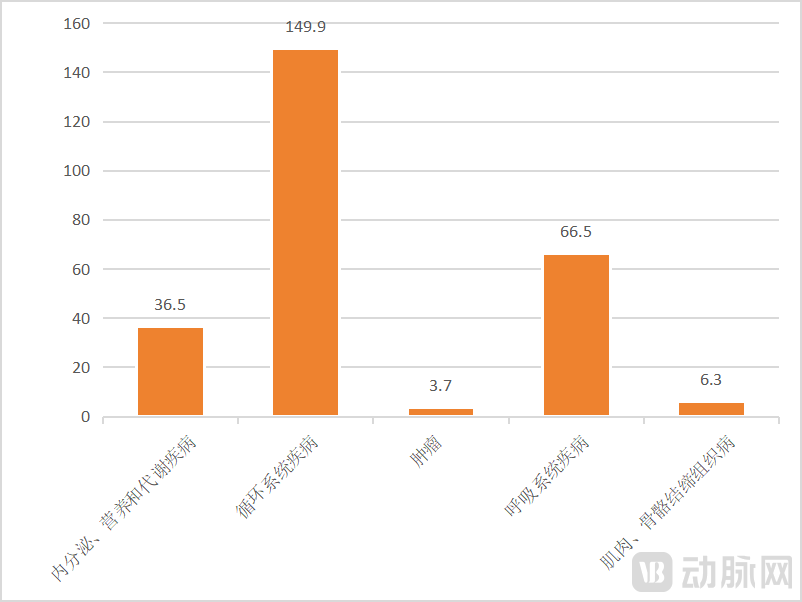
According to the "Statistical Communiqué of the People's Republic of China on the 2022 National Economic and Social Development" released by the National Bureau of Statistics, the proportion of the population aged 65 and above in China reached 14.9% in 2022, marking China’s formal entry into an aging society. The aging demographic structure will inevitably exert certain pressures on the healthcare system, which is predominantly oriented toward chronic disease management. Furthermore, the confluence of factors such as environmental pollution, irregular lifestyles, and excessive stress has led to a continuous rise in the number of individuals suffering from chronic diseases in China.
Two-Week Prevalence Rate (‰) of Major Chronic Diseases in China, 2021
Data source: China Health Statistics Yearbook 2022, prepared by VCBeat.
Compared with Western medicine, Traditional Chinese Medicine (TCM) services cover the entire life cycle, from disease prevention to treatment and rehabilitation. TCM emphasizes the prevention and control of chronic diseases and advocates maintaining a healthy diet and lifestyle to sustain vitality, promote physical well-being, and enhance immune function. In the areas of chronic disease management and health management, TCM holds unique advantages that better align with current patient needs. Over the three years of the pandemic, data from the National Administration of Traditional Chinese Medicine showed that the clinical efficacy rate of using TCM healthcare solutions in the treatment of COVID-19 exceeded 90%. As patients’ cultural identification with TCM has deepened, their subjective willingness to seek TCM assistance has continued to rise.
Multifaceted Technologies Empower the Upgrading of Traditional Chinese Medicine Industry, Unlocking the Value of Diagnostic and Treatment Data
As the patient population for Traditional Chinese Medicine (TCM) continues to expand, the traditional extensive management model is increasingly unable to meet China’s practical needs. Driven by emerging technologies, various software and hardware tools centered on big data, artificial intelligence, and the Internet of Things (IoT) are beginning to permeate every aspect of TCM, propelling the industrial ecosystem toward greater collaboration, automation, digitalization, and intelligence. This transformation not only reshapes the operational models of the traditional TCM industry but also helps optimize the structure of the TCM industrial chain and promote the rational reallocation of resources.
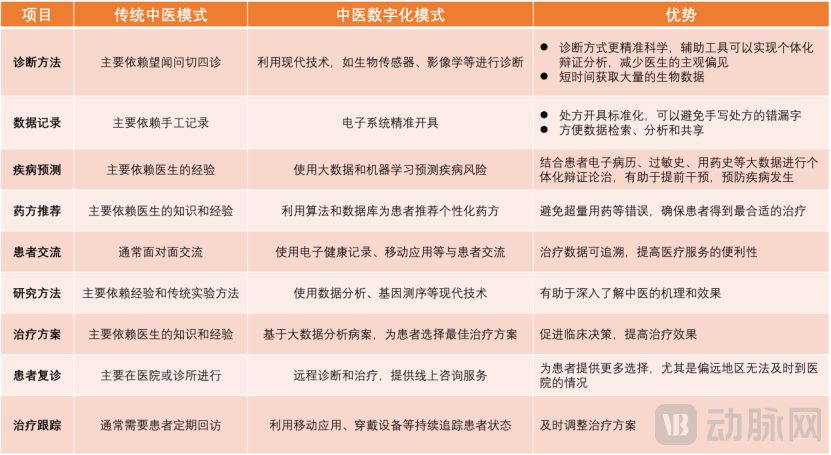
For Traditional Chinese Medicine (TCM), digital technology serves as a key driver of innovation and development, rather than a replacement for traditional practices. Digital approaches break down information silos in TCM diagnosis and treatment, unlock the value of vast amounts of clinical data, and enable the full realization of TCM’s advantages.
Comparison Between Traditional Chinese Medicine and the Digitalized Model of Traditional Chinese Medicine
Data Source: VCBeat Research Institute
As a multidisciplinary field, the digitalization of Traditional Chinese Medicine (TCM) intersects with TCM itself, information science, biomedical engineering, and other disciplines. The digitalization of TCM is not merely a technological innovation; it also requires integration with the traditional knowledge system of TCM, preserving its uniqueness while meeting the demands of modern healthcare. Furthermore, as technology advances, the digitalization of TCM will incorporate more emerging technologies and applications, such as virtual reality, augmented reality, and edge computing, thereby offering greater possibilities for its future development.
Five-Year Fundraising Surpasses 1 Billion: Investors Favor System Digitalization
From the perspective of investment and financing in traditional Chinese medicine (TCM), the scale of investment and financing in the TCM industry reached its peak in recent years in 2017. In terms of the primary market, 2015–2017 was a period of rapid development for the TCM industry.
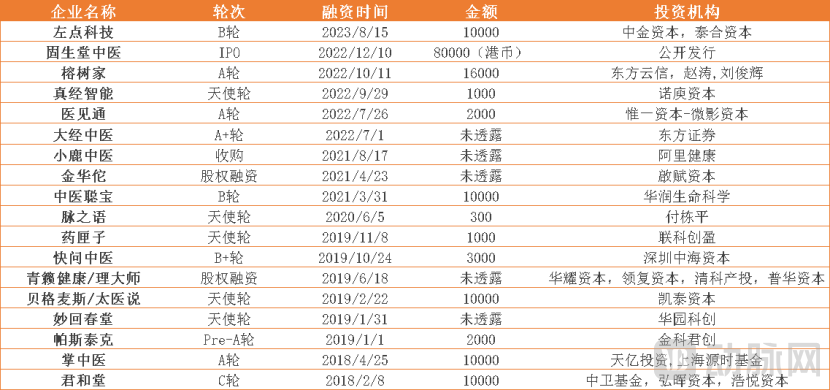
The rapid development of emerging technologies such as the Internet, the Internet of Things (IoT), big data, and artificial intelligence has accelerated their integration with the healthcare sector. This trend has led to a significant increase in digitalization and informatization projects within Traditional Chinese Medicine (TCM), while the entry of major internet companies has further broadened financing channels for the TCM industry. Furthermore, the COVID-19 pandemic has prompted China to strengthen its support for healthcare informatization, encouraging the use of digital tools to enhance epidemic prevention and control as well as medical services. Consequently, investor interest in TCM informatization and online diagnosis and treatment has risen markedly, aligning with consistent market expectations.
Table of Investment and Financing in Online TCM Diagnosis and Treatment Over the Past Five Years (in 10,000 Yuan)
Data Source: Arterial Orange Database, Produced by VCBeat.
Since traditional Chinese medicine (TCM) gained widespread recognition in the capital market in 2017, the niche segment of “online TCM consultation and diagnosis,” supported by digitalization, has come to the forefront. Data show that investors’ attention remains focused on the field of system digitalization. The short return-on-investment period, coupled with the government’s clear supportive stance, has significantly boosted investor confidence. Meanwhile, system digitalization can respond frequently and flexibly to market demands, inherently carries internet DNA, and can collaboratively address and resolve inefficiencies across the industry chain, thereby offering greater investment potential.
In the past, traditional Chinese medicine (TCM) faced numerous restrictions within healthcare reforms, and capital markets maintained a cautious stance toward the TCM sector. However, recent TCM-related policies have seen qualitative and quantitative improvements in both the speed and frequency of implementation. The 14th Five-Year Plan has also introduced measures to promote the development of TCM. Leveraging these favorable conditions, the TCM industry is poised to embrace new development opportunities.
TCM Medical Equipment Configuration Focuses on Auxiliary Diagnosis, While Treatment Remains Constrained by Experience-Dependent Limitations
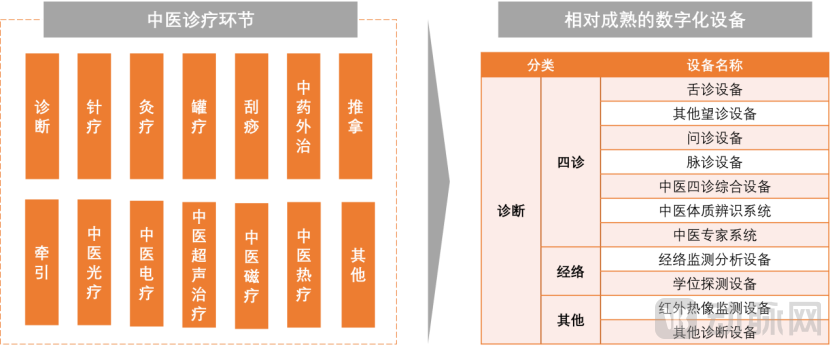
According to the Notice issued by the National Administration of Traditional Chinese Medicine on the “Standards for Medical Equipment Configuration in TCM Hospitals (Trial),” the principles for configuring TCM diagnostic and treatment equipment were proposed in 2012. The notice requires all TCM hospitals to actively apply and draw upon modern scientific and technological methods and achievements to serve clinical TCM practice, promote the integration of modern science and technology with TCM techniques, and ensure that inheritance and innovation proceed hand in hand. While the document clearly lists equipment requirements for TCM diagnostic and treatment devices, ward equipment, and various specialized departments, digitalization has currently reached a corresponding level of maturity only in the diagnostic phase; its application in treatment and ward management remains in an early exploratory stage.
Standards for Medical Equipment Configuration in Traditional Chinese Medicine Hospitals
Data source: Standards for Medical Equipment Configuration in Traditional Chinese Medicine Hospitals (Trial), prepared by VCBeat.
Digital systems for assisted diagnosis have already demonstrated excellent application, such as symptom-based syndrome differentiation and reasoning systems, laying a solid foundation for the development of digital diagnostic processes in Traditional Chinese Medicine (TCM). Furthermore, these assisted diagnosis systems can more precisely reach primary healthcare settings. In contexts with limited medical resources, digital assisted diagnosis systems can play a more effective role, thereby increasing the penetration of diagnostic and treatment services to grassroots levels. In the future, existing technologies can be leveraged to iterate and optimize solutions at the primary care level, promoting the selective and cyclical development of assisted diagnosis devices.
Furthermore, the treatment process is more complex and variable, requiring consideration of numerous factors and reliance on the accumulation of physicians’ clinical experience. Patients differ in their physical constitutions, necessitating that physicians formulate treatment plans tailored to individual circumstances. As such, clinical decision-making remains heavily dependent on physicians’ prior experience and is not easily replaceable by artificial intelligence at present.
Overall, the current digitalization of Traditional Chinese Medicine (TCM) focuses more on auxiliary diagnosis than on treatment processes. This trend is closely related to both the theoretical characteristics of TCM itself and the current state of digital technology development, and it is expected to continue in the future.
Digital Empowerment of Traditional Chinese Medicine: Expanding Application Boundaries and Integrating the Full-Chain Model
This study defines the digitalization of Traditional Chinese Medicine (TCM) as the digitalization of TCM diagnosis and treatment, encompassing all diagnostic and therapeutic activities conducted through digital technologies. Accordingly, it conducts a technical inventory aligned with the three previously delineated domains of digitalization: digitization of methods, digitization of systems, and digitization of instruments and equipment.
Three Major Domains of Digitalization in Traditional Chinese Medicine

Data source: VCBeat.
1Digitalization of Methods: Limited and Highly Homogeneous Product Categories with an Unclear Competitive Landscape
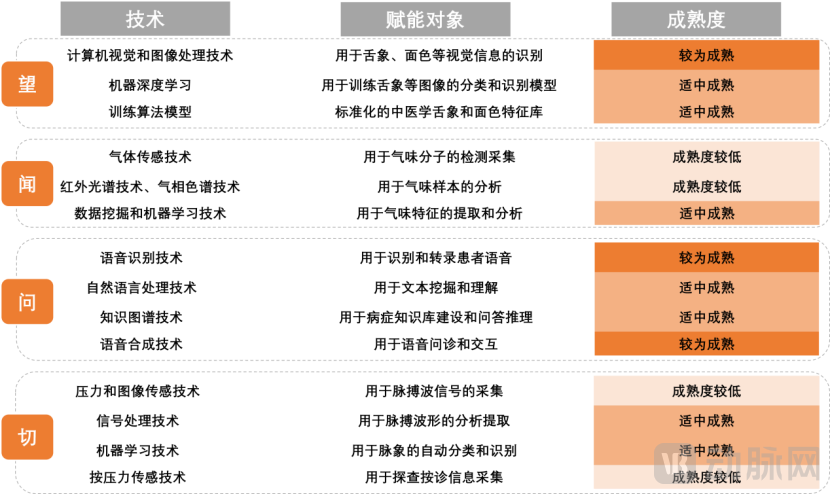
The digitalization of the Four Diagnostic Methods in Traditional Chinese Medicine (TCM) is a critical component of TCM clinical practice, aiming to achieve intelligent diagnosis through assistance in inspection, auscultation and olfaction, inquiry, and palpation. TCM theory posits that these four methods are interdependent; digital technologies can facilitate their organic integration, thereby assisting TCM practitioners in comprehensive analytical reasoning, scientifically applying the TCM concept of "preventive treatment of disease," and enhancing diagnostic efficacy.
A Review of Digital Technologies for the Four Diagnostic Methods
Data Source: VCBeat
As the industry for digital diagnostic equipment in Traditional Chinese Medicine (TCM) is still in its early stages of development, product categories are limited and relatively homogeneous, resulting in a comparatively small market size and intense competition. However, with the continuous advancement and application of digital technologies in the healthcare sector, coupled with government support, the market outlook for TCM digital diagnostic equipment is optimistic. Consequently, the future will see not only an influx of numerous innovative enterprises into the market but also a significant degree of both competition and collaboration.
In the future, techniques for the four diagnostic methods can leverage multimodal data fusion and reinforcement learning to enhance the robustness of diagnostic models.
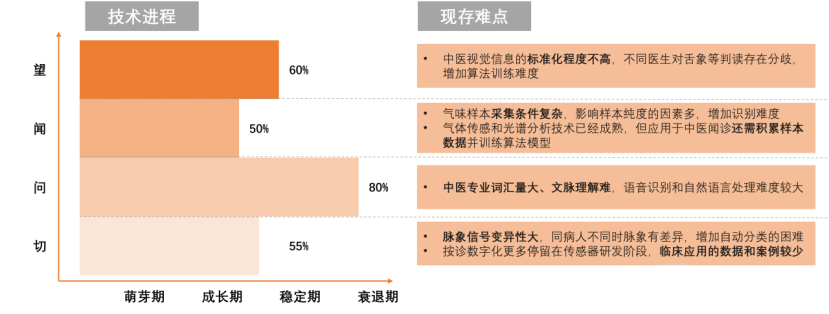
In the realm of inspection, mature computer vision and deep learning technologies have enabled high-precision extraction and recognition of image features from facial and tongue manifestations. By constructing standardized Traditional Chinese Medicine (TCM) image databases, expert experience can be unified to provide high-quality data for model training, thereby enhancing the accuracy of identification and classification. However, the standardization of TCM visual information is a systematic engineering endeavor. It requires the extensive collection of clinical images from physicians of various specialties across different regions to form representative training datasets, while simultaneously organizing experts to reach consensus on diagnostic outcomes, so as to improve the generalization capability of algorithms.
In the context of medical consultation, speech recognition and synthesis technologies have made human-computer voice interaction more natural and fluid, while natural language processing (NLP) and knowledge graph technologies have enhanced the understanding of patient narratives and the ability to infer medical conditions. These technologies have already been validated and applied in certain medical assistance systems. However, the digitalization of Traditional Chinese Medicine (TCM) consultations still faces significant challenges in interpreting professional corpora. Addressing this requires the development of standardized TCM knowledge graphs and the application of techniques such as transfer learning to adapt NLP models, thereby achieving accurate interpretation of patients’ verbal descriptions of their symptoms.
Auscultation and Olfaction Hold a Central Position, but Technology Lags Behind; There Is Still Room for Breakthroughs in the Future
In terms of olfactory diagnosis, the application of various gas sensors has expanded the scope and throughput of odor molecule detection, while spectroscopic techniques have enabled quantitative analysis of the composition of odor samples. Furthermore, machine learning algorithms can deeply mine complex correlations among odor components to achieve intelligent extraction of odor features. Although existing technologies can detect trace volatile compounds, the collection and processing of odor samples remain significant influencing factors; these processes require control of environmental conditions and sample purification. In the future, sampling protocols need to be further designed in integration with medical practice.
Pulse Diagnosis Maturity Relatively Low, but Potential Should Not Be Underestimated; Holistic TCM Diagnosis Is Just Around the Corner
In terms of pulse diagnosis, high-sensitivity physiological signal acquisition combined with mature signal processing technologies has enabled accurate extraction of pulse characteristics, while machine learning algorithms have demonstrated the capability to intelligently classify and analyze complex pulse patterns. These technologies may draw upon established methods in image, speech, and signal acquisition, integrating clinical knowledge graphs to develop intelligent palpation models. However, given the inherent variability in pulse diagnosis signals, it is essential to collect sufficient samples and design adaptive models. The digitization of palpation diagnosis can begin with pressure sensing and signal processing, followed by clinical validation, which will significantly advance the holistic diagnostic approach in Traditional Chinese Medicine.
Current Technical Challenges in the Digitalization of the Four Diagnostic Methods
Data Source: VCBeat
2System Digitization: Diverse Development Models, with a Matthew Effect in Online Medical Services
According to the Internet+ Traditional Chinese Medicine (TCM) Healthcare Data Report, the proportion of online physicians with senior professional titles was 28.0% in 2021, representing a significant decline from 37.0% and 36.0% in the preceding two years. This marked decrease in the share of senior TCM practitioners suggests that the recruitment of such experts has reached its peak, with signs emerging of a contraction in the frequency of online consultations provided by renowned physicians.
Given the relatively weak regional presence of online Traditional Chinese Medicine (TCM) services, the Matthew effect is expected to emerge in the digital TCM online consultation sector, leading to a continuous increase in market concentration. From a horizontal perspective, current online consultation platforms are exhibiting a trend of multi-point expansion, radiating from first-tier cities to surrounding areas to build their business footprint. These platforms leverage technology to directly connect with patients, thereby mitigating the long-standing disadvantage of geographical constraints in medical resource distribution. From a vertical perspective, some online consultation platforms are extending or developing specialized business lines to address the stagnation resulting from the limited scope of standalone online consultation services.
Online consultations help mitigate the disadvantage of unevenly distributed medical resources, while the integration of online and offline resources constitutes a primary competitive barrier.
Thanks to digitalization breaking down geographical barriers, some patients are gradually shifting their “battleground” for diagnosis and treatment. Online consultation platforms can progressively absorb the remaining market share of traditional in-person TCM consultations. Two derivative pathways have emerged: In the first pathway, patients undergo online follow-up visits and then receive treatment—such as acupuncture and cupping—at offline partnered or self-operated medical and health service institutions based on the online diagnostic results. In the second pathway, after completing the online diagnosis, pharmaceutical companies partnered with the platform step in to fulfill demand, creating an integrated service chain that covers prescription-based dispensing, medication purchase, decoction, and delivery.
The degree and pace of resource integration between online and offline channels constitute the primary barrier in this sector. Without a robust and stable offline network, online consultations struggle to gain mainstream visibility, making it difficult for new market entrants to compete with established players in the traditional Chinese medicine market.
Build a Platform to Connect TCM Practitioners, Share and Disseminate TCM Data, and Accelerate Digital Transformation
Across China, there has been a strong demand for information exchange among traditional Chinese medicine (TCM) hospitals and healthcare institutions, while academic research activities of particular interest to physicians have been constrained by physical limitations. By establishing a digital community platform, TCM researchers can share data, knowledge, and research findings in real time, thereby fostering collaborative cooperation and communication.
This model of data sharing and collaborative cooperation can transcend geographical and institutional boundaries, leveraging traditional Chinese medicine (TCM) research resources on a global scale to foster cross-disciplinary collaboration in TCM scientific innovation. Meanwhile, digital technologies can provide TCM researchers with more convenient and efficient collaborative platforms, promoting interdisciplinary integration across multiple disciplines and fields, thereby driving innovation and development in TCM research.
3Digitalization of Medical Devices and Equipment: Offering Broad Possibilities for Traditional Chinese Medicine Treatment, with No Ceiling in Sight
The digitization of medical equipment transforms the distinctive and personalized characteristics of Traditional Chinese Medicine (TCM) treatments into computer-operated processes. By optimizing and adjusting programs to tailor stimulation effects, this approach not only effectively shortens the treatment course but also allows patients to experience a gentler, non-irritating therapeutic process.
Given that acupuncture and cupping are traditional therapies in Traditional Chinese Medicine (TCM), involving complex human physiology and subtle technical manipulations, their application remains relatively limited despite the widespread adoption of robotic technology in the medical field. According to statistics from the China National Intellectual Property Administration, although research and development of acupuncture robots have gained significant momentum since 2017, only 29 related patents have been granted to date, highlighting both the technical challenges and the niche nature of this field.
Patent Application List for Acupuncture Robots
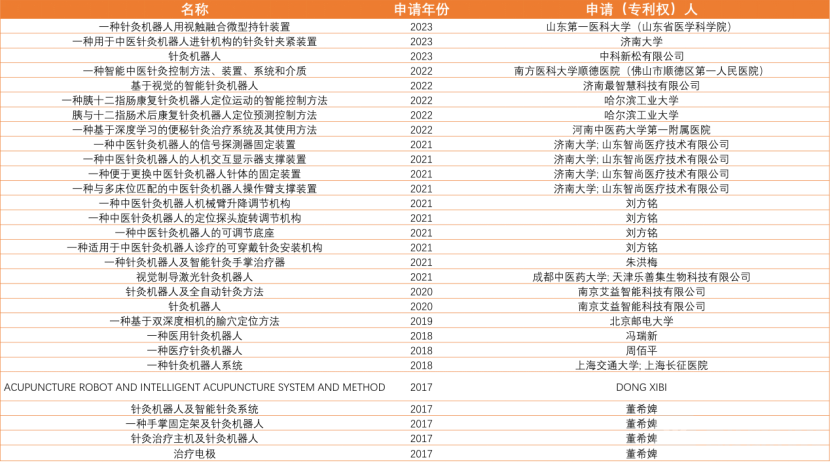
Data source: China National Intellectual Property Administration, prepared by VCBeat.
Currently developed acupuncture robots have basically achieved functions such as automatic acupoint localization, intelligent acupoint combination, needle insertion, and simulation of physician manipulation techniques. However, the research and development of acupuncture robots still face multiple challenges, including precise positioning, fine force control, and system integration.
First, acupoint identification is highly challenging.Automatically identifying acupoint locations is the primary challenge. Due to individual variations in acupoint positions, achieving automated personalized localization is highly difficult and requires robust support from image recognition and sensing technologies.
Secondly, it is difficult to control the needle insertion force.Precise control of acupuncture needle insertion force directly influences therapeutic efficacy; achieving fine-grained force modulation across different acupoints and patient constitutions is highly complex.
Furthermore, the control of acupuncture needle insertion angle is complex.Different acupoints require different needling angles, and the limited operating space makes it difficult to achieve multi-axis control of the needling angle.
Moreover, system integration design is highly challenging.Acupuncture robots require the integration of multidisciplinary knowledge—including mechanics, control systems, sensing technologies, path planning, and human–computer interaction—for system design and integration, posing significant technical challenges.
Finally, clinical translation poses significant challenges.Moreover, the transition from research to clinical application involves a lengthy process of validation and trials, making clinical translation extremely challenging. The manufacturing cost of high-precision, high-reliability acupuncture robots is prohibitively high, posing significant difficulties for their widespread adoption.
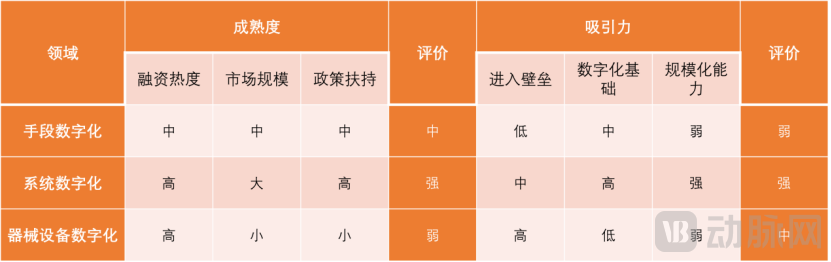
Significant Differences Across Three Major Sectors: Digitalization of Medical Devices Holds Greater Future Market Potential
In this study, considering the uniqueness of digitalization in Traditional Chinese Medicine (TCM), a comprehensive development capability model covering three major domains was established based on two key perspectives: maturity and attractiveness. Maturity is primarily assessed using three indicators: investment and financing热度 (investment heat), market size, and policy support. Attractiveness is represented by three indicators: entry barriers, digital infrastructure, and scalability. Through the evaluation of these various indicators, a maturity and attractiveness analysis was conducted for each sub-sector.
Evaluation Indicators for the Comprehensive Development Capabilities in the Three Major Fields of Digital Traditional Chinese Medicine
Data Source: VCBeat
Currently, few companies are involved in the digitalization of medical devices and equipment. This field requires substantial support from hardware, software, and research personnel, characterized by high initial investment, long R&D cycles, and significant sunk costs. Although artificial intelligence has shown potential in many medical fields, traditional Chinese medicine therapies, such as acupuncture and cupping, still require the integration of physicians’ experience and intuition.
The digitalization of medical devices and equipment not only meets the growing market demand for Traditional Chinese Medicine (TCM) practices, but also helps improve diagnostic and therapeutic efficiency, reduce medical risks, expand the promotion of TCM, stimulate industrial innovation, and enhance the level of TCM research.
For Traditional Chinese Medicine (TCM) therapies requiring precise manipulation, the digitalization of medical devices and equipment can enhance diagnostic and therapeutic efficiency. Furthermore, this digital transformation will drive the development of related industrial chains, such as new materials, robotics, and sensor technologies, thereby generating more technological innovations and market opportunities, and further fostering new drivers for digital economic growth. By integrating TCM’s unique therapeutic approaches with modern digital technologies, the digitalization of TCM medical devices warrants sustained investment and support from relevant industries and capital in the future.
Leveraging Lower-Tier Market Penetration to Divert Mainstream TCM Healthcare Demand; First-Tier Cities Remain the Primary Battleground
According to research on financing data for digital traditional Chinese medicine (TCM) enterprises disclosed by VCBeat, over the past five years, capital has predominantly favored companies based in Beijing (39%), Shanghai (18%), and Guangdong (16%), gradually forming three major industrial clusters. These are followed by the Jiangsu-Zhejiang region, which boasts a more developed healthcare sector. Given that digitalization primarily relies on technological innovation, the current regional development trends in this industry align well with market logic.
Currently, medical resources in remote areas remain relatively scarce, with a pronounced mismatch between supply and demand. Meanwhile, primary healthcare facilities face significant challenges, including inadequate informatization, difficulties in service delivery, limited access to diagnostic examinations, and constraints in medication availability. Strengthening primary care and promoting the downward allocation of high-quality medical resources are inevitable choices for the current development of the traditional Chinese medicine (TCM) healthcare system.
According to the 2022 Statistical Bulletin on the Development of Health and Family Planning, there were a total of 63,627 primary traditional Chinese medicine (TCM) medical institutions (including TCM outpatient departments and TCM clinics) in 2022. This represents an increase of 2,656 institutions compared to 2021. Data indicate that, benefiting from the detailed implementation of local policies, the number of patient visits at primary TCM medical institutions has increased significantly in recent years, thereby alleviating pressure on the TCM healthcare system.
The above is an excerpt of the main content of the report. The complete framework of the report is as follows:
Chapter 1 Industry Background: Expansion of the TCM Market and Digitalization Driving Supply-Side Reform
1.1 Basic Concepts: Focusing on Diagnosis and Treatment, Digitalization of Traditional Chinese Medicine Enters a Stage of Deep Technological Integration
1.2 Market Size: Continuous Rise in Patient Visits Makes TCM Medical Services an Essential Need
1.3 Supply Analysis: Severe Mismatch Between the Replenishment of TCM Medical Resources and Diagnostic and Treatment Demand
1.3.1 The Primary Care Market Continues to Expand, with TCM Clinics Remaining the Primary Providers
1.3.2 TCM Physicians Remain a Scarce Resource and the Core Competitive Advantage of Major TCM Institutions
1.3.3 Uneven Distribution of TCM Medical Resources and Inadequate Market-Based Allocation
Chapter 2: Driving Forces: Resonance of Four Major Engines Accelerates the Digitalization of Traditional Chinese Medicine
2.1 Policy-Driven: State Council’s Guiding Documents Steer the Virtuous Cycle of Digitalization in the Traditional Chinese Medicine Industry
2.2 Social Drivers: Aging Population Drives Up Demand for Chronic Disease Management, Highlighting the Advantages of TCM Governance
2.3 Technology-Driven: Diverse Technologies Empower the Upgrading of the TCM Industry and Unlock the Value of Diagnostic and Treatment Data
2.4 Capital-Driven: Over RMB 1 Billion Raised in Five Years, Investors Favor System Digitalization
Chapter 3 Scenario Analysis: Layout Across Three Major Domains, Implementation of the Digital Matrix for Traditional Chinese Medicine
3.1 Traditional TCM Scenarios: Empowering Tradition to Enhance the Inheritance, Innovation, and Accessibility of Traditional Chinese Medicine
3.2 Configuration of TCM Medical Equipment: Focusing on Assisted Diagnosis, with Treatment Limited by Heavy Reliance on Experience
3.3 Scenario Analysis: Digital Empowerment of Traditional Chinese Medicine, Expanding Application Boundaries, and Integrating the Full-Chain Model
3.3.1 Digitalization of Methods: Limited and Relatively Homogeneous Product Categories, with an Unclear Competitive Landscape
3.3.2 System Digitalization: Diverse Development Models, with a Matthew Effect in Online Diagnosis and Treatment Services
3.3.3 Digitalization of Medical Devices: Expanding the Possibilities for TCM Treatment with No Ceiling in Sight
3.3.4 Significant Differences Across Three Major Sectors: Greater Future Market Potential for Digitalization of Medical Devices and Equipment
3.4 Leveraging Lower-Tier Market Penetration to Alleviate Pressure on Mainstream TCM Healthcare; First-Tier Cities Remain the Primary Battleground
Chapter 4 Corporate Case Studies
4.1 Eagle Eye Smart TCM
4.2 Dajing TCM
Please scan the QR code to add our assistant and obtain the full report. If you have already added the assistant, please initiate your inquiry proactively.