

Ruier Mingkang Eyes the $250M Widefield Retinal Imaging Market with Confocal Laser Technology
“If we were to describe the origin of our startup in one sentence, it would be that our anticipation for high-resolution imaging technology coincided perfectly with the vast diagnostic and treatment demands in ophthalmology,” said Wang Qingyang, founder of RealMingKang.
On the surface, RealMed’s journey—from its founding in 2016, to the capture of its first fundus photograph in 2019, the development of its first product in 2020, and subsequent formal regulatory approval, along with the expansion of its product pipeline into the field of optometry—appears to have been driven by one coincidence after another.
The story began when Wang Qingyang, a seasoned professional with over a decade of clinical experience in medical ultrasound imaging, serendipitously came across a U.S. medical imaging technology. By another stroke of fortune, he connected with the R&D team at RealMingKang, thereby embarking on his entrepreneurial journey in the fundus camera sector.
But in reality, behind what appears to be mere coincidence lies the founding team of RealMed’s deep reflection on the development of the medical imaging and ophthalmic precision instrument industries.
Prior to formally launching his startup, Wang Qingyang had three professional experiences: first, he served as an ultrasound physician for 11 years; second, he was a member of the marketing department at a leading domestic medical device company; and third, he facilitated the localization of a project based on foreign medical imaging technology, successfully obtaining medical device registration certification and promoting its products to dozens of renowned medical institutions across China.
It was also during his third job that Wang Qingyang recognized the development potential of the domestic ophthalmic imaging sector, particularly in the field of fundus cameras, and ultimately decided to join the entrepreneurial wave in this space.
Relevant materials also confirm that the fundus camera sector is indeed experiencing robust growth.
For decades, fundus cameras have served as essential tools in ophthalmic diagnosis and screening, exerting a profound impact on the diagnosis, screening, and even treatment of eye diseases. Consequently, advancements in fundus camera technology have consistently drawn significant attention from stakeholders across the industry.
However, with the development of the industry, conventional fundus cameras have gradually become obsolete, and digital ultra-widefield fundus imaging has emerged as the mainstream trend in industry development. According to a report released this year by VCBeat, the total market size for ultra-widefield fundus cameras is projected to reach approximately RMB 1.8 billion by 2028, achieving comprehensive replacement of conventional color fundus photography products.
However, imported brands continue to dominate this trend. Encouragingly, driven by supportive policies and the relentless efforts of various enterprises, Chinese companies have begun to enter the digital ultra-widefield fundus imaging sector in recent years. RealMed is one such company.
VCBeat has learned that since its establishment in 2016, RealMingKang has obtained six invention patents and four utility model patents, secured patent approvals in the United States and Japan, and has an additional patent application currently under review in India.
Furthermore, Ruier Mingkang’s first product featuring confocal and low-laser-based, non-mydriatic, ultra-widefield full-layer fundus imaging—the DF600 Digital Fundus Camera—has successfully received regulatory approval. Meanwhile, its self-developed Angel500 Binocular Auto Refractometer has also recently obtained a medical device registration certificate and is poised for imminent market launch.
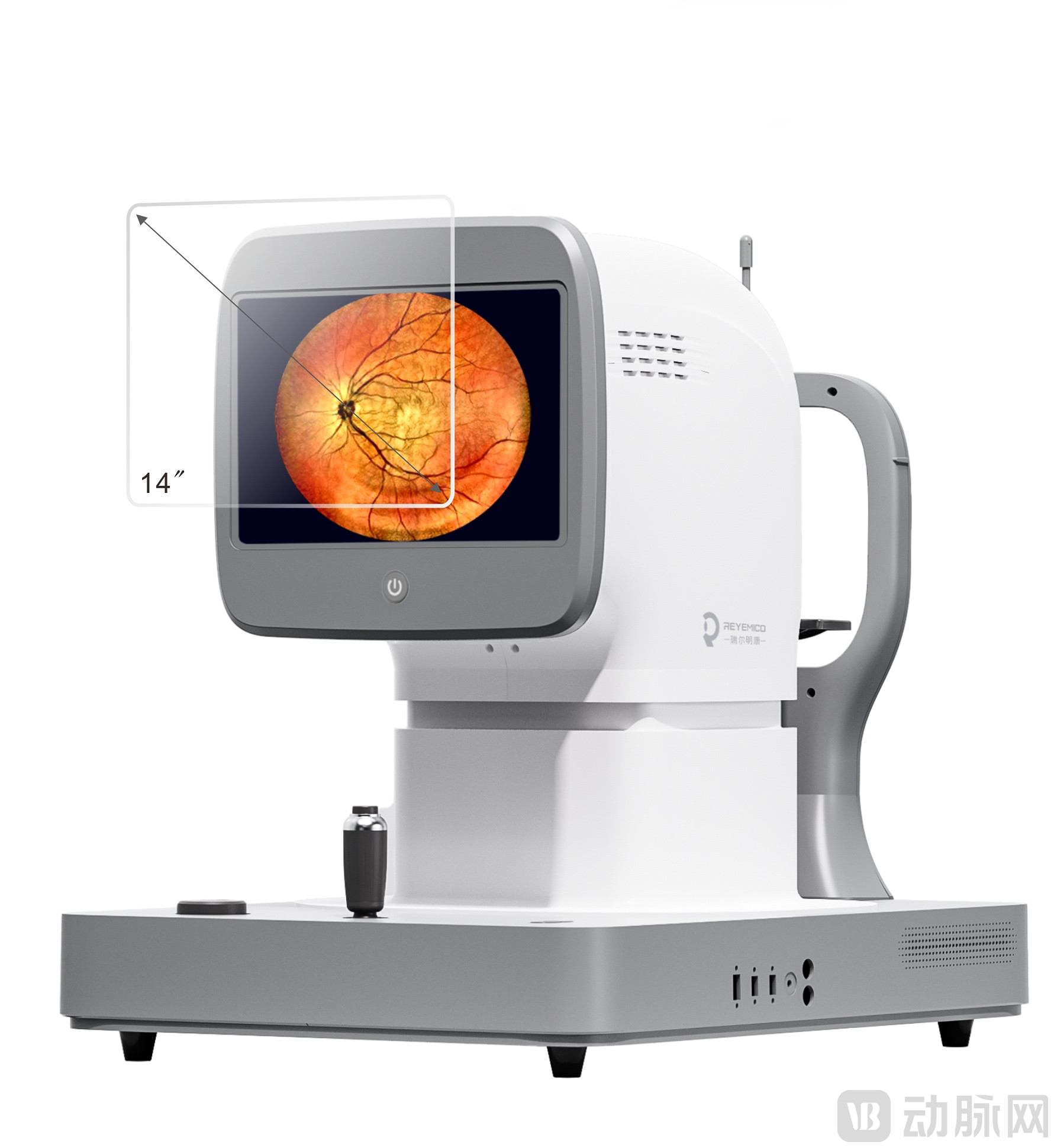
RealMed Digital Fundus Camera DF600
As RealMingKong focuses on the fundus imaging sector, why has it also turned its attention to the optometry market? Amidst fierce competition from industry giants in the ophthalmic precision instrumentation sector, what capabilities have enabled RealMingKong to carve out a niche and secure its survival? On an afternoon in November, founder Wang Qingyang guided VCBeat through RealMingKong’s entrepreneurial journey and the secrets behind its development.
Practice is the sole criterion for testing truth. For current ultra-widefield fundus cameras, the primary criteria for evaluating their quality are clarity, comprehensive field of view, distortion-free imaging, and rapid acquisition speed. In other words, high resolution, ultra-wide field of view, absence of distortion, and imaging speed are the key performance indicators for ultra-widefield fundus cameras.
In the interview, VCBeat learned that the Ruier Mingkang DF600 digital fundus camera features high resolution, a wide field of view, distortion-free imaging, and the capability for dynamic photography/videography.
Specifically, leveraging its unique optical path design and precise algorithmic architecture, the Ruier Mingkang DF600 Digital Fundus Camera enables high-resolution imaging within the target field of view and distortion-free wide-field imaging.
Furthermore, thanks to its high imaging speed, the RealMedKang fundus camera can deliver complete, high-resolution images of retinal vasculature and microstructures. This not only provides imaging evidence for early and ultra-early diagnosis of fundus diseases, but also supports fundus-based diagnosis of systemic vascular-related disorders.
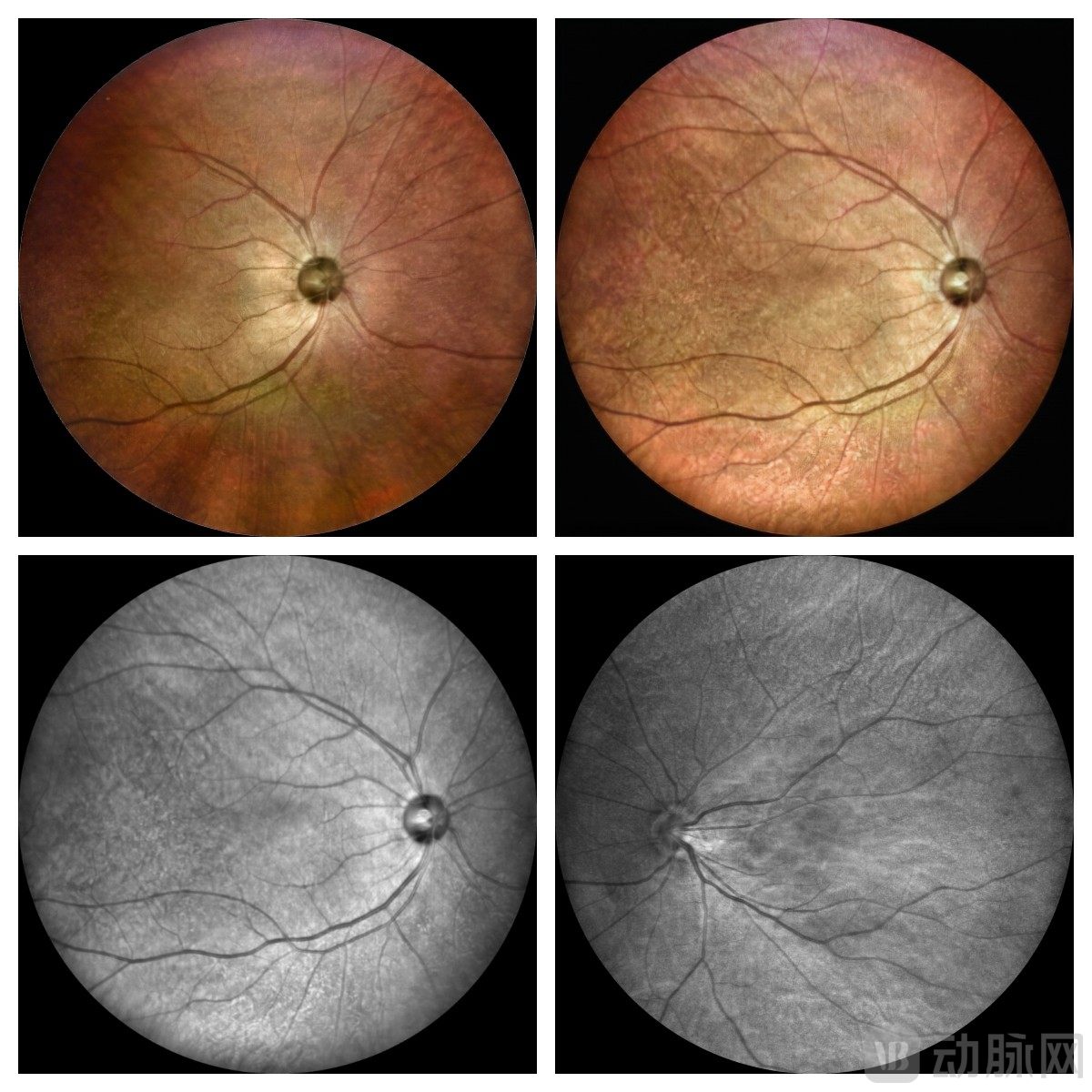
Furthermore, leveraging confocal low-laser imaging technology, the Ruier Mingkang DF600 digital fundus camera enables full-thickness retinal imaging, clearly “revealing the complete” fundus structure.
Moreover, drawing on years of practical experience in technology development and integrating know-how from the introduction of relevant technologies, RealMingKang has achieved ultra-wide-field, high-resolution, rapid imaging through a small aperture without the need for pupil dilation.
Furthermore, leveraging the core technologies accumulated in the field of fundus imaging, Ruier Mingkang has also expanded its product pipeline in the optometry sector.
“In fact, the core technologies applied in both fundus imaging and optometry are interconnected. It is precisely due to this seamless technological synergy that we have developed corresponding optometric products based on our existing technical reserves,” summarized Wang Qingyang.
The optometric product referred to by Wang Qingyang is the RealMingKang Angel500 Binocular Auto Refractometer. This product is primarily positioned as a “valuable assistant” for optometrists, aiming to enhance refraction accuracy and alleviate issues such as the scarcity of high-quality optometric professionals.
According to a 2020 report by Guokr, the current healthcare system lacks professional titles related to optometry, leaving optometrists with no opportunities for promotion. This has resulted in a significant brain drain of optometric talent. Furthermore, many practicing optometrists have entered the field after obtaining vocational qualification certificates through short-term training programs, lacking a solid foundation of professional knowledge. Therefore, under the strict definition of an optometrist established by the World Council of Optometry, many domestic optometrists in China fail to meet the required standards.
This has also placed domestic optometrists in a dual predicament of insufficient quantity and compromised quality, which may directly lead to inaccurate refraction results. According to a survey report on the optometry industry in Hunan Province, the non-compliance rate for eyeglass assembly in certain areas of Hunan exceeded 60%.
Meanwhile, RealMingKang’s binocular autorefractor aims to leverage technology to mitigate human errors arising from optometrists’ limited experience and capabilities, thereby enhancing their work efficiency.
Furthermore, according to RealMingKang, its Angel500 binocular auto-refractometer features synchronized binocular refraction, offering a significant improvement in accuracy compared to the monocular autorefractors currently dominant in the market. The Angel500 achieves a refractive precision of 1 diopter, whereas contemporary monocular devices typically offer a precision of 0.25 diopters.
Furthermore, the RealMingKang Angel500 binocular auto-refractor can also measure pupillary distance and pupil height difference, offering undoubtedly greater precision compared to manual measurements by optometrists.
Regarding the future development of RealMingKang, Wang Qingyang stated that over the next 1–3 years, the company will continuously enhance its technical capabilities, actively embrace new digital technologies, and launch new products such as fundus cameras and binocular autorefractors. It will also actively collaborate with top international R&D institutions to gradually expand into the global market, with the ultimate goal of improving quality of life and delivering high-quality life care through technological innovation.