

CMC Digital Therapeutics Achieves Significant Impact in National Pilot Zones for Primary Healthcare Innovation
On December 7, the Summary and Promotion Conference on the Construction of National Pilot Zones for Comprehensive Primary Healthcare was held in Dongfang City, Hainan Province. Relevant officials from the Department of Primary Healthcare of the National Health Commission attended the meeting, along with representatives from counties and cities across 12 provinces nationwide.
Advanced, replicable best practices were shared at the meeting. Notably, Dongfang City in Hainan Province leveraged the development of digital therapeutics for chronic diseases to strengthen chronic disease management infrastructure across municipal, township, and village levels. By standardizing integrated medical care and prevention for each specific chronic condition, the city has pioneered innovative approaches to enhance grassroots capabilities in disease prevention, treatment, and health management, offering new insights and a model for chronic disease prevention and control efforts nationwide.
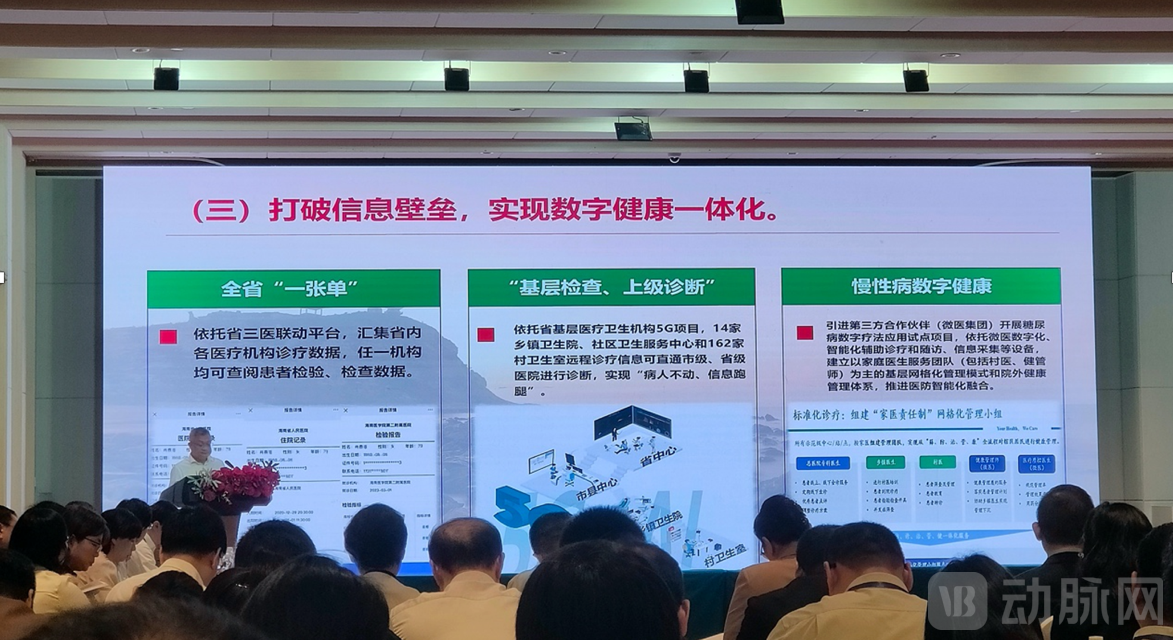
Figure | Dongfang City, Hainan Province: Sharing Best Practices and Experiences
In 2022, Dongfang City was designated by the National Health Commission as a new Comprehensive Pilot Zone for Primary Healthcare. It is also among the first batch of cities in Hainan Province to pilot digital therapeutics for diabetes. To effectively integrate resources from all sectors and advance the development of the pilot zone, Hainan Province has innovatively promoted a model characterized by “government leadership, social participation, and multi-dimensional, digitalized, comprehensive precision prevention and control.” The provincial government supports the Dongfang Municipal People’s Government in forming a strategic partnership with WeDoctor, an internationally leading digital healthcare service platform, to jointly develop digital therapeutics for chronic diseases. Starting with the establishment of standardized “screening, prevention, diagnosis, treatment, and management” models and medical care networks for diabetes and hypertension, the initiative aims to achieve health maintenance goals covering various chronic conditions in a phased manner.
At the meeting, Zhang Yuhui, Deputy Mayor of Dongfang Municipal People’s Government, outlined specific measures for advancing digital therapeutics for chronic diseases: establishing a municipal Chronic Disease Management Center and creating integrated chronic disease outpatient clinics to promote continuous services spanning prevention, diagnosis and treatment, and management; leveraging the “Three-Medical Linkage” platform to achieve interoperability of health data such as laboratory tests and examinations, thereby enabling region-wide digitalization of diagnosis and treatment and allowing residents to benefit from the model of “primary-level testing with higher-level diagnostic interpretation”; and implementing intelligent medical prevention and control for chronic diseases by applying digital-intelligent tools for assisted diagnosis and follow-up data collection, while establishing a grassroots grid-based management system led by family physicians, village doctors, and health managers, along with an out-of-hospital health management framework.
Bridging the urban-rural gap in service capacity for the prevention and control of chronic diseases, and delivering standardized, regulated, and systematically continuous health services, constitute a critical foundation for implementing grassroots chronic disease management and achieving health for all. The "Opinions on Further Improving the Healthcare Service System," issued by the General Office of the Communist Party of China Central Committee and the General Office of the State Council, proposes to “explore the establishment of joint chronic disease clinics between primary healthcare institutions and higher-level medical institutions to carry out treatment, prevention, and rehabilitation for common chronic diseases.” Recently, the National Health Commission held a press conference to promote advanced practices that leverage county-level medical consortia to create integrated chronic disease management featuring vertical coordination, two-way referrals, and standardized management.
Dongfang City has established a closely integrated urban medical and health group, actively advancing grid-based chronic disease management and prevention. It has built a Chronic Disease Management Center at the municipal level, set up chronic disease management stations in townships, and established chronic disease service points in villages. Leveraging the digital intelligence capabilities of its partner, WeDoctor’s platform, the city has deployed digital intelligence solutions—including AI-assisted physicians, AI-driven health management, and AI-enabled pharmacists—as part of a comprehensive digital system for chronic disease prevention and control and full-course disease management. This initiative has created CMC (Chronic Disease Management Center) digital therapeutics and interconnected public health systems, clinical consultation environments, and health management platforms, achieving integrated chronic disease outpatient services and digitalized medical-preventive care across municipal, township, and village levels. A whole-process health service system for the prevention and control of diabetes and hypertension has thus been established.
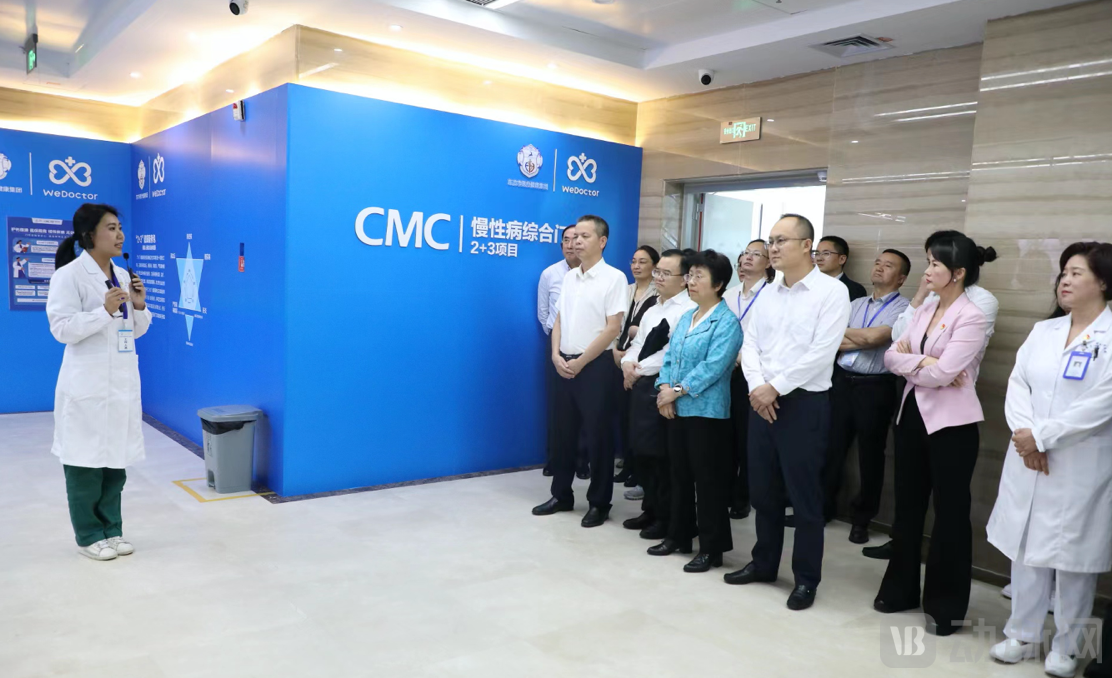
Figure | Leaders from the Department of Primary Health Care of the National Health Commission, representatives from municipal and county levels, and field experts examine digital therapeutics for chronic diseases
Both Chronic Disease Management Centers and Management Stations provide one-stop services encompassing “prevention, diagnosis and treatment, and management” of chronic diseases. At service points, village doctors primarily implement the diagnosis, treatment, and management plans devised by superior-level physicians, while integrating family doctor contract services and public health services to ensure effective daily patient management. Specialists, primary care physicians, and health managers jointly implement the “Three-Provider Co-Management” model, delivering continuous care to patients both within and outside healthcare institutions.
The CMC Digital Therapeutics System assists physicians in the standardized implementation of clinical diagnosis, treatment, and management protocols, while enabling tiered and grouped management of patients with chronic diseases. At the Gancheng Town Central Health Center, located approximately 40 kilometers from Dongfang City, it was observed that the local Chronic Disease Management Station has deployed the “Ruiyi AI Assistant.” This system provides intelligent alerts for laboratory tests and complication screening, offers diagnostic and treatment plans along with medication recommendations, and automatically stratifies and categorizes chronic disease patients based on their comprehensive health indicators, thereby facilitating effective patient group management by physicians.
“The AI assistant can recommend standardized diagnosis and treatment management plans based on patients’ electronic health records, including laboratory test data such as glycated hemoglobin, renal function, and blood lipids, while also indicating patients’ health status levels using different color codes,” introduced Dr. Zhang Jiale, Director of the General Practice Department at Gancheng Town Central Health Center. He noted that with intelligent tools, their service capacity has been enhanced, leading to higher patient satisfaction and a greater willingness to seek medical care locally, thereby alleviating outpatient pressure on higher-level hospitals. For chronic disease patients with stable health indicators, care is decentralized to the village level, where village doctors conduct out-of-hospital follow-ups and management. Through a health management system with interconnected data, patients’ daily monitoring data are transmitted back in real time, enabling online home-based health guidance.
Dongfang City has established a “Green-Yellow-Red” three-tier health management mechanism: patients with well-controlled indicators are managed under the “Green Label” by village clinics; those with suboptimally controlled indicators are managed under the “Yellow Label” by township health centers; and patients with difficult-to-control, fluctuating conditions are managed under the “Red Label” by the general hospital. This system implements dynamic management with stepwise upward and downward referrals.
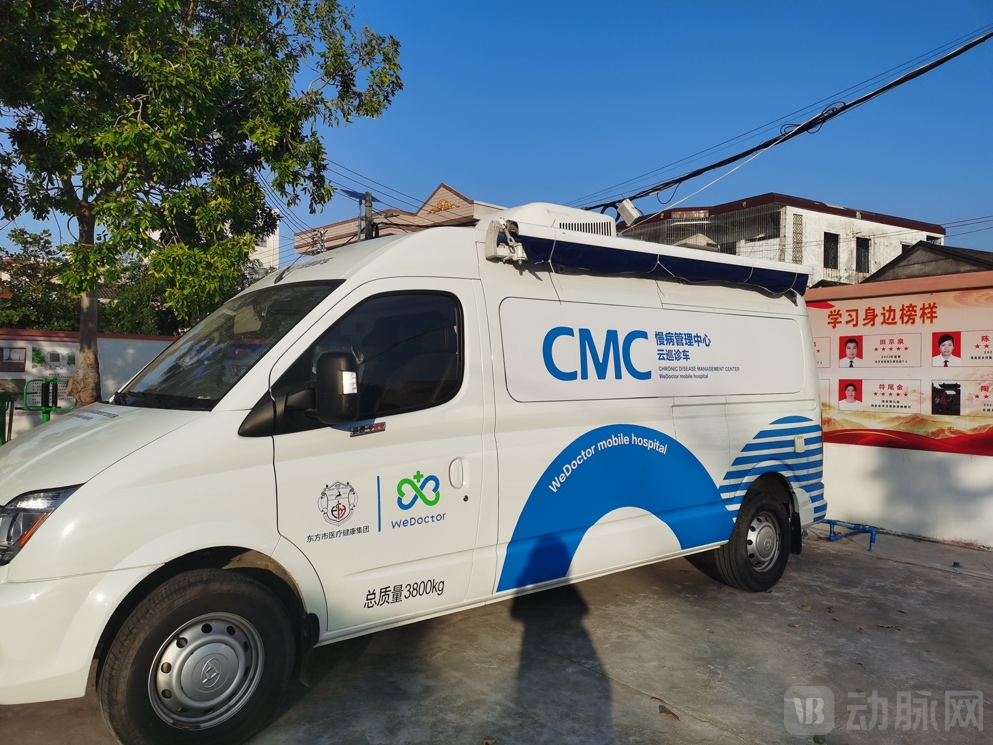
Figure | Dongfang City Equips Primary Hospitals with Cloud-Based Mobile Clinic Vehicles to Conduct Chronic Disease Management in Villages
It is reported that Dongfang City will next implement the “1+14+N” chronic disease management and care network design, with Dongfang City People’s Hospital serving as the general hospital, 14 township health centers and community health service centers across the city acting as intermediate providers, and more than 160 village clinics functioning as grassroots nodes. The city aims to gradually build a comprehensive system covering an expanded range of chronic conditions, featuring standardized services (“standardized medical care,” “standardized medication,” “standardized examinations,” “standardized health management,” and “standardized supervision”) and closely coordinated two-way referrals between different levels of care. While deepening exploration into the construction of pilot zones for comprehensive primary healthcare reform, these efforts will also support the implementation and rollout of Hainan Province’s “2+3” Health Service Package project.
In response to the severe situation posed by China’s accelerating aging population and the rising incidence of chronic diseases and complications, Hainan Province began fully implementing the “2+3” Health Service Package across the province in 2023. This initiative aims to provide effective management, prevention, and treatment for five conditions that significantly impact the health of Hainan residents: hypertension, diabetes, tuberculosis, hepatitis, and severe mental disorders. Aligning with its positioning as a medical and health hub in southwestern Hainan, Dongfang City is striving to create the “Dongfang Model,” a benchmark for high-quality development of primary healthcare and the integration of medical care and prevention for chronic diseases.